Category Archives: psychology
Learning to See Ourselves as Inferior
“I asked my teachers not to tell anyone that I was doing well in school because I was afraid I’d get beaten up.”
This quote comes from a young black man, freshly admitted to Brown University, who was telling a reporter about his struggle to get good grades at a high school where academic attempts were punished for “acting white.”
Why would doing well in school take on a sense of “whiteness”? Or merit punishment?
It all goes back to something called “internalization,” which happens when society ends up embedded in our own minds.
When children are born they don’t know much of anything, and are faced with a seemingly chaotic world that lacks meaning. But we need to cope. So the mind unconsciously categorizes what it observes. And the vast majority of the following appear white: Presidents of the United States, Congress, scientists, doctors, CEOs, major historical figures, teachers, professors. On the other hand, majorities, or large numbers, of the following seem to be black: basketball players, football players, baseball players, rappers and entertainers. In movies, TV shows, music videos, and in the news criminals, gang members and the poor are often black.
Unconsciously fitting a complex world into simple categories, stereotypes arise. We all do it. After a while – somehow in the back of our minds – smart successful people too often come to be associated with whiteness, while sports stars, rappers, criminals and the poor can come to be connected to blackness. And early in life the mind doesn’t discern the history of discrimination that lies beneath the patterns.
We grow up hearing we shouldn’t stereotype, shouldn’t be racist, but the messages can linger unless we become conscious of them and work hard to rid them. We find evidence of this in psychological tests like Harvard’s Implicit Bias test, which I wrote about a couple of weeks ago. When people take this test, most learn that they’re more racist than they had thought. So much so that about half of the black test-takers also have a preference for whites.
So consider young African Americans in school, having internalized these stereotypes. Jeff Howard and Ray Hammond, a black sociologist and a black physician, wrote a piece called “Rumors of Inferiority” for The New Republic a few years back. The stereotype gnaws at the minds of young black kids, they said. And people tend to live up to – or down to – expectations.
Howard and Hammond suggest that the children unconsciously fear competing academically for fear of failing, and proving the stereotype. They refuse to play on a field where they think they can’t win, rejecting the value of academics outright. And, they punish anyone who doesn’t go along. Instead, valor in areas like sports is praised. Unfortunately, academic achievement is a much surer route to success.
Interestingly, the threat of “acting white” arises primarily in integrated schools. Perhaps when children are competing in all-black communities they don’t fear doing worse than whites and proving the rumor of inferiority true. They may also have more black role models and a greater focus on the achievements of African-Americans, boosting the children’s faith in themselves.
The only way to overcome the loss of faith that accompanies the stereotype is to become aware of its existence and critique it. When prejudice plays on the unconscious mind, it doesn’t occur to us to rethink. But when we understand the history of discrimination that led to privilege for some and underprivilage for others, and when we see what many Black people have accomplished despite the obstacles, we understand that the stereotypes are not true. And faith can be restored.
Georgia Platts
February is Black History Month
Related Posts on BroadBlogs
“Why I Left the KKK”: One Man’s Revelation
How Does Racism Hurt Racists? The Case of Emmett Till
Rise Up or Beat Others Down: Reactions to Oppression
Share this:

Why Do The “Isms” That Affect Men Seem More Important?
“You’re never going to have this revolution happen unless there’s also a sexual revolution.”
That’s Bill Maher’s verdict on the push for Democracy in Egypt as he discussed the matter on his show, Real Time with Bill Maher.
Pro-feminist, Tavis Smiley, agreed that women need to be treated better. Yet he inserted a different spin: “When we have these conversations about how they treat women, as if we treat women better in our country, it demonizes Muslim men.”
The most well-meaning among us, men like Smiley, work hard to respect other cultures. Yet sometimes we need to discern whether powerful elements of a society are harming less powerful targets. And really, is pointing out a need for improvement “demonization”?
Mr. Smiley is a-okay in my book, and I appreciate his aim here. Yet there is plenty of room for change in cultures that (depending upon the country or province) stone women for being victims of rape, beat women for leaving home without a male relative, keep girls out of school, forbid women from driving, make divorce difficult for women but easy for men, remove battered women from shelters, and cut women’s genitals – leaving them in pain, crippled, or dead.
It’s a sad turn of events when early Islam did so much to improve women’s rights in the world. The Koran gave women the right to work, inherit and own property. Female infanticide and slavery were abolished. Women were given the right to consent to marry. Protections against abuse became instituted.
Today Islamic scholars like Dr. Jamal Badawi work to support women’s rights. Meanwhile, large majorities favor legal, political and professional freedoms for women in North Africa and many countries in the Middle East and the broader Muslim world, according to a 2007 Gallup poll. In fact, the Islamic culture of West Sumatra, Indonesia is one of the most peace-loving, egalitarian places on the planet.
Islam isn’t the problem. Neither are Muslim men.
Still, problems abound. Yet Smiley seems more concerned with ethnocentrism than sexism, given his desire to cut off conversation. Why do the “isms” that affect men seem more important? And did women have equal power to create the cultures that oppress them?
When ethnocentrism and sexism are at odds, which worries should prevail? Cultural relativism – don’t judge one culture from the perspective of another – is a good guide most of the time. But what if someone is being harmed? When people are killed for reasons other than self-defense, when they are crippled physically, emotionally, intellectually or spiritually, those circumstances must trump all others.
Must we worry more about offending those who create cultures that harm women than freeing women who are harmed by them?
Meanwhile, Islamic feminists complain that Western women can be too fearful of offending ethnic sensitivities to back their feminist sisters.
Now, is lecture the best way to handle this? Dialogue is better. Other cultures have perspectives that can benefit us, too. Perhaps we can learn from each other.
Love Tavis. But he insists we cannot criticize until we perfect ourselves. We’ll never be perfect. Still, we must fight oppression wherever it is found, here and there, to whatever degree we find it. Tolerating intolerance is not progressive.
Georgia Platts
Popular Posts on BroadBlogs
Early Islam’s Feminist Air
Did Women Create Burqa Culture?
Don’t Reject Your Culture, Even When It Mutilates You
Cultural Relativism: Must We Be Nazis to Criticize Them?
Share this:

Learning to Say No in 520 Languages

I’m Learning to Say No in 520 Languages
“How often do I hear my brain screaming NO as I smile and say yes? These random words are all “NO” in different languages. So I am learning to say no in 520 languages, most importantly mine, NO.”
Artist, Karen Gutfreund, works with unconventional materials: roof tar, bone, red food coloring, wax… Moving against standards and customs, is she saying NO even in the becoming and embodiment of her art?
She has good reason to go against the flow. We all do.
“Using hot political issues, I mix it up with text, pop culture images, stencils, and symbols to create works that are a combination of personal commentary, religious and moral teachings, political outrage and social observation,” she says. “Often the imagery and core meaning of the painting is very personal and emotionally gut-wrenching, so that not being able to discuss it verbally, I present it visually. Part humorous, part tragic.”
As she explains, the layering and mixed meanings echo and reveal the inner complexity of dreams, nightmares and emotions.
Her work strikes a chord with a piece I once read entitled, “Betrayed by the Angel”:
“I’m 25 years old. I’m alone in my apartment. I hear a knock. I open the door and see a face I don’t know. The man scares me, I don’t know why. My first impulse is to shut the door. But I stop myself: You can’t do something like that. It’s rude… He is inside. He slams the door shut himself and pushes me against the wall… Since he is being rude, it is okay for me to be rude back.”
Despite her revelation that rudeness can be good, it was too late. The young woman was raped.
Some feel queasy at self-defense seminars when told to gouge out an attacker’s eyes. “Could I do something less gruesome?” Advice from the expert: “He’s bigger than you. If you try something weaker he’ll overtake you and you’ll be raped or dead.”
I had it easier. But not really easy. He was a guy from church, and we were dating. At church we didn’t have double standards. Men and women were both told to stay pure. So inexperienced and naïve that when he touched me outside my clothes, but at “third base,” I froze in shock. Was he really doing that? I didn’t want to be rude. In guarding his feelings I paid a price, smacked with the label, “loose.”
Virginia Woolf speaks of the Angel in the House. Some scattered lines:
“You who come of a younger and happier generation may not have heard of her – you may not know what I mean by the Angel in the House… She was intensely sympathetic. She was immensely charming. She was utterly unselfish… She sacrificed herself daily… She preferred to sympathize always with the minds and wishes of others…
“I turned upon her and caught her by the throat. I did my best to kill her. My excuse, if I were to be had up in a court of law, would be that I acted in self-defense. Had I not killed her she would have killed me.”
This piece was originally shown at “CONTROL,” an exhibition of California women artists presented by The Women’s Caucus for Art at New York’s Ceres Gallery, February 1 – February 26th, 2011.
For more on Karen Gutfreund’s work go to her website.
Popular Posts on BroadBlogs
Spoon Fed Barbie
Cartoonish vs Authentic Sexuality
Sex: Who Gets Screwed?
Share this:

Men: More Homophobic Than Women?
 There is plenty of bad news on the gay/lesbian front. Suicides, gay-bashing. Just a few months ago a gubernatorial candidate maintained that “homosexuality is not an equally valid option” but felt women having sex with horses was hot. Historically, men have been more homophobic than women. But why?
It’s common to think of gay men as woman-like. Some act feminine, feminine stereotypes abound, and gay men do often perform sexually like women.
The very idea that men might be like, or act like, women is pretty threatening to manly men. But even more so when manhood feels insecure.
Men acting anywhere in the realm of womanhood collapses the great divide between male and female. Seeming more the same, male dominance and status are at risk.
Further, if gays and lesbians couple together no one can be the male head of home. Another blockage to male dominance.
But in the last four years the level of homophobia among men has dropped drastically, according to a Gallup poll taken a few months ago. Today men are no more homophobic than women. What happened?
Importantly, women’s status has risen. If women and men are equal, then men acting like women isn’t the big threat it had once been.
But women and men haven’t achieved full equality yet. So what else is going on?
New York Times columnist, Charles Blow called a couple of experts to get insight into the change in men’s attitudes. He talked with sociologist, Michael Kimmel, who studies men, and Ritch Savin-Williams, Cornell’s Chair of Human Development and an expert on same-sex attraction.
Dr. Kimmel notes that, “Men have gotten increasingly comfortable with the relative equality of ‘the other.’ The dire predictions for diversity have not only not come true, they’ve been proved to be other way.”
Additionally, as gays and lesbians come out of the closet people come to see that they are like the rest of us: our fathers and mothers, our sisters and brothers, our friends and coworkers. Who knew they were real people?
Most interestingly, “virulent homophobes are increasingly being exposed for engaging in homosexuality,” as Blow put it. Evangelical Ted Haggard and George Rekers of the Family Research Council have both been outed. Not long ago, anti-gay megachurch pastor Eddie Long was accused of coercing young men into sex. Some are starting to see that spouting homophobia can be a front for the gay man inside. (Is homophobia acting to decrease claims of homophobia?)
Despite continued gay bashing, things are looking up.
Related Posts on BroadBlogs
Homophobes Aroused by Gay Porn
Higher Suicide Rates in Conservative “Values Voters” States
Gay Marriage Helps Families
Share this:

Passionate Love: Like a Drug, or Mental Illness
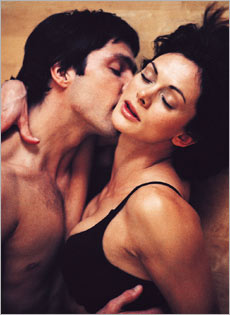 The passion of early love! Giddy, and intense. Heart thumping in the yearning breast. Can’t eat, can’t sleep. Can think of little else.
In fact, passionate love is like a drug. Or a mental illness.
Researchers asked volunteers to look at photos of their partners. Those in passionate love responded in ways similar to drug addiction, as captured in brain imaging. Lead researcher, Helen Fisher, commented, “When I first started looking at the properties of infatuation,” she said, “they had some of the same elements of a cocaine high: sleeplessness, loss of a sense of time, absolute focus on love to the detriment of all around you.”
According to Psychology Today, a brain chemical connected to falling in love rises with infatuation, heightening euphoria and excitement.
Meanwhile, brain areas that control impulses, fear and negativity become less active. Obsession and reckless behavior increase. As Dr. Fisher put it, “Infatuation can overtake the rational parts of your brain.” Passionate love resembling mental illness.
The turbulent times are marked by ecstasy and fulfillment when love is returned; but sadness and despair when it is not.
Over time passionate love settles a bit. Not a bad thing, really, for who can function drug-addicted and mentally ill?
Something is lost, but something may also be gained as greater intimacy and commitment join passionate affection, rounding out the three pillars of love, which psychologist, Robert Sternberg has identified in his “triangular theory of love.”
Sternberg calls love that is marked only by “intimacy,” but not passion or commitment, “liking love,” or good friends.
When love consists only of “commitment,” nothing but duty keeps a couple together. He calls this “empty love.”
But when intimacy and commitment meet passion, a couple moves into “consummate love,” the best of all worlds.
Few couples continually stay in a state of consuming love. And many will go through various loving styles as feelings rise, fall, and rise again.
Perhaps the trick is going with the flow and creating ways to enliven the relationship.
Popular Posts on BroadBlogs
Men Watch Porn, Women Read Romance. Why?
Men Have Higher Sex Drive. Why?
Orgasm: It’s All in the Mind
Share this:

Spoon Fed Barbie
Surface appearances can be deceiving, says artist, Yvonne Escalante.
Commenting on the pieces shown here, she reflects,

- Spoon Fed


Baby's Rattle

- Sucker

As a first generation American, Escalante’s father had stressed American identity over cultural ties. Today, her work explores the conflict she feels, caught in the kaleidoscope of identity, gender roles, and societal norms.
Her work can be viewed this month at an exhibit titled, “CONTROL” at New York’s Ceres Gallery.
Here’s what these pieces say to me.
Like most little girls, I grew up spoon fed on Barbie. But not just Barbie. She was an emblem of all that mass media, friends and schoolmates, told me to be. A good shopper. Paired with Ken. Skinny and curvy all at once. The emblem of perfect womanhood, where body defines us.
Oddly, all this spoon feeding can lead to a dearth of feeding of any sort. I’ve gone through phases of not eating like I should, hoping to look like what turn out to be phony photoshopped images that don’t even resemble the starving models who posed for the pics.
What did I know?
Of course, skinny isn’t enough. We must be buxom, too. Which leads to unnecessary, and sometimes life-threatening, surgeries in pursuit of Barbie breasts. At least that’s what happens when boobs define us, creating our worth. For too many women and men, surface is all.
When women are told they must acquire surreal measurements, and when obtaining them is the source of self-worth, the pursuit takes unending time and energy.
Obsessed with diet and exercise, women can become distracted from the rest of life; so much so that (as Naomi Wolf can tell you) advances of the women’s movement can quickly wane. Frantic pursuit of the perfect body removes agitation for power of greater substance.
Hence, the pacifier. Here, called “Sucker.”
Any wonder the exhibit’s theme is “CONTROL”?
This piece can be viewed at “CONTROL,” an exhibition of California women artists presented by The Women’s Caucus for Art at New York’s Ceres Gallery, February 1 – February 26th, 2011.
For more on Yvonne Escalante’s work go to ARTslant.
Popular Posts on BroadBlogs
The Constricting Bodice: Empowerment and Imprisonment? (CONTROL series)
Men Finding Fewer Women “Porn-Worthy”
Men Are Naturally Attracted To Unnatural Women
Share this:

Think You’re Not Racist?
Think you’re not racist?
Go to https://implicit.harvard.edu/implicit/ to find out.
First you’ll fill out a survey asking how racist you are. You’ll probably think you aren’t. But a test of unconscious attitudes will likely suggest otherwise.
In the test you will be asked to quickly categorize whether a face that appears on screen is black or white. Next you will be asked to categorize whether a word is negative or positive. All this is very quick and easy. Then you will see a screen like the following:
Black Person White Person
or criminal or
Bad Good
Your job is to categorize words like “criminal” as belonging to either the left or right side of the screen. The categorization process must go very quickly in order to measure the unconscious mind and not our conscious efforts to deliberately act against our prejudices.
People quickly categorize negative words like “criminal” (or “harm” or “depraved”) as belonging on the left hand side. Positive words like “smart” are quickly assigned to the right.
But then the test switches so that “black person” is paired with “good,” while “white person” is paired with “bad.”
Black Person White Person
or criminal or
Good Bad
Suddenly, most people take more time to correctly place “criminal” on the right side of the screen. They also make more mistakes, assigning negative words like “violence” to the left.
When the test is done you will be placed into one of the following categories:
Strong preference for whites Strong preference for blacks
Moderate preference for whites Moderate preference for blacks
Slight preference for whites Slight preference for blacks
No preference
80% of people show pro-white associations – and that includes about half of the black test-takers, too. Yet few of us think we are racist.
People take the test over and over again, trying to change their score, but they usually end up in the same place every time.
If you show a preference for whites, are you a bad person? With 80% of the population, and about half of blacks, registering that preference, what it really tells you is that you live in a racist society filled with messages that whites are better.
Our minds unconsciously notice that presidents of the U.S. and large companies are usually white, that supermodels are usually white, and that doctors are usually white. So we unconsciously bring positive connotations to that color. Our minds also unconsciously notice that the poor and the disparaged are often black, creating negative associations.
Any hope for change?
Yes.
Some people end up categorized as “no preference” for either race. Others move around from, say, “moderate preference for whites” to “moderate preference for blacks,” suggesting they lack (much) bias. (I’m one of those who move around. Truth be told, I most often end up at “slight preference for whites,” suggesting some unconscious lasting residue of cultural prejudice. I still have work to do!)
People with little or no bias have generally made more conscious efforts to see the world in unbiased ways. They become aware of their unconscious prejudices and critique them.
Focusing on the accomplishments of great Black leaders, thinkers, poets, and scientists like Nelson Mandela, Sojourner Truth, Barack Obama, Maya Angelou, Oprah Winfrey, Fredrick Douglas, Harriet Tubman, Alice Walker, George Washington Carver, and many more, can help people appreciate the talents and intellect of our brothers and sisters of African descent.
Popular Posts on BroadBlogs
Should Business Owners Have More Rights than Blacks?
Men Watch Porn, Women Read Romance. Why?
Cartoonish vs Authentic Sexuality
Share this:

“Bitches and Dudes,” a.k.a. “Women and Men” on College Campuses
Researchers looking at the most commonly used words to describe women and men on college campuses made some interesting findings.
Labels for college men: guy, dude, boy (as in “one of my boys”), stud/homey
Labels for college women: babe, chick, slut, bitch
See a difference?
The words describing men are fairly neutral. The most negative term may be “boy,” implying immaturity, not manhood. But the phrase “one of my boys” is endearing and inclusive. “Homey” prompts thoughts of ghetto life – low class. But it also suggests streetwise toughness – a positive for men.
Stud is very positive, and was likely used a bit more ten years ago when this study was done. Player and pimp might be more common now, but they all create similar imagery: a sexually active man who is potent and adept at attracting women, conquering them, getting women to submit sexually. Powerful imagery.
And words for women? They are all sexualized. “Babe” and “chick” indicate sexual attractiveness, alerting us to how important beauty is for women.
But “babe” infantilizes, while suggesting endearment. The term can also describe men whom women are close to. “Chick” may have come from the word chic, meaning fashionable. But thoughts of a baby bird do suggest immaturity, with the added hint of animal status.
“Slut” is the counterpart to stud, but without the celebratory salute – quite the opposite. “Bitch” can have a similar meaning as in, “A bitch sleeps with everyone but me.” Of course, “extremely unpleasant personality” can be an alternate meaning.
When men seem so interested in getting sex it seems odd to use words that shame women’s sexuality and contribute to sexual dysfunction. Perhaps it all makes conquest, and the ensuing rise in self-regard, that much sweeter.
On the whole, terms describing women are much more negative than those labeling men.
Language affects our minds, it guides how we see the world and ourselves. For more on this, see my post on how language shapes us.
When words describe women as sexual, secondary, and degraded, both women and men come to see them that way, at least unconsciously. We see the effects when less evolved men easily throw these sticks and stones at women, or when too many women swallow the terms, and without much of a whimper.
Popular posts on BroadBlogs
Surprises in Indiana University Sex Survey
Women Learn the Breast Fetish, Too
Men Finding Fewer Women “Porn-Worthy”
Share this:

Men Have Higher Sex Drive. Why?
 While some women have stronger sex drives than some men, generally the pattern goes the other way.
Why is the male sex drive usually stronger?
Researchers at Indiana University say,
Women had a wider range of response, with some loving sex, and others feeling uninterested. Generally, women have more difficulty with arousal for both anatomical and psychological reasons.
Difficulty with arousal won’t likely lead to a strong sex drive. Biology and psychology both seem to play a role. Let’s start with biology.
Sexual Biology
According to Louann Brizendine, author of the books, The Female Brain and The Male Brain, the area governing sexuality takes up twice as much space in the male. And the part that controls desire to pursue is 2½ times greater, and more quickly activated. (This is exaggerated and stereotyped in the accompanying photo.)
Brizendine tells us that when the male brain is sexually activated pretty much everything but thoughts of sex shut down. Women certainly can stay focused, but they are more likely than men to be distracted with concerns about the kids’ lunches, a scheduled business meeting, or whether they’ll be labeled a “slut” the next day.
But Dr. Brizendine’s book has met criticism. Dr. Cordelia Fine is a University of Melbourne professor who specializes in social psychology and neuroscientific research. She points out that 1) neuroscience is in its infancy, 2) you cannot determine whether any particular brain is male or female at the individual level, and 3) brain structure is affected by experience. If a woman’s sexuality is punished and repressed, the parts of her brain associated with sexuality will be affected. If a man’s sexuality is celebrated, his brain will also be affected.
But anatomy could have an effect. A penis must ejaculate on a regular basis to create fresh sperm. A penis is also larger than a clitoris. Both of these things might make its workings more obvious so that boys are more likely to masturbate, and girls are less likely to get to know their bodies and what arouses them. An erect penis also gives men a lot of feedback, while women’s genitals seem to provide less: Men looking at a naked body are much more likely to feel aroused than women doing the same thing. But women’s bodies are also much more sexualized by our culture — that may play a role. And the repression of women’s sexuality in our society may also affect genital feedback to the brain.
Of course, men do have much more testosterone, crucial to sex drive. Even when women and men are both treated with testosterone for low libido, the hormone is less effective in women, according to Dr. Glenn Braunstein of Cedars Sinai Medical Center. But women are more sensitive to the testosterone that they do have.
But in women’s favor, they seem to be more capable of multiple orgasm. Some think women’s sex drive could be innately stronger than men’s for that reason. Who knows?
Sexual Psychology
Because psychology affects biology, I’ve already mentioned that women’s sexuality is more punished and repressed in our culture. Men who have sex have been variously praised as players, studs, Casanovas, Don Juans, and lady killers. They are “high-fived” for “scoring.” But women are called sluts, hoes, whores, skanks… Men sport a cocky cock, while a vagina is called “down there.” Or, women get screwed, rammed, nailed, cut, boned, banged, smacked, beaten, and f’d, in street parlance.
Sexual violence doesn’t help, either, and it’s something that more egalitarian, sex-positive societies lack.
Meanwhile, because women’s bodies are so much more sexualized and sexually revealed, men get far more provocation on a daily basis.
In societies where women’s sexuality is not repressed and not objectified, they greatly enjoy sex and behave in ways that are similar to men.
But in our repressive world, women experience more sexual problems. In fact, nearly half of American women report having experienced some form of sexual dysfunction. University of Texas, Austin researchers reported in Why Women Have Sex that one-third of women, aged 18-23, felt little sexual interest in the prior year. But only 14% of men did. Meanwhile, 30-40% of women reported difficulty climaxing. Among those in a relationship, 75% of men said they always had an orgasm, but only 26% of women did. This difference likely affects how much each gender desires sex, since one is more consistently rewarded.
Interest and enjoyment needn’t be such a problem for women. And culture, more than biology, seems to be the culprit. The University of Texas researchers note that women are easily orgasmic in cultures where women are expected to enjoy sexuality. But they aren’t in places where they are repressed.
While women are taught that they are bad if they like sex too much, men are taught the opposite. The male role casts men as being ever-desirous, which could propel them to live up to expectations.
Meanwhile, both men and women learn to see women as the sexier sex. So men can be with someone who’s very physically alluring. But women aren’t taught to see men in the same way. Men can focus on a breast fetish. What are women supposed to pay attention to? No fetish is attached to the male. No wonder we’re less interested.
Sex also provides one of the few vehicles for men to experience emotional closeness. Men need that intimacy, yet the male role leaves them repressing their emotions. Esther Perel, author of Mating in Captivity, feels that “For men, sex is the connection. Sex is the language men use to express their tender loving vulnerable side.”
So how do women and men come together? Large cultural changes would help. Seeing women primarily as the sexy half of the species doesn’t aid women’s sex drive. It would help women to live in a less sexually repressive culture, while men would gain from a less emotionally repressive society. But given that this is our reality, perhaps both women and men could use some counseling or therapy. Communication and acting from a place of love to accomodate each other would surely help, too.
Sure, some women really take pleasure in sexuality, but the heightened and more widespread enjoyment of our sisters who come out of non-shaming cultures tell us that women could be loving sex a whole lot more.
Popular Posts on BroadBlogs
Sex Drive: How Men and Women Match Up
Women Seeing Women as Sexier than Men
Orgasm: It’s All in the Mind
“Cock” vs “Down There”
Share this:

Sex Drive: How Men and Women Match Up
According to Marta Meana, psychology professor at the University of Nevada, Las Vegas, data overwhelmingly show that, typically, men have a higher sex drive than women, when measured by the frequency of fantasy, masturbation and sexual activity.
WebMD concurs, noting that study after study shows men with the stronger drive: “Men want sex more often than women at the start of a relationship, in the middle of it, and after many years of it,” according to Roy Baumeister, a social psychologist at Florida State University. Most men under 60 think about sex at least once a day, but only one-quarter of women do. Older men fantasize less, but still twice as often as their female counterparts. Men say they want more sex partners in their lifetime, they are more interested in casual sex, and they are much more likely than women to buy sex.
Norah Vincent passed as a man in an attempt to get inside the male psyche. After living as a “man” among men for a year and a half, she described the male sex drive as “relentless,” an “obsession with f’ing.” Male reviewers of Self-Made Man found her insights credible.
Or as one man described the unyielding obsession, “Someone needs to invent a drug which has no hormonal imbalance side-effects but is able to erase a man’s sex drive and attraction to women. It would increase productivity rates to incredible heights. I’d be free and happy. I’d feel complete. I’d be able to concentrate on my biochemistry studying.”
Some women want more sex than their partners, but in general the pattern goes the other way.
Given their lower drive, it’s not surprising that women are also choosier. Most men find most women at least somewhat sexually attractive, whereas most women do not find most men sexually attractive at all, according to the University of Texas, Austin researchers who wrote Why Women Have Sex.
And, women are pickier about both “who” and “how.” They tend to want more connection and romance. Esther Perel, author of Mating in Captivity, says that women’s desire “is more contextual, more subjective, more layered on a lattice of emotion.” She says, “For women there is a need for a plot — hence the romance novel. It is more about the anticipation, how you get there; it is the longing that is the fuel for desire.”
Life can be difficult with such a large gap between the sexes.
Next week I’ll discuss which biological and cultural factors create this gap, and how we might even things out.
Georgia Platts
Popular Posts on BroadBlogs
Women: Climax Less Likely in Relationship Sex
Men: Climax More Likely in Relationship Sex
Orgasm: It’s All in the Mind

 BroadBlogs