Blog Archives
The Crimes of Hoodies, Short Skirts and Fannie Mae

“More guns, fewer hoodies” and we’d all be safer, Gail Collins advised in a New York Times piece after Trayvon Martin was gunned down for “eating skittles while black” – and while wearing said hoodie – in a gated community. A clear threat that had to be stopped.
That’s right. Guns don’t kill people, hoodies do: Trayvon Martin’s “hoodie killed him as surely as George Zimmerman did,” claimed Geraldo Rivera (who later apologized).
Sounds familiar. When women are raped short skirts become the culprit.
Yet few rape victims are wearing short skirts. And even nicely dressed black men can create fear. Journalist Brent Staples noticed that people got out of his way when he nonchalantly walked about. Amazed at his ability to alter public space, he tried humming Mozart to project his innocence. Seemed to help.
But why aren’t pricey cars, fancy suits and expensive watches blamed when rich, white men get robbed? What thief could resist?
Why? Because making more powerless members of society the culprit is meant to distract from the sins of the powerful. It’s women’s fault if men rape them, and it’s black men’s fault if lighter men kill them.
In another example, some blamed liberals for foolishly using Fannie Mae and Freddie Mac to help Blacks and Hispanics “buy homes they couldn’t afford,” leading to the banking crises that nearly drove the U.S. economy off a cliff.
What really happened is that rich bankers gave rich campaign contributions to government officials, who in gratitude disposed of pesky regulations. That helped bankers get mega-rich by devising complex financial packages that no one could comprehend.
Used to be that when someone bought a home bankers made sure they’d get paid back. But under deregulation it didn’t matter because the loan was sold to someone else. And that investor sold the loan again. And financial packages were created and sold, composed of fractions of many people’s mortgage loans. They were rated AAA since they were 1) diversified – and hence, “safe” investments and 2) the housing market never goes down. (Yeah, right!)
Fannie and Freddie entered the process late, thinking they’d better join in or lose out.
When the housing market dropped and people couldn’t afford their homes, or sell them for a profit, the banks began collapsing. Lucky for them, the taxpayers bailed them out (or the whole economy likely would have collapsed).
Did deregulation get blamed for the fiasco? By some. But plenty of the “powers that be” — and especially “hate radio” — blamed Blacks and Latinos.
Because blaming more powerless members of society distracts from the sins of the powerful.
The crime does not lie with the man who pulls the trigger, nor with the man who rapes, and certainly not with the fat cat who pays to rig the game. No, the crime lies with those who wear hoodies, short skirts and who bank while black or brown.
Popular Posts on BroadBlogs
Cheerleader Ordered To Cheer Her Rapist, and Other Stories
Markets Must Be Free; Women Must Be Constrained
8-Year-Old Called “Whore” for Long Sleeves, Skirts
Share this:

Is Male or Female Sexuality Better?
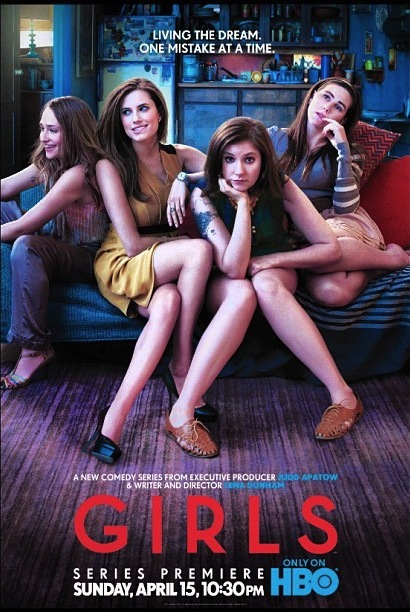 “I heard so many of my friends saying, ‘Why can’t I have sex and feel nothing?’ It was amazing: that this was the new goal.”
That’s what 25-year-old Lena Dunham told New York Times columnist, Frank Bruni as they discussed her new Sex-and-the-Cityish HBO series called “Girls,” which she writes, directs and stars in.
Dunham points out that numerous cultural cues press women to take on non-emotional, non-connected, “empowered” sexuality.
Yet she can’t manage to do it, herself. And she is not sure it’s empowering.
“There’s a biological reason why women feel about sex the way they do and men feel about sex the way they do,” she adds. “It’s not as simple as divesting yourself of your gender roles.”
Evolutionary psychology says women are genetically programmed for monogamy so fathers will stick around and provide resources for their children, while men are promiscuous so that they can widely “spread their seed.”
I have my doubts. If women are monogamous then men can’t be promiscuous. And both men and women are promiscuous in some tribal cultures.
Modernity seems to breed a monogamous ideal (meaning lifetime marriage after a few years of “sewing your wild oats”) among both women and men, perhaps because these societies are complex and children aren’t raised by the entire community (as they are in small tribes) making single parenthood difficult.
And even while casual, male-stereotypic hookup sex has overtaken college campuses (at least in theory), a recent study of hookup culture found that both men and women prefer close, connected relationships.
Still, study after study shows most women preferring sex in a context of love and connection, while men are more open to casual encounters.
So which is better? Casual or connected?
I’ve asked my students what they think. They see positives and negatives in each approach.
The variety offered in non-connected sex can be fun, and if you really do it “man-style,” guilt-free. There are no ruts! But STDs and unwanted pregnancies are bigger risks. And it’s possible that one partner will end up wanting more, which can create hurt and complications. Emotional connection adds depth and dimension, and many can’t enjoy sex without it.
The problem, my students think, lies in feeling pressured to behave in ways that are inauthentic – which isn’t pleasurable, either!
And is non-emotional, non-connected sex more “empowered”? Or do some just think so because it’s the “male” way in a culture that values masculine over feminine? Or that sees men and “their ways” as more powerful, by definition. Sure, you’re less vulnerable and dependent, but there is great power in relationship.
Likely the “best” and “most empowered” sex is that which is most fulfilling, and which best expresses who you are and what you want, and which is acted out most responsibly.
Popular Posts on BroadBlogs
“Dressing Like Prostitutes”? Authentic Sexuality?
Cartoonish vs Authentic Sexuality
It’s Ok To Be A Tomboy But Not A Sissy. Why?
Share this:

Rape Epidemic in South Africa. Why?
More than one in three South African men admits committing rape, one in seven has joined a gang rape, and more than three quarters admit committing violence against women.
More than half of South African women have experienced violence at the hands of men, and one-quarter will be raped by age sixteen.
Why? Two thirds of rapists felt sexually entitled. Some wanted to punish women who had angered or rejected them. Others wanted to turn lesbians straight. And some were just bored.
These “reasons” may only get at surface issues. What else is going on?
Rachel Jewkes, a lead researcher on the study of violence in South Africa, feels that racism lies behind the abuse.
Rape holds a sexual component, but it is essentially about power. When a large population is oppressed, say through racism – even as manhood is defined as “dominant and powerful” – men may use rape as a weapon to gain a sense of personal empowerment. Rapists are often trying to bridge a gap between their impotent selves and the dominant men they seek to be. Imagine the control they feel when they restrain, take over, and invade another person’s body. Imagine how high and mighty they feel in creating humiliation.
Gay bashing is another weapon whereby some men try to create a sense of male superiority. If women act like men (sexually/stereotypically) how can men keep their sense of dominance? Hence, the need for “corrective rape” in South Africa that seeks to turn lesbians straight.
In one attack Millicent Gaika was beaten and raped for five hours as her assailant screamed, “I know you are a lesbian. You are not a man, you think you are, but I am going to show you, you are a woman. I am going to make you pregnant.” Since the women are often murdered “correction” sounds less likely than gay-bashing as motive.
Others were simply bored. So the eroticized violence of patriarchy comes in handy: Oh, let’s have some fun!
This is helped when women are seen as sex objects, and not people who have their own lives, goals, thoughts and emotions. When women become nothing but objects for sexual pleasure, it’s no wonder that one third of the rapists said they did not feel guilty.
So here we have powerless men beaten down by racism who are trying to feel powerful, who live in a world where violence against women is eroticized, and where women are seen as mere objects. A recipe for epidemic rape.
Originally posted on January 14, 2011 by BroadBlogs
Related Posts on BroadBlogs
Mind of a Rapist: Trying to Bridge a Gap between a Small Self and a Big Man
It’s Ok To Be A Tomboy But Not A Sissy. Why?
Yale Fraternity Chants “No Means Yes.” Men? Or Scaredy Cats?
Share this:

Making Violence Against Women Sexy
 What happens when you beat a sex object? Or hang her? Or rape her? Or hogtie and torture her?
Pop culture is filled with images of women as objects. It’s also filled with images of women as abused objects. But then, the two go hand in hand: Objects have no feelings to empathize with, no lives of their own to interrupt or worry about. They can exist just for sadistic pleasure.
Oddly, I’m not seeking to shame anyone who gets aroused by these images. People tend to unconsciously absorb their culture like a sponge – we all do. Even my women’s studies students and the feminist blogs I read register a taste for this stuff. No surprise that so many find it sexy, our society is so filled with these images.
At the same time, I’m not dismissing the issue. Whether you want to participate or fight it, at least have eyes open and look at the downside.
When I was a little girl I got a children’s book from the library. In one story a woman was punished: She was stripped, placed in a kettle-like contraption with spikes to poke her, and driven through the town in humiliation. That’s my first memory of sexualized abuse.
My second encounter was flipping TV stations as a child, and seeing a man throw a woman over his knee to spank her. Apparently, if I’d flipped through a magazine I could have seen an ad with the same image.

When I got older the Rolling Stones promoted their “Black and Blue” album with a picture of a woman bound and bruised.

At the movies women are killed – in sexy bras and panties – in popular horror flicks. In tamer fare, Scarlett started out resisting Rhett, but ended up enjoying a night of passion as “no” turned to “yes.” In the soaps, Luke raped Laura and they fell in love.

Devo’s “Whip It” showed a man whipping the clothes off a mannequin. The red hat from this video is now in the Smithsonian.
In magazines and billboards we are bombarded with ads depicting violence against women.

Romance novels and erotic tales tell stories of women who are abducted and raped and who fall in love with their captors. Mainstream movies like 9-1/2 Weeks and The Secretary depict women enjoying abuse at their lovers’ hands. Justine Timberlake slapped Janet Jackson around at the Super Bowl before ripping off her bodice. Megan Fox got beat up in a popular video that you can view over and over again. In the background Eminem mouths “I’m in flight high of a love drunk from the hate,” to which Rihanna replies, “I like the way it hurts.” And then there’s the porn world full of “no’s” turning to “yes.” Or “no” remaining “no,” but that’s sexy, too.
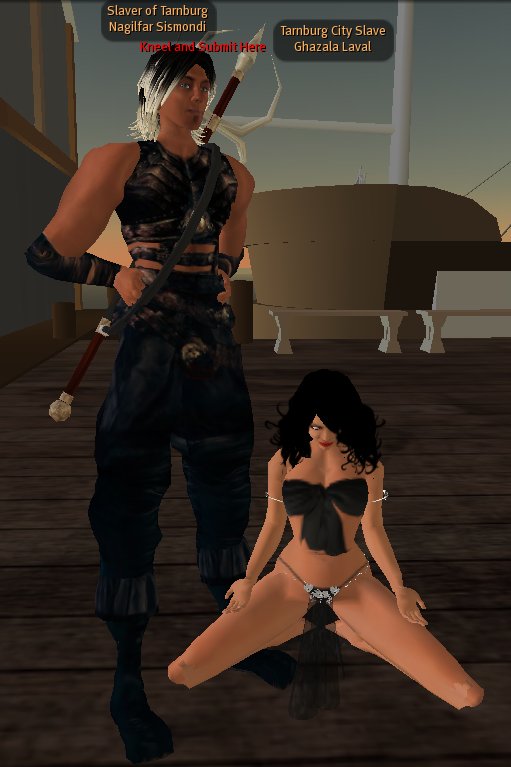 On a feminist website, one woman described the joys of being a sex slave avatar to a dominant man in the virtual world of “Second Life.” Another explained the appeal with the help of a poor understanding of evolutionary psychology: Through evolution, she explained, women have come to want male domination in their relationships.
That’s not really what evolutionary psych says (and I have issues with that field, anyway). How would craving your own abuse be adaptive? Pain is meant to warn us to stop doing something. Women’s genes don’t crave poor treatment. If they did, we’d find eroticized violence in every culture, but we don’t. Egalitarian societies like those of the American Indian (before contact with patriarchy) did not sexualize abused women.
Here are two big problems with eroticizing male dominance and women’s pain: First, women and men can both come to crave the abuse of women in real life. Second, when we make male dominance seem sexy, we become more accepting of male dominance.
Originally posted on January 12, 2011 by BroadBlogs
Popular Posts on BroadBlogs
Anything Good About Being A Sex Object?
Frats Invite Sluts, Bitches; Women Accept Degradation. Why?
Orgasm: It’s All in the Mind
Share this:

Women Seeing Women as Sexier than Men
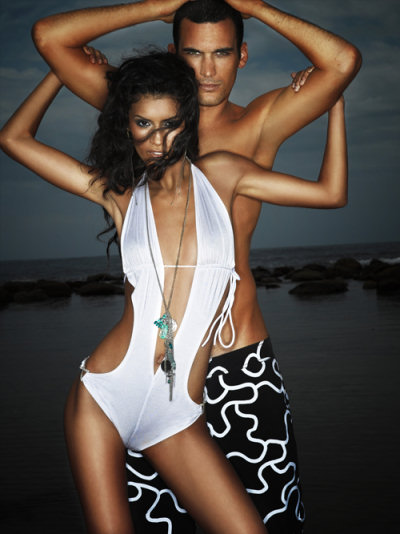 Girls are so inundated with sexualized images of women that they learn to see women as sexier than men. Women come to see women through male eyes?
In the bedroom, this can make women’s sexuality a bit convoluted, which I’ll discuss later.
But consider my students:
“Women’s bodies are just naturally sexier than men’s,” my class tells me when I ask why women are portrayed as sex objects.
In this belief, my students are not alone.
A few years back Lisa Kudrow, of Friends fame, told Jay Leno that female nudity is displayed more in movies because, “Who wants to look at a guy?”
Hugh Hefner thinks women are natural sex objects, “If women weren’t sex objects, there wouldn’t be another generation.”
I’ve talked before about how the breast fetish is not natural, but is learned by both men and women. But how do we all learn that women are sexier than men in ways that go beyond the fetish?
Growing up, girls are bombarded with visions of women as sexy, with skin selectively hidden and revealed, the camera focused on those intriguingly concealed parts.
When I was little my mom took me to the Ice Capades. After noticing that the women were half dressed while the men were fully clothed, I asked why. Mom told me that women just have better legs.
Do they? One warm summer day an adult from my church youth group commented, “It’s too bad the guys have the best legs.” (Thanks!) But what is our cultural ideal? Longer, leaner. Young men typically have longer legs, and they don’t have the extra layer of fat that women do. So most young men’s legs come closer to our ideal. Yet we say women have better legs? When I think about it, I actually think men have pretty nice looking legs. But nothing and no one directs our attention to them.
On Dancing With The Stars, women are half-dressed and men are fully-clothed. During an advertisement, the camera lingers on women’s breasts and legs in a Victoria’s Secret display. Next, a commercial for shoes focuses on women’s behinds: See this Rebook ad for EasyTone. Try to imagine the same focus on men’s butts (which actually are pretty attractive)!
Watch a football game and see big, fully-dressed, aggressive guys playing on the field, while scantily clad cheerleaders show off their stuff from the sidelines. In the Bikini Open men sport golf wear while women dawn bikinis. When does Sports Illustrated most focus on women? In the swimsuit edition.
Through it all, the camera gazes at women’s body parts, but not men’s. Telling us what’s important to notice. What’s sexy and what’s not.
Men’s bodies are rarely sexualized outside infrequent underwear ads.
Historically, men have had control of media, and they’ve portrayed what they see as sexy.
Bombarded with these images, girls come to see women as sexier than men. As I’ve said before, when I tell my class that I find a Playboy pinup sexier than a Playgirl pinup, women’s heads nod in agreement.
Meanwhile, when women answer surveys about what they find sexy they say “men.” But when they are wired up, blood flow to the vagina is stronger when viewing an image of a nude woman than a nude man – conscious responses and bodily responses not agreeing.
Oddly, and yet logically, women come to see women through male eyes.
So women come to see themselves as the sexy half of the species. Being sexy has some advantages. It can just be fun, it’s easier to attract mates (consider the success of women versus men in singles bars), and sexiness is a source of power.
But there’s a downside, too, including the narrow construct that leaves so many women feeling they exist outside the “sexy” box, with a drop in self esteem kicking in.
Taken to extreme, some women can become sex objects, taking an unhealthy one-dimensional focus on themselves, feeling that how they look is all that matters. And some men may see them as objects whose sole purpose is to be used for their pleasure.
It ain’t so great to be, or be seen, as mere object.
Popular Posts on BroadBlogs
Sex Objects Who Don’t Enjoy Sex
Men Have Higher Sex Drive. Why?
Women Learn the Breast Fetish, Too
Originally posted on January 10, 2011by BroadBlogs
Share this:

Beastly Breasts. Patriarchy? Or Blasphemy?
 In honor of women’s history month I talked with Brock Neilson, a feminist artist who wonders if he might sometimes unconsciously support patriarchy.
Or, is he blasphemous instead?
BB: It’s very easy for anyone, including feminists, to unconsciously see and think in patriarchal ways, at least some of the time, since we’re all immersed in the system. You wonder if you sometimes unconsciously support patriarchy in your art. How so?
BN: This past year a lot of my art has been about someone – or something — that has enormous or strange looking breasts. These images are what I’d imagine a drunken fraternity or a 12-year-old boy drawing.
I imagine that these kinds of perversions are part of the package with which males are endowed in society, and I feel a responsibility to address that somehow.
Sometimes I might want the breasts to look uncomfortably disfigured or I might want the  viewer to feel a kind of confusion about the body they are seeing. The breasts could also be more humane when they are not perfectly shaped or as easily sexualized, but I worry that I might be reinforcing patriarchy by not allowing something as commonly fetishized as breasts — or the person or entity to which the breasts belong — to just exist without having to be ugly, or strange, or beautiful, or symbolic. However, this concern is unavoidable as these images are being filtered through my nonobjective brain and hands.
The ultimate goal of feminism is to not have to be the mother, the champion goddess, the victim, or even a female or a male in order to have credibility and dignity. It is the hope that everyone could simply be who they want to be without having to force ourselves into degrading positions.
That said, I think it’s important to express these positions — or distortions — of power and powerlessness (and the variations between). My art is preoccupied with the slots we pop people into: the corporate leader, the androgynous, the porn victim, the violent athlete, the disabled or disfigured. I find that I’m often exploring possibilities for a better world by regurgitating things that are offensive to me.
BB: How might your work be blasphemous instead, working against patriarchy?
BN: There’s been a big focus among popular male artists to make big objects and paintings that can be bought and sold — similar to a Wall Street investment. This approach to art is problematic. I have been decorating a lot of brown paper in my work because it’s cheap and accessible. Being a male who is involved in decorating materials that require a kind of gentleness can be a blasphemous act.
I remember overhearing a mother years ago who was telling her five year old son not to smell flowers because she was afraid that this would make him look “gay.” I was so taken back that this innocent behavior — a child smelling flowers — was already perceived as inferior. My work, however crude it may be, is concerned with a hope of reclaiming this kind of sensitivity.
Tawnie Silva, an artist I discovered this last summer, made a beautiful inflatable sculpture of a quirky four-eyed girl with a rainbow coming out of her head. It’s made of fragile plastic bags, but Tawnie Silva’s body is brawny and masculine. It is especially sacrilegious to commercial gender ideals when men make things that are sweet and delicate. Both women and men need to protect and make space for vulnerable things in others and in themselves. This is an important way that we can expand and break dangerous gender stereotypes.
Related Posts on BroadBlogs
Man as Object: Reversing the Gaze
The Constricting Bodice: Empowerment and Imprisonment?
Spoon Fed Barbie
Share this:

I Didn’t Want To Be Pretty
By Victoria King
Man clothes, dark, heavy makeup, scarcely a trace of femininity: that was me in high school. I hated the notion that girls had to be pretty and were valued only for their looks. I wanted people to appreciate me for being fun, funny and a good debater.
I felt like women made themselves out to be pretty idiots because they were naturally shallow and stupid.
And envious. I hated the competition between females, so I looked as weird as possible hoping no one would see me as a threat.
Men don’t see attractive males as threats. They’re high-fived for getting women – the more the better. I wanted sisterhood, but was really more interested in having “brotherhood.”
It was a strange place to be, looking down on females as a female, and not wanting people to care whether I was pretty or not.
Yet part of me wanted very badly to be pretty. I believed I was hideous.
Despite a wholehearted attempt to free myself from incessant judgments on my appearance, I developed severe issues with self-image and self-esteem.
I saw myself being sidelined because of how I looked. I began to resent working that much harder to keep myself relevant and earn respect when other girls just stood there looking pretty. I felt trapped by society, my body and my inability to change myself or anything around me.
And so I fell into disordered eating in a desperate attempt to gain control over something. It didn’t work.
I began searching for answers. I wanted to know why women’s beauty seemed to be the only thing that mattered. I wanted to know why deep pain is associated with the beauty that is supposed to be a blessing.
The film, America the Beautiful offered a clue. The film tells how businesses make money when women feel dissatisfied with the way they look. If women weren’t satisfied, they wouldn’t spend money to make themselves “better.” I saw how we are manipulated.
As I studied more I began to see what it means to live in a patriarchy. It had never occurred to me that denigrating women’s appearance and capabilities could be a reaction to women’s gain of rights and power. If women have equal rights, you can still defeat their souls by draining their self-worth as they strive to live up to impossible standards.
The revelation was freeing. I didn’t have to accept impossible standards. I even stopped seeing anorexic models as attractive.
Now I feel that “pretty” is neither something to be obsessed over nor obsessively avoided. And I don’t think “attractive” comes in only one form. And that is freeing.
Popular Posts on BroadBlogs
Am I Ugly? Girls Ask YouTube
Keep Your Boobs, Get Better Guys
I Can’t Believe I Ate A Whole Head Of Lettuce!
Share this:

Women Make Men Dumber?
 “Talking to an attractive woman really can make a man lose his mind,” says The Telegraph. “Men get dumber just thinking women are nearby,” adds The Globe & Mail. And the more attractive she is, the dumber he gets.
Actually men may make women dumber, too. I’ll get to that in a moment.
Dutch researchers asked 71 straight male and female college students to perform a series of cognitive tests. Some were told they would be monitored by an unseen person. Others interacted with real live people.
When women were involved, seen or not, men’s performance dropped. But the presence of men had no effect on women’s functioning.
Why the difference? Lead researcher, Sanne Nauts, speculates that the men were preoccupied with how to impress the women – or how to make a good impression should they meet. And that distracted them from the task at hand.
While the researchers turned to evolutionary psychology to suggest that men get distracted because they pursue, while women wait and choose, I might note that while men are biologically more oriented toward pursuing sex (they have more testosterone, twice as much of their brain is devoted to sex, and their brain more quickly activates to pursue sex), in our culture men are also expected to take the lead. All this leaves them more distracted when given an opportunity to make that first move.
Interestingly, the study arose after one of the researchers was so struck by an attractive woman that he couldn’t remember his address when she asked where he lived. Apparently he was trying too hard to make a good impression.
But men may make women dumber, too. Once a woman is alerted to the fact that an attractive man might be interested in her, a woman may become flustered, distracted by the work of trying to look good.
Most people get distracted when they’re trying to look good. And that, unfortunately, can make us flub up. Sad but true: wanting to make a good impression can leave us looking like dimwits.
Popular Posts on BroadBlogs
Women Want Casual Sex? Yes and No
Women Want Good Sex, Men Want Cuddling
Sex Drive: How Men and Women Match Up
Share this:

Are Blondes as Picky as the Men Who Prefer Them?
 I’m still regarded a libidinous lad by a lot of (especially buxom blonde) ladies, so this muscular, boyishly handsome 5’8 black 58-year-old ALMOST ALWAYS ogles well-endowed women because I’m proud to be considered an aging lad!!!! How ’bout it, girls?
That’s one of the more colorful comments I’ve received (slightly edited to include all the vital stats he’s provided over time).
“Lusty” (part of his moniker) has voiced his buxom blonde penchant on numerous occasions, so I asked:
“Do you think Buxom Blondes are as picky as you?”
“Well, maybe,” he responded. “But as long as I can remember, I’ve been captivated by bosomy women — white, black, Latina, etc. — but buxom blondes are my faves.”
Little wonder, since they are regularly presented as the most prized by our society — though the preference has been moving toward “racially ambiguous” (meaning you can’t tell what race the woman is). Still, most starlets today embody Lusty’s preference.
Sooo many men desire buxom blondes and think they’re “the best.” But if BB’s are similarly restricted in their preferences (and why not, when they’ve got so much to choose from) then few men would seem to stand a chance. It just doesn’t seem to occur to a lot of men that snobbery can run both ways, leaving them out of the running, too.
I suspect that narrow notions of beauty benefit few (mostly corporations that sell products by making people feel bad about themselves).
But when only some are esteemed, everyone else ends up feeling deprived and frustrated. Women, because they don’t fit the narrow notions, and men, because they can’t have the limited number of women who do.
Meanwhile fabulous people, who may be a much better match, and who could please us more, end up out in the cold.
And that leaves too many lonely and lacking deep satisfaction.
Instead of running about like lemmings, led around by society’s dictates, why not find beauty in the varieties of women and men around us? And in the men and women we are actually with?
Popular Posts on BroadBlogs
Men Are Naturally Attracted To Unnatural Women
Self-Esteem Falls with Rise in Power? Blame Beauty Ideals|
Does Sexual Objectification Lead to Bad Sex?
Share this:

Spilling Sperm Harms Unborn, Law Says
by Aviva Dove-Viebahn @ Ms.
Political and cultural debates over contraception and abortion loom large in the news these days, with a notable new twist. Instead of feminists being the butt of ridicule, the tables have turned. Comedians, pundits and even legislators are satirizing the extremism and sexism of anti-woman bills by flipping the gender script. Here are some recent legislative counter-proposalsby women lawmakers:
–In late January, Virginia state senator Janet Howell tacked on an amendment to the proposed transvaginal ultrasound bill requiring that men seeking erectile dysfunction medication submit to a required rectal exam and cardiac stress test at their own expense (mirroring the ultrasound bill’s mandating of an unnecessary medical procedure women seeking an abortion would have to pay for out of pocket). The amendment failed, but only by a narrow margin of 21-19.
–In early February, Oklahoma state senator Constance Johnson, added a “spilled semen” amendment onto the state’s proposed “personhood” bill. Obviously a sardonic protest rather than a true piece of legislation, it would deem “any action in which a man ejaculates or otherwise deposits semen anywhere but in a woman’s vagina … an action against an unborn child.”
–A week ago, Georgia state representative Yasmin Neal, backed by a group of other women legislators, authored a bill proposing that vasectomies should be made illegal, also in response to legislation restricting women’s access to abortions.
It is patently unfair,” Neal writes, “that men can avoid unwanted fatherhood by presuming that their judgment over such matters is more valid than the judgment of the General Assembly, while women’s ability to decide is constantly up for debate throughout the United States.
What’s particularly smart about these legislative interventions is how they call into question the government’s ability to infringe upon the rights of an entire class of individuals based on the idea that they’re not fit to make decisions for themselves. Remarkably, faced with these inversions of their own restrictive policies, many in the anti-contraception crowd still don’t see the irony. Let’s hope, though, that most Americans do.
This was originally posted on the Ms. Blog
Popular Posts on BroadBlogs
Cheerleader Ordered To Cheer Her Rapist, and Other Stories
8-Year-Old Called “Whore” for Long Sleeves, Skirts
Don’t Reject Your Culture, Even When It Mutilates You

 BroadBlogs