Blog Archives
Condoms With Spikes
South African Dr. Sonnet Ehlers was on call one night four decades ago when a devastated rape victim walked in. Her eyes were lifeless; she was like a breathing corpse. “She looked at me and said, ‘If only I had teeth down there,'” recalled Ehlers, who was a 20-year-old medical researcher at the time. “I promised her I’d do something to help people like her one day.”
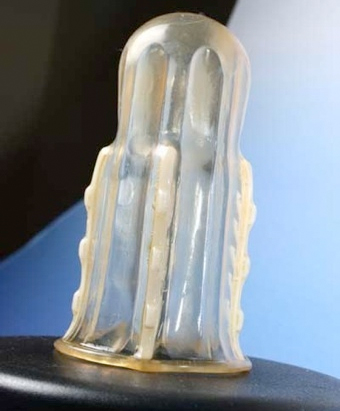
Dr. Ehlers eventually created a product she calls Rape-aXe. It’s a condom women wear that is inserted like a tampon. It has jagged teeth-like hooks that attach themselves to a penis and won’t come off without a doctor. “It hurts, he cannot pee and walk when it’s on,” Ehlers explained. “If he tries to remove it, it will clasp even tighter… however, it doesn’t break the skin, and there’s no danger of fluid exposure.”
She says that South African women are already resorting to extreme measures, like hiding razor blades in sponges in their vaginas.
Those extremes are caused by living in the “Rape Capital of the World” where a 17-year-old’s gang-rape recently went viral and where 40% of women say their first sexual experience was forced. A University of South Africa study estimated that 2,777 assaults are committed per day, totaling one million a year. The South African Law Commission believes the rate is even higher at 1.69 million per year. Sixty-five percent of victims are gang-raped. Forty percent are children.
Given what the condom is responding to, some criticisms sound odd, as when likening the device to “barbarous” and “medieval” torture. Dr. Ehlers admits, “Yes, my device may be medieval, but it’s for a medieval deed that has been around for decades.” More like millennia.
On the more practical side, others worry that it would only work if the rapist didn’t know it was there, didn’t remove it, didn’t resort to oral or anal rape, and didn’t simply begin raping younger girls.
And so the gadget would likely only work with a large-scale buy-in that was not publicized so that it could be used to identify rapists (who must go to a doctor) to get them off the streets.
So far Rape-aXe has not had any widespread distribution that would indicate its potential for rape-prevention.
The biggest problem is that the condom neglects the core issue: men feeling disempowered and using rape to regain a sense of power, while also venting their rage on women.
Popular Posts on BroadBlogs
Rape Epidemic in South Africa. Why?
Mind of a Rapist: Trying to Bridge a Gap between a Small Self and a Big Man
One Man Says Real Men Don’t Beat, Rape Women
Share this:

Ex-Hooker’s Letter to her Younger Self
 Last week I wrote about Stella Marr who had been kidnapped and forced into prostitution, but who eventually escaped. Below is a letter she wrote to her younger, enslaved self. With details changed it is good advice for anyone, especially those who have lived through trauma.
Words of wisdom from a survivor:
By Stella Marr @ Secret Life of a Manhattan Call Girl
Dear twenty-year old Stella,
Work hard on learning to ask for help. It’s the only way you’ll ever break free. No one ever does anything alone. You don’t have to.
You’ll learn how to make the men happy. The happier they are the nicer they treat you. You’ll get very good at being a hooker. But when the Johns say “baby you were born for this” that doesn’t mean it’s true.
Now when most men come near, you feel a stabbing at your eyes, your throat, and your gut that you know isn’t real. You don’t want to admit it but you’re terrified. You start, you tremble. Your hands shake. Think about it, you’re being stabbed a lot these days. This is a quite reasonable reaction to being used by man after man, day after day, in this prison of a brothel. It doesn’t mean you are so miserably flawed that you can’t do anything but be a hooker.
Being a hooker doesn’t make you subhuman. It’s not OK for your (white) pimps to smack you and tell you they’ll kill you.
You have to work up the nerve to pay a cashier for a soda. You’re too scared to ask that guy behind the deli counter to make you a sandwich. This isn’t weakness, it’s biology. Trauma changes your brain. Your hippocampus, where you form narrative memory in the brain, shrinks. This is a symptom of PTSD – a neurophysiologic response to repetitive trauma – not evidence that you deserve to be in prostitution.
In the middle of the winter in the middle of the night when that guy in the Doubletree suite invites you to sit while he pours you a seltzer trust your gut and back out of there before the five guys you can’t see who are waiting in the bedroom have a chance to get between you and the door.
Being vulnerable means you’re alive. There’s no shame in it. It doesn’t mean you’re a terrible person. You don’t have to apologize for doing what you must to survive.
When Samantha stops working for your pimp, Johnny, find her and make her get out of the city. Otherwise two weeks later Nicole, the madam who works with Johnny, will show you Samantha’s diamond initial ring and tell you Johnny murdered her. Though you’ll always hope she was lying, you doubt it.
You’ve lost all sense of the linear — time disappeared and you felt it leave. Now you’re living in the immediate and eternity. It’s scary and bewildering, but you need this — you need each moment to stretch infinitely so that you can be acutely aware of each man’s tiny movements and shifts in expression, which can reveal a threat before it happens. This hyperawareness will save your life. One day you’ll see this being untethered from time as a kind of grace.
When that shiny classical pianist you meet at Au Bon Pain says he wants to know everything about you don’t believe him.
A lot of what’s happening doesn’t make sense now but it will later. That habit you have of writing poems in your mind to the beloved you haven’t met yet as you’re riding in cabs to calls? There’s something to it.
Your ability to perceive beauty is part of your resilience and survival. When a man is on top of you watch the wind-swirled leaves out his window. Seize the gusty joy you feel as you run three blocks to a bodega to buy condoms between calls at 3 AM. When you think for a minute you see that friend, who’s death you never got over, standing in the brassy light under a weeping linden, be grateful. All this has a purpose.
Being a hooker can seem to mean you’ve lost everything you hoped to be, but that’s not true. You’ve splintered into a million pieces, but you’re still you. You’re alive. It’s in the spaces between those pieces where you learn to feel how other people are feeling. It hurts so much you’re sure it’ll kill you, but it won’t. Later when you’re out of the life it’ll be so easy to be happy. The mundane will buoy you.
When your madam sends you to the Parker Meridien at 3 AM and you meet a British professor who says he wants to help you, believe him. He will set you up in a beautiful condominium across from Lincoln Center that he deeds in your name. Of course you’ll have everything to do with this — you are so “good” at being a hooker, so “good” at fucking that you can make a guy want to buy you a condo. Shame is a hollow stone in the throat.
During the two years that this voracious man ‘keeps’ you as his private prostitute the condo will come to feel like a platinum trap. But it’s still your chance to get out and heal. Take it.
After you’ve sold the condominium and are living in a graduate dorm at Columbia University, a man with eyes like blue shattered glass will sit beside you in the cafeteria. When he begins to speak you know he’s the unmet beloved you’ve been writing poems to all these years. You’ll try to run away, but he won’t let you. Fourteen years later the two of you will be hiking through pink granite outcroppings with your Labrador retriever. You’ll feel like the freest woman in the world.
One afternoon when you’re twenty-one you’ll be at the Metropolitan Museum of Art with your best friend Gabriel, who’s a hustler, a male prostitute. When he says you ‘remind him of his death’ don’t lash back. Even though he told you the doctor said he didn’t have that rare new virus named AIDS, it would behoove you to realize he’s still coughing.
Stop thinking about your own hurt. Don’t lash back with that vicious phrase your mother’s said to you so many times – “I hope you die a slow death.” Don’t tell Gabriel you never want to see him again and storm out of the sculpture gallery. Or it will be the last time you see him. Gabriel will die of AIDS five months later. When he said you reminded him of ‘his own death’ he was trying to tell you he was dying. You’ll regret what you said for the rest of your life. But even more you’ll regret running away from his friendship.
Say forgive me.
Say I love you.
Stay connected.
Love,
Stella
This was originally posted By Stella Marr @ Secret Life of a Manhattan Call Girl and is reposted here by permission.
Popular Posts on BroadBlogs
Becoming A Sex Worker – The Brutal Side
In-laws Rip Off Girl’s Fingernails, But Who Cares?
Learning to Say No in 520 Languages
Share this:

Sexual Desire & Sexism

Karen Zack, Man As Object
We are bombarded with “sexy women” but not “sexy men”
Whether on billboards, TV ads, Dancing With The Stars, Olympic ice skating, or professional football, women are half-dressed and men are fully-clothed. The camera hones in on women’s breasts and butts and ignores men. Sure, we are seeing more hot men these days thanks to Matthew McConaughey and Ryan Gosling. But the last time I checked out People’s sexiest men I saw lots of faces and loose T-shirts and few bods. Even the clothing that women and men walk around in show off women’s bodies and, more often, hide men’s.
As Amanda Marcotte at RH Reality Check points out,
Straight women don’t get nearly the provocation on a daily basis — is it any wonder that 60% of the men who answered the Consumer Reports survey (on sex) thought about sex once a day, but only 19% of women?
No part of the male is fetished
No part of the male body is fetishized, either. Men stare at breasts and butts, but what are we supposed to look at? These fetishes may seem natural for men but they are actually a cultural construction. How are they created? In part, see the section above. Or see my piece called, “Men Aren’t Hard Wired To Find Breasts Attractive.” Ever wonder why tribal men don’t get all excited about tribal women’s breasts and butts?
Porn may lead men to think we get aroused by penises, but when Anthony Weiner sexted a photo of his package, Tracy Clark-Flory over at Salon asked women if being sexed a man’s penis would “do it” for them. Most expressed repulsion. Or as one put it, “If by ‘do it (for me)’ you mean ‘send me to the toilet retching,’ then yes, it does.”
Sexy men can seem “gay”
Women are not taught to consume the male body with their eyes, as men consume theirs. To make matters worse, pics of sexy men can seem “gay.” Since sexiness is almost always meant for the male gaze, on an unconscious level women can come to see “sexy” men – perhaps posed in Speedos — through male eyes, too. Bummer!
Women don’t feel sexy
Meanwhile, we might not feel too sexy, ourselves. Surrounded by the “perfect” images our partners consume, we might not feel too hot by comparison to ladies who live on lettuce, surgery and photoshop. Do we really want to reveal our bodies and be negatively judged? The opposite of an aphrodisiac.
Good girls shouldn’t
The double standard is loosening up but sexual women may still be called: slut, whore, ho’, tramp, skank, nympho, hussy, tart, loose, trollop… the list goes on. Men possess cocky cocks while women’s privates are just “down there.” College men returning home Sunday morning may take the Walk of Fame while the women they’ve just had sex with take the Walk of Shame. And so women’s sexuality becomes more repressed.
The problem of housework
Sometimes the problem is more mundane. Women do about twice as much housework as men. After a full day at work women are more likely than men to cook dinner, clean up, and get kids ready for bed. Then they’re too tired for sex and resent their husbands. Not a way to get in the mood.
Or, maybe mom works in the home where her “invisible” work gets noticed only when it’s undone. A lack of appreciation won’t get anyone in the mood for love making.
Sexual violence
Sexual violence also takes a toll. Rape is most prevalent when women are devalued. And women who are raped often lose interest in sex. One woman I know of went numb and emotionally left her body when she had sex because a past rape had made sex seem terrifying and repugnant to her. “Desperate Housewife,” Teri Hatcher, was molested by an uncle who told her that one day she would like sex. That only made her close up more because she didn’t want to prove her disgusting uncle right.
But all women also face the prospect of getting screwed, rammed, nailed, cut, boned, banged, smacked, beaten, and f’d — in common street parlance — when they get intimate. Who wants that?
How to raise a woman’s desire
If you want women to desire sex then: help with housework, show appreciation, stop shaming women for being sexual, or for not fitting ridiculous “ideals,” desire her and let your lady know she’s beautiful.
Popular Posts on BroadBlogs
Man as Object: Reversing the Gaze
Men, Women & Internet Porn
Men, Women React to Male/Female Nudity
Share this:

Child Rape: Not As Bad As Contraception
Raping children is better than using contraception? Raping children is better than ordaining women priests? Raping children is better than using fertility treatments? Raping children is better than aborting a child to save a woman’s life? And priests raping boys is better than homosexuality and gay marriage?
It appears the Vatican thinks so, raising a furor over everything but child rape. That’s right, a nun was excommunicated for saving a woman’s life by allowing an abortion while pedophile priests were simply transferred to new parishes to abuse new children or were, at best, defrocked. Pretty sad when Vatican officials, including the future Pope Benedict, failed to defrock a priest who had molested a couple hundred deaf boys.
When the crimes of pedophile priests are investigated a nation may be rebuked for stifling church autonomy, as happened in Belgium. Or church leaders become defensive, as when Cardinal Timothy Dolan begrudged a global shaming, since only a few priests were involved in the scandal.
Most recently the Vatican admonished nuns for spending too much time caring for the poor, supporting health care reform, confronting bishops and questioning teachings on male-only priesthood — and not spending enough time fighting abortion and homosexuality.
Interesting that, as the Times’ Maureen Dowd put it, “Church leadership never recoiled in horror from pedophilia, yet it recoils in horror from outspoken nuns.”
Most anyone would find the moral priorities outrageous. Nonsensical even.
Yet one thing makes sense of it all (logically, not morally) and that is patriarchy: rule of the fathers, or here, church fathers.
In its earliest manifestation patriarchy meant the rule of old men over young men, boys, girls and women. This is the world that now stands behind Vatican walls. Old men do as they please and young boys take what they get. Old men who know little of the lives and hearts of women allow them no power over parishes, their bodies, or even their own lives should they become threatened by pregnancy. Anything that imperils the patriarchy must be battled. Anything that sustains the patriarchy is just fine.
Old men control all. And in a manner that is not very Christ-like.
Popular Posts on BroadBlogs
Why Do Women Fight Against Their Own Interests?
Why Do The “Isms” That Affect Men Seem More Important?
Should Organized Religion Have More Rights Than Women?
Share this:

Becoming A Sex Worker – The Brutal Side
 Some people get into sex work because it just seems to make sense to them, as I described last week. But more often the entry is brutal, whether poverty, drug addiction, or kidnapping force the involvement.
One prostitute writing “A Personal Refutation of the Concept of Choice” says:
Choice does not always present as balanced; it does not always offer a different-but-equal alternative. When I think of my choices they were simply these: have men on and inside you, or continue to suffer homelessness and hunger. Take your pick. Make your ‘choice.’
Another former prostitute says her grandmother unsuccessfully tried to keep her manic-depressive son from marrying his schizophrenic girlfriend. “What,” she wanted to know, “would happen to any children born into that union?”
“She was right to worry,” her granddaughter says. “It left us in state care, one after the other. And as a young teenager it left me homeless, hungry, and prostituted, in that order.”
Sometimes prostitution arises from poor choices, as one drug addict describes, “My addiction is so bad I sell my body to pay for it. I never thought I would end up like this… I wanna get clean.”
Others are promised a better life through employment, education, or marriage. Instead, they are kidnapped and thrust into international sex slavery. Nick Kristof traveled to India and found that every prostitute he encountered had been forced into it by a trafficker, her parents, or her husband. Having studied and observed trafficking over the years, Kristof says his sense is that prostitution is deeply enmeshed in coercion.
In the U.S. girls often end up walking the streets by way of pimps who “befriend” them and then enslave them. You may have heard of Sara Kruzan. Her mother was drug addicted and abusive, and she didn’t know her father. After years in foster care she became depressed and by age nine she began attempting suicide.
At age eleven, 30-year-old G.G. became a father figure, showing her affection, taking her roller skating or to the movies, and telling her she was special — “so special” that she should never give away sex for free. Pimps like G.G. know that girls like Sarah are emotionally needy, and offer a sense of love from a “father” or a “husband” figure. And, like most pimps, he added terror for good measure. He raped her repeatedly and forced her to walk the streets everyday from six in the evening until six in the morning.
Sara eventually killed her pimp. She got a life sentence.
Or, there is Stella Marr who has fortunately escaped prostitution. She grew up in a troubled home. Her mother beat her all the time for things like trying to steal her friends (when Stella was 4 years old!) or for “making noise that woke her up when I came home from school.” Sometimes abuse took a sexual turn. And she was confined to her room much of the time.
Stella eventually went to Columbia University and got good grades. But the better she did in school, the more violent her mother grew. Finally, her mom threw her out of the house.
Broke and desperate, Stella says her grief created a micro-climate around her that drew pimps. One tricked her into sexual slavery:
I met Johnny (who said) he had a friend who needed a roommate, and that her family owned a restaurant and could give me a job. When we got to the apartment Johnny and two other guys who were waiting there jumped me, beat me up and raped me. They locked me in a tiny room without a window. They broke me like you’d break a horse. It was systematic. They’d rape me, beat me up, and then they’d be ‘nice,’ and give me a tuna sandwich. Again and again and again. It was torture. They dislocated my shoulder, and gave me codeine. I didn’t know if it was day or night. I didn’t think there was anyone I could turn to.
Some wonder why she didn’t run away. But trauma affects the brain, and Stella became brainwashed into believing escape wasn’t possible. And she saw society as complicit in her slavery. Early on, her pimp took her to a party with fourteen policemen because he wanted her to know he had cops in his pocket. Stella felt there was nowhere she could turn.
Unfortunately, despite all of the brutality surrounding prostitution, we too often blame the victims instead of helping them. In future posts I’ll discuss what might be done.
Popular Posts on BroadBlogs
Becoming a Sex Worker – The Benign Side
In-laws Rip Off Girl’s Fingernails, But Who Cares
Anything Good About Being A Sex Object?
Share this:

That’s Bitchin, But Life’s A Bitch
 If you say, “That’s bitchin!” it’s good. But if she’s bitchin, she’s annoying. If “Life’s a bitch,” things are difficult. If “She’s a bitch!” she’s difficult, she won’t give ground. (He thinks that’s bad.) If “I’m a bitch!” I stand my ground. (I think that’s baaad – but in a good way!) But if “She’s my bitch” or “He’s my bitch,” that bitch is submissive.
So which is it? Does a bitch stand her ground? Or does she submit? I guess the words “a” vs “my” make all the difference. Taking someone who stands her ground and making her succumb is, apparently, a huge triumph.
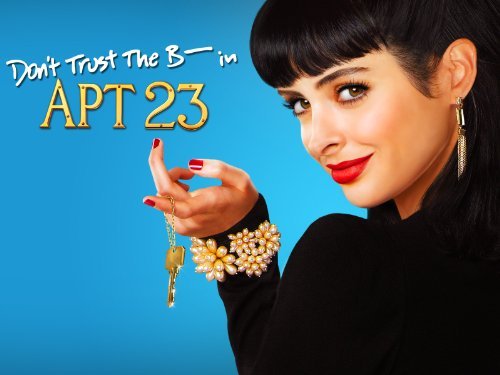
The contradictions continue. Two sitcoms, “Don’t trust the B— in Apt. 23” and “GCB” were first pitched as “Don’t Trust the Bitch in Apt. 23” and “Good Christian Bitches.” In fact, “Good Christian Bitches” was transformed to “Good Christian Belles” before finally becoming the non-descript “GCB.” So network execs shun the b-word in series titles even as actors spew those same words on air.
The networks like the hip, cool titillation the word suggests.
Titillation, as in: “bitch,” defined as a woman who will have sex with anyone – “except me.” (And earlier, defined as a female breeding dog.) Bitch being quite different from a stud (a male breeding horse).
Bitch as hip and cool? It’s cool to demean women, as in “the Bitch in Apt. 23”? Or, it’s cool that women celebrate their independence, as in “GCB”?
Women reclaim this word that has been used to debase and dominate them. But others still use it to insult and control – and then say, “Well, you women use the word yourselves.” (Blacks use the n-word themselves, yet few non-blacks think that grants them the same permission.)
This shape shifter may reflect our society’s contradictory views of women. On the one hand women are strong and amazing; on the other, women are belittled and demeaned.
Popular Posts on BroadBlogs
“Cock” vs “Down There”
Gender-Swapping Grammar Lessons
“Bitches and Dudes,” a.k.a. “Women and Men” on College Campuses
Share this:

The Plump Beauty Ideal: Exotic Dancers in 1890
Once upon a time “plump” was the beauty ideal.
Check out this post by Lisa Wade @ Sociological Images
I recently had the pleasure of reading Peter Stearns’ Fat History: Bodies and Beauty in the Modern West. The book chronicles the shift in American history from a plump to a thin ideal. The beauty of Stearns’ book is his resistance to reducing the shift in norms to a simple cause. Instead, he traces the changes to conflicts between capitalism and religion, the backlash against women’s equality, industrialization and the devaluation of maternal roles, fashion trends, the professionalization of medicine, our cultural relationship to food, and more.
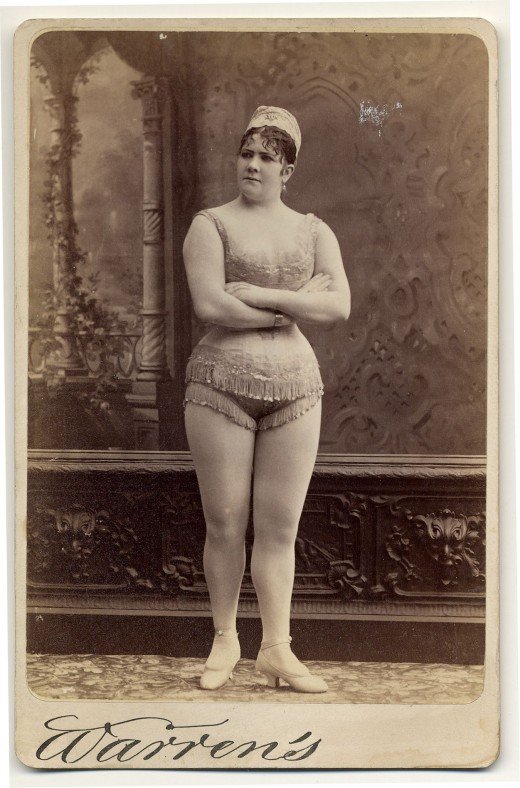
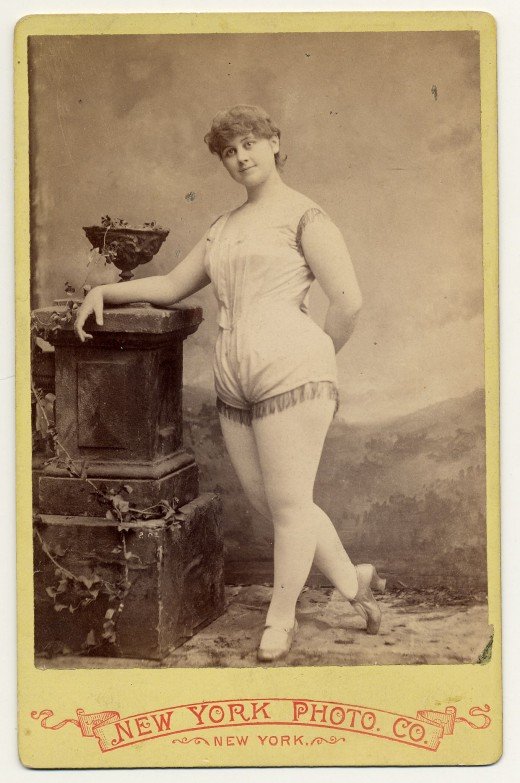
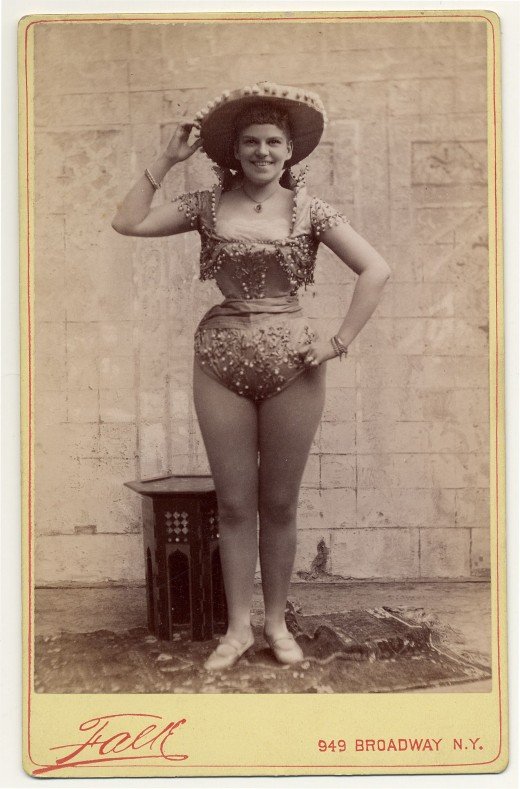
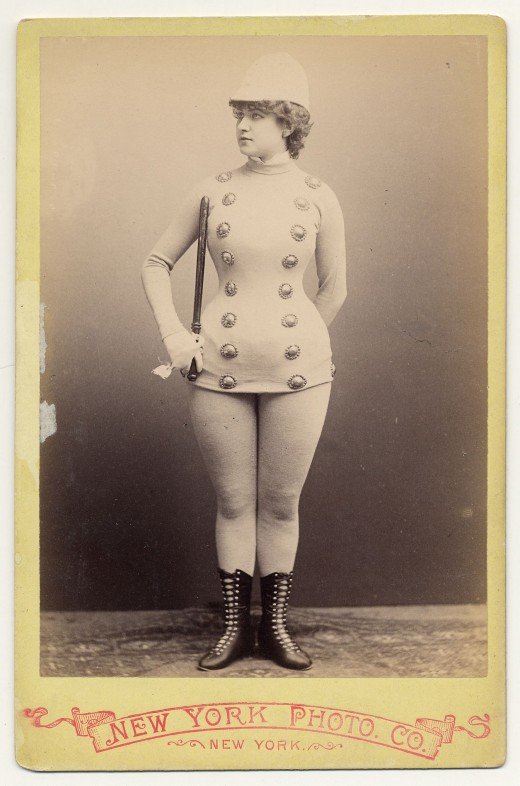
Stearns is quite specific in timing the change, however, pointing to the years between 1890 and 1910. In these 20 years, he writes:
…middle-class America began its ongoing battle aginst body fat. Never previously an item of systemic public concern, dieting or guilt about not dieting became an increasing staple of private life, along with a surprisingly strong current of disgust directed against people labeled obese.
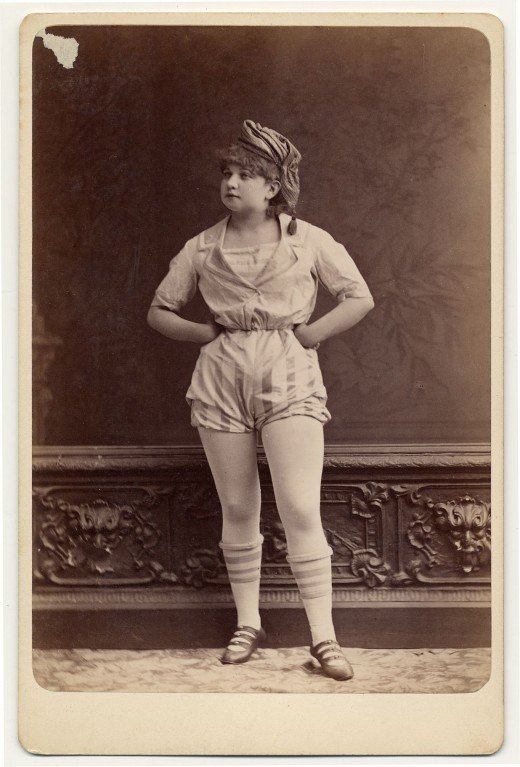
I thought of Stearns’ book when I came across a delightful collection of photographs of exotic dancers taken in 1890, the year he pinpoints as the beginning of the shift to thinness. From a contemporary perspective, they would likely be judged as “too fat,” but their plumpness was exactly what made these dancers so desirable at the time.
This piece was originally posted @ Sociological Images
Popular Posts on BroadBlogs
Beautiful Women’s Hips Are Thinner Than Their Heads?
Men Are Naturally Attracted To Unnatural Women
How to Look Like a Victoria’s Secret Angel
Share this:

Men, Women & Internet Porn
The first time you see Lena Dunham’s character having sex in the new HBO series “Girls,” her back is to her boyfriend, who seems to regard her as an inconveniently loquacious halfway point between partner and prop, and her concern is whether she’s correctly following instructions.
“So I can just stay like this for a little while?” she asks. “Do you need me to move more?”

Those are the opening lines from New York Times columnist, Frank Bruni, writing about the HBO series “Girls” which premiered April 15. I wrote a bit about the interview last week asking, “Is male or female sexuality better?” But Lena and Frank have more to say, and so do I.
Bruni says their sex play seems to be all about what “he” wants “her” to do. Dunham’s real life informs the show, and Dunham suggests that what the proverbial “he” wants is often NOT what “she” wants. Amidst aggressive posturing and “a lot of errant hair pulling” she has thought, “There’s no way any teenage girl taught you and reinforced that behavior.”
The scene, and Dunham’ comments, suggest a depersonalized sexuality with women as objects, sex as sometimes harsh gymnastics and, too often, all about “his” pleasure.
She thinks it’s tied to internet porn, which so many young men are steeped in.
Some women get into pornified sex, too, but usually not all the time, or not on the first few dates. And most seem to want something more, even if porn-sex is a part of the experience.
Meet Valerie, who discovered pornography at age 12 and was very excited by it. Today she sometimes finds it exciting when men pull porn moves on her. But at the same time she says, “It’s icky”:
I don’t just want to become Body A. I want men to feel like they are with me, Valerie, a particular woman with a particular body and my own unique personality. I want them to be in the moment, as opposed to going through some form of learned behavior. I want it to be our own experience as opposed to an imitation of porn.
She talks of Miguel, a musician. She can tell he’s into porn by how he acts:
Lights glaring, gaping at her body parts, manipulating her into positions popular in pornography so he could admire her. He was aggressive, he was confident, he was following a formula. He was cold.
As Valerie saw it, “He thought it was hot, that he was a stud. I felt cheapened. I felt so empty after the experience.”
Dunham can relate, saying that, “People can be so available in a superficial sense that they’re inaccessible in a deeper one.”
One woman wrote about her and her friends’ experiences for GQ and offered tips for the internet-drenched generation. She loves both porn and sex, she says, but warns that not all women are charmed by being called a “dirty whore.” Most women don’t want anal three times in one night – and not from men they barely know.
And why is it, she asks, that orgasming inside someone, “the goal of every dude for zillions of years,” now seems to pale in comparison to “facials”? Noting the irony, “It hardly seems fair to call that sex. It’s more like masturbation with a fellow 3-D person. You finish with your hand, after all, like you’ve done with a million clips.” And please, no facials on the fourth date. “That’s stuff to save for later, when the excitement of someone new has worn into a comfortable live-tweeting-Monk-from-bed kind of cohabitation.”
And maybe when there’s a larger context of relationship, and not just empty sex.
Popular Posts on BroadBlogs
Sex Objects Who Don’t Enjoy Sex
Wanting “X” from Sex, but Doing “Y”
Women Want Emotionally Connected Sex. Why?
Share this:

Beauty Tricks to Remove Your Power

Ashley Judd’s face looked puffy in the promo for her new TV series, Missing. Big deal. She’s aged since I last saw her, and maybe she’s gained a little weight.
And then the furor. Everyone talking about Ashley’s face.
So she responded in the Daily Beast. A few lines:
The Conversation about women’s bodies exists largely outside of us, while it is also directed at us, and used to define and control us. The Conversation about women happens everywhere, publicly and privately. We are described and detailed, our faces and bodies analyzed and picked apart, our worth ascertained and ascribed based on the reduction of personhood to simple physical objectification. Our voices, our personhood, our potential, and our accomplishments are regularly minimized and muted. The assault on our body image, the hypersexualization of girls and women and subsequent degradation of our sexuality as we walk through the decades, and the general incessant objectification is what this conversation allegedly about my face is really about.
Wow.
The lines linger, waiting to be soaked up.
We are described and detailed
our faces and bodies analyzed and picked apart
our worth ascertained and ascribed based on
the reduction of personhood to simple physical objectification
The body detailed and critiqued, diminished and demeaned. An emotional trashing. Cut up, dissected. It feels like a killing. No wonder we are body-obsessed, declare nourishment the enemy and become terrified of aging.
With our bodies spotlighted the rest of us vanishes.
Our voices, our personhood, our potential
and our accomplishments are regularly minimized and muted
(as)
The Conversation about women’s bodies exists largely outside of us
We become nothing but our “defective” parts.
And we can say nothing as the conversation bubbles everywhere, outside ourselves, removing our power to name and control.
But Judd doesn’t leave us, or herself, hanging in hopelessness. What is deemed good and bad are equally fanciful interpretations, she says, and so she has chosen to abstain from all outside judgments about herself and her body.
We are social animals. Our identities are keenly influenced by how others see us, and more so when those visions act in concert. When many see us a certain way, the agreement brings objectivity, while our solitary thoughts seem merely subjective.
But the declarations are not absolute. Especially when we discern shallowness and falsity. We may choose otherwise:
I do not want to give my power, my self-esteem
or my autonomy
to any person, place, or thing outside myself
The only thing that matters is how I feel about myself
my personal integrity
and my relationship with my Creator
“It is ultimately about conversations women will either choose to have or choose not to have,” says NPR’s Linda Holmes.
Let’s have some new conversations.
Popular Posts on BroadBlogs
You Are “Less Than”?
Self-Esteem Falls with Rise in Power? Blame Beauty Ideals
Anything Good About Being A Sex Object?
Share this:

Dominance, Submission, Meaning & VOICE

Sally Deskins, Red Belly
Feminism has long sought to gain equality by obliterating dominance and submission. Yet some find the ends of this dichotomy alluring… erotic, and seek to drink in both sides. So comes the quandary: how to sustain this sensuality yet stay true to a feminist commitment? That’s a question that artist, Trilety Wade asks in the new exhibit: Les Femmes Folles: VOICE.
Wade knows that submission and dominance can vacillate and be exchanged. She explores how balance might be gained in the space between while reveling in both sides. As she describes it:
I usually find myself on the cusp of submitting. I almost give in to my desires. I almost give in to another person. I never wholly submit, thus I am also dominant. That push and pull of submission and dominance leaves me in a static state of anticipation, which is reflected in the distance between the figures in my paintings.
My paintings make me question why there are some people and desires I want to submit to, and why I never allow myself the freedom to either be submissive or dominant; instead I freeze.
Moving to other matters involving passion, power, surrender and control, Sally Deskins’ “Red Belly” signifies motherhood, the scarlet color evoking fiery emotion, passion and sacrifice — which may be ennobling blood-life or deadening blood-loss. The energy of this red belly calls to mind more life than loss, though the two may be intertwined.
A passionate theme continues in the seductive vibes of breasts and loins:
The curly-prints from my pubic hair give the image an erotic flair. The white stamped nipples provide a ghostly aura, and the various drips and red line at the bottom sheds light on the beautiful indeterminism that is visual art and sometimes life as well.
Inspired by Yves Klein’s “Anthropometries,” Deskins’ self-portraits explore the relationship of mind and body. She paints her body with as if it were a canvas and then physically straps herself to paper or canvas to form an imprint, painting her psyche on what appear to be a series of Rorschach Inkblot Tests. Through these self-portraits Deskins searches for her voice.
Ella Weber explores how identity evolves over a lifetime. In her “Boy’s n’ toys” series she places a person next to a person-sized inanimate object from pop culture. The drawings seem to be all about innocence, nostalgia and humor. But look closely and see something more subversive.
 In “but is she worth it?” Weber places Mrs. Butterworth’s on a bed of sticky syrup. Next to her a woman holds a plate in each hand, resembling scales. Perhaps she’s weighing her options, to serve or not? A stack of hotcakes lie between the two figures.
What is the appeal of nostalgia… falling back to a place of greater inequity when women and Blacks were all about serving others? Why does the past still loom so large? And why is it so sticky?
Inanimate object and human being stand side by side. What does it mean to be human – and female? How does identity grow? And might those hotcakes be just fine levitating in thin air? Weber voices the questions.
Wanda Ewing knits social commentary into latch-hook yarn rugs that explore how race factors into society’s notions of feminine beauty and sexuality. The interlace of gender and race adds further texture. In her hands a surprising juxtaposition of risqué images of women’s bodies attaches to cozy yarn rugs. As if Madonna and whore are woven together?
 Megan Loudon Sanders delves into identities that lie hidden yet seek expression. Historically, women were asked to conform to rigid standards that left their potential concealed from them. By mixing stylistically dissimilar elements, Sanders depicts a woman who at first glance could pass for any suburbanite. Yet she subversively announces on her body, This is who I am:
A young woman in a blue polka-dot dress brings her teacup up to sip, a simpering smile to the viewer. Intricate and colorful tattoos line her hands and arms, challenging the pristine environment.
While identities can lie hidden, so can the emotional significance of everyday life. Trudie Teijink uses a digital camera to document the remnants of family suppers, highlighting the colors and shapes of food and the utensils used to prepare it. She reveals how art emerges in the mish-mash that falls together. Her work makes us ponder how sentiments and human connections arise through the sights, smells and tastes of food, and of preparing and imbibing together. But sometimes, she says, the mundane still seems futile.
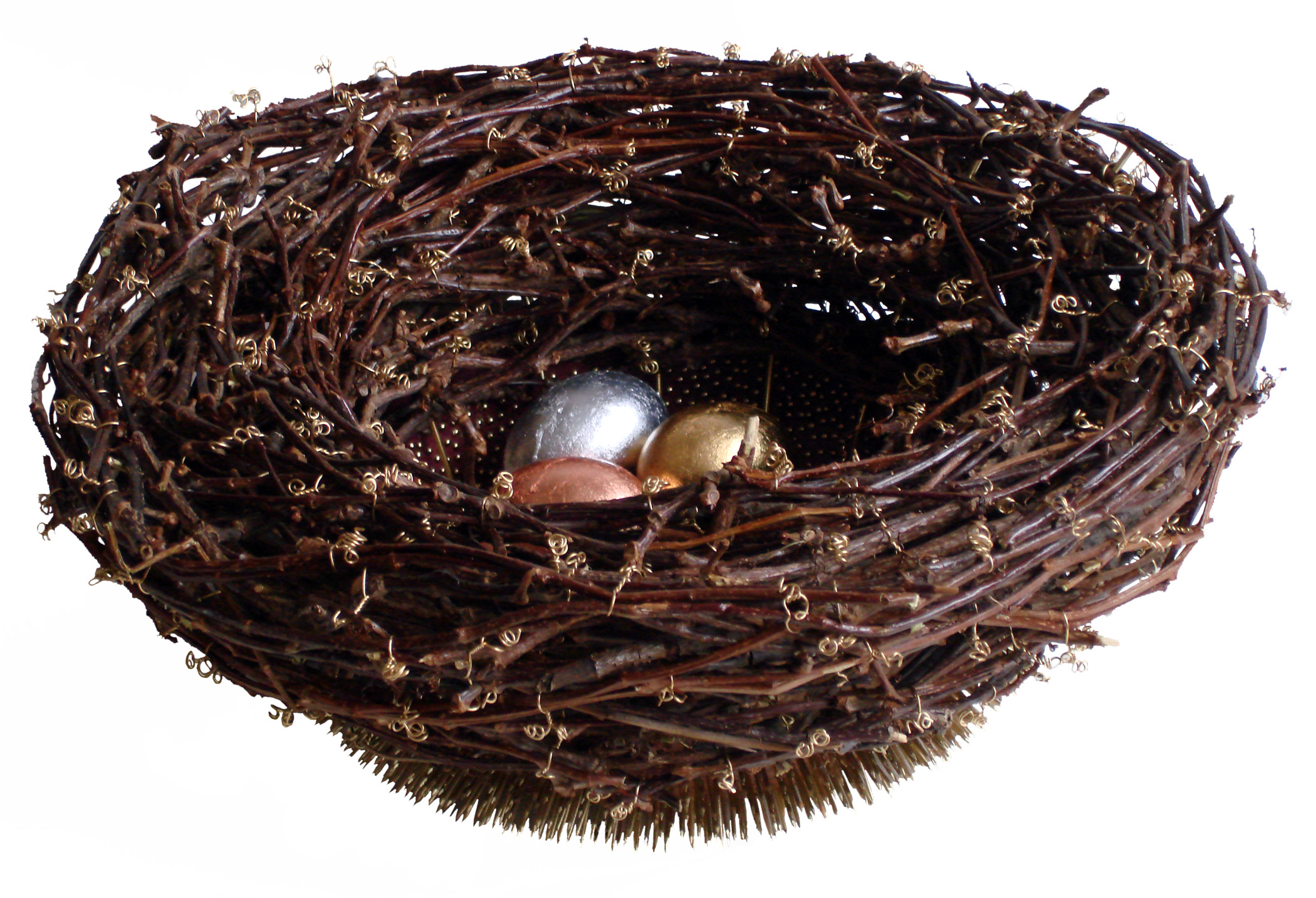 While domesticity seems a safe haven, home can be dangerous. Marcia Joffe-Bouska uses barbed nests to pose the question, “How might things appear safe when they are not?”
Joffe-Bouska also uses egg and nest imagery to express the worth of each individual and to explore how we might create our own safe havens. Strong metal nests signify strength, fabrications representing DNA indicate smarts, and lacy trimmings suggest patience. Each egg/nest combo represents a reason, a justification, or a reminder of why we have value. And each titled piece opens with this mantra: “I am ….”
Other themes look at the voices in our heads, how so much of the work women do everyday lies invisible or seemingly insignificant even to those who do it, and performance art invites attendees to write out notes to be re-interpreted by performers, with response. And more.
Women are speaking up, challenging status quo power politics and giving voice to lives and identities that too often remain shrouded and undervalued, all the while promoting positive communication in the VOICE exhibit.
Together, this art calls for deeper thought, broader expansion, and raised voices.
Co-curated by Sally Deskins and Megan Loudon Sanders, VOICE artists include Marcia Joffe-Bouska, Sally Deskins, Wanda Ewing, Kristin Lubbert, Jewel Noll, Melanie Pruitt, Amy Quinn, Megan Loudon Sanders, Trudie Teijink, Trilety Wade and Ella Weber.
Les Femmes Folles Presents: VOICE, a curated exhibition
The New BLK, 1213 Jones St.
Opening reception: Friday, April 13, 7-10p.m. Exhibition runs thru April 30. Preview art-talk at Indian Oven: April 11, 7p.m.
Art Talk at The New BLK, April 18, 7p.m.
LES FEMMES FOLLES: VOICE WANTS YOUR VOICE
Call for art
Deadline: April 6, 5pm deliver to The New BLK, 1213 Jones St.
Open to: artists who identify themselves as women
Les Femmes Folles: Voice is a curated exhibit featuring the artistic perspective of 11 Midwestern artists who are women at The New BLK Gallery opening April 13, 2012. The artists would like to also showcase the VOICES of other artists who are women with a collaborative piece. Artists are invited to create a mouth in any medium, in 2-dimensional form, no larger than 18×24” that can be hung on a wall. Deliver to The New BLK by April 6 to have it included in the show opening April 13 with artist contact information. Details sallydeskins@yahoo.com or mloundons@unmc.eduor shane@thenewblk.com
More information on the exhibit at thenewblk.com or facebook.com/newblk

 BroadBlogs