Blog Archives
Snow White’s Dark Forest of the Psyche
 Snow White’s popping up all over with two movies, a popular TV series and another on the way. A graphic novel centered on the Snow White fable is out. Even indie rockers and Snoop Dogg are flocking to Snow.
What’s up?
As one of our earliest childhood memories, Snow White has a certain primal appeal. But the lack of plot leaves room to explore the dark forest of the psyche, that shadowy, terror-filled place of dreams that Snow White, and all of us, must make our way through.
As these regions are reflected in Snow White, matters of beauty, power and love loom large. How have they evolved since Disney’s Depression-Era version?
Beauty is crucial both now and then. Though then it was the whole story. Now there’s more.
In Once Upon a Time Queen Regina is less concerned with being fairist than seeking to avenge the lost love that Snow unwittingly took from her.
In Snow White and the Huntsman Snow’s death would bring Queen Ravenna immortality. The Queen is also wounded and angered by a patriarchy that commits sexual crimes without penalty. She thinks herself a righteous avenger.
But beauty does weigh heavily. For much of history this has been a rare source of female power, a lesson Ravenna learned as a little girl. But the pursuit of beauty destroys her.
Which provokes questions: What will we do to gain allure? And might we destroy ourselves chasing beauty?
Certainly, the pursuit of beauty messes with our health as some live on diet coke and cigarettes, becoming malnourished, anorexic or bulimic, which can end in death. Implants too often deaden sensual nerve endings. Some die on the plastic surgeon’s table.
When beauty feels evasive we can get depressed and down on ourselves, a spiritual dying.
Queen Ravenna devours raven hearts to gain eternal youth. An LA Times reviewer suggests this is frighteningly reflective of our times.
Those bloody little raven hearts she seems to be munching would sell like hotcakes if they had half of the rejuvenating properties we witness on screen.
The evil Queen has been deemed a female Darth Vader who loses her humanity, capturing beautiful women and seeking to consume Snow White’s heart so she can remain “fairest of all.”
In our envy, women become alienated from each other. We demean and slut-shame those whose beauty seems to threaten our own, not seeing that the shaming dampens our sexuality. We scorn others’ flaws even as the distain highlights our own blemishes.
No wonder Ravenna, angry at male dominance, directs her wrath at other women. Too often we do so ourselves.
 Or, in one village women disfigured themselves to avoid Ravenna’s evil. How often do women diminish themselves to appease power?
But we find women becoming empowered, too. Disney’s Snow White needs to be rescued. Today’s Snow kicks butt. Sometimes she’s saved. But she saves too. She’s strong, she battles, she defeats Ravenna, ending her reign of terror.
And then there is love. Throughout the decades love remains the most powerful magic. “Love conquers all” is both trite and true. Trite, because we hear it all the time. But maybe we hear it so much because it is true. Love overcomes alienation, reconnects us to one another, brings back our humanity, empowers and offers deep fulfillment.
Perhaps we may have a happy ending, after all.
Popular Posts on BroadBlogs
So Nice We Let Others Hurt Us
Harry Potter’s Hermione: Less Brainy, Brave. More Sexy
My Son Wants to Be Snow White for Halloween
Share this:

Believe You’re Beautiful – Others Will, Too
 Back in college I knew a girl who did not seem to fit our cultural notion of “pretty.” But then a really attractive guy began dating her. Holding my own “lookism” bias, I didn’t get it. What did he see in her?
What happened next surprised me more. “Plain Jane” transformed into a beautiful young woman. It’s as though she hadn’t known her beauty, and couldn’t show it to the world until she felt someone else see it in her. And whether he actually did doesn’t matter. She believed that he did, and she was transformed.
This reminded me of a story my mom told me. An “unattractive” friend of hers went to college in the 1950s, when a girl’s worth was tied to how many dates she got. (Back then women didn’t sleep with the men they dated, so the only reputation they got was “popular.”)
Anyway, a frat decided to joke around by getting all the brothers to eagerly ask her out. Once again an ugly duckling transformed into a swan and the men began asking her out for real.
If you want to be beautiful, believe that you are.
Pretty women wonder where my secret lies.
I’m not cute or built to suit a fashion model’s size
But when I start to tell them,
They think I’m telling lies.
I say,
It’s in the reach of my arms
The span of my hips,
The stride of my step,
The curl of my lips.
I’m a woman
Phenomenally.
Phenomenal woman,
That’s me.
– From Maya Angelou’s “Phenomenal Woman”
Popular Posts on BroadBlogs
Beauty Tricks to Remove Your Power
You’re Hotter Than You Think
Share this:

Lose Virginity, Lose Self-Esteem?
 When women lose their virginity, they can lose self-esteem, too, experiencing a small drop. That’s what a recent Penn State study reveals.
Why?
Women college students were surveyed over time. Before sex the women felt increasingly good about their bodies. But after first sex they felt worse. Looks like when they’re in bed women start worrying about whether they look good enough. Masters and Johnson tagged the phenomenon of watching yourself from a third person perspective instead of focusing on sexual sensations or your partner, “spectatoring.” Women are much more prone, being the objectified. Then, feeling they don’t measure up, self-worth drops.
Other usual suspects may also affect self-esteem, including the double standard that provokes worries about labels like slut and whore. Tracy Clark-Flory over at salon.com points to a 1995 study that found “women were significantly more likely to report that their first sexual experience left them feeling less pleasure, satisfaction, and excitement than men, and more sadness, guilt, nervousness, tension, embarrassment, and fear.” Even now women continue to experience that bind.
The double standard strikes again when women feel used, unappreciated, and worried about reputations after short flings or one-night stands.
Meanwhile, a study I recently posted finds 35% of women in strong partnerships feeling sad, anxious, restless, or irritable, after sex. Researchers don’t know why. Commenters, speculating on their own experience with the phenomenon, fingered sexual repression or difficulties with orgasm (which are related to repression) as culprit.
Studies repeatedly find that women are less likely than men to enjoy sex. Other research suggests the problem is not biologically based, or inevitable. Women in sex-positive cultures enjoy sexuality a great deal.
We are going to have to move beyond sexism for women to reclaim their sexuality. That would benefit both women and men.
Popular Posts on BroadBlogs
Are Women Naturally Monogamous?
Are Women Culturally Monogamous?
Surprises in Indiana University Sex Survey
Share this:

Men’s Mags Celebrate Varied Body Types
 From time to time men’s magazines exalt body types that vary from the tall, skinny, buxom shape they typically flaunt. True, the lovely ladies on Maxim’s and FHM’s “Hot 100” lists look pretty much the same, but it’s nice to see a little branching out now and again, so let’s celebrate what we can.
Small Busted Bombshells
While buxom breasts are a highly appreciated part of the female form, Mila Kunis was just named #3 on Maxim’s Hot 100, which considers their picks “the definitive list” of the world’s most beautiful women. Mila also made #9 on FHM where male readers vote for their faves. Also on that list are Kristin Stewart, Paris Hilton, Pippa and her sister Kate Middleton, the Duchess of Cambridge. And Keira Knightly once made FHM’s #1 hottest hottie.
“Un-Skinny” Stunners
Slim figures are also admired, but Kim Kardashian, along with Scarlett Johansson and pear-shaped Jennifer Lopez, made FHM’s top 100 this year. And, Christina Hendricks, “Joan” of Mad Men, was picked as a “Girls We Love” covergirl.
When women see men gaping in appreciation of Joan’s full figure, I’m sure they are better able to appreciate their own curves. And when Mila Kunis asked Justin Timberlake if her breasts were too small in “Friends With Benefits,” I’m sure plenty of women were happy to hear him respond, “They’re breasts, aren’t they?” No problem. And then he falls in love.
Opening up the ideal is good for both women and men, even if there is still far to go.
When a woman sees herself as beautiful her self-esteem rises. It’s also easier to feel sexy. And when she feels sexier her interest in sex rises, too. She isn’t distracted, wondering if she’s attractive enough. And, women tend to get aroused by feeling that their partners see them as alluring. Plus, when men see that the ladies they love resemble Maxim’s Top 100 in some way, they can more easily see the beauty of their partners.
I suspect most women overestimate how harshly men see them and I suspect that most men are more accepting of women’s bodies than women are, themselves. So that’s good news ladies.
Our society’s ideals don’t have to determine our self-esteem, but they usually play a heavy role both in how we see ourselves and in how others see us. And so while we can work to move beyond the superficial, we’d all benefit if our culture expanded its notions of beauty, too.
Popular Posts on BroadBlogs
Lose Virginity, Lose Self-Esteem?
Beauty Tricks to Remove Your Power
Being Sexual vs Looking Sexual
Share this:

Sexual Desire & Sexism

Karen Zack, Man As Object
We are bombarded with “sexy women” but not “sexy men”
Whether on billboards, TV ads, Dancing With The Stars, Olympic ice skating, or professional football, women are half-dressed and men are fully-clothed. The camera hones in on women’s breasts and butts and ignores men. Sure, we are seeing more hot men these days thanks to Matthew McConaughey and Ryan Gosling. But the last time I checked out People’s sexiest men I saw lots of faces and loose T-shirts and few bods. Even the clothing that women and men walk around in show off women’s bodies and, more often, hide men’s.
As Amanda Marcotte at RH Reality Check points out,
Straight women don’t get nearly the provocation on a daily basis — is it any wonder that 60% of the men who answered the Consumer Reports survey (on sex) thought about sex once a day, but only 19% of women?
No part of the male is fetished
No part of the male body is fetishized, either. Men stare at breasts and butts, but what are we supposed to look at? These fetishes may seem natural for men but they are actually a cultural construction. How are they created? In part, see the section above. Or see my piece called, “Men Aren’t Hard Wired To Find Breasts Attractive.” Ever wonder why tribal men don’t get all excited about tribal women’s breasts and butts?
Porn may lead men to think we get aroused by penises, but when Anthony Weiner sexted a photo of his package, Tracy Clark-Flory over at Salon asked women if being sexed a man’s penis would “do it” for them. Most expressed repulsion. Or as one put it, “If by ‘do it (for me)’ you mean ‘send me to the toilet retching,’ then yes, it does.”
Sexy men can seem “gay”
Women are not taught to consume the male body with their eyes, as men consume theirs. To make matters worse, pics of sexy men can seem “gay.” Since sexiness is almost always meant for the male gaze, on an unconscious level women can come to see “sexy” men – perhaps posed in Speedos — through male eyes, too. Bummer!
Women don’t feel sexy
Meanwhile, we might not feel too sexy, ourselves. Surrounded by the “perfect” images our partners consume, we might not feel too hot by comparison to ladies who live on lettuce, surgery and photoshop. Do we really want to reveal our bodies and be negatively judged? The opposite of an aphrodisiac.
Good girls shouldn’t
The double standard is loosening up but sexual women may still be called: slut, whore, ho’, tramp, skank, nympho, hussy, tart, loose, trollop… the list goes on. Men possess cocky cocks while women’s privates are just “down there.” College men returning home Sunday morning may take the Walk of Fame while the women they’ve just had sex with take the Walk of Shame. And so women’s sexuality becomes more repressed.
The problem of housework
Sometimes the problem is more mundane. Women do about twice as much housework as men. After a full day at work women are more likely than men to cook dinner, clean up, and get kids ready for bed. Then they’re too tired for sex and resent their husbands. Not a way to get in the mood.
Or, maybe mom works in the home where her “invisible” work gets noticed only when it’s undone. A lack of appreciation won’t get anyone in the mood for love making.
Sexual violence
Sexual violence also takes a toll. Rape is most prevalent when women are devalued. And women who are raped often lose interest in sex. One woman I know of went numb and emotionally left her body when she had sex because a past rape had made sex seem terrifying and repugnant to her. “Desperate Housewife,” Teri Hatcher, was molested by an uncle who told her that one day she would like sex. That only made her close up more because she didn’t want to prove her disgusting uncle right.
But all women also face the prospect of getting screwed, rammed, nailed, cut, boned, banged, smacked, beaten, and f’d — in common street parlance — when they get intimate. Who wants that?
How to raise a woman’s desire
If you want women to desire sex then: help with housework, show appreciation, stop shaming women for being sexual, or for not fitting ridiculous “ideals,” desire her and let your lady know she’s beautiful.
Popular Posts on BroadBlogs
Man as Object: Reversing the Gaze
Men, Women & Internet Porn
Men, Women React to Male/Female Nudity
Share this:

The Plump Beauty Ideal: Exotic Dancers in 1890
Once upon a time “plump” was the beauty ideal.
Check out this post by Lisa Wade @ Sociological Images
I recently had the pleasure of reading Peter Stearns’ Fat History: Bodies and Beauty in the Modern West. The book chronicles the shift in American history from a plump to a thin ideal. The beauty of Stearns’ book is his resistance to reducing the shift in norms to a simple cause. Instead, he traces the changes to conflicts between capitalism and religion, the backlash against women’s equality, industrialization and the devaluation of maternal roles, fashion trends, the professionalization of medicine, our cultural relationship to food, and more.
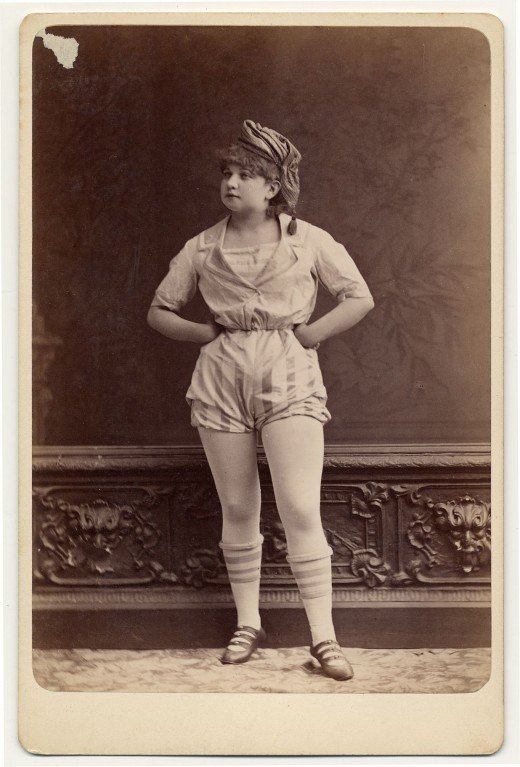
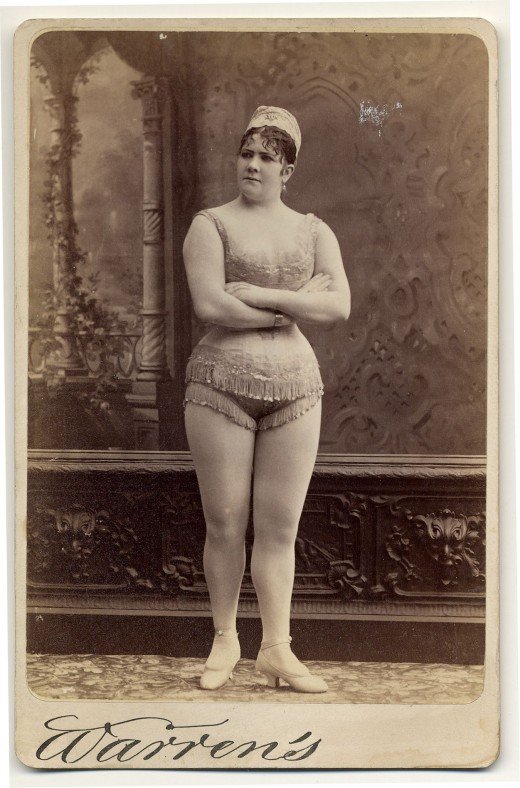
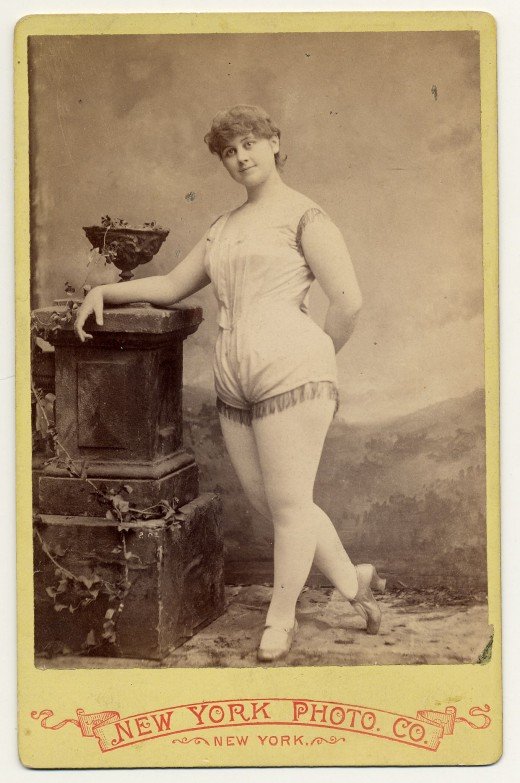
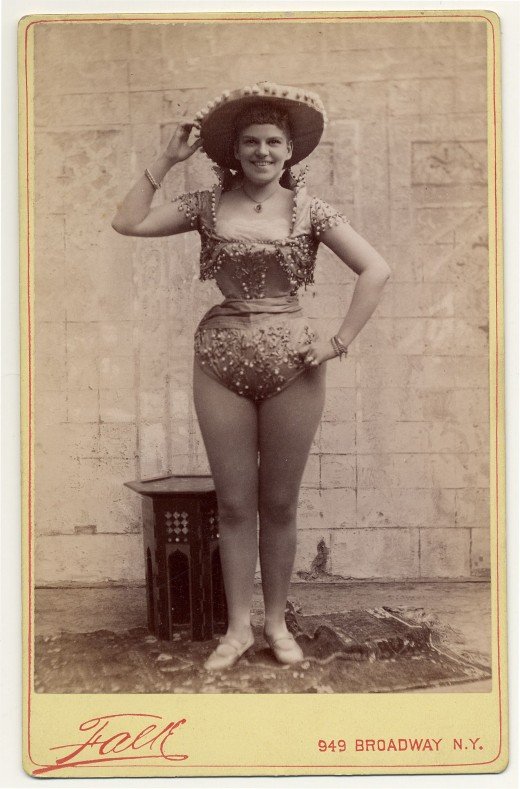
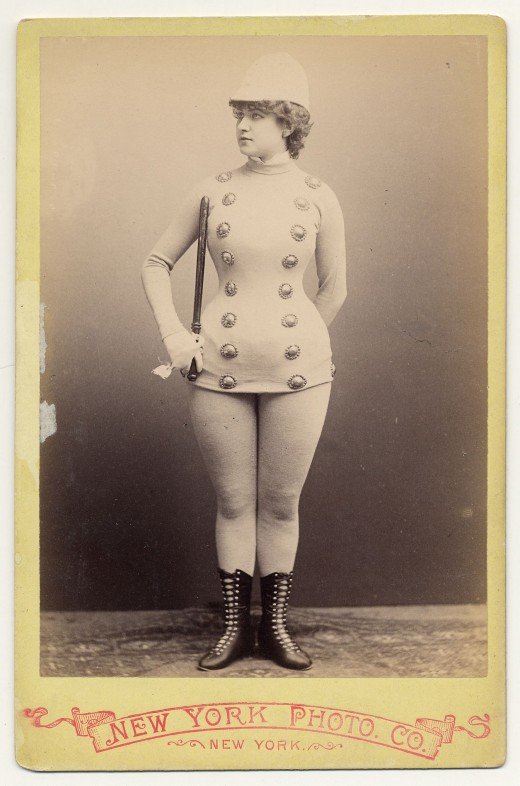
Stearns is quite specific in timing the change, however, pointing to the years between 1890 and 1910. In these 20 years, he writes:
…middle-class America began its ongoing battle aginst body fat. Never previously an item of systemic public concern, dieting or guilt about not dieting became an increasing staple of private life, along with a surprisingly strong current of disgust directed against people labeled obese.
I thought of Stearns’ book when I came across a delightful collection of photographs of exotic dancers taken in 1890, the year he pinpoints as the beginning of the shift to thinness. From a contemporary perspective, they would likely be judged as “too fat,” but their plumpness was exactly what made these dancers so desirable at the time.
This piece was originally posted @ Sociological Images
Popular Posts on BroadBlogs
Beautiful Women’s Hips Are Thinner Than Their Heads?
Men Are Naturally Attracted To Unnatural Women
How to Look Like a Victoria’s Secret Angel
Share this:

Beauty Tricks to Remove Your Power

Ashley Judd’s face looked puffy in the promo for her new TV series, Missing. Big deal. She’s aged since I last saw her, and maybe she’s gained a little weight.
And then the furor. Everyone talking about Ashley’s face.
So she responded in the Daily Beast. A few lines:
The Conversation about women’s bodies exists largely outside of us, while it is also directed at us, and used to define and control us. The Conversation about women happens everywhere, publicly and privately. We are described and detailed, our faces and bodies analyzed and picked apart, our worth ascertained and ascribed based on the reduction of personhood to simple physical objectification. Our voices, our personhood, our potential, and our accomplishments are regularly minimized and muted. The assault on our body image, the hypersexualization of girls and women and subsequent degradation of our sexuality as we walk through the decades, and the general incessant objectification is what this conversation allegedly about my face is really about.
Wow.
The lines linger, waiting to be soaked up.
We are described and detailed
our faces and bodies analyzed and picked apart
our worth ascertained and ascribed based on
the reduction of personhood to simple physical objectification
The body detailed and critiqued, diminished and demeaned. An emotional trashing. Cut up, dissected. It feels like a killing. No wonder we are body-obsessed, declare nourishment the enemy and become terrified of aging.
With our bodies spotlighted the rest of us vanishes.
Our voices, our personhood, our potential
and our accomplishments are regularly minimized and muted
(as)
The Conversation about women’s bodies exists largely outside of us
We become nothing but our “defective” parts.
And we can say nothing as the conversation bubbles everywhere, outside ourselves, removing our power to name and control.
But Judd doesn’t leave us, or herself, hanging in hopelessness. What is deemed good and bad are equally fanciful interpretations, she says, and so she has chosen to abstain from all outside judgments about herself and her body.
We are social animals. Our identities are keenly influenced by how others see us, and more so when those visions act in concert. When many see us a certain way, the agreement brings objectivity, while our solitary thoughts seem merely subjective.
But the declarations are not absolute. Especially when we discern shallowness and falsity. We may choose otherwise:
I do not want to give my power, my self-esteem
or my autonomy
to any person, place, or thing outside myself
The only thing that matters is how I feel about myself
my personal integrity
and my relationship with my Creator
“It is ultimately about conversations women will either choose to have or choose not to have,” says NPR’s Linda Holmes.
Let’s have some new conversations.
Popular Posts on BroadBlogs
You Are “Less Than”?
Self-Esteem Falls with Rise in Power? Blame Beauty Ideals
Anything Good About Being A Sex Object?
Share this:

Women Seeing Women as Sexier than Men
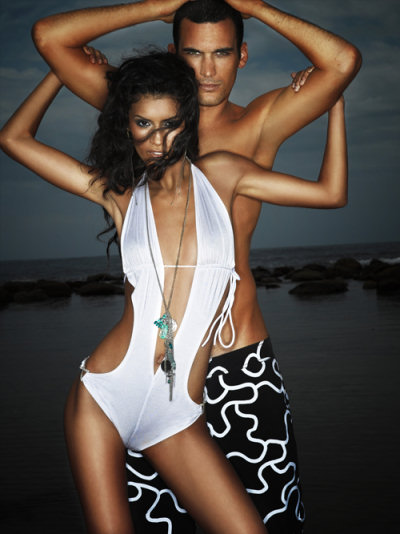 Girls are so inundated with sexualized images of women that they learn to see women as sexier than men. Women come to see women through male eyes?
In the bedroom, this can make women’s sexuality a bit convoluted, which I’ll discuss later.
But consider my students:
“Women’s bodies are just naturally sexier than men’s,” my class tells me when I ask why women are portrayed as sex objects.
In this belief, my students are not alone.
A few years back Lisa Kudrow, of Friends fame, told Jay Leno that female nudity is displayed more in movies because, “Who wants to look at a guy?”
Hugh Hefner thinks women are natural sex objects, “If women weren’t sex objects, there wouldn’t be another generation.”
I’ve talked before about how the breast fetish is not natural, but is learned by both men and women. But how do we all learn that women are sexier than men in ways that go beyond the fetish?
Growing up, girls are bombarded with visions of women as sexy, with skin selectively hidden and revealed, the camera focused on those intriguingly concealed parts.
When I was little my mom took me to the Ice Capades. After noticing that the women were half dressed while the men were fully clothed, I asked why. Mom told me that women just have better legs.
Do they? One warm summer day an adult from my church youth group commented, “It’s too bad the guys have the best legs.” (Thanks!) But what is our cultural ideal? Longer, leaner. Young men typically have longer legs, and they don’t have the extra layer of fat that women do. So most young men’s legs come closer to our ideal. Yet we say women have better legs? When I think about it, I actually think men have pretty nice looking legs. But nothing and no one directs our attention to them.
On Dancing With The Stars, women are half-dressed and men are fully-clothed. During an advertisement, the camera lingers on women’s breasts and legs in a Victoria’s Secret display. Next, a commercial for shoes focuses on women’s behinds: See this Rebook ad for EasyTone. Try to imagine the same focus on men’s butts (which actually are pretty attractive)!
Watch a football game and see big, fully-dressed, aggressive guys playing on the field, while scantily clad cheerleaders show off their stuff from the sidelines. In the Bikini Open men sport golf wear while women dawn bikinis. When does Sports Illustrated most focus on women? In the swimsuit edition.
Through it all, the camera gazes at women’s body parts, but not men’s. Telling us what’s important to notice. What’s sexy and what’s not.
Men’s bodies are rarely sexualized outside infrequent underwear ads.
Historically, men have had control of media, and they’ve portrayed what they see as sexy.
Bombarded with these images, girls come to see women as sexier than men. As I’ve said before, when I tell my class that I find a Playboy pinup sexier than a Playgirl pinup, women’s heads nod in agreement.
Meanwhile, when women answer surveys about what they find sexy they say “men.” But when they are wired up, blood flow to the vagina is stronger when viewing an image of a nude woman than a nude man – conscious responses and bodily responses not agreeing.
Oddly, and yet logically, women come to see women through male eyes.
So women come to see themselves as the sexy half of the species. Being sexy has some advantages. It can just be fun, it’s easier to attract mates (consider the success of women versus men in singles bars), and sexiness is a source of power.
But there’s a downside, too, including the narrow construct that leaves so many women feeling they exist outside the “sexy” box, with a drop in self esteem kicking in.
Taken to extreme, some women can become sex objects, taking an unhealthy one-dimensional focus on themselves, feeling that how they look is all that matters. And some men may see them as objects whose sole purpose is to be used for their pleasure.
It ain’t so great to be, or be seen, as mere object.
Popular Posts on BroadBlogs
Sex Objects Who Don’t Enjoy Sex
Men Have Higher Sex Drive. Why?
Women Learn the Breast Fetish, Too
Originally posted on January 10, 2011by BroadBlogs
Share this:

I Didn’t Want To Be Pretty
By Victoria King
Man clothes, dark, heavy makeup, scarcely a trace of femininity: that was me in high school. I hated the notion that girls had to be pretty and were valued only for their looks. I wanted people to appreciate me for being fun, funny and a good debater.
I felt like women made themselves out to be pretty idiots because they were naturally shallow and stupid.
And envious. I hated the competition between females, so I looked as weird as possible hoping no one would see me as a threat.
Men don’t see attractive males as threats. They’re high-fived for getting women – the more the better. I wanted sisterhood, but was really more interested in having “brotherhood.”
It was a strange place to be, looking down on females as a female, and not wanting people to care whether I was pretty or not.
Yet part of me wanted very badly to be pretty. I believed I was hideous.
Despite a wholehearted attempt to free myself from incessant judgments on my appearance, I developed severe issues with self-image and self-esteem.
I saw myself being sidelined because of how I looked. I began to resent working that much harder to keep myself relevant and earn respect when other girls just stood there looking pretty. I felt trapped by society, my body and my inability to change myself or anything around me.
And so I fell into disordered eating in a desperate attempt to gain control over something. It didn’t work.
I began searching for answers. I wanted to know why women’s beauty seemed to be the only thing that mattered. I wanted to know why deep pain is associated with the beauty that is supposed to be a blessing.
The film, America the Beautiful offered a clue. The film tells how businesses make money when women feel dissatisfied with the way they look. If women weren’t satisfied, they wouldn’t spend money to make themselves “better.” I saw how we are manipulated.
As I studied more I began to see what it means to live in a patriarchy. It had never occurred to me that denigrating women’s appearance and capabilities could be a reaction to women’s gain of rights and power. If women have equal rights, you can still defeat their souls by draining their self-worth as they strive to live up to impossible standards.
The revelation was freeing. I didn’t have to accept impossible standards. I even stopped seeing anorexic models as attractive.
Now I feel that “pretty” is neither something to be obsessed over nor obsessively avoided. And I don’t think “attractive” comes in only one form. And that is freeing.
Popular Posts on BroadBlogs
Am I Ugly? Girls Ask YouTube
Keep Your Boobs, Get Better Guys
I Can’t Believe I Ate A Whole Head Of Lettuce!
Share this:

Are Blondes as Picky as the Men Who Prefer Them?
 I’m still regarded a libidinous lad by a lot of (especially buxom blonde) ladies, so this muscular, boyishly handsome 5’8 black 58-year-old ALMOST ALWAYS ogles well-endowed women because I’m proud to be considered an aging lad!!!! How ’bout it, girls?
That’s one of the more colorful comments I’ve received (slightly edited to include all the vital stats he’s provided over time).
“Lusty” (part of his moniker) has voiced his buxom blonde penchant on numerous occasions, so I asked:
“Do you think Buxom Blondes are as picky as you?”
“Well, maybe,” he responded. “But as long as I can remember, I’ve been captivated by bosomy women — white, black, Latina, etc. — but buxom blondes are my faves.”
Little wonder, since they are regularly presented as the most prized by our society — though the preference has been moving toward “racially ambiguous” (meaning you can’t tell what race the woman is). Still, most starlets today embody Lusty’s preference.
Sooo many men desire buxom blondes and think they’re “the best.” But if BB’s are similarly restricted in their preferences (and why not, when they’ve got so much to choose from) then few men would seem to stand a chance. It just doesn’t seem to occur to a lot of men that snobbery can run both ways, leaving them out of the running, too.
I suspect that narrow notions of beauty benefit few (mostly corporations that sell products by making people feel bad about themselves).
But when only some are esteemed, everyone else ends up feeling deprived and frustrated. Women, because they don’t fit the narrow notions, and men, because they can’t have the limited number of women who do.
Meanwhile fabulous people, who may be a much better match, and who could please us more, end up out in the cold.
And that leaves too many lonely and lacking deep satisfaction.
Instead of running about like lemmings, led around by society’s dictates, why not find beauty in the varieties of women and men around us? And in the men and women we are actually with?
Popular Posts on BroadBlogs
Men Are Naturally Attracted To Unnatural Women
Self-Esteem Falls with Rise in Power? Blame Beauty Ideals|
Does Sexual Objectification Lead to Bad Sex?

 BroadBlogs