Category Archives: psychology
Inflaming Feminazis: BEING Powerful? Or just FEELING Powerful?
As Women’s History month winds down I’d like to ponder the difference between being powerful and merely feeling powerful. Too often people chase the feeling and give up the real thing.
I sensed the phenomenon in a highly publicized event last year.
Last October a Yale fraternity chanted “No means yes, yes means anal” in front of the campus Women’s Center. One man concluded it was all meant to stir up feminazis. “The sole purpose of that building,” he opined, “is to give hatemongering academic feminists a base to spread their propaganda and recruit new members… They most likely (chanted there) because feminazis always go out of their way to harm men. Just about every policy implemented by academic feminazis is meant to incite misandry and marginalize men.”
Interesting tactic. “Who looks worse?” I asked.
“The guys will come across as arseholes, but they don’t care. All they care about is stirring up the feminazis.”
The commenter has a blog which seems to have the same goal. I just don’t know whether any feminazis go to his site so that he can stir them up.
Let’s give him the benefit of the doubt that his theory could be true. Do you think the Yale frat staged a blow to feminism? Or to sexism, instead?
While some seek to feel strong by chanting rape fantasies, real rapists and wife batterers are involved in the same loop. They want to feel powerful, so they beat down a woman or invade her body. Or both. They feel dominant in the moment. But their potency is actually pretty limited. And the acts are only destructive, not constructive.
Any time gang members beat or kill someone they probably feel formidable. But in the long run, how mighty are they sitting in jail, or dead?
A few early feminists made the error of feeling powerful over the real thing when they spewed man-hating rhetoric. In the moment they likely felt pretty tough. But the strategy did not create real muscle and feminists at large gave it up. For the effect was to repel potential female and male allies, alike.
Now we are left with the brand “feminazis.”
To all of the above I ask, why don’t you do something with your efforts and your lives that are both powerful and constructive, instead of beating others down in a basically weak attempt to feel better about yourselves?
And next time you seek power, consider whether you are being powerful only in your own head.
Georgia Platts
March is Women’s History Month
Popular Posts on BroadBlogs
Cultural Relativism: Must We Be Nazis to Criticize Them?
Don’t Reject Your Culture, Even When It Mutilates You
Why Are We More Offended By Racism Than Sexism?
Share this:

Women Want Casual Sex? Yes and No
 Women want casual sex as much as men, says one study. No they don’t, says another.
Which is it?
Maybe you’ve heard of this project: strangers approach students on college campuses and propose a one night stand or a short-term fling. Women almost always decline, but a lot of men accept.
Standard conclusion: evidence supports evolutionary psychology which claims women are picky, wanting faithful men with good genes, who will provide for their children. Men, on the other hand, will have sex with as many women as possible to better “spread their seed.”
But wait. A new study found that women were as likely to accept casual offers as men. So long as the possible partners were Brad Pitt or Johnny Depp.
Neither Brad nor Johnny propositioned real live research subjects. Rather, men and women were surveyed on a variety of scenarios.
Would you like to have sex if a stranger propositioned you in broad daylight? Survey says women find this set-up is no more appealing on paper than in the real life original study. Real or imagined, men were much more likely than women to accept.
What if fears of violence were removed? Women were asked if they’d like to have sex with their best male friend. Not really. Men were much more interested in sex with a female friend.
How about sexy men who seemed non-violent. Johnny Depp or Brad Pit? By all means, YES!!! Just as interested as men were in having sex with Angelina Jolie or Christy Brinkley.
Researchers queried on a variety of factors that might drive appeal or repulsion, including assumed sexual capability, status, warmth, faithfulness, likely gift-giving, or worries about danger, STDs or mental illness.
For women, nothing much affected their feelings other than worries about violence, or most especially, sexual capability.
For the most part, women said “no” to strangers and good friends because they didn’t think they’d enjoy sex with them very much. And they said yes to Johnny and Brad because they thought they would.
Still, another survey found that large numbers of women regretted one-night stands. While 80% of men had positive feelings, only 54% of women did. Displeased women felt used or worried about their reputations, while the men felt even more confident after these encounters. Lead researcher, Professor Anne Campbell of Durham University (UK) explained, “What the women seemed to object to was not the briefness of the encounter but the fact that the man did not seem to appreciate her.”
Others have found emotional connection to be extremely important to women. Women who respond to my blog constantly say they enjoy sex, but that it needs to be with someone they care about.
Maybe the truth lies somewhere in between. I need a strong emotional connection, myself. But I’d make an exception for Brad or Johnny.
Is my general preference due to evolutionary psychology? I doubt it. American Indians and Tahitians were promiscuous before European contact, so I don’t think monogamy’s in the genes.
In the western world women’s sexuality is repressed by negative messages from parents, friends, religious instructors, words like slut and whore, and worries about reputations. The threat of sexual violence can make sex seem fearful, while the act of sexual violence can make sex seem abhorrent. Since women are the sex objects, we don’t have sexy men to focus on. Instead we too often dwell on ourselves, distracted by how good or bad we look. All of this makes emotional connection an important component for many women.
My conclusion: Women are as biologically capable as men of wanting casual sex. But a lot of women want a lot more.
Popular Posts on BroadBlogs
Surprises in Indiana University Sex Survey
Men Have Higher Sex Drive. Why?
Orgasm: It’s All in the Mind
Women Learn the Breast Fetish, Too
Share this:

500 Calories + Pregnancy Hormones = Perfect Body
Pregnancy hormones plus 500 calories a day equals the newest diet fad. Theoretically, the hormone injections allow the dieter to starve without hunger pangs.
Susan Yager, on faculty at New York University’s Department of Nutrition, called it “one of the loopiest and most dangerous ideas ever.” Even if it does work, it’s not sustainable, she says. Once people get off the injections, most will return to their usual weight.
This is the latest in a long line of nutty fads. We’ve got the grapefruit diet, liquid diet, cabbage soup diet, lemonade diet, acai berry diet, and even a tapeworm diet, to name a few.
Some who follow these regimes, are obese. Others aren’t, but are desperate to get skinny, skinny.
What else can you do but go on crazy diets if you want to resemble today’s insanely slim supermodels? They go on crazy diets, too.
Victoria’s Secret Angels are considered the ideal, but how do they create their angelic bodies? One jumped rope and ate nothing but spinach, chard and kale to lose 20 pounds, post-pregnancy. Another described the routine as “killing ourselves” in unending runs, lunges and squats. One supermodel’s big cheat was eating “a whole head of lettuce.” Many use drugs to deal with the stress of starving. These women have unusual genes in the first place, but still go diet-mad.
Naomi Wolf says the expectation that women’s bodies must be gaunt yet full breasted, though rarely found in nature, was once assumed to be the eternal and transcendent ideal. It seemed important beyond question to somehow live up to that standard.
Wolf wrote The Beauty Myth twenty years ago. Today things have changed and stayed the same. A lot of women and men now get it – that the ideal is a myth and not descended from heaven. But others don’t.
Some women still diet to extreme and feel compelled to go under the knife to correct their natural but, in their minds, “deformed” breasts.
One might hope the insanity of the means would clue us in to the insanity of the end. But too often it doesn’t.
Georgia Platts
Popular Posts on BroadBlogs
Men Are Naturally Attracted To Unnatural Women
Beautiful Women’s Hips Are Thinner Than Their Heads?
Bridalplasty: Competing to be Plastic on Reality TV
Share this:

Charlie Sheen: Winning. But Is He Happy?
Charlie Sheen is obsessed with winning, as in, “The only thing I’m addicted to right now is winning…” “Just winning every second…” “Winning, anyone?…” “Duh, winning!”
What’s winning? To Charlie it’s sleeping with all the attractive women he can buy, and treating them anyway he wants. When he abuses women does “beating” carry a double entendre – batter and win?
Two trains of thought prevail on the source of happiness. One side advocates freedom. The other, deep bonds.
Charlie, the libertine, seeks the former. Devoid of moral or social restraint, he feels more deserving of freedom than others. After all, the libertine’s liberty comes through other’s bondage.
Winning. Conquering. Total liberty as burden heaps onto others.
While your classic libertine could indulge in rape, murder and mayhem without much thought for the victims (think Marquis de Sade), Charlie may actually experience some, uh, “concern for others” (quotes indicating irony) seeking to believe his victims enjoy it, too. A little narcissism can help with that: I’m feelin’ good, so you must, too.
When Andrea Canning asked in a 20/20 interview how he thought the women felt, Charlie explained, “I expose people to magic. I expose them to something they’re never otherwise going to get to see in their normal, boring lives.”
Let’s see, death threats, beatings, shooting, a rampage. Magic, indeed.
It helps when others are things – objects, sex objects – to be treated anyway you want. Yet as the “thing” becomes dehumanized, so does the dehumanizer.
Charlie Sheen: part libertine, part narcissist. Either way, it’s all about himself. Me, me, me without any real concern for you.
Yes, two perspectives prevail on the roots of happiness: freedom versus deep bonds. Social research suggests that deep connection is what actually creates bliss.
In fact, some see addiction as arising out of deficiencies in deep spiritual bonds, whether the craving is for drugs/alcohol, sex, or thrills. Sheen may be exhibiting each of these. Making us wonder how joyful he really is.
Some suspect Sheen is mentally ill. If former child star, Todd Bridges, is right there may be a connection between drugs and this illness. In a discussion on The View this week, Bridges said that stopping cocaine use led him into “cocaine psychosis,” which he believes Sheen may be experiencing now.
Of course, Charlie thinks he’s fine. He’s winning. And he repeats it so often that you have to wonder who he’s trying to convince.
What is happiness’ source? Deep connection? Total freedom? Treating others like objects to be used, abused and tossed away? Drug use?
Winning and happy? That depends on your pursuit.
Georgia Platts
Popular Posts on BroadBlogs
Charlie Sheen: Celebrating a Bad-Boy Who Abuses Women
Men Finding Fewer Women “Porn-Worthy”
Real Women Competing With Porn Stars
Sex Objects Who Don’t Enjoy Sex
Share this:

Boob: A Breast? Or a Fool?
The English language has more than 1000 words that sexually describe women or their body parts. Here are a few:
Babe, nymph, nymphomaniac, bimbo, fox, dog, beaver, freak, super freak, knockout, melons, tomatoes, whore, ho, dumb blond, shapely, pussy, boobs, hussy, slut, buxom, trim, troll, femme fatale, skank, goddess, jugs, bush, poontang, tart, loose, tramp, butch, bitch, Lolita, Betty, sex kitten, temptress, beast, promiscuous.
Sometimes neutral words take on a sexual meaning when they are applied to women. Call a man a professional and you’ll likely envision doctor or a lawyer. But say, “She’s a professional” and “prostitute” may be the first thing that comes to mind.
An author was asked to rename a book title before publication. “The Position of Women in Society” seemed too suggestive.
“It’s easy” sounds like a simple task. “He’s easy,” might denote an easy grader. But say, “she’s easy,” and you’ll likely hear “sexually promiscuous.”
One-time courtesy titles, or even high titles, can take on sexual meanings. “Madam” is a polite way of addressing a woman. She may be the female head of household. But she may also be the female head of a house of prostitution. Mistress – another term for the female head of house – is now associated with adultery. “Lady” is a polite title. But “lady of the evening” is not. Even the highest status a woman can gain, “Queen” takes on sexual connotations when applied to a gay man or a “drag queen.”
And notice how these words are demeaning as well as sexual (“gay” is beginning to overcome the stigma, but there’s a way to go). We could add drama queen and cootie queen to that mix.
Even the term boob, slang for a woman’s breast, is defined in the dictionary as, “a stupid or foolish person.” Odd that something so valued is also degraded. Is the appeal of boobs similar to the draw of a dumb blonde?
What difference does it all make?
In their work in anthropology, Edward Sapir and Benjamin Whorf learned that words affect how we see. The Hopi Indians had no words to distinguish among the past, present, and future. And they had a difficult time with those concepts. Skiers are more attuned than most to different kinds of snow: powder, packed powder, corn, ice, slush, for example. Or, we so often use male terms to describe humanity – man, mankind, brotherhood, fellowship – that when people are asked to think of a person, a man generally comes to mind.
Words dig deep into our unconscious psyches, directing how we see ourselves and others. When we constantly hear sexual and pejorative terms describing women, women come to be sexualized and demeaned in our minds.
The language we learn is neither the fault of the men or the women of our society, in so far as baby girls and baby boys both grow up immersed in these words. What’s important is how we use language once we “get it,” and once we get that it matters.
Georgia Platts
Related posts on BroadBlogs
“Cock” vs “Down There”
Sex: Who Gets Screwed?
Words: Sticks and Stones? Or Shaping How We See Ourselves?
Share this:

My Son Likes Girl-Things. Is He Gay?
Random Moms across America think they know: My son has got to be gay. He wears khakis today but wore a dress to school from age 4 to 6; he used to do ballet and still doesn’t like sports; in preschool he was all about playing princess but now is all about Pokemon; and, in spite of the clear gender divisions in third grade, he plays with both girls and boys. I mean, what straight boy is into that kinda freaky gender mash-up?

This mom knows better, and she goes on to remark that, actually, butch boys can grow up to be gay, and fem boys can grow up to be straight.
Interestingly, few moms worry that their little tomboys will grow up to be lesbians.
But this mom gets LOADS of advice on how to turn her son “boyish.” Take away the girly toys and clothes, and enroll him in sports!
So much worry about girly boys.
Yet what we think of as “girl stuff” turns out to be “boy stuff” in other times and places.
Boys shouldn’t wear pink? Years ago the country staged a great debate on whether pink or blue should designate girls or boys. Some advocated pink for boys – such a robust color! Blue is so dainty.
The Cabbage Patch craze of the last generation led a lot of boys to want dolls. One of my little boy cousins got one for Christmas. Today most people would call him a manly man, complete with wife and baby. (And G.I. Joe is a doll, too.)

Ancient Roman men wore skirts, though the one on the left is armored! (A likely relief to some macho men out there.) Other Roman men wore dresses (robes).


And we mustn’t forget men in tights, circa “Romeo and Juliet.”

Moving on to the court of the “Sun King,” Louis XIV, we find him wearing lots of lace, ruffles, curls, and color. And gracefully posed!


The American founding fathers had considerably less glitz, but they still wore more color, lace, ruffles, and curls than most men today would be caught dead in. They also hired instructors to help present a more graceful appearance. One of my male students asked, “Ok, but what did the manly men wear?” This is what they wore!

In more modern times, Scottish men can still be partial to skirts, though they call them kilts. Below are traditional and more recent versions of the garment.

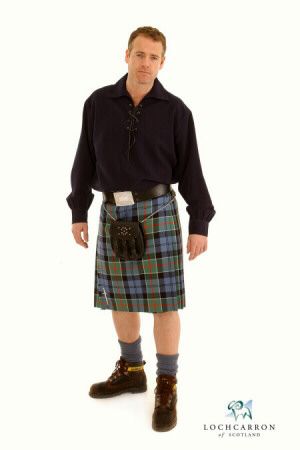
Judges, priests, and scholars also continue to wear “dresses” today.

Perhaps the most surprising expressions of manhood come from a culture entirely different from our own: the Wodaabe of Nigeria in Africa. There, men adorn themselves with makeup and jewelry. Because white eyes and teeth are part of the beauty ideal for men, they often roll their eyes and show their teeth to show off these features.

In our own time and place there’s Rod Stewart, who seems to be strongly hetero by all accounts. But check out these shots:


© Chris Walter
There’s a difference between sex and gender. Sex is biologically-based. It’s made up of our genes (xx for girls, xy for boys), hormones (testosterone, estrogen), anatomy (vagina, penis, breasts, etc.). But gender is all made up. Or what cultures make up to mark biological differences.
If clothing, makeup, jewelry and toys aren’t naturally “boy” or “girl” things, how can doing “boy” or “girl” things mark sexual orientation?
Popular Posts on BroadBlogs
Sex Objects Who Don’t Enjoy Sex
“Cock” vs “Down There”
Men Finding Fewer Women “Porn-Worthy”
Men: More Homophobic Than Women?
Share this:

Charlie Sheen: Celebrating a Bad-Boy Who Abuses Women
Charlie Sheen got fired. Until now he seemed to be rewarded more than punished for bad behavior, including a history of violence against women: He shot a fiancée in the arm, he hit a woman who wouldn’t have sex with him, he was arrested for beating a girlfriend, a porn star locked herself in a hotel bathroom as he went berserk, two of the women he married filed restraining orders against him after he issued death threats.
But right now I’m less concerned with Charlie’s behavior than with our own. Why did this abuse bring him greater celebrity than shame?
As Jezebel founder Anna Holmes pointed out in a New York Times piece, offense at abuse depends on the sort of women abused. Porn stars, prostitutes and suspected gold digging wives aren’t sympathetic.
But sometimes violence against women just doesn’t seem like a big deal. Eminem had a huge hit and huge accolades for “Love the Way You Lie,” which highlighted Rihanna singing “I like the way it hurts” as Eminem chanted, “It’s like I’m in flight, High of a love, Drunk from the hate,” while Megan Fox got beaten up in the accompanying video. The song garnered critical acclaim, including Grammy nominations for Song of the Year and Record of the Year. In fact, going into Grammy night, he led with ten nominations, including Album of the Year. No one seemed too bothered about eroticized abuse.
Oscar felt pretty hip awarding “It’s Hard Out Here For A Pimp” a few years back. Isn’t “owning,” degrading and beating women all part of the pimping life? But hey, it’s all good, as they say.
Or, Super Bowl audiences sat shocked when Justin Timberlake ripped off Janet Jackson’s bodice, revealing a bare nipple. Few cared that choreographed “slapping around” led to the grabbing and ripping. Abusing women is acceptable. But nudity is horrifying.
Then there’s Smack a Slut Week which runs October 3rd – 7th, and can be celebrated “anywhere you like, by, you guessed it, smackin’ sluts,” as The F-Bomb put it. Just a joke? One study found that men discriminated against women more after hearing sexist jokes.
Even the red hat from Devo’s “Whip It” video, depicting a man whipping the clothes off a female mannequin, is now a part of the Smithsonian collection. Accepted, mainstream stuff.
I won’t even get into the eroticized violence so often depicting women freshly killed in high fashion ads.
My first cue that Charlie had a sadistic streak was a news report that he alerted police to a “snuff” film in which a killing that followed sex looked a bit too real to him. Now, he seems to get off on harming women in real life.
Meanwhile, the rest of us stand by, barely noticing. Or celebrating Sheen’s behavior. He’s a bad boy. It’s a lot of fun, and no big deal.
Georgia Platts
Related Posts on BroadBlogs
Charlie Sheen: Winning. But Is He Happy?
Women Seeing Women as Sexier than Men
What Happens When You Beat A Sex Object?
Rape Epidemic in South Africa. Why?
Share this:

What Happens When “A Woman’s Place is in the Home”?
See anything odd in this argument about why rape should be illegal?
“Women’s power to withhold or grant sexual access is an important bargaining weapon… it fosters, and is in turn bolstered by, a masculine pride in the exclusive possession of the sexual object… whose value is enhanced by sole ownership.”
How about the lack of concern about women’s suffering from violence and violation? Nope; women are instead straightforwardly called sex objects that are owned by men.
Understanding the roots of this strange view brings me to a project sponsored by CARE, a poverty-fighting group who are discrediting “The Top 10 Myths about Women” for the 100th anniversary of International Women’s Day. To understand what went wrong with the above explanation on rape, it helps to consider this myth: A woman’s place is in the home.
What would happen if that wish actually came true?
If women are home, they’re missing elsewhere–among professors, researchers, law schools, courts, Congresses, media, business managers and religious hierarchies. And what happens when women are largely absent in the halls of power? Consider a few scattered examples:
* Turning first to the strange thesis on rape’s illegality, consider that the article was published in the 1952-53 Yale Law Journal, when the editorial board was 95 percent men, and lacking much female perspective. And, in the 1950s women’s psychology was not studied much because male researchers focused mostly on men.
* In the Old Testament (Judges 19:22-29) depraved men pound at a door, demanding a male guest be turned out to be raped. A concubine is sent out instead, to “use and do whatever you wish.” The woman is raped and abused throughout the night. At daybreak she staggers home, falls down and dies. No one seems too upset at her suffering. The concern back then was over defiled property (the concubine). Whether you take this story as historical fact, or simply as evidence of the writer’s bias, a male-dominant power structure is in play.
* In 2009 Arizona Senator John Kyle declared to an 83% male Senate that maternity leave needn’t be mandated since “I don’t need maternity care.” Well, if a man doesn’t need it, clearly it’s not important. You have to wonder if he’d be so brazen in a Congress that was half women.
* More recently, in the current 83.6% male House of Representatives, Rep. Bobby Franklin of Georgia introduced a bill to criminalize some miscarriages. Pennsylvania Rep. Joe Pitts feels hospitals should be able to refuse to terminate pregnancies even to save a mother’s life. Others want to slash support for international family planning and reproductive health care. Or as the New York Times summed it, a war on women is being waged.
* Soon after Justice Sandra Day O’Connor exited the Supreme Court, leaving an eight men and one woman jury, the ban on “partial birth” abortion was upheld. As Justice Ruth Bader Ginsberg, the sole remaining woman, noted, the ban saves no lives, but makes the procedure more dangerous for women.
We need women out in the world in places of power. Not surprisingly, women med students are pushing for abortion training at Bay Area universities (most prominently UC San Francisco and Stanford) so that women’s lives can be saved.
When women’s place is in the home, women are at the mercy of the patriarchy’s ways of seeing. And that is more than a little scary.
Georgia Platts
March is Women’s History Month
A version of this article was originally posted on the Ms. Magazine Blog on March 4, 2011
Popular Posts on BroadBlogs
Did Women Create Burqa Culture?
Cheerleader Ordered To Cheer Her Rapist, and Other Stories
Ways of Seeing: Ravaged or Ravishing?
Share this:

Do Kids Bully from Low Self-Esteem? Or Because they’re Popular? No and No
As Nadin Khoury walked home from school last January, a “wolf pack” of seven teens, aged 13 to 17, randomly attacked. As Nadin screamed for the boys to stop during his 30 minute nightmare, they kicked and punched him, hung him upside down from a tree, and ended by hanging Nadin from a six foot wrought iron fence.
Phoebe Prince’s horror began by merely dating a popular football player, provoking the wrath of “mean girl” rivals. “Irish slut” and “whore” began appearing on social network sites like Facebook and Twitter. Threatening messages showed up in texts. The mean girls scribbled Phoebe’s face out of photographs on school walls, knocked books from her hands, and threw things at her as other students watched and did nothing.
After months of bullying, Phoebe went home and hanged herself.
Why do kids act so cruelly?
The old view suggested bullying arose from low self-esteem. By establishing dominance over someone, a brute could bridge the gap between the lowly place she sat and the supreme rank she desired.
But recent research finds that kids who bully are higher on the pecking order, leaving Time Magazine running a piece entitled, “Why Kids Bully: Because They’re Popular.”
Or as a Huffington Post commenter put it, “kids bully because they can.”
I question both notions.
Recent research destroys the low self-esteem hypothesis.
But what about this newer idea that kids bully because they are popular? Or that strong social support allows them to?
Is persecuting people fun, in itself, so that people do it just because they can? An awful lot of people get stressed harming others. Even very young children have a basic sense of justice which is based on whether one person is hurting another. Bullying probably serves some other purpose.
Why do some bully? The real answer seems an odd mix of the old and new explanations. The somewhat popular Mean Girl has to bridge a gap between where she sits and where she thinks she belongs. She wants to be seen as more socially dominant than she already is. If she felt secure at the top of the ladder, she wouldn’t need to work to gain her position.
Those at the very top have no gap to bridge. They actually avoid harassing others because they don’t want to signal insecurity and weakness, suggesting they need to prove something.
When people act aggressively to move up the hierarchy, they are doing what sociologists call “the social construction of personal identity.” When others witness our supremacy, it feels more real. It becomes “objective.” No surprise that Nadin Khoury’s tormentors taped the abuse and posted it on YouTube – which led to their arrest. I guess the risk seemed worth it (or they were too stupid to see the eventual outcome) since identities feel more objective when others witness our power.
How do we address the problem? Some suggest focusing on the kids who aren’t involved. Cultivating their empathy so they won’t stand idly by.
Perhaps encouraging more constructive sources of self-esteem would be useful.
Or, drawing attention to the (relative) insecurity of the bully might help, too.
Popular Posts on BroadBlogs
Men Watch Porn, Women Read Romance. Why?
Cartoonish vs Authentic Sexuality
Men Finding Fewer Women “Porn-Worthy”
Share this:

Sex Objects Who Don’t Enjoy Sex
Sexualizing women can have its perks in the bedroom, with breast fetishes and butt fetishes heightening men’s arousal.
But surprisingly, sexualizing women can have the opposite effect, harming both men’s and women’s enjoyment. And in many ways. Here’s one: self-objectification.
Drowning in “sexy women” images, men and women can both come to see women as the sexy half of the species. So what happens in bed? Because men aren’t seen as especially sexy (at least by comparison) men are focused on women and women can be focused on themselves.
Caroline Heldman, assistant professor at Occidental College, found that some women become preoccupied with how they look instead of the sexual experience. “One young woman I interviewed described sex as being an ‘out of body’ experience,” she said. “She viewed herself through the eyes of her lover, and, sometimes, through the imaginary lens of a camera shooting a porn film.”
Sounds a bit like Paris Hilton: “My boyfriends say I’m sexy but not sexual,” she mused. “Being ‘hot’ is a pose, an act, a tool, and entirely divorced from either physical pleasure or romantic love.”
Heldman feels that girls and women are learning to eroticize male sexual pleasure as though it were their own. She feels they need to explore their sexuality in more empowering and satisfying ways than this vicarious act.
Cultural theorist Jackson Katz has similar concerns. “Many young women are now engaged in sex acts with men that prioritize the man’s pleasure,” he reflected, “with little or no expectation of reciprocity.”
When having sex, these young women may be enjoying themselves, and how nice they look. They may gain a boost to self-esteem as they dwell on their “hotness.” But they’re not enjoying sex.
Popular Posts on BroadBlogs
Women Seeing Women as Sexier than Men
Women Learn the Breast Fetish, Too
Surprises in Indiana University Sex Survey

 BroadBlogs