Category Archives: feminism
Is Male or Female Sexuality Better?
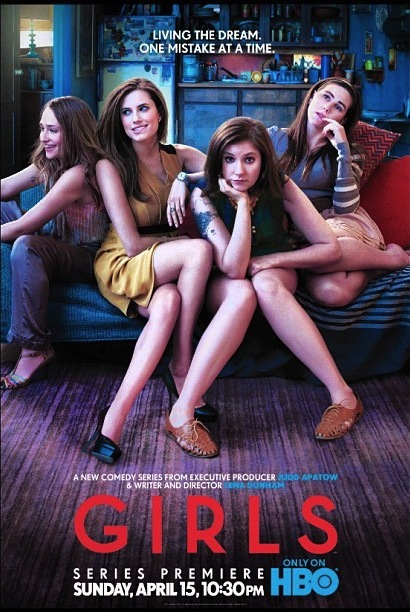 “I heard so many of my friends saying, ‘Why can’t I have sex and feel nothing?’ It was amazing: that this was the new goal.”
That’s what 25-year-old Lena Dunham told New York Times columnist, Frank Bruni as they discussed her new Sex-and-the-Cityish HBO series called “Girls,” which she writes, directs and stars in.
Dunham points out that numerous cultural cues press women to take on non-emotional, non-connected, “empowered” sexuality.
Yet she can’t manage to do it, herself. And she is not sure it’s empowering.
“There’s a biological reason why women feel about sex the way they do and men feel about sex the way they do,” she adds. “It’s not as simple as divesting yourself of your gender roles.”
Evolutionary psychology says women are genetically programmed for monogamy so fathers will stick around and provide resources for their children, while men are promiscuous so that they can widely “spread their seed.”
I have my doubts. If women are monogamous then men can’t be promiscuous. And both men and women are promiscuous in some tribal cultures.
Modernity seems to breed a monogamous ideal (meaning lifetime marriage after a few years of “sewing your wild oats”) among both women and men, perhaps because these societies are complex and children aren’t raised by the entire community (as they are in small tribes) making single parenthood difficult.
And even while casual, male-stereotypic hookup sex has overtaken college campuses (at least in theory), a recent study of hookup culture found that both men and women prefer close, connected relationships.
Still, study after study shows most women preferring sex in a context of love and connection, while men are more open to casual encounters.
So which is better? Casual or connected?
I’ve asked my students what they think. They see positives and negatives in each approach.
The variety offered in non-connected sex can be fun, and if you really do it “man-style,” guilt-free. There are no ruts! But STDs and unwanted pregnancies are bigger risks. And it’s possible that one partner will end up wanting more, which can create hurt and complications. Emotional connection adds depth and dimension, and many can’t enjoy sex without it.
The problem, my students think, lies in feeling pressured to behave in ways that are inauthentic – which isn’t pleasurable, either!
And is non-emotional, non-connected sex more “empowered”? Or do some just think so because it’s the “male” way in a culture that values masculine over feminine? Or that sees men and “their ways” as more powerful, by definition. Sure, you’re less vulnerable and dependent, but there is great power in relationship.
Likely the “best” and “most empowered” sex is that which is most fulfilling, and which best expresses who you are and what you want, and which is acted out most responsibly.
Popular Posts on BroadBlogs
“Dressing Like Prostitutes”? Authentic Sexuality?
Cartoonish vs Authentic Sexuality
It’s Ok To Be A Tomboy But Not A Sissy. Why?
Share this:

Rape Epidemic in South Africa. Why?
More than one in three South African men admits committing rape, one in seven has joined a gang rape, and more than three quarters admit committing violence against women.
More than half of South African women have experienced violence at the hands of men, and one-quarter will be raped by age sixteen.
Why? Two thirds of rapists felt sexually entitled. Some wanted to punish women who had angered or rejected them. Others wanted to turn lesbians straight. And some were just bored.
These “reasons” may only get at surface issues. What else is going on?
Rachel Jewkes, a lead researcher on the study of violence in South Africa, feels that racism lies behind the abuse.
Rape holds a sexual component, but it is essentially about power. When a large population is oppressed, say through racism – even as manhood is defined as “dominant and powerful” – men may use rape as a weapon to gain a sense of personal empowerment. Rapists are often trying to bridge a gap between their impotent selves and the dominant men they seek to be. Imagine the control they feel when they restrain, take over, and invade another person’s body. Imagine how high and mighty they feel in creating humiliation.
Gay bashing is another weapon whereby some men try to create a sense of male superiority. If women act like men (sexually/stereotypically) how can men keep their sense of dominance? Hence, the need for “corrective rape” in South Africa that seeks to turn lesbians straight.
In one attack Millicent Gaika was beaten and raped for five hours as her assailant screamed, “I know you are a lesbian. You are not a man, you think you are, but I am going to show you, you are a woman. I am going to make you pregnant.” Since the women are often murdered “correction” sounds less likely than gay-bashing as motive.
Others were simply bored. So the eroticized violence of patriarchy comes in handy: Oh, let’s have some fun!
This is helped when women are seen as sex objects, and not people who have their own lives, goals, thoughts and emotions. When women become nothing but objects for sexual pleasure, it’s no wonder that one third of the rapists said they did not feel guilty.
So here we have powerless men beaten down by racism who are trying to feel powerful, who live in a world where violence against women is eroticized, and where women are seen as mere objects. A recipe for epidemic rape.
Originally posted on January 14, 2011 by BroadBlogs
Related Posts on BroadBlogs
Mind of a Rapist: Trying to Bridge a Gap between a Small Self and a Big Man
It’s Ok To Be A Tomboy But Not A Sissy. Why?
Yale Fraternity Chants “No Means Yes.” Men? Or Scaredy Cats?
Share this:

Making Violence Against Women Sexy
 What happens when you beat a sex object? Or hang her? Or rape her? Or hogtie and torture her?
Pop culture is filled with images of women as objects. It’s also filled with images of women as abused objects. But then, the two go hand in hand: Objects have no feelings to empathize with, no lives of their own to interrupt or worry about. They can exist just for sadistic pleasure.
Oddly, I’m not seeking to shame anyone who gets aroused by these images. People tend to unconsciously absorb their culture like a sponge – we all do. Even my women’s studies students and the feminist blogs I read register a taste for this stuff. No surprise that so many find it sexy, our society is so filled with these images.
At the same time, I’m not dismissing the issue. Whether you want to participate or fight it, at least have eyes open and look at the downside.
When I was a little girl I got a children’s book from the library. In one story a woman was punished: She was stripped, placed in a kettle-like contraption with spikes to poke her, and driven through the town in humiliation. That’s my first memory of sexualized abuse.
My second encounter was flipping TV stations as a child, and seeing a man throw a woman over his knee to spank her. Apparently, if I’d flipped through a magazine I could have seen an ad with the same image.

When I got older the Rolling Stones promoted their “Black and Blue” album with a picture of a woman bound and bruised.

At the movies women are killed – in sexy bras and panties – in popular horror flicks. In tamer fare, Scarlett started out resisting Rhett, but ended up enjoying a night of passion as “no” turned to “yes.” In the soaps, Luke raped Laura and they fell in love.

Devo’s “Whip It” showed a man whipping the clothes off a mannequin. The red hat from this video is now in the Smithsonian.
In magazines and billboards we are bombarded with ads depicting violence against women.

Romance novels and erotic tales tell stories of women who are abducted and raped and who fall in love with their captors. Mainstream movies like 9-1/2 Weeks and The Secretary depict women enjoying abuse at their lovers’ hands. Justine Timberlake slapped Janet Jackson around at the Super Bowl before ripping off her bodice. Megan Fox got beat up in a popular video that you can view over and over again. In the background Eminem mouths “I’m in flight high of a love drunk from the hate,” to which Rihanna replies, “I like the way it hurts.” And then there’s the porn world full of “no’s” turning to “yes.” Or “no” remaining “no,” but that’s sexy, too.
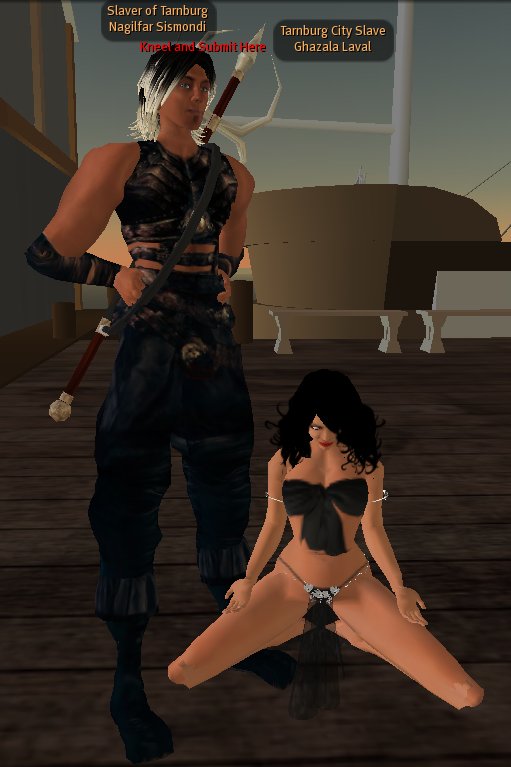 On a feminist website, one woman described the joys of being a sex slave avatar to a dominant man in the virtual world of “Second Life.” Another explained the appeal with the help of a poor understanding of evolutionary psychology: Through evolution, she explained, women have come to want male domination in their relationships.
That’s not really what evolutionary psych says (and I have issues with that field, anyway). How would craving your own abuse be adaptive? Pain is meant to warn us to stop doing something. Women’s genes don’t crave poor treatment. If they did, we’d find eroticized violence in every culture, but we don’t. Egalitarian societies like those of the American Indian (before contact with patriarchy) did not sexualize abused women.
Here are two big problems with eroticizing male dominance and women’s pain: First, women and men can both come to crave the abuse of women in real life. Second, when we make male dominance seem sexy, we become more accepting of male dominance.
Originally posted on January 12, 2011 by BroadBlogs
Popular Posts on BroadBlogs
Anything Good About Being A Sex Object?
Frats Invite Sluts, Bitches; Women Accept Degradation. Why?
Orgasm: It’s All in the Mind
Share this:

Women Seeing Women as Sexier than Men
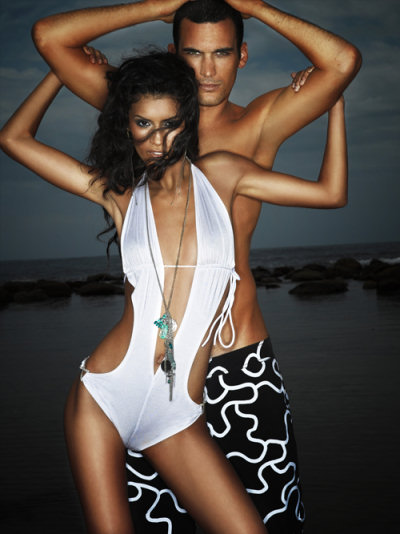 Girls are so inundated with sexualized images of women that they learn to see women as sexier than men. Women come to see women through male eyes?
In the bedroom, this can make women’s sexuality a bit convoluted, which I’ll discuss later.
But consider my students:
“Women’s bodies are just naturally sexier than men’s,” my class tells me when I ask why women are portrayed as sex objects.
In this belief, my students are not alone.
A few years back Lisa Kudrow, of Friends fame, told Jay Leno that female nudity is displayed more in movies because, “Who wants to look at a guy?”
Hugh Hefner thinks women are natural sex objects, “If women weren’t sex objects, there wouldn’t be another generation.”
I’ve talked before about how the breast fetish is not natural, but is learned by both men and women. But how do we all learn that women are sexier than men in ways that go beyond the fetish?
Growing up, girls are bombarded with visions of women as sexy, with skin selectively hidden and revealed, the camera focused on those intriguingly concealed parts.
When I was little my mom took me to the Ice Capades. After noticing that the women were half dressed while the men were fully clothed, I asked why. Mom told me that women just have better legs.
Do they? One warm summer day an adult from my church youth group commented, “It’s too bad the guys have the best legs.” (Thanks!) But what is our cultural ideal? Longer, leaner. Young men typically have longer legs, and they don’t have the extra layer of fat that women do. So most young men’s legs come closer to our ideal. Yet we say women have better legs? When I think about it, I actually think men have pretty nice looking legs. But nothing and no one directs our attention to them.
On Dancing With The Stars, women are half-dressed and men are fully-clothed. During an advertisement, the camera lingers on women’s breasts and legs in a Victoria’s Secret display. Next, a commercial for shoes focuses on women’s behinds: See this Rebook ad for EasyTone. Try to imagine the same focus on men’s butts (which actually are pretty attractive)!
Watch a football game and see big, fully-dressed, aggressive guys playing on the field, while scantily clad cheerleaders show off their stuff from the sidelines. In the Bikini Open men sport golf wear while women dawn bikinis. When does Sports Illustrated most focus on women? In the swimsuit edition.
Through it all, the camera gazes at women’s body parts, but not men’s. Telling us what’s important to notice. What’s sexy and what’s not.
Men’s bodies are rarely sexualized outside infrequent underwear ads.
Historically, men have had control of media, and they’ve portrayed what they see as sexy.
Bombarded with these images, girls come to see women as sexier than men. As I’ve said before, when I tell my class that I find a Playboy pinup sexier than a Playgirl pinup, women’s heads nod in agreement.
Meanwhile, when women answer surveys about what they find sexy they say “men.” But when they are wired up, blood flow to the vagina is stronger when viewing an image of a nude woman than a nude man – conscious responses and bodily responses not agreeing.
Oddly, and yet logically, women come to see women through male eyes.
So women come to see themselves as the sexy half of the species. Being sexy has some advantages. It can just be fun, it’s easier to attract mates (consider the success of women versus men in singles bars), and sexiness is a source of power.
But there’s a downside, too, including the narrow construct that leaves so many women feeling they exist outside the “sexy” box, with a drop in self esteem kicking in.
Taken to extreme, some women can become sex objects, taking an unhealthy one-dimensional focus on themselves, feeling that how they look is all that matters. And some men may see them as objects whose sole purpose is to be used for their pleasure.
It ain’t so great to be, or be seen, as mere object.
Popular Posts on BroadBlogs
Sex Objects Who Don’t Enjoy Sex
Men Have Higher Sex Drive. Why?
Women Learn the Breast Fetish, Too
Originally posted on January 10, 2011by BroadBlogs
Share this:

Beastly Breasts. Patriarchy? Or Blasphemy?
 In honor of women’s history month I talked with Brock Neilson, a feminist artist who wonders if he might sometimes unconsciously support patriarchy.
Or, is he blasphemous instead?
BB: It’s very easy for anyone, including feminists, to unconsciously see and think in patriarchal ways, at least some of the time, since we’re all immersed in the system. You wonder if you sometimes unconsciously support patriarchy in your art. How so?
BN: This past year a lot of my art has been about someone – or something — that has enormous or strange looking breasts. These images are what I’d imagine a drunken fraternity or a 12-year-old boy drawing.
I imagine that these kinds of perversions are part of the package with which males are endowed in society, and I feel a responsibility to address that somehow.
Sometimes I might want the breasts to look uncomfortably disfigured or I might want the  viewer to feel a kind of confusion about the body they are seeing. The breasts could also be more humane when they are not perfectly shaped or as easily sexualized, but I worry that I might be reinforcing patriarchy by not allowing something as commonly fetishized as breasts — or the person or entity to which the breasts belong — to just exist without having to be ugly, or strange, or beautiful, or symbolic. However, this concern is unavoidable as these images are being filtered through my nonobjective brain and hands.
The ultimate goal of feminism is to not have to be the mother, the champion goddess, the victim, or even a female or a male in order to have credibility and dignity. It is the hope that everyone could simply be who they want to be without having to force ourselves into degrading positions.
That said, I think it’s important to express these positions — or distortions — of power and powerlessness (and the variations between). My art is preoccupied with the slots we pop people into: the corporate leader, the androgynous, the porn victim, the violent athlete, the disabled or disfigured. I find that I’m often exploring possibilities for a better world by regurgitating things that are offensive to me.
BB: How might your work be blasphemous instead, working against patriarchy?
BN: There’s been a big focus among popular male artists to make big objects and paintings that can be bought and sold — similar to a Wall Street investment. This approach to art is problematic. I have been decorating a lot of brown paper in my work because it’s cheap and accessible. Being a male who is involved in decorating materials that require a kind of gentleness can be a blasphemous act.
I remember overhearing a mother years ago who was telling her five year old son not to smell flowers because she was afraid that this would make him look “gay.” I was so taken back that this innocent behavior — a child smelling flowers — was already perceived as inferior. My work, however crude it may be, is concerned with a hope of reclaiming this kind of sensitivity.
Tawnie Silva, an artist I discovered this last summer, made a beautiful inflatable sculpture of a quirky four-eyed girl with a rainbow coming out of her head. It’s made of fragile plastic bags, but Tawnie Silva’s body is brawny and masculine. It is especially sacrilegious to commercial gender ideals when men make things that are sweet and delicate. Both women and men need to protect and make space for vulnerable things in others and in themselves. This is an important way that we can expand and break dangerous gender stereotypes.
Related Posts on BroadBlogs
Man as Object: Reversing the Gaze
The Constricting Bodice: Empowerment and Imprisonment?
Spoon Fed Barbie
Share this:

I Didn’t Want To Be Pretty
By Victoria King
Man clothes, dark, heavy makeup, scarcely a trace of femininity: that was me in high school. I hated the notion that girls had to be pretty and were valued only for their looks. I wanted people to appreciate me for being fun, funny and a good debater.
I felt like women made themselves out to be pretty idiots because they were naturally shallow and stupid.
And envious. I hated the competition between females, so I looked as weird as possible hoping no one would see me as a threat.
Men don’t see attractive males as threats. They’re high-fived for getting women – the more the better. I wanted sisterhood, but was really more interested in having “brotherhood.”
It was a strange place to be, looking down on females as a female, and not wanting people to care whether I was pretty or not.
Yet part of me wanted very badly to be pretty. I believed I was hideous.
Despite a wholehearted attempt to free myself from incessant judgments on my appearance, I developed severe issues with self-image and self-esteem.
I saw myself being sidelined because of how I looked. I began to resent working that much harder to keep myself relevant and earn respect when other girls just stood there looking pretty. I felt trapped by society, my body and my inability to change myself or anything around me.
And so I fell into disordered eating in a desperate attempt to gain control over something. It didn’t work.
I began searching for answers. I wanted to know why women’s beauty seemed to be the only thing that mattered. I wanted to know why deep pain is associated with the beauty that is supposed to be a blessing.
The film, America the Beautiful offered a clue. The film tells how businesses make money when women feel dissatisfied with the way they look. If women weren’t satisfied, they wouldn’t spend money to make themselves “better.” I saw how we are manipulated.
As I studied more I began to see what it means to live in a patriarchy. It had never occurred to me that denigrating women’s appearance and capabilities could be a reaction to women’s gain of rights and power. If women have equal rights, you can still defeat their souls by draining their self-worth as they strive to live up to impossible standards.
The revelation was freeing. I didn’t have to accept impossible standards. I even stopped seeing anorexic models as attractive.
Now I feel that “pretty” is neither something to be obsessed over nor obsessively avoided. And I don’t think “attractive” comes in only one form. And that is freeing.
Popular Posts on BroadBlogs
Am I Ugly? Girls Ask YouTube
Keep Your Boobs, Get Better Guys
I Can’t Believe I Ate A Whole Head Of Lettuce!
Share this:

Forced Births in the Bad Old Days
By Mijita @ Daily Kos
Judy was born in 1950 to an Irish Catholic family. When she was 12 her uncle began molesting her.
Like a lot of girls of that time, Judy didn’t understand sex, or what was happening to her. She liked the attention, but felt ashamed and couldn’t talk to her mother. At 13 she started getting sick, not just in the mornings, but all day long. Her mother took her to the doctor, and she learned she was pregnant.
As the doctor and her mom questioned her the truth came out. Judy remembers the doctor being very kind, and as he left he asked the nurse to “talk to her mother.” The nurse told them there was an option to childbirth. Judy’s mother felt that would be the right thing, but wanted to pray about it.
So they went to their parish priest, where her mother tearfully recounted what happened, and warned that if her husband found out, he would kill her brother. She also told the priest about the “other option.”
The priest, who had been kind and comforting, now turned harsh. He warned that abortion was both illegal and a mortal sin. It could not be considered.
And he told Judy that if her father learned of the molestation and hurt or killed her uncle, she would be responsible.
The priest then announced that Judy would be sent to a St. Anne’s, a home for unwed mothers in a city fifty miles away. She would have her baby and give it up for adoption.
Judy was terrified. She didn’t want to have a baby and she didn’t want to be sent away. She cried and begged her mother to let her stay at home. The priest said there was nothing else they could do and that it would be alright.
That night, Judy waited upstairs as her mother told her father the news. He yelled at her mom but never asked how she had gotten pregnant. And in fact, Judy wasn’t entirely sure — her body and sex were outside her understanding.
After the conversation Judy began pleading to see the nurse who had promised to help because she did not want to leave her home. When that failed she threw herself down the stairs, trying to kill herself or the baby. She only broke her arm.
She was sent to St. Anne’s. But because she was suicidal she was not permitted above the ground floor, was not allowed anything long or sharp, and was watched all the time.
But one day she heard some of the girls talking about self-abortion. Desperate, she tried pushing her hand as far inside herself as she could. When she was caught she was made to sleep tied to the bed. And because she was sick, she was kept in bed for most of the last two months.
Giving birth without her mother, in pain and among strangers was agony. She screamed so much that the doctor finally put her under. When she woke up the baby – a boy – was gone. She told the nurses she didn’t want to see him.
After she recovered and went home the pregnancy was never spoken of. And she never felt close to her mother again.
Judy left home the week she graduated from high school, moving as far away from her family as she could get. She never returned and never spoke to them again. She even missed her parents’ funerals.
Her son eventually contacted her through an attorney, but she refused to see him. She didn’t want to tell him he was the product of child rape, incest and forced birth. “Whatever he thinks can’t be as bad at the truth,” she said.
As terrible as the molestation had been, Judy feels that being forced to give birth against her will was far worse. And something, she believes, she will never get over.
She worries about the trend in politics today against contraception and abortion. She does not want other girls to undergo her ordeal.
As Judy told me, “Never, ever again.”
This edited piece was originally posted on Daily Kos and reprinted with permission. Go here to see the full original version.
Popular Posts on BroadBlogs
Markets Must Be Free; Women Must Be Constrained
Should Organized Religion Have More Rights Than Women?
Apple® and Eve’s Choice
Share this:

Prejudiced People Are Stupid
Prejudiced people are stupid. That’s not me pre-judging. That’s science.
An article published in the Journal of Psychological Science, and reported in Live Science says children who have low IQs tend to become prejudiced adults who are drawn to socially conservative beliefs that – in turn – encourage prejudice, adherence to hierarchy and authority, and promote resistance to change.
The researchers suggest that low intelligence makes it difficult to grasp the complexity of the world, which could explain the appeal of oversimplifications like, “Poor people are lazy.”
But you also have to wonder if the appeal of prejudice comes partly from a desire to feel like you are better (and smarter?) than someone.
John Dean wrote a book (which he had begun writing with Barry Goldwater just before Goldwater died) called Conservatives Without Conscience. These two conservatives presented a list of characteristics that are common among right-wing authoritarian “followers” (as opposed to “leaders”). The traits seem to fall into two categories: those that would appeal to the less intelligent and those that are just mean. Right-wing authoritarian “leader” traits fell almost entirely into the “mean” category.
Examples of beliefs and behaviors that fit well with not thinking too hard include: conventional, submissive to authority, highly religious (follow God’s authority), prejudiced, narrow-minded, inconsistent and contradictory (“Get your government hands off my Medicare!”) and having little self-awareness.
The “mean” list includes these traits: prejudiced, aggressive on behalf of authority, dogmatic, mean-spirited, intolerant, bullying, and highly self-righteous. All suggest a desire to feel bigger and stronger than someone else — as in overcompensating for insecurities?
Ahhh, that was fun for a liberal like me who gets so annoyed by both right-wingers and prejudiced people.
But there is a crimp in the analysis. First, the researchers recognize, not all liberals are brilliant, nor are all conservatives dense. We’re talking averages here. Certainly there are smart conservatives, including John Dean and Barry Goldwater. Also, the less intelligent are drawn to social and not fiscal conservatism.
And of course, extremists on the left and the right may both be simplistic. As the authors admit:
A study of left-wing liberals with stereotypically naïve views like “every kid is a genius in his or her own way,” might find that people who hold these attitudes are also less bright. In other words, it might not be a particular ideology that is linked to stupidity, but extremist, over-simplified views in general.
The main advantage of this research is finding clues to decreasing fear and hatred. For instance, many anti-prejudice programs ask people to see things from others’ perspectives, but that might be too hard for those with low IQ. And since prejudice is more emotionally than intellectually rooted, it’s probably better to change feelings instead of thoughts.
Who knows, perhaps the fear of appearing dimwitted will itself advance the cause against fear and hatred.
Popular Posts on BroadBlogs
Think You’re Not Racist?
Mind of a Rapist: Trying to Bridge a Gap between a Small Self and a Big Man
Do Kids Bully from Low Self-Esteem? Or Because they’re Popular? No and No
Share this:

Spilling Sperm Harms Unborn, Law Says
by Aviva Dove-Viebahn @ Ms.
Political and cultural debates over contraception and abortion loom large in the news these days, with a notable new twist. Instead of feminists being the butt of ridicule, the tables have turned. Comedians, pundits and even legislators are satirizing the extremism and sexism of anti-woman bills by flipping the gender script. Here are some recent legislative counter-proposalsby women lawmakers:
–In late January, Virginia state senator Janet Howell tacked on an amendment to the proposed transvaginal ultrasound bill requiring that men seeking erectile dysfunction medication submit to a required rectal exam and cardiac stress test at their own expense (mirroring the ultrasound bill’s mandating of an unnecessary medical procedure women seeking an abortion would have to pay for out of pocket). The amendment failed, but only by a narrow margin of 21-19.
–In early February, Oklahoma state senator Constance Johnson, added a “spilled semen” amendment onto the state’s proposed “personhood” bill. Obviously a sardonic protest rather than a true piece of legislation, it would deem “any action in which a man ejaculates or otherwise deposits semen anywhere but in a woman’s vagina … an action against an unborn child.”
–A week ago, Georgia state representative Yasmin Neal, backed by a group of other women legislators, authored a bill proposing that vasectomies should be made illegal, also in response to legislation restricting women’s access to abortions.
It is patently unfair,” Neal writes, “that men can avoid unwanted fatherhood by presuming that their judgment over such matters is more valid than the judgment of the General Assembly, while women’s ability to decide is constantly up for debate throughout the United States.
What’s particularly smart about these legislative interventions is how they call into question the government’s ability to infringe upon the rights of an entire class of individuals based on the idea that they’re not fit to make decisions for themselves. Remarkably, faced with these inversions of their own restrictive policies, many in the anti-contraception crowd still don’t see the irony. Let’s hope, though, that most Americans do.
This was originally posted on the Ms. Blog
Popular Posts on BroadBlogs
Cheerleader Ordered To Cheer Her Rapist, and Other Stories
8-Year-Old Called “Whore” for Long Sleeves, Skirts
Don’t Reject Your Culture, Even When It Mutilates You
Share this:

What Gossip Magazines & Abusers Have In Common
By Linda Bakke
Star Magazine promotes violence against women.
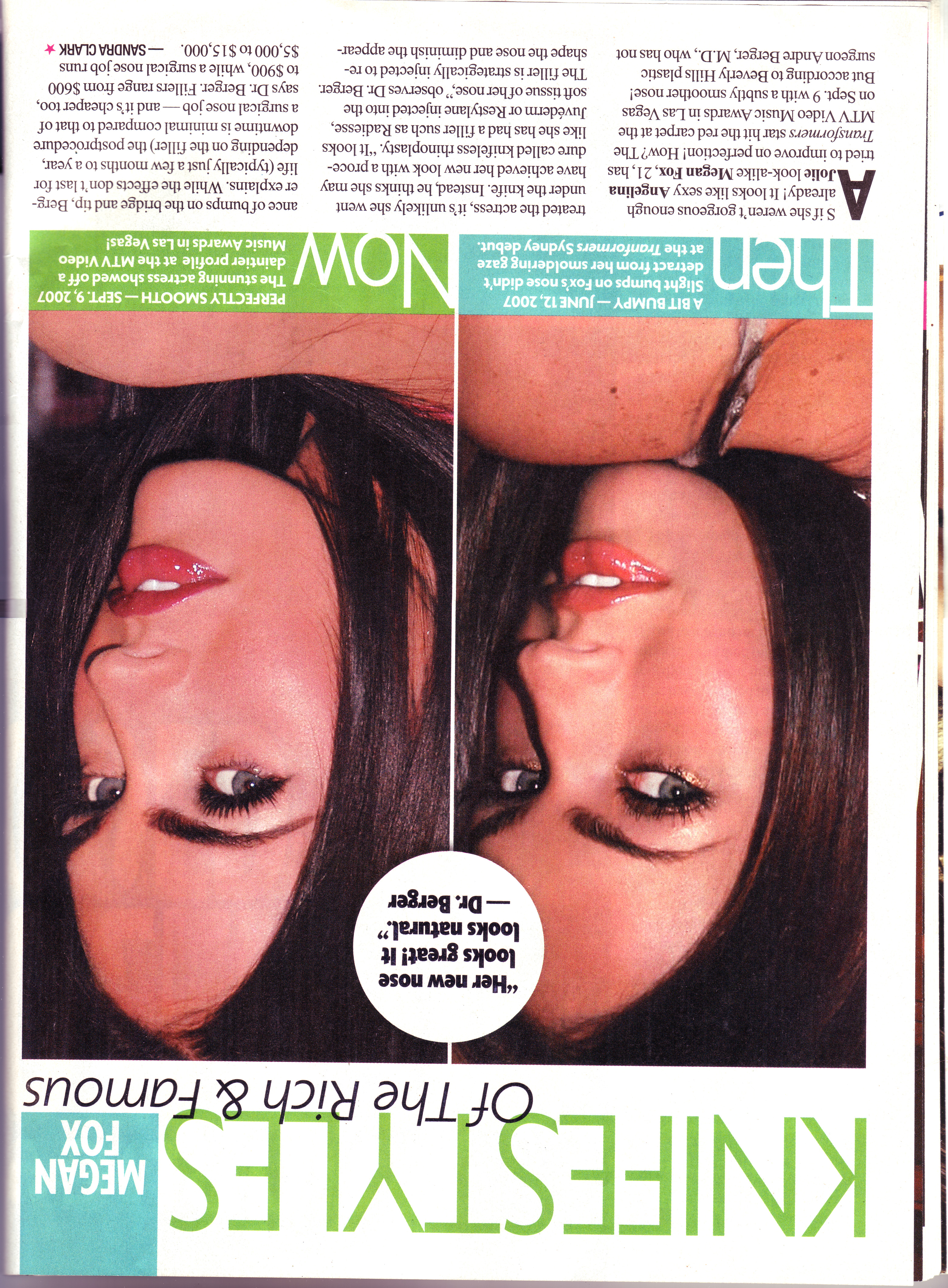 Ok, that sounds like a tabloid headline, but the more I look over Star Magazine, the more I’ve been struck by a sense of violence directed at women.
The starlets are constantly attacked for any extra weight, cellulite, bunions, ugly fingers or thick arms. It feels like open season. “Kill the Celebrity” is the name of the game.
One section called “Knifestyles” advocates mutilating women through plastic surgery. With the accompanying message, “You’re not good enough.”
In fact, Star uses the same devices that characterize domestic abusers: watching the victim’s every move, humiliation, stressing the negative rather than the positive aspects of the victim (who is supposedly adored), using “it’s her fault” to launch an attack, and transferring the abuser’s dissatisfaction with life and himself onto the victim.
After a while, she starts to blame herself.
Paparazzi hunt celebrities down and we all become cannibals of the spoils, savoring the flaws of “perfect” idols as we bring them down a peg.
But it’s not just about starlets. It’s not just their bodies that are under attack. Yours and mine are, too. If they don’t look good, we don’t either.
The depiction of women in gossip magazines represents the degradation, abuse and mutilation of women. We must recognize how damaging these portrayals are for all of us, women, girls, men and boys.
For we are all encouraged to scrutinize and vilify women for being less than perfect.
Popular Posts on BroadBlogs
Men Watch Porn, Women Read Romance. Why?
What Happens When You Beat A Sex Object?
Beautiful Women’s Hips Are Thinner Than Their Heads?

 BroadBlogs