Blog Archives
Keep Your Boobs, Get Better Guys
 If I had I been more spiritually evolved, or more grounded at 22 when I got breast implants, I never would have gotten them. Yes I got lots of attention, sexual attention. And for awhile I enjoyed it. But as the saying goes, be careful what you wish for. It became apparent that the attention I received was not from quality people… Why did I mutilate my body to appease the tastes of SOME men? We were all duped by the media, the medical profession, our low self esteem. I am now ready to have these D cups removed.
That’s a comment a woman placed on a web site called “48 Reasons Not To Get A Boob Job.” The response followed the male author’s contention that:
If you want more male attention, implants may increase the quantity but only with a corresponding decrease in quality. You’ll probably get your biggest gains in approval among guys who are most prone to objectifying you.
Whether you see all this as good or bad depends on what you’re after. If you want all eyes on you, or random sex, fake boobs could do the trick.
So I’ll address this to those who want something else. Quality men for quality relationships.
Fake boobs seem to create an image of “sex object.” Consider this experience:
A woman asked me about implants last week and I told her about the risks. But I told her the things people don’t talk about, like not being able to buy every little cute top, how no one looks you in the eyes, how people think of you as a bimbo.
Sex may not be so fun, either. Men don’t see objects as having feelings, and feel little empathy in return. Women exist to fill their needs, as far as they’re concerned. In Pornified Pamela Paul talks of objectified sex lives as all about bodies and positions, and not about intimacy.
But the culture worships its fetish, leaving a young woman asking girlsaskguys.com the following question.
Are big boobs important to guys? Because as you can see from the photo, I have really small breasts and I have really low self-esteem because of it. Do guys only think a girl is hot by the size of her bra cuz if that’s true I am in big trouble.
Here’s what some guys thought about guys who judge women by bust size:
- If someone would not date you based solely upon the size of your breasts they would not be worth jack squat anyway.
- If any guy judges you differently because of your breast size, he doesn’t deserve you!
- I like girls more for how the face looks. Nice eyes, lips, smile, hair, eyelashes… Any guy getting with someone just because they have a nice rack doesn’t seem like it could be a stable relationship.
- Don’t worry about your boobs, period. We love you for who you are.
These are some higher quality men.
There’s only a two-inch difference between an A-cup and a C-cup. Or between a B-cup and a D-cup. Two inches! That is the measure by which a woman judges herself? Or the measure by which a man judges a woman? Please! Be glad to lose those guys!
Do you really want to be wanted for your boobs and not for you? Are these types of
men even worth bothering with?
And here’s some good advice:
I’m not busty, nor am I gorgeous, but when I was single, I had NO TROUBLE attracting plenty of great men. I have some hints for women who are interested in attracting men — they have NOTHING to do with your boobs!…. #3 Carry yourself well! Stand tall… #5 — Don’t apologize for your body…. If the man you’re with constantly makes you feel insecure, you don’t need a boob job – you need a new man!
Popular Posts on BroadBlogs
Anything Good About Being A Sex Object?
Sex Objects Who Don’t Enjoy Sex
Men Aren’t Hard Wired To Find Breasts Attractive
Share this:

Grade School Lingerie
When I was ten years old plenty of my friends would wear “big girl lingerie” that they got from Abercrombie and the like. I felt pressured to constantly push to be sexier, or more desirable. At ten years old, who exactly am I trying to attract?
This comment (paraphrased) came in reaction to a piece I recently wrote called, “Cartoonish vs Authentic Sexuality.”
I found the remark a bit starling. At age ten I did not feel any pressure to be sexy. I was a kid! None of my little-girl friends seemed to have such notions, either.
Wondering who she was trying to attract, the young woman added, “I don’t think any of us really knew the answer to that, but it felt necessary all the same.” And then she asked what lay behind the focus on sexualizing young girls.
My first thoughts are that companies like Abercrombie are trying to get young kids to like their brand by appealing to the desire to feel “grown up.” Not to mention all the free
publicity they get from controversies surrounding their products.
But I’ve also noticed a broad trend toward sexualizing both girls and women that goes beyond what I had experienced at the age of ten, or even twenty.
In fact, not long ago I was flipping through TV channels looking for movies when I saw the 1988 film Crossing Delancy with Amy Irving (Steven Speilberg’s ex) and the 1986 film About Last Night with Demi Moore and Rob Lowe. And then I noticed that in these films – and several other romantic comedies of that period – the women were not dressed sexually. No body-hugging clothing. No revealing décolletage.
Why the change?
Naomi Wolf’s The Beauty Myth might help us out. Wolf points out that as women
have gained power they have also become more sexualized. She says it’s no accident.
Think about it. As women take on sex object status, they become objects. Objects aren’t quite human, leaving them at a lower rung on the ladder than men. Meanwhile, the ideal of huge breasts and skinny waists is near impossible to achieve, leading to poor self-esteem and an awful lot of time spent trying to fulfill this “requirement.” And if you’re busy focused on your looks, you’ll take your attention off more substantive things.
In sum: As women become more sexualized, even as they gain power they lose status by becoming objects. Even as women gain power, narrow notions of beauty leave them feeling worse about themselves as body image suffers. As women put tremendous time and energy into their looks, they have little time or energy left to become more empowered.
I personally feel that sexy is fine (and beyond the cartoonish narrow notions, please!), but that “sex object” isn’t. Sexy can be one part of a well-rounded woman’s life, while “sex object” sees women as being only about sex.
Women should not be seen as only sexy. Sexy should not be the primary source of self-worth. Sexy should not be the most important thing in the world.
And children should not be trained to see themselves as objects.
Georgia Platts
Popular Posts on BroadBlogs
Cartoonish vs Authentic Sexuality
Spoon Fed Barbie
Women Seeing Women as Sexier than Men
Share this:

Anything Good About Being A Sex Object?
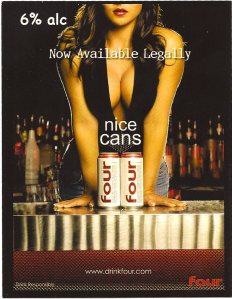 When I ask my students if they can think of anything good about being a sex object they think there must be something positive, since so many women put a lot of effort into being sexy, with some aspiring to “sex symbolness.” Here’s what they say:
- Sexy women get attention. They feel attractive and admired, so it’s a source of self-esteem.
- It’s nice to feel wanted and desired. It’s easier to attract mates or just get sex.
- It can be fun to feel sexy.
- Sex is a historic source of power for women. Sexiness can gain women resources, whether through marriage or getting men to do favors. It puts women in control over men.
Then I ask if there’s a downside. More comments:
- It can be uncomfortable being gawked at. You can feel like you’re only a sex object – and that’s all, like you’re not worth a lot.
- You can feel disrespected. Guys just want one thing. You get used.
- When women are seen as all about sex, and they don’t want to put out, they’re seen as bitches.
- You aren’t seen as intelligent. You aren’t taken seriously.
- Your personality disappears.
- It can feel inauthentic, feeling pressured from friends or society to look sexy.
- Sexual objectification leads to sex trafficking. Treating young women and girls like they are nothing but objects that exist to pleasure men. They have no lives. They’re all about sex and nothing else. And they’re not given an opportunity to be anything else.
But there are problems when you don’t meet sex-object standards, too:
- You feel like you’re constantly being judged, and not coming out well.
- You may starve. Or get implants and die (that does happen). You have false hope, and when you don’t meet the standard you lose self-esteem.
So much contradiction. Is there any way to get some of the positive upside without all the downside? I’ll admit to feeling the world would be a bit dull without any spice of sexiness.
How about distinguishing between sexy and sex object. And broadening our notion of what “sexy” means?
Objects are treated as little more than a means to others’ pleasure. They are not people with lives, goals, thoughts or emotions. It’s one-dimensional. A limited box. And who cares how you treat an object?
So if a woman does have – and is seen as having – a life, goals, emotions and intelligence, and sexiness is one part of all that, then she can be a full person – who is also sexy.
But still, can we move outside the narrow notions? Who’s sexy to me? Women and men who are classy, smart, talented, confident, and who make a difference in the world.
I nominate:
Nancy Pelosi, Thandie Newton, French politician Marie-Ségolène Royal, Helen Mirren, Angelina Jolie, Jackie O, Jennifer Lopez, Toni Morrison, Queen Rania of Jordan, Barbara Walters, Sandra Bullock, Zhang Ziyi, America Ferrera, Diane Sawyer, Jennifer Aniston, Queen Latifah, Gloria Steinem, Julia Roberts, and Maria Shriver.
And men? My list includes:
Ezra Klein, Benico del Torro, Ed Harris, New York Times columnist, Princeton professor and Nobel Laureate Paul Krugman, CNN anchor T.J. Holmes, Tom Brokaw, Brad Pitt, Barack Obama, Stephen Colbert, Gabriel Byrne, Japan’s former Prime Minister Koizumi Junichiro, JFK Jr., Antonio Banderas, Sidney Poitier, Javier Bardem, and White House corresspondent, Jake Tapper.
Yeah, sexiness can be fun and alluring, when moving outside narrow limits. But sex objects are just trapped.
Popular Posts on BroadBlogs
Men Are Naturally Attracted To Unnatural Women
The Constricting Bodice: Empowerment and Imprisonment?
What Happens When You Beat A Sex Object?
Share this:

Cartoonish vs Authentic Sexuality
 “I believe we should afford our daughters and ourselves a right to our own authentic sexuality,” to paraphrase psychoanalyst and author Joyce McFadden. “Not the cartoonish MTV kind, but the kind where we respect ourselves enough to listen to what our bodies and hearts feel is right for us.”
What is authentic sexuality? In a recent post I suggested it is neither shameful nor a crutch for powerlessness or low self-esteem. But what else?
Young women are flooded with images screaming “sexy is” which can feel foreign or unpleasant. Or the market offers limited choice. Some have a hard time finding anything they feel comfortable wearing because sexy is all that’s offered.
Cartoonish sexuality is all about surface. It’s about plastic and peroxide, feeling famished and wearing clothing – or even implants – that don’t quite fit.
Actor Gabriel Olds tells a story about a woman he met at a party who blurted out, “By the way, these fake boobs are so not me.” He asked why she’d gotten them. A former boyfriend had awoken her one morning with the romantic proposition, “Hey, you ever think about getting better tits?” So she bought D-cups. He left her soon after. Eventually, she got the implants removed because they had never felt like “her.”
I asked my students how they imagined cartoonish sexuality. They saw it as a freakish figure not found in nature: Huge boobs combined with small waist and hips, big lips, bleached blond hair. Also, how society sees sexy – not what comes from inside. Artificial and superficial.
Taking it further, how cartoonish are seven-year-olds wearing Abercrombie and Finch padded bras or ten-year-olds in thongs? (Do parents actually buy these or does Abercrombie just stock them knowing they’ll bring plenty of free publicity?)
And authentic sexuality? When it came to looks, my students described it as natural, appreciating a range of sizes and body types, including your own. Light makeup (or none), a real smile, good personality, a sense of humor and confidence. Who you really are. I’ve got some pretty wise students.
Let’s turn to what inauthentic sexuality feels like. Having sex out of feeling pressured from friends or boyfriends. Having sex because it seems like the “right time,” but not because you want to.
Experiencing sexuality through the male gaze is not authentic, either. Women too often focus on how they look instead of how they feel in the bedroom. They are observing (and often criticizing) but not experiencing.
Inauthentic sexuality involves unhappily acting like porn stars for your partner’s pleasure, but not your own. (If you’re both enjoying it, that’s different). Some do things they don’t like just to keep the guy. One woman called these experiences “harrowing.”
We can all take a page from our ancient sex-positive Tahitian sisters who were not objectified in the way Western women are today, who learned the beauty of sexuality, and who did not act only for others. Of course, we live in a complex world so our sexuality must be conscientious. We must protect ourselves and others from sexually transmitted diseases. We must take care not to bring lives into the world when we are not ready for the responsibility.
Here’s what one commenter on Part I of this series wrote.
Personally, I’m constantly questioning myself when I get dressed; am I choosing this outfit for attention or simply because I genuinely like it? I try to embrace my sexuality and my femininity and dress/act in a way that’s natural for me. I don’t like playing games or feeling like I have to put on a show for others… Perhaps one small step towards liberation is dressing and acting for oneself rather than for others.
Georgia Platts
Related Posts on BroadBlogs
“Dressing Like Prostitutes”? Authentic Sexuality?
Men Are Naturally Attracted To Unnatural Women
Beautiful Women’s Hips Are Thinner Than Their Heads?
Share this:

“Dressing Like Prostitutes”? Authentic Sexuality?
Why do moms let their daughters “dress like prostitutes?” asked Jennifer Moses in a Wall Street Journal piece that got people talking.
Moses thinks it’s because the moms had a sexually free past, which they now regret. “Not one woman I’ve ever asked about the subject,” she declared, “has said that she wishes she’d ‘experimented’ more.”
So wouldn’t you want your daughters to NOT look like prostitutes, then?
Yes, but mom’s don’t want to be hypocrites, she says, so they don’t know how to advise their daughters.
Joyce McFadden, writing in the Huffington Post, sees things differently. “I think the real problem is that dressing provocatively is one of the only outlets we allow our daughters to express their sexuality,” she said.
McFadden prefers a healthier approach, recommending moms help their daughters to own an authentic sexuality.
Sounds good. But what would that be?
As I see it, authentic sexuality contains many parts.
Authentic sexuality is not shameful
Bombarded with words like slut, skank and whore, it’s easy for sexually interested young women to feel polluted. I’m not aware of even one positive word that specifically communicates women enjoying sexuality. Compounding the problem, when parents avoid discussing the matter with their daughters the silence shows embarrassment. Meanwhile, church elders warn of the untamed libido, but the message can come across as “sex is sinful.” Opposing images of “Madonna and Whore” emphasize the point. Even when sex is forced upon women against their will, they can end up feel shamed, themselves.
Instead, women and girls need to know that sex it is completely natural. Understanding and exploring their bodies and what pleases them is, too.
Authentic sexuality is not a crutch for powerlessness or low self-esteem
More than one commenter on McFadden’s piece felt girls dressed provocatively to gain power over boys, or to simply feel empowered, generally. I’m all for female empowerment. But how much strength is there, really, in drawing the male gaze? Or in gaining a favor here or there? Is this power substantive? Some women may skillfully use their sexuality to manipulate, but manipulation is a weak form of power. It’s what people do when they feel they have no other choice.
Another commenter sees the matter differently: “I’ve worked as a school counselor and there is a difference between girls wearing clothing they are comfortable with and girls who wear clothing to manipulate and have power over boys, which is a self-esteem issue.”
Really about self-esteem? Maybe that’s right because I don’t see a lot of real power in sexy dressing.
Nothing wrong with feeling good when people find you attractive. But hopefully it’s not a primary source of self-worth. That sort of beauty is all about the surface, and it is fleeting.
Instead, real contributions create real power and substantive esteem.
What else?
Authentic sexuality also involves cutting through the lure of the market, peer pressure, and the flood of images that scream “sexy is” to discover one’s own sexuality and authentic pleasure.
But I’ll save that discussion for next week.
Georgia Platts
Popular Posts on BroadBlogs
Cartoonish vs Authentic Sexuality
Sources of Power in Relationships
Should You Ask Why Your Lover Loves You?
Share this:

Lose Virginity, Lose Self-Esteem?
When women lose their virginity, they can lose self-esteem, too, experiencing a small drop. That’s what a recent Penn State study reveals.
Why?
Women college students were surveyed over time. Before sex the women felt increasingly good about their bodies. But after first sex they felt worse. Looks like when they’re in bed women start worrying about whether they look good enough. Masters and Johnson tagged the phenomenon of watching yourself from a third person perspective instead of focusing on sexual sensations or your partner, “spectatoring.” Women are much more prone, being the objectified. Then, feeling they don’t measure up, self-worth drops.
Other usual suspects may also affect self-esteem, including the double standard that provokes worries about labels like slut and whore. Tracy Clark-Flory over at salon.com points to a 1995 study that found “women were significantly more likely to report that their first sexual experience left them feeling less pleasure, satisfaction, and excitement than men, and more sadness, guilt, nervousness, tension, embarrassment, and fear.” Even now women continue to experience that bind.
The double standard strikes again when women feel used, unappreciated, and worried about reputations after short flings or one-night stands.
Meanwhile, a study I recently posted finds 35% of women in strong partnerships feeling sad, anxious, restless, or irritable, after sex. Researchers don’t know why. Commenters, speculating on their own experience with the phenomenon, fingered sexual repression or difficulties with orgasm (which are related to repression) as culprit.
Studies repeatedly find that women are less likely than men to enjoy sex. Other research suggests the problem is not biologically based, or inevitable. Women in sex-positive cultures enjoy sexuality a great deal.
We are going to have to move beyond sexism for women to reclaim their sexuality. That would benefit both women and men.
Popular Posts on BroadBlogs
DO Women Like Sex Less Than Men?
Are Women Naturally Monogamous?
Are Women Culturally Monogamous?
Surprises in Indiana University Sex Survey
Share this:

Men: Erotic Objects of Women’s Gaze

Michelangelo’s “David” — a view from behind.
A nude woman frolics in silhouette as clothed men sleuth about, guns in hand and feet in chase. These images introduce The Spy Who Loved Me.
Flipping through TV stations the other day, this Bond rerun caught my eye and left me imagining the reverse: a nude man cavorting about as clothed women raced in pursuit of criminals. Weird.
The female body is celebrated – or exploited – while the male body is ignored.
Check out People’s sexiest men and you will see face shots, loose T-shirts, and very few rippled muscles. Who could imagine a “sexiest woman” shoot sans bodies.
Searching for a calendar of sexy men at Boarders, the closest I could find was Barack Obama.
Yeah, yeah, there is the occasional men’s underwear ad, but they are rare.
No wonder women don’t spend a lot of time checking out men’s bodies, ogling them or judging them.
A man commented on one of my posts that (to paraphrase):
Not only are men not considered erotic, they are often used to get laughs. In Seinfeld, Elaine referred to the male body as “utilitarian,” implying that the female is much more erotic. George Costanza became a victim of “shrinkage.” Scenes of Johnny Knoxville running around in a thong get chuckles.
Why is the male body so de-eroticized?
One possibility: Men have historically controlled media, and they focus on what they find sexy (about 95% of them anyway). Homophobia further hinders eroticization. As women enter the industry we find more focus on men, but still not much compared with women. Meanwhile, showered with sexy-women images from the time they are small, even women come to find women the sexier of the species.
What if the world were to switch? Suddenly, a universe of men in Speedo’s?
What if women became subject, and men erotic object for women to gaze upon? What if women sought to consume men as objects? Judging them, grading their beauty? Would women feel empowered, experiencing themselves on the “person” side of the person/object divide?
Something to think about.
Popular Posts on BroadBlogs
Women Seeing Women as Sexier than Men
Man as Object: Reversing the Gaze
Women Learn the Breast Fetish, Too
Share this:

She Drinks, She Flirts, She Passes Out … Is It Rape?
Around midnight at a college party, several young women soccer players are alerted that a 17-year-old girl is barricaded in a room with eight guys on the baseball team. Through a window, the women glimpse what looks like an assault.
They batter down the door and, as the men disperse, find a young, semi-conscious woman on her back, unmoving and naked from the waist down. Vomit trickles from her mouth down the side of her face and collects in a pool. Blood runs from her genitals. She mumbles, “I’m sorry.”
The women lift up the teen, wipe the vomit from her face, carry her to their car and drive her to a hospital. The next day, the girl remembers nothing.
This is the scene the soccer players and other witnesses describe at a De Anza College party in San Jose four years ago. Is it rape?
The case has just been tried in civil court because the Santa Clara, Calif., district attorney felt there was not enough evidence to criminally prosecute, since all involved were drunk.
In civil court, witnesses for the defense supplied other details. Earlier in the night, the girl was drunk and flirting. She rubbed up against a young man and grabbed his genitals. She performed a bawdy lap dance in front of other party-goers. She made a graphic sexual invitation.
Is it rape?
Today, the jury in the civil suit found the defendants not liable on any of 10 charges, including two counts of rape. I am not surprised.
I am not surprised because as a culture we are sorely unaware of the dynamics of rape and its motivations.
But I believe a rape did occur, and here’s why.
Rape is sex without consent, plain and simple. In this case, the plaintiff argued that there was no consent because the woman was intoxicated, unconscious, or both. Everyone agreed that six or seven hours after the alleged assault, the young woman’s blood-alcohol level was at least twice the legal limit for driving under the influence. However, unlike drunk-driving, there is no legal limit at which a blood alcohol level automatically indicates lack of consent. Hence, the plaintiff and defense argued over the timing of the teen’s peak blood alcohol level.
The defense expert testified that the teen had not reached peak blood alcohol level until after she had left the bedroom, while the plaintiff’s toxicology expert testified that she had reached peak level while in the bedroom. So expert evidence is contradictory.
However, when the soccer girls found the young woman, they say she was passed out on the bed and in need of help to rise up and walk to a car. That sounds like “peak level”–or at least, a level at which consent was impossible–before she left the bedroom.
Rapists rape for different reasons. Gang rapes, which are most common among sports teams, fraternities and criminal gangs, are often male bonding rituals meant to degrade a woman as men enact male superiority.
This was sex with a nearly comatose girl, an object–a sex object–used by others. The whole scenario looked more like a degradation ceremony than sex. One man left the room and told a friend, “There is a girl … basically getting gang banged.” Yet when the soccer players forced their way into the room, another man allegedly branded the teen, “a ho” who “wanted it.”
Another young woman came forward to say that one of the baseball players had raped her in the same small room 10 weeks before. But his insurance company settled last week, making him no longer a defendant and testimony about him inadmissible.
Defense attorneys asserted everything was on the up-and-up, insisting, “If it weren’t for the soccer girls, we wouldn’t be here.” The plaintiff rebutted: “If it weren’t for the soccer girls, the attack would have continued,” adding, “For how long? Hours? Would she have woken up in the morning?”
Some still, horrendously, blame the victim: She should have known better than to let herself get drunk, they say. The accused insisted she invited the behavior. She had propositioned the men.
Was the teen an unwise, and possibly troubled, girl? Maybe. Was she raped? By any reasonable standard, yes.
This post originally appeared in the Ms. Magazine Blog April 8, 2011
Related Posts on BroadBlogs
Yale Fraternity Chants “No Means Yes.” Men? Or Scaredy Cats?
Cheerleader Ordered To Cheer Her Rapist, and Other Stories
Frats Invite Sluts, Bitches; Women Accept Degradation. Why?
Share this:

Men Prefer Great Hair Over Big Breasts?
Sixty percent of men would rather date a woman with great hair than big breasts. Fabulous hair also topped low-cut blouses when it came to alluring men in bars. So says a recent survey reported in Glamour.
Do keep in mind that 40% chose breasts over hair. So if you’re well-endowed, not to worry.
Is this true? Some wonder. After all, Pantene commissioned the study.
The research has been picked up and widely reported. Here are a few comments from men on the topic.
- On my list of attributes I wanted, “hair longer than mine” ranked well above “a chest larger than mine.”
- The face/hair falls #1 on the thing my friends and I notice first about attractive ladies. It’s not that we ignore the other blessings bestowed upon a beautiful woman, but what’s above the neckline determines approachability and friendliness and gives a much better sense of the person than cleavage. I have no friends who discriminate based on cup size, and bras today can make Betty White’s breasts appear firm. (NOTE: Admittedly, I’m almost 40. So maybe we older dudes judge by different standards.)
- We would notice your curves first, ass, chest, legs and the way you stand. But your head will become our primary focus after that. Your face, your hair, your smile is what charm us. We really notice your hairstyle, especially if it’s a nice cut. It’s also a mirror of your personality, of how you can take care of yourself, it’s feminine and sexy.
The survey results make some sense. Keira Knightley and Paris Hilton have both landed on FHM’s “sexiest women” list. They both have great hair, but little cleavage. A past roommate of mine had gorgeous hair and face but very little “up top,” as they say, yet men went nuts for her.
Related research shows that men usually rank face over body in some circumstances too. Surprising? Given a choice between seeing a woman’s face or body, 75% of men preferred to see face for long-term relationships, compared with 51% who wanted to see body for a short fling.
Overall, I would call this good news. First, maintaining beautiful hair is not dangerous, unlike going under a knife for implants.
And, I appreciate the sense that face and hair reveal personality and give a sense of who the woman is, while cleavage does not. Men caring more about women as people than objects. Who knew?
Popular Posts on BroadBlogs
Men Aren’t Hard Wired To Find Breasts Attractive
Men Watch Porn, Women Read Romance. Why?
Keep Your Boobs, Get Better Guys
Share this:

Charlie Sheen: Winning. But Is He Happy?
Charlie Sheen is obsessed with winning, as in, “The only thing I’m addicted to right now is winning…” “Just winning every second…” “Winning, anyone?…” “Duh, winning!”
What’s winning? To Charlie it’s sleeping with all the attractive women he can buy, and treating them anyway he wants. When he abuses women does “beating” carry a double entendre – batter and win?
Two trains of thought prevail on the source of happiness. One side advocates freedom. The other, deep bonds.
Charlie, the libertine, seeks the former. Devoid of moral or social restraint, he feels more deserving of freedom than others. After all, the libertine’s liberty comes through other’s bondage.
Winning. Conquering. Total liberty as burden heaps onto others.
While your classic libertine could indulge in rape, murder and mayhem without much thought for the victims (think Marquis de Sade), Charlie may actually experience some, uh, “concern for others” (quotes indicating irony) seeking to believe his victims enjoy it, too. A little narcissism can help with that: I’m feelin’ good, so you must, too.
When Andrea Canning asked in a 20/20 interview how he thought the women felt, Charlie explained, “I expose people to magic. I expose them to something they’re never otherwise going to get to see in their normal, boring lives.”
Let’s see, death threats, beatings, shooting, a rampage. Magic, indeed.
It helps when others are things – objects, sex objects – to be treated anyway you want. Yet as the “thing” becomes dehumanized, so does the dehumanizer.
Charlie Sheen: part libertine, part narcissist. Either way, it’s all about himself. Me, me, me without any real concern for you.
Yes, two perspectives prevail on the roots of happiness: freedom versus deep bonds. Social research suggests that deep connection is what actually creates bliss.
In fact, some see addiction as arising out of deficiencies in deep spiritual bonds, whether the craving is for drugs/alcohol, sex, or thrills. Sheen may be exhibiting each of these. Making us wonder how joyful he really is.
Some suspect Sheen is mentally ill. If former child star, Todd Bridges, is right there may be a connection between drugs and this illness. In a discussion on The View this week, Bridges said that stopping cocaine use led him into “cocaine psychosis,” which he believes Sheen may be experiencing now.
Of course, Charlie thinks he’s fine. He’s winning. And he repeats it so often that you have to wonder who he’s trying to convince.
What is happiness’ source? Deep connection? Total freedom? Treating others like objects to be used, abused and tossed away? Drug use?
Winning and happy? That depends on your pursuit.
Georgia Platts
Popular Posts on BroadBlogs
Charlie Sheen: Celebrating a Bad-Boy Who Abuses Women
Men Finding Fewer Women “Porn-Worthy”
Real Women Competing With Porn Stars
Sex Objects Who Don’t Enjoy Sex

 BroadBlogs