Blog Archives
One Out of Ten Women Get Depressed After Sex
While sex is usually associated with ecstasy, for some women getting it in is anything but joyous.
According to a new study published in the the International Journal of Sexual Health, a third of women under 35 say they often feel sad, anxious, restless or irritable after sex. Further more, 10 percent of the women surveyed admitted to frequently or almost always feel sad after their romp in the sheets was done.
While previous research has shown a connection between depression following casual sex, the women in the study were not experiencing the blues as a result of a one night stand. In fact, many of them were in established relationships and still felt the nagging feelings after having sex with the ones they were with.
Speaking on her emotions in relation to her romantic relationship, one of the respondents said:
“I did not associate the feeling with an absence of love or affection for my sexual partner nor with an absence of love or affection from them towards me, because it seemed so unconnected with them.”
The study has many researchers fuddled. The definite cause for “post-coital sadness” as it is known in the psychological community, remains unknown. While researchers note that these feels are common in women who approach sexual intercourse with histories of sexual abuse often associate making love with an overwhelming sense of guilt. However, this is not seen as a constant with the women interviewed for the study, so researchers will be looking next at the different personalities of the women. Researchers hope that by examining their personality types, they can find a connection between how the women describe themselves and how they experience the act of having sex.
This article was originally posted in Clutch on April 11, 2011.
Sample comments from readers
I experience this. When I was having sex this is something I experienced. Hmm…Could be personality types…
I would imagine that women my age at least (over 40) may still have some guilt tied up with sex. Growing up in the 60′s and being browbeaten, threatened and dared not to “keep your dress down and your panties up”, by the time many women did get some, they felt too guilty about it to enjoy it. And then these women raised their daughters this same way as they were raised, which would explain younger women suffering from the same emotional malady. We pass along a lot of twisted notions to our kids sometimes, even when we know it’s not right.
Maybe it is due to dissatisfaction cause ain’t nothing worst than getting all horny and having the inability to put the fire out. And perhaps they may be unable to achieve orgasms that is something i think should be explored as well.
I had that problem in the past but for some reason, it hasn’t occurred in a very long time. I have also experienced extreme agitation and anger, but um, I’m sure that was due to not being satisfied.
i get irritable when i don’t have an orgasm. this is why i believe in using a magic wand. go get one – around $35. best money you will ever spend.
My thoughts:
In cultures that are sex-positive for women, women enjoy sex a great deal and are highly orgasmic. Something is terribly wrong in our society for one-third of American women to feel sad or anxious after sex.
Related Posts on BroadBlogs
DO Women Like Sex Less Than Men?
Repressive Female Sex Culture
Sex Lessons from Mom and Dad
Surprises in Indiana University Sex Survey
Share this:

She Drinks, She Flirts, She Passes Out … Is It Rape?
Around midnight at a college party, several young women soccer players are alerted that a 17-year-old girl is barricaded in a room with eight guys on the baseball team. Through a window, the women glimpse what looks like an assault.
They batter down the door and, as the men disperse, find a young, semi-conscious woman on her back, unmoving and naked from the waist down. Vomit trickles from her mouth down the side of her face and collects in a pool. Blood runs from her genitals. She mumbles, “I’m sorry.”
The women lift up the teen, wipe the vomit from her face, carry her to their car and drive her to a hospital. The next day, the girl remembers nothing.
This is the scene the soccer players and other witnesses describe at a De Anza College party in San Jose four years ago. Is it rape?
The case has just been tried in civil court because the Santa Clara, Calif., district attorney felt there was not enough evidence to criminally prosecute, since all involved were drunk.
In civil court, witnesses for the defense supplied other details. Earlier in the night, the girl was drunk and flirting. She rubbed up against a young man and grabbed his genitals. She performed a bawdy lap dance in front of other party-goers. She made a graphic sexual invitation.
Is it rape?
Today, the jury in the civil suit found the defendants not liable on any of 10 charges, including two counts of rape. I am not surprised.
I am not surprised because as a culture we are sorely unaware of the dynamics of rape and its motivations.
But I believe a rape did occur, and here’s why.
Rape is sex without consent, plain and simple. In this case, the plaintiff argued that there was no consent because the woman was intoxicated, unconscious, or both. Everyone agreed that six or seven hours after the alleged assault, the young woman’s blood-alcohol level was at least twice the legal limit for driving under the influence. However, unlike drunk-driving, there is no legal limit at which a blood alcohol level automatically indicates lack of consent. Hence, the plaintiff and defense argued over the timing of the teen’s peak blood alcohol level.
The defense expert testified that the teen had not reached peak blood alcohol level until after she had left the bedroom, while the plaintiff’s toxicology expert testified that she had reached peak level while in the bedroom. So expert evidence is contradictory.
However, when the soccer girls found the young woman, they say she was passed out on the bed and in need of help to rise up and walk to a car. That sounds like “peak level”–or at least, a level at which consent was impossible–before she left the bedroom.
Rapists rape for different reasons. Gang rapes, which are most common among sports teams, fraternities and criminal gangs, are often male bonding rituals meant to degrade a woman as men enact male superiority.
This was sex with a nearly comatose girl, an object–a sex object–used by others. The whole scenario looked more like a degradation ceremony than sex. One man left the room and told a friend, “There is a girl … basically getting gang banged.” Yet when the soccer players forced their way into the room, another man allegedly branded the teen, “a ho” who “wanted it.”
Another young woman came forward to say that one of the baseball players had raped her in the same small room 10 weeks before. But his insurance company settled last week, making him no longer a defendant and testimony about him inadmissible.
Defense attorneys asserted everything was on the up-and-up, insisting, “If it weren’t for the soccer girls, we wouldn’t be here.” The plaintiff rebutted: “If it weren’t for the soccer girls, the attack would have continued,” adding, “For how long? Hours? Would she have woken up in the morning?”
Some still, horrendously, blame the victim: She should have known better than to let herself get drunk, they say. The accused insisted she invited the behavior. She had propositioned the men.
Was the teen an unwise, and possibly troubled, girl? Maybe. Was she raped? By any reasonable standard, yes.
This post originally appeared in the Ms. Magazine Blog April 8, 2011
Related Posts on BroadBlogs
Yale Fraternity Chants “No Means Yes.” Men? Or Scaredy Cats?
Cheerleader Ordered To Cheer Her Rapist, and Other Stories
Frats Invite Sluts, Bitches; Women Accept Degradation. Why?
Share this:

What Happens When “A Woman’s Place is in the Home”?
See anything odd in this argument about why rape should be illegal?
“Women’s power to withhold or grant sexual access is an important bargaining weapon… it fosters, and is in turn bolstered by, a masculine pride in the exclusive possession of the sexual object… whose value is enhanced by sole ownership.”
How about the lack of concern about women’s suffering from violence and violation? Nope; women are instead straightforwardly called sex objects that are owned by men.
Understanding the roots of this strange view brings me to a project sponsored by CARE, a poverty-fighting group who are discrediting “The Top 10 Myths about Women” for the 100th anniversary of International Women’s Day. To understand what went wrong with the above explanation on rape, it helps to consider this myth: A woman’s place is in the home.
What would happen if that wish actually came true?
If women are home, they’re missing elsewhere–among professors, researchers, law schools, courts, Congresses, media, business managers and religious hierarchies. And what happens when women are largely absent in the halls of power? Consider a few scattered examples:
* Turning first to the strange thesis on rape’s illegality, consider that the article was published in the 1952-53 Yale Law Journal, when the editorial board was 95 percent men, and lacking much female perspective. And, in the 1950s women’s psychology was not studied much because male researchers focused mostly on men.
* In the Old Testament (Judges 19:22-29) depraved men pound at a door, demanding a male guest be turned out to be raped. A concubine is sent out instead, to “use and do whatever you wish.” The woman is raped and abused throughout the night. At daybreak she staggers home, falls down and dies. No one seems too upset at her suffering. The concern back then was over defiled property (the concubine). Whether you take this story as historical fact, or simply as evidence of the writer’s bias, a male-dominant power structure is in play.
* In 2009 Arizona Senator John Kyle declared to an 83% male Senate that maternity leave needn’t be mandated since “I don’t need maternity care.” Well, if a man doesn’t need it, clearly it’s not important. You have to wonder if he’d be so brazen in a Congress that was half women.
* More recently, in the current 83.6% male House of Representatives, Rep. Bobby Franklin of Georgia introduced a bill to criminalize some miscarriages. Pennsylvania Rep. Joe Pitts feels hospitals should be able to refuse to terminate pregnancies even to save a mother’s life. Others want to slash support for international family planning and reproductive health care. Or as the New York Times summed it, a war on women is being waged.
* Soon after Justice Sandra Day O’Connor exited the Supreme Court, leaving an eight men and one woman jury, the ban on “partial birth” abortion was upheld. As Justice Ruth Bader Ginsberg, the sole remaining woman, noted, the ban saves no lives, but makes the procedure more dangerous for women.
We need women out in the world in places of power. Not surprisingly, women med students are pushing for abortion training at Bay Area universities (most prominently UC San Francisco and Stanford) so that women’s lives can be saved.
When women’s place is in the home, women are at the mercy of the patriarchy’s ways of seeing. And that is more than a little scary.
Georgia Platts
March is Women’s History Month
A version of this article was originally posted on the Ms. Magazine Blog on March 4, 2011
Popular Posts on BroadBlogs
Did Women Create Burqa Culture?
Cheerleader Ordered To Cheer Her Rapist, and Other Stories
Ways of Seeing: Ravaged or Ravishing?
Share this:

Why Do The “Isms” That Affect Men Seem More Important?
“You’re never going to have this revolution happen unless there’s also a sexual revolution.”
That’s Bill Maher’s verdict on the push for Democracy in Egypt as he discussed the matter on his show, Real Time with Bill Maher.
Pro-feminist, Tavis Smiley, agreed that women need to be treated better. Yet he inserted a different spin: “When we have these conversations about how they treat women, as if we treat women better in our country, it demonizes Muslim men.”
The most well-meaning among us, men like Smiley, work hard to respect other cultures. Yet sometimes we need to discern whether powerful elements of a society are harming less powerful targets. And really, is pointing out a need for improvement “demonization”?
Mr. Smiley is a-okay in my book, and I appreciate his aim here. Yet there is plenty of room for change in cultures that (depending upon the country or province) stone women for being victims of rape, beat women for leaving home without a male relative, keep girls out of school, forbid women from driving, make divorce difficult for women but easy for men, remove battered women from shelters, and cut women’s genitals – leaving them in pain, crippled, or dead.
It’s a sad turn of events when early Islam did so much to improve women’s rights in the world. The Koran gave women the right to work, inherit and own property. Female infanticide and slavery were abolished. Women were given the right to consent to marry. Protections against abuse became instituted.
Today Islamic scholars like Dr. Jamal Badawi work to support women’s rights. Meanwhile, large majorities favor legal, political and professional freedoms for women in North Africa and many countries in the Middle East and the broader Muslim world, according to a 2007 Gallup poll. In fact, the Islamic culture of West Sumatra, Indonesia is one of the most peace-loving, egalitarian places on the planet.
Islam isn’t the problem. Neither are Muslim men.
Still, problems abound. Yet Smiley seems more concerned with ethnocentrism than sexism, given his desire to cut off conversation. Why do the “isms” that affect men seem more important? And did women have equal power to create the cultures that oppress them?
When ethnocentrism and sexism are at odds, which worries should prevail? Cultural relativism – don’t judge one culture from the perspective of another – is a good guide most of the time. But what if someone is being harmed? When people are killed for reasons other than self-defense, when they are crippled physically, emotionally, intellectually or spiritually, those circumstances must trump all others.
Must we worry more about offending those who create cultures that harm women than freeing women who are harmed by them?
Meanwhile, Islamic feminists complain that Western women can be too fearful of offending ethnic sensitivities to back their feminist sisters.
Now, is lecture the best way to handle this? Dialogue is better. Other cultures have perspectives that can benefit us, too. Perhaps we can learn from each other.
Love Tavis. But he insists we cannot criticize until we perfect ourselves. We’ll never be perfect. Still, we must fight oppression wherever it is found, here and there, to whatever degree we find it. Tolerating intolerance is not progressive.
Georgia Platts
Popular Posts on BroadBlogs
Early Islam’s Feminist Air
Did Women Create Burqa Culture?
Don’t Reject Your Culture, Even When It Mutilates You
Cultural Relativism: Must We Be Nazis to Criticize Them?
Share this:

Learning to Say No in 520 Languages

I’m Learning to Say No in 520 Languages
“How often do I hear my brain screaming NO as I smile and say yes? These random words are all “NO” in different languages. So I am learning to say no in 520 languages, most importantly mine, NO.”
Artist, Karen Gutfreund, works with unconventional materials: roof tar, bone, red food coloring, wax… Moving against standards and customs, is she saying NO even in the becoming and embodiment of her art?
She has good reason to go against the flow. We all do.
“Using hot political issues, I mix it up with text, pop culture images, stencils, and symbols to create works that are a combination of personal commentary, religious and moral teachings, political outrage and social observation,” she says. “Often the imagery and core meaning of the painting is very personal and emotionally gut-wrenching, so that not being able to discuss it verbally, I present it visually. Part humorous, part tragic.”
As she explains, the layering and mixed meanings echo and reveal the inner complexity of dreams, nightmares and emotions.
Her work strikes a chord with a piece I once read entitled, “Betrayed by the Angel”:
“I’m 25 years old. I’m alone in my apartment. I hear a knock. I open the door and see a face I don’t know. The man scares me, I don’t know why. My first impulse is to shut the door. But I stop myself: You can’t do something like that. It’s rude… He is inside. He slams the door shut himself and pushes me against the wall… Since he is being rude, it is okay for me to be rude back.”
Despite her revelation that rudeness can be good, it was too late. The young woman was raped.
Some feel queasy at self-defense seminars when told to gouge out an attacker’s eyes. “Could I do something less gruesome?” Advice from the expert: “He’s bigger than you. If you try something weaker he’ll overtake you and you’ll be raped or dead.”
I had it easier. But not really easy. He was a guy from church, and we were dating. At church we didn’t have double standards. Men and women were both told to stay pure. So inexperienced and naïve that when he touched me outside my clothes, but at “third base,” I froze in shock. Was he really doing that? I didn’t want to be rude. In guarding his feelings I paid a price, smacked with the label, “loose.”
Virginia Woolf speaks of the Angel in the House. Some scattered lines:
“You who come of a younger and happier generation may not have heard of her – you may not know what I mean by the Angel in the House… She was intensely sympathetic. She was immensely charming. She was utterly unselfish… She sacrificed herself daily… She preferred to sympathize always with the minds and wishes of others…
“I turned upon her and caught her by the throat. I did my best to kill her. My excuse, if I were to be had up in a court of law, would be that I acted in self-defense. Had I not killed her she would have killed me.”
This piece was originally shown at “CONTROL,” an exhibition of California women artists presented by The Women’s Caucus for Art at New York’s Ceres Gallery, February 1 – February 26th, 2011.
For more on Karen Gutfreund’s work go to her website.
Popular Posts on BroadBlogs
Spoon Fed Barbie
Cartoonish vs Authentic Sexuality
Sex: Who Gets Screwed?
Share this:

What Abusers and “Pro-Family” Conservatives Have in Common
Birth control sabotage has been revealed to be a common form of partner abuse. In a report released earlier this week by the National Domestic Violence Hotline, 25 percent of women callers to the hot line, who voluntarily answered questions about birth control and pressure to get pregnant in their relationships, reported some form of reproductive coercion.
The callers said their partners hid birth control pills or flushed them down the toilet. Some refused to wear condoms or poked holes in them. One woman’s partner became furious when she recently got her period.
The study’s authors state firmly that reproductive coercion is a form of abuse. Family Violence Prevention Fund president Esta Soler says, “While there is a cultural assumption that some women use pregnancy as a way to trap their partner in a relationship, this survey shows that men who are abusive will sabotage their partner’s birth control and pressure them to become pregnant as a way to trap or control their partner.”
And physical and emotional abuse go hand-in-hand with birth control sabotage: Another study on reproductive coercion found that one-third of women using reproductive health clinics (of five studied), whose partners were physically abusive, also said their partners had pressured or forced them into pregnancy, often hiding or destroying contraception.
This tactic should alarm feminists and anti-domestic-violence workers. It also suggests a revealing political analogy.
It seems these ostensibly “pro-family” men, who are busily destroying contraception in pursuit of children, have a lot in common with the “pro-family” (read: anti-reproductive rights) political agenda.
So why aren’t we willing to call the anti-choice agenda abusive, too?
The conservative political agenda is anti-women working outside the home, anti-abortion, anti-birth control, and once upon a time, anti-battered women’s shelters (the better to keep women inside the home and attached to intact nuclear families). Each of these stances, in some way, disempowers women.
It’s easy to see how restricting shelters keeps women under the thumb of abusive men: It’s a no brainer. If there’s no safe place to go, you’re trapped.
The same holds for denying women access to birth control or abortion. If you’re pregnant with this man’s child, you’re attached–you’re trapped, again, by an unwanted pregnancy.
And women who don’t work outside the home tend to have less say within it. Not to mention that a lack of income makes it hard to leave an abusive partner.
The “pro-family” political agenda may claim to uphold “traditional” American values, but for for many young men claiming to want “normal” nuclear families, pregnancy coercion is a form of abuse and control. What kind of “family values” are those?
Georgia Platts
This post originally appeared in the Ms. Magazine Blog, February 18, 2011
Related Posts on BroadBlogs
Are You Pro Life, Or Do You Just Want To Control Women?
Patriarchy’s Role in Shielding Pedophile Priests
Is Sexism Men’s Fault?
Share this:

Is it Rape? She Was Asleep and He Didn’t Use a Condom
Is it rape if a woman said “yes” previously? What if she awakened to the man having sex with her, and without a condom? After she had agreed to sex if he used one?
Two Swedish women have accused WikiLeaks founder, Julian Assange, of rape under those conditions. One had previously agreed to have sex with him, with condom. But on another occasion she awoke to his penetrating her sans protection.
The other accuser felt similarly violated when he reluctantly used a condom but then seemed to purposefully break it.
A New York Times reporter said none of her friends felt either case constituted rape, voicing opinions like:
“It cheapens rape.”
“Why get the police into the bedroom over something like this? Grow up.”
“He sounds really sleazy, but not exactly like a rapist.”
Here’s why I disagree with our reporter’s friends.
Most obviously, rape is defined as sex without consent. When women are sleeping, they cannot give consent. A survey of young women found that most felt that initiating sex while they were asleep was rape.
And if the women gave consent only if a condom were used, a man has no right to find ways around that protection.
A woman may want to have sex if she doesn’t fear getting pregnant or a sexually transmitted disease. But behaving in ways that could create pregnancy or infection, against a woman’s will, has deeply troubling consequences.
Some doubt the allegation because one victim didn’t report to police until days later, and only after she’d learned that Assange had behaved similarly with another woman, who also felt violated.
Yet with the common view that rape comes in only one variety – “stranger jumps out of bushes using violent force” – many women who feel hurt and violated aren’t aware that what happened constitutes rape.
I find it hard to believe that anyone questions whether these women were raped.
But one exasperated male journalist queried, “So in future we need a written contract every time before we close our bedroom doors?”
Not really. Everyone just needs to understand that rape is sex without consent. Meaning, rape occurs when a woman has sex out of fear or force. If she’s unconscious from sleep, drugs, or alcohol. And if she’s mentally or physically disabled so that she cannot consent.
And communication is key.
Popular Posts on BroadBlogs
Surprises in Indiana University Sex Survey
Women Learn the Breast Fetish, Too
Men Finding Fewer Women “Porn-Worthy”
Share this:

Patriarchy’s Role in Shielding Pedophile Priests
Vatican Warned Bishops Not to Report Child Abuse. Vatican Shielded Dublin Priest Until He Raped Boy in Pub, Inquiry Says. Pope Lashes Out at Belgium After Raid on Church (investigating sexual abuse by clerics).
All are New York Times headlines revealing Vatican efforts to shield pedophile priests – and itself. I could go on.
Odd that the Church, which incessantly preaches morality to the masses, is so unconcerned with its own.
In stark contrast, a Catholic nun was immediately excommunicated for saving a woman’s life. Sister Margaret was senior administrator of St. Joseph’s Hospital in Phoenix when a 27-year-old mother of four arrived, suffering from pulmonary hypertension. Doctors determined the condition would likely kill her. So Sister Margaret okayed an abortion in the eleventh month of pregnancy to save her life.
Even when priests are defrocked for pedophilia they are not normally excommunicated, remaining able to take the sacrament.
The Vatican shielding pedophile priests while excommunicating life-saving nuns seems nonsensical. Confusing.
Yet one thing ties it all together: a rabid support of patriarchy. Really, patriarchy in its old sense: “rule of the fathers.” Or in this case, church fathers.
In patriarchy’s origins, old men ruled young men and women. Such is the case here. Old men are free to do as they will, while young boys must take what they get. Women are not allowed to control their bodies, or let their lives be saved. Old men control all.
Even Mel Gibson’s staunch rejection of birth control and Vatican II liberalization had seemed odd to me, given the many movies he appeared in promoting sex and violence. Not to mention real-life adultery and battering. Until I realized that the consistency in his life is patriarchy, as well. Men doing as they please, sleeping with whomever they wish (despite church prohibitions). But not allowing a wife to control he own womb (suddenly he cares that the church prohibits birth control). And feeling entitled to lash out and “discipline” women at will.
Vatican patriarchy has certainly not been good for women or children, inflicting suffering upon the “minions.”
Georgia Platts
Popular Posts on BroadBlogs
Cheerleader Ordered To Cheer Her Rapist, and Other Stories
Are You Pro Life, Or Do You Just Want To Control Women?
Did Women Create Burqa Culture?
Share this:

Rape Epidemic in South Africa. Why?
More than one in three South African men admits committing rape, one in seven has joined a gang rape, and more than three quarters admit committing violence against women.
More than half of South African women have experienced violence at the hands of men, and one-quarter will be raped by age sixteen.
Why? Two thirds of rapists felt sexually entitled. Some wanted to punish women who had angered or rejected them. Others wanted to turn lesbians straight. And some were just bored.
These “reasons” may only get at surface issues. What else is going on?
Rachel Jewkes, a lead researcher on the study of violence in South Africa, feels that racism lies behind the abuse.
Rape holds a sexual component, but it is essentially about power. When a large population is oppressed, say through racism – even as manhood is defined as “dominant and powerful” – men may use rape as a weapon to gain a sense of personal empowerment. Rapists are often trying to bridge a gap between their impotent selves and the dominant men they seek to be. Imagine the control they feel when they restrain, take over, and invade another person’s body. Imagine how high and mighty they feel in creating humiliation.
Gay bashing is another weapon whereby some men try to create a sense of male superiority. If women act like men (sexually/stereotypically) how can men keep their sense of dominance? Hence, the need for “corrective rape” in South Africa that seeks to turn lesbians straight.
In one attack Millicent Gaika was beaten and raped for five hours as her assailant screamed, “I know you are a lesbian. You are not a man, you think you are, but I am going to show you, you are a woman. I am going to make you pregnant.” Since the women are often murdered “correction” sounds less likely than gay-bashing as motive.
Others were simply bored. So the eroticized violence of patriarchy comes in handy: Oh, let’s have some fun!
This is helped when women are seen as sex objects, and not people who have their own lives, goals, thoughts and emotions. When women become nothing but objects for sexual pleasure, it’s no wonder that one third of the rapists said they did not feel guilty.
So here we have powerless men trying to feel powerful, who live in a world where violence against women is eroticized, and where women are seen as mere objects. A recipe for epidemic rape.
Georgia Platts
If you would like to read more and sign a petition on corrective rape, go to change.org
I received this note from change.org: “Several weeks ago, survivors of “corrective rape” started a petition on Change.org to ask the Minister of Justice to declare corrective rape a hate crime… More than 65,000 signatures later, and the senior Ministry officials we targeted are apparently having major difficulty accessing their e-mail because of all the e-mails your signatures are generating! WOOOHOOOO! Well done & thank you!”
Let’s help keep it up!
Related Posts on BroadBlogs
Women Seeing Women as Sexier than Men
What Happens When You Beat A Sex Object?
Mind of a Rapist: Trying to Bridge a Gap between a Small Self and a Big Man
Share this:

What Happens When You Beat A Sex Object?

Sexualizing abuse
What happens when you beat a sex object? Or hang her? Or rape her? Or hogtie and torture her?
Pop culture is filled with images of women as objects. It’s also filled with images of women as abused objects. But then, the two go hand in hand: Objects have no feelings to empathize with, no lives of their own to interrupt or worry about. They can exist just for sadistic pleasure.
Oddly, I’m not seeking to shame anyone who gets aroused by these images. People tend to unconsciously absorb their culture like a sponge – we all do. Even my women’s studies students and the feminist blogs I read register a taste for this stuff. No surprise that so many find it sexy, our society is so filled with these images.
At the same time, I’m not dismissing the issue. Whether you want to participate or fight it, at least have eyes open and look at the downside.
When I was a little girl I got a children’s book from the library. In one story a woman was punished: She was stripped, placed in a kettle-like contraption with spikes to poke her, and driven through the town in humiliation. That’s my first memory of sexualized abuse.
My second encounter was flipping TV stations as a child, and seeing a man throw a woman over his knee to spank her. Apparently, if I’d flipped through a magazine I could have seen an ad with the same image.

When I got older the Rolling Stones promoted their “Black and Blue” album with a picture of a woman bound and bruised.

At the movies women are killed – in sexy bras and panties – in popular horror flicks. In tamer fare, Scarlett started out resisting Rhett, but ended up enjoying a night of passion as “no” turned to “yes.” In the soaps, Luke raped Laura and they fell in love.

Devo’s “Whip It” showed a man whipping the clothes off a mannequin. The red hat from this video is now in the Smithsonian.
In magazines and billboards we are bombarded with ads depicting violence against women.

Romance novels and erotic tales tell stories of women who are abducted and raped and who fall in love with their captors. Mainstream movies like 9-1/2 Weeks and The Secretary depict women enjoying abuse at their lovers’ hands. Justine Timberlake slapped Janet Jackson around at the Super Bowl before ripping off her bodice. More recently Megan Fox gets beat up in a popular video that you can view over and over again. In the background Eminem mouths “I’m in flight high of a love drunk from the hate,” to which Rihanna replies, “I like the way it hurts.” And then there’s the porn world full of “no’s” turning to “yes.” Or “no” remaining “no,” but that’s sexy, too.
On a feminist website, one woman described the joys of being a sex slave avatar to a dominant man in the virtual world of “Second Life.” Another explained the appeal with the help of a poor understanding of evolutionary psychology: Through evolution, she explained, women have come to want male domination in their relationships.
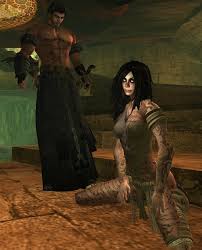 That’s not really what evolutionary psych says (and I have issues with that field, anyway). How would craving your own abuse, or even domination, be adaptive? Pain is meant to warn us to stop doing something. Women’s genes don’t crave poor treatment. If they did, we’d find eroticized violence in every culture, but we don’t. Egalitarian societies like those of the American Indian (before contact with patriarchy) did not sexualize abused women.
Here are two big problems with eroticizing male dominance and women’s pain: First, women and men can both come to crave the abuse of women in real life. Second, when we make male dominance seem sexy, we become more accepting of male dominance.
Neither of these aid the fight for equality, justice or human rights.
Popular Posts of BroadBlogs
Frats Invite Sluts, Bitches; Women Accept Degradation. Why?
What Do Top Model and Hard Core Porn Have in Common?
Women: Climax Less Likely in Relationship Sex
Men: Climax More Likely in Relationship Sex
Orgasm: It’s All in the Mind

 BroadBlogs