Blog Archives
Stop Objectifying Yourself: 4 Daily Rituals
 Sexual objectification hurts women.
Women who see themselves as primarily objects of desire for others have higher levels of body shame, clinical depression, eating disorders and experience higher levels of sexual dysfunction. They also have lower levels of self-worth and life satisfaction, cognitive functioning, motor functioning, access to leadership and political efficacy. And they waste a lot of time primping. As they age they lose even more value in their own eyes.
Men who objectify also dehumanize women and believe they are less competent and less worthy of empathy. So no surprise that objectifiers are more tolerant of sexual harassment and rape myths.
So says Occidental College professor, Caroline Heldman.
In the post below, originally published in Ms., Dr. Heldman suggests daily rituals that interrupt harmful objectifying scripts. (This is the last of a four-part series. See Part 1, Part 2 and Part 3.)
Sexual Objectification 4: Daily Rituals to Start
1) Start enjoying your body as a physical instrument. Girls are raised to view their bodies as a project they have to constantly work on and perfect for the adoration of others, while boys are raised to think of their bodies as tools to master their surroundings. Women need to flip the script and enjoy our bodies as the physical marvels they are. We should be thinking of our bodies as vehicles that move us through the world; as sites of physical power; as the physical extension of our being in the world. We should be climbing things, leaping over things, pushing and pulling things, shaking things, dancing frantically, even if people are looking. Daily rituals of spontaneous physical activity are a sure way of bringing about a personal paradigm shift, from viewing our bodies as objects to viewing our bodies as tools to enact our subjectivity.
Suggested activity: parkour,”the physical discipline of training to overcome any obstacle within one’s path by adapting one’s movements to the environment,” can be done any time, anywhere. I especially enjoy jumping off bike racks between classes while I’m dressed in a suit.
2) Do at least one “embarrassing” action a day. Another healthy daily ritual that reinforces the idea that we don’t exist to only please others is to purposefully do at least one action that violates “ladylike” social norms. Discuss your period in public. Swing your arms a little too much when you walk. Open doors for everyone. Offer to help men carry things. Skip a lot. Galloping also works. Get comfortable with making others uncomfortable.
 3) Focus on personal development that isn’t related to beauty culture. Since you’ve read Part 3 of this series and given up habitual body monitoring, body hatred and meaningless beauty rituals, you’ll have more time to develop yourself in meaningful ways. This means more time for education, reading, working out to build muscle and agility, dancing, etc. You’ll become a much more interesting person on the inside if you spend less time worrying about the outside.
4) Actively forgive yourself. A lifetime of body hatred and self-objectification is difficult to let go of, and if you find yourself falling into old habits of playing self-hating tapes, seeking male attention, or beating yourself up for not being pleasing, forgive yourself. It’s impossible to fully transcend the beauty culture game, since it’s so pervasive and part of our social DNA. When we fall into old traps, it’s important to recognize that, but then quickly move on through self forgiveness. We need all the cognitive space we can get for the next beauty culture assault on our mental health.
Originally posted in Ms., reposted with permission.
Also posted on Caroline Heldmans’ Blog.
Related Posts on BroadBlogs
Sexual Objectification, What is it?
Sexual Objectification, The Harm
4 Daily Rituals to Stop Objectification
Share this:

Surviving Beauty and its Privileges
The supermodels weren’t just about physical beauty. They had character. They had personality. They had something on the inside that came through.

Or so Calvin Klein opined on HBO’s documentary, “About Face: Supermodels, Then and Now.”
Supermodel, Pat Cleveland, agreed:
I have seen so many girls come and go because they had nothing going on inside.
Maybe that’s why they were supermodels.
Or maybe that’s why they survived being supermodels.
The cover girls had plenty to contend with: the temptation of ego-inflation amid fawning and primping and everyone saying they’re so great because they’re so beautiful. Or, fearing they could never live up to the hype. Anorexia, bulimia… Sex, drugs and rock ‘n roll…
The supermodel’s life was full of highs and lows.
![0-whiteny[1]](https://broadblogs.com/wp-content/uploads/2013/05/0-whiteny1.jpg) “We lived the greatest adventure of all in those days,” Marisa Berenson reminisced, “We were so free and we wanted to taste everything and do everything.”
“We lived the greatest adventure of all in those days,” Marisa Berenson reminisced, “We were so free and we wanted to taste everything and do everything.”
Jerry Hall expounded, “Salvador Dali, Andy Warhol. We met all these amazing people. It was about making this whole world that you would enter into.”
Pat Cleveland relished the memory:
I was a liberated woman in those days. I had the pill, I had the clothes, I had the place to go. We didn’t know who we were with. The girls with the boys and the boys with the boys. Just get with the best-looking thing you can find! And there were a lot of good-looking people in the modeling business.
Some people got lost in that….
Drugs, anorexia… AIDS. “AIDS was like a fire that went straight through the heart of the business,” Paulina Porizkova recalled. “Is my friend so thin because she’s smoking too much or partying too much, or is it AIDS?”
In Pat Cleveland’s eyes, “Everyone was dressing in black and they started disappearing and I knew it was the end of a time.”
I’m not sure why the supermodels who show up in “About Face” came out alive and mostly well. But I was struck by how many had created space between “who they are” and “what they projected” in those super images.
![Paulina_Porizkova[1]](https://broadblogs.com/wp-content/uploads/2013/05/paulina_porizkova1.jpg) Isabella Rossellini remarked that, “I understood it was an image. It wasn’t me.” Paulina Porizkova, Pat Cleveland and China Machado echoed the theme. Kim Alexis came to see that beauty didn’t make her happy – family did. And Carol Alt remained grounded throughout:
Isabella Rossellini remarked that, “I understood it was an image. It wasn’t me.” Paulina Porizkova, Pat Cleveland and China Machado echoed the theme. Kim Alexis came to see that beauty didn’t make her happy – family did. And Carol Alt remained grounded throughout:
At my first job the editor walked in and said, “Who cuts your hair? Your eyebrows look like shit. And you’re too big for our clothes.” But I knew who I was so it didn’t hurt me. After that it changed for me a little bit but I still knew who I was. I’m a fireman’s daughter from Long Island. And that’ll never change.
When Cheryl Tiegs finished college her agent told her that the key to beauty was “always educating yourself. Always learning something new, always doing something new, having something to talk about. And I think that’s how one ages beautifully.”
Pat Cleveland talked of making people appreciate what you’re wearing by being alive in it:
On the runway it’s as though I’m lifting off the ground. I want to hear drums playing and express all that rhythmy feeling in your soul. It’s almost orgasmic.
Dayle Haddon thought other models were more beautiful than she was, so she brought more than what she looked like.
Through a picture I felt like I could communicate. That’s where beauty lies. How do you translate your experiences – good or bad – into something that is meaningful to yourself and to others?
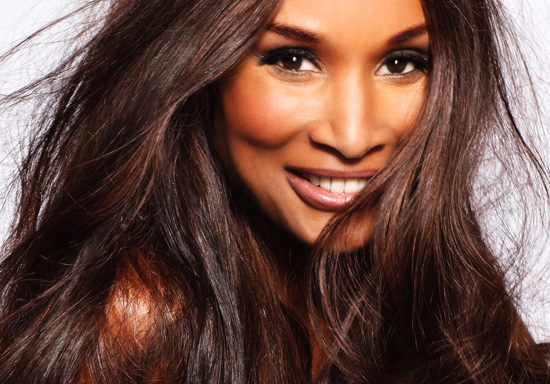 People who face abuse and prejudice often develop both character and empathy for others. Maybe that’s what happened to Pat Cleveland as the Ebony Fashion Fair traveled the states:
It was hard work, especially in the South. We were in this Greyhound bus and stopped to go to the bathroom and they said, “You black girls can’t go in there,” except for me because I was only 1/8 black so I didn’t look black, but everyone else did. And then these angry guys came toward the bus with sticks and the bus driver says, “We’ve got to get out of here!” but he couldn’t get the bus started to get away, and the men started banging on the bus and tried to turn it over, and it was very frightening.
Others developed an attitude to protect themselves. China Machado exhibited the unique walk she used to look empowered and intimidating: commanding, with arched back, wide gestures, and head held high – in an effort to avoid sexual harassment.
Most interestingly, some could see their beauty only after living, surviving, and gaining self-assurance. Despite Paulina Porizkova’s ravishing youthful looks she only came to see herself as beautiful a couple of years ago. She now says, “The most beautiful thing is confidence.”
Ah, lessons from supermodels. Who knew?
Popular Posts on BroadBlogs
Must We All Look The Same? Variety Is The Spice Of Life
Beauty Tricks to Remove Your Power
Believe You’re Beautiful – Others Will, Too
Share this:

Angelina’s Boobs: Cock-Equivalent?
I can’t believe Angelina sacrificed her boobage!
I don’t know one guy who would cut off his cock in the name of cancer-prevention. I wouldn’t!

That’s the DJ blather I had the misfortune of hearing on my morning commute the day Angelina Jolie announced her double mastectomy to prevent cancer.
It made me wonder.
Why would these guys choose their cocks over life?
And boobs are a cock-equivalent?
The male member makes babies and gives pleasure (not necessarily in that order), and eliminates waste. Breasts do just one of the three — and they are not the only route to pleasure. In fact, the clit works better.
And while men love looking at Angie’s boobs, women are less enamored of the male package, or gazing at it, anyway.
And of course, some guys think a bigger cock means a bigger man. (Not true.)
I’m not sure that women see their breasts in quite the same way. Sure, they’re seen as a sign of femininity and some women want bigger ones to feel more womanly. Yet others are secure in their femininity, regardless of size: Keira Knightley, Mila Kunis, Paris Hilton, Kate Middleton and her sister, Pipa, for instance.
And as Angelina now says,
On a personal note, I do not feel any less of a woman. I feel empowered that I made a strong choice that in no way diminishes my femininity.
So what about a man choosing his cock over his life? A male student of mine wrote a piece I will be posting called, “Doing dumb stuff to prove manhood.” Maybe this is an example?
But of course, breasts have been a defining trait of Angelina Jolie – take those away and there’s nothing left if you happen to be a boob-obsessed guy? A kind of death, as far as they are concerned?
Or, if a woman is defined by her boobs and her man-appeal, maybe some dudes are just pissed that a woman would think that her body and her life are for herself and not for them?
Are others just disconcerted? Angie’s hot — even without natural C-cups. How could that be?
Boobs are a big thing, but in one stroke they’ve lost a chunk of cultural power, says Alexandra Bradner at Salon,
She absolutely robbed them of their cultural, symbolic power. And what’s so completely thrilling about this, is that she did it on her own, one single woman — one single decision — against the machine.
Imagine, valuing women for themselves and not for their breasts. For some, that is plenty disconcerting. No wonder there’s a bit of a backlash on the man-o-sphere.
Popular Posts on BroadBlogs
Beauty Tricks to Remove Your Power
Miss Representation: How I Look Is What Matters
Love My Body
Share this:

Be Sexy, Not Sexual – Ya Think?
 Good girls are sexy, bad girls are sexual. Can that message wreck havoc on women’s sexuality?
Miss Universe can pose for Playboy, but she’d better not have sex with an actual playboy.
Sexual girls may be “sluts” and “ho’s” but all girls are bombarded by sexy-women images — that tell them what they’re supposed to look like. Combined with a high school hierarchy based on looks, the message gets thru that a woman’s worth rests largely upon her ability to attract.
Some seek confirmation that they are, indeed sexy, and therefore, “worthy” by drawing the male gaze.
Walking down the street a young woman meets male approval. Or, she may try sexting. All for his pleasure and her self-esteem.
Some have sex with men, hoping to feel beautiful. But a young woman who tries that is back to being a bad girl because now she’s sexual. Except that she’s not. She’s being sexy for someone else’s pleasure — a sex object who doesn’t enjoy sex — even as she enjoys looking good.
Kerry Cohen, psychotherapist and author of Dirty Little Secrets: Breaking the Silence on Teenage Girls and Promiscuity says,
The problem is not necessarily that girls are victims of predatory males. It’s that they are victims of very narrow definitions of sexual desirability. And in the course of confirming their desirability – and hence their worthiness – they end up completely removed from their own sexuality and experience of sexual desire.
So how can young women get in touch with their sexuality on their own terms? Dr. Cohen has some suggestions:
1. Talk about Desire. When girls ask parents how they will know they are ready to have sex, desire rarely comes up:
We tell them that sex will get in the way of their happiness and growth. We tell them they must be in love. We tell them that good sex happens only when you are in love… (We must acknowledge) that girls have sexual desire, and everything can change.
2. Talk about Outercourse. Think second and third base, she says, or phone sex, so that young women can explore and test intimacy and communicate with their partners. Plus, women get more orgasms through outercourse than intercourse, anyway.
3. Talk about Masturbation. Women need to get in touch with their own bodily pleasure. It’s hard to know what you like, or communicate what you like, unless you get know your body and how it responds.
4. Talk about Emotions. Sex and sexual feelings are too often removed from emotions in our society, says Cohen, even though they are entwined. Young people need to think about various types of sexual acts and whether they are interested in them, or even prepared for them.
It’s about time more women enjoyed sexual pleasure instead of just being sexy for someone else’s.
Popular Posts on BroadBlogs
Sex Objects Who Don’t Enjoy Sex
Lose Virginity, Lose Self-Esteem?
Sexual Desire & Sexism
Share this:

Gender-Bending Ads
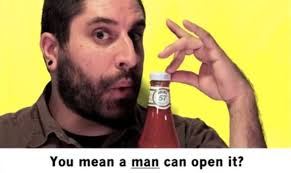 What if you lived in a world where gender-as-we-know-it were switched?
As you drive to work you see billboards with scantily clad men drawing your attention to products that they gracefully caress. Other men bend over in ways that make you want sex with them. In some ads women lord it over submissive men.
You arrive at your ad agency, and as Creative Director you take a look at new ideas your copywriters have brought:
 1) A dead man lies in an open trunk with his legs hanging over the trunk’s edge to show off some Jimmy Choo shoes. A woman stands nearby holding a murder weapon.
2) The silhouette of a man with a beer body and a foam head appears. Copy reads, “You never forget your first guy.”
3) Two women surgeons sit near a male patient who is sprawled over an operating table, dressed in just a thong. A scalpel “knife’s” his body in an ad for a TV show called “Nip Tuck.”
4) A man didn’t make coffee right so his wife spanks him.
In this world women are the dominant sex consumers who expect men to “turn them on,” passively open to them, and submit to them — sexually and otherwise. And if they don’t behave, the men will be punished.
Here’s a video on how such a world would look:
Popular Posts on BroadBlogs
Guys, Girls Swap Roles at a Bar
If Sports Were Covered Like Women’s Beach Volleyball
Men: Erotic Objects of Women’s Gaze
Share this:

Flip Gender, Flip Ways of Seeing
Flipping images of women and men can flip our way of seeing.
This picture of Steve Carell, Jon Stewart and Stephen Colbert posing like female supermodels is making its way around the web:

(Is Stephen Colbert so hot because he’s not wearing glasses? Or is it that pose?)
Over at The Gender Press a “side-by-side” comparison of real Victoria’s Secret models and men posing to look like them is jarring. The women look sexy, but I’m not sure the men do. We are definitely not used to seeing men posed “sexily” in that way.

This superhero image has also gotten around:

Ready and willing, these guys may strike terror in the hearts of villains. But not for fear of getting beaten up.
The Gender Press offers another take on the theme:

No if’s, and’s or butts with these Avengers. Unless gender is switched — in Kevin Bolk’s parody.
Men come across as tough and strong, as assertive or aggressive. Or at least standing upright.
Women are more likely sitting or lying on the floor, maybe caressing themselves or an object. And if at all possible, their butts or breasts are aimed at us.
Even when women are depicted as tough, best to add sexy and stir? Even as we move outside the box, we get put back in it.
Popular Posts on BroadBlogs
Anything Good About Being A Sex Object?
Why Men Objectify
Nude Men Seem Less Intelligent
Share this:

Jon Hamm Hates Being A Sex Object
 Jon Hamm, aka Mad Men’s Don Draper, is sick of being objectified.
With photos and gossip targeting his penis, and with headlines like: “Jon Hamm’s Penis Is Too Big for Clothes,” Hamm is majorly annoyed! As he groaned to Rolling Stone:
They’re called privates for a reason. I’m wearing pants, for f-‘s sake. When people feel the freedom to create Tumblr accounts about my cock, I feel like that wasn’t part of the deal.
Female celebs are objectified all the time. Remember how Anne Hathaway’s nipples seemed more important than Anne Hathaway’s Oscar? Even Princesses get caught in the net, viz., Kate Middleton’s “Boobgate.”
Women are supposed to be used to this sort of thing. But men aren’t used to it.
A lot of guys probably think that objectifying is no biggie – and maybe even a complement – until men are.
When sociologist, Beth Quinn, asked men how they thought women felt about being stared at and commented on, most hadn’t given it much thought. It’s just something guys do. It’s no big deal.
But when she asked them to imagine waking up in a woman’s body things changed. Guys typically said they did not “know how to be a woman.” But as they talked, they mirrored what women said. Now that their identities and abilities – and humanity – were ignored, they didn’t like it and wanted to avoid it.
Here’s what one guy said:
I would probably have to be very concerned about my attire in the lab. Because in a lot of cases I’m working at a bench and hunched over, in which case your shirt, for example, would open up and I would just have to be concerned about that.
In everyday life he needn’t worry about his clothing or how he looks at every angle. Suddenly he does. And sometimes it doesn’t matter what you wear, you will get commented on anyway.
Turns out, men, women and Jon Hamm don’t really like being reduced to being all about sex and nothing else.
Popular Posts on BroadBlogs
Anything Good About Being A Sex Object?
Does Porn Objectify? Experts Disagree
Why Men Objectify
Share this:

Enticing a Woman’s Libido
This matter of women liking sex less than men is confusing. I enjoy sexuality very much as a man and am disheartened by the seemingly in-your-face fact that women don’t enjoy sex as much as we men do. To me sex is a total experience (heart, soul, mind and body) and it seems that if women don’t enjoy this important part of healthy relationships, then they aren’t as attracted to men in all those ways. I don’t know, it would be nice to actually feel very attractive to the opposite sex. The whole thing makes me very sad, i dunno.

That’s one man’s reaction to a blog post I wrote asking, “DO Women Like Sex Less Than Men?” I wrote the post because statistics suggest that, on average, women do typically like it less.
That’s because women’s sexuality has been repressed by a culture that calls us sluts and ho’s and describes men getting sex with women in unappetizing ways: screw, f-, bang, nail, ram, smash, smack that, beat those… Or, women may get distracted with worry about not looking good enough. And if they do think they look good, they may focus on looking hot for the guy. Who can be in touch with sensual feelings with all that going on? Not to mention, women who have been raped often don’t enjoy sex at all.
Women in egalitarian, sex-positive cultures love sex and are easily and multiply orgasmic. They don’t even need a vibrator.
The problem is sexism, not biology.
The question remains: What to do?
As a society we need to heal. Women, their sexuality, and their bodies — in all their many forms — must be respected and celebrated. And we must put an end to a rape culture that so often blames the victim and fails to punish rapists.
Over time, both sexism and sexual repression have diminished, so there is hope. But cultural change takes time. What can we do right now?
If sexual abuse and trauma are part of a woman’s past, she likely needs therapy and a great deal of understanding from her partner. Too many couples try to struggle through the problem alone when they need help.
Meanwhile, the beauty ideal has narrowed to impossible standards, leaving many women feeling sexually undesirable – and that dampens libido. So women need to become more loving and accepting of their bodies, and men need to appreciate and communicate the unique beauty their partners hold.
Also, let go of how you look and get in tune with how you feel. Focusing on looks is a huge distraction. Instead, center on small sensations that grow larger as you submerge yourself in them.
Deep connection may also help partners to merge and emerge into a transcendent experience. As one woman describes it:
There is a form of sexual ecstasy that mimics the union of God and man, recreation of the world. I can’t really describe this experience… But pure joy and connection with another person I feel is becoming closer to the cycles of life and the underlying palpable energy to the world… in essence, God.
And finally I’ll repeat some advice to men from earlier posts:
If you want your partner to desire sex then romance her, show appreciation, stop shaming women for being sexual, or for not fitting ridiculous “ideals,” desire her and let your lady know she’s beautiful.
Popular Posts on BroadBlogs
Does Sexual Objectification Lead to Bad Sex?
Sexual Desire & Sexism
Turning on the Sex Goddess
Share this:

Rather be a Victoria’s Secret Angel or You?
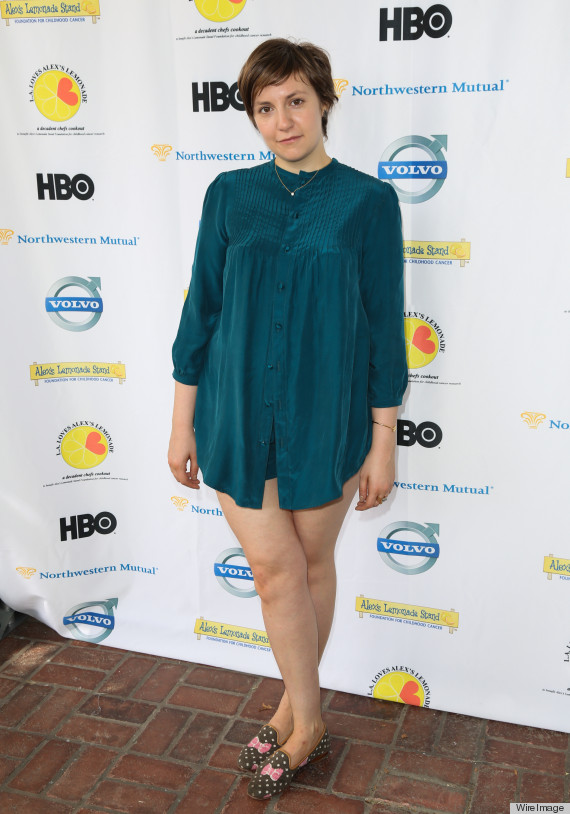 Playboy wanted to know how average-looking Lena Dunham, the award-winning producer, director, writer and star of HBO’s Girls, would feel if she woke up in the body of a Victoria’s Secret Angel.
Not so great, said Dunham, who frequently appears nude on her show.
I don’t think I’d like it very much. There would be all kinds of weird challenges to deal with that I don’t have to deal with now. I don’t want to go through life wondering if people are talking to me because I have a big rack. Not being the babest person in the world creates a nice barrier. The people who talk to you are the people who are interested in you. It must be a big burden in some ways to look that way and be in public.
Looking like a Victoria’s Secret Angel instead of me. I can see the upside. Women are hugely judged by their looks so in an Angel-body I’d land at the top of the pack. How nice. And I could have any guy.
But studies show a downside. Plain women are more likely to get a job interview, for instance. Maybe they seem less sex objecty and more brainy. The beautiful are also believed to be more conforming and self-promoting.
Or, therapist, Mary Pipher wrote in her bestselling Reviving Ophelia that,
Girls who are too attractive are seen primarily as sex objects. Their appearance overdetermines their identity. They know that boys like to be seen with them, but they doubt that they are liked for reasons other than their packaging.
Michael Kimmel, a sociology professor who studies men, says some guys are more interested in bragging to other guys that they nailed a beautiful girl than in having sex with her. Other guys entirely miss seeing the girl because they’re obsessed with her body.
Meanwhile, girls who are too plain are ignored and miss a lot of experiences. Pipher continues:
The luckiest girls are neither too plain or too beautiful. They’ll be more likely to date boys who genuinely like them. They’ll have an identity based on other factors, such as sense of humor, intelligence or strength of character.
And then there’s this: A lot of guys thought Dunham’s response was B.S. But in a Slate comment thread one woman wrote,
You think you’d be happier if you were better-looking, but would you feel the same way if you were in prison? You don’t associate being attractive with any sort of threat, but for women it can be.
On a more mundane note, it’d also take a lot of time, work, starvation and calorie-counting to keep up that body when you could be doing other stuff. Healthy is good, “perfect” takes too much time and surgery.
Popular Posts on BroadBlogs
How to Look Like a Victoria’s Secret Angel
Celebs Less Weight-Conscious
Believe You’re Beautiful – Others Will, Too
Share this:

Gentlemen Prefer Big Boobs?
 A new study on men’s breast size preferences may or may not be surprising.
University of Westminster researchers showed 361 British men 3-D models of women with different bust sizes and asked which woman they found most attractive.
A lot of women think that men only like big breasts, but this study says otherwise. Yes, nearly half – 44% – favored larger busts. But more than half didn’t, with one third preferring medium-sized gals and another quarter saying smaller is better. So there’s a range.
And, the researchers focused on white men because prior studies showed that preference varies by ethnicity. Once again, it’s not a one-size-fits-all kind of thing.
It all goes against pop evolutionary psychology which claims men want bigger breasts because they indicate health and fertility. First of all, most men don’t prefer larger over smaller. Second, if men preferred larger, then those genes would have been spread more widely and we’d have a lot more large busted women around today. Finally, there is no evidence that large breasts are associated with better health or fertility.
And even men who love big breasts may come to love more petite women, and vice-versa, as many can attest.
So ladies, you needn’t get expensive and potentially dangerous surgeries (which need to be redone every ten years) for implants.
And here’s another reason you don’t need them: Men who preferred big boobs were more likely to be sexist.
After indicating their breast preferences the guys were surveyed on how much they objectified women, felt hostility toward them and practiced benevolent sexism (seeing women as weak and needing protection).
Turns out, a preference for large breasts was most common among men in all three of those sexist categories, and most especially, among those who saw women as weak.
Now, men who are partial to buxom women aren’t always sexist. The Western world acts like “bigger is better” so no surprise that many men come to think so.
At the same time, the pattern makes a certain amount of sense. One researcher suggested that,
It is arguable that benevolently sexist men perceived larger female breasts as attractive because larger breast size on a woman is associated with perceived femininity.
And if you are going to objectify, it helps to easily see the crucial body parts.
That said, women should be confident and proud of their bodies, however they are shaped. That confidence will attract the best guys.
Popular Posts on BroadBlogs
Men’s Mags Celebrate Varied Body Types
The Plump Beauty Ideal: Exotic Dancers in 1890
You’re Hotter Than You Think

 BroadBlogs