Category Archives: sex and sexuality
Homophobes Aroused by Gay Porn
You’d think homophobic men would be the least likely to get aroused by homoerotic images. Think again.
Researchers at the University of Georgia surveyed young men on the degree of homophobia the felt, as measured by their self-described levels of aversion to gay men, and specifically, the intensity of “dread” they experienced interacting with them.
Then they wired them up and showed them gay porn, lesbian porn, and straight porn. Eighty percent of the homophobes experienced arousal at the homoerotic screenings. The non-homophobic men did not.
Are these men unconsciously deceiving themselves? Or are they consciously trying to draw attention away from their homosexuality? Who knows?
One gay man told a story about attempting the latter. Writing for Scientific American, Jesse Bering said, “My earliest conscious tactic to hide my homosexuality involved being outlandishly homophobic. When I was eight years old, I figured that if I used the word “fag” a lot and on every possible occasion expressed my repugnance for gay people, others would obviously think I was straight. But,” he continued, “although it sounded good in theory, I wasn’t very hostile by temperament and I had trouble channeling my fictitious outrage into convincing practice.”
Maybe it helps to be mean and angry, too.
Jesse went on to cite the Freudian concept of reaction formation which occurs when repressed desires become manifested in sharp emotional reactions and hostile behaviors toward the thing desired.
Plenty of gay homophobes screech against the so-called “sins” of the orientation, but end up outed, anyway: Evangelical Ted Haggard, George Rekers of the Family Research Council, and anti-gay megachurch pastor Eddie Long are a few who come to mind. The whole scene is reminiscent of the homophobic gay man from American Beauty attacking what he feared – his own gayness.
“Thou dost protest too much,” to paraphrase the bard, Shakespeare.
Really, who are you trying to convince?
Popular Posts on BroadBlogs
“Cock” vs “Down There”
Sex: Who Gets Screwed?
Women Learn the Breast Fetish, Too
Sex Objects Who Don’t Enjoy Sex
Share this:

Anything Good About Being A Sex Object?
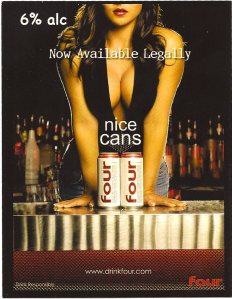 When I ask my students if they can think of anything good about being a sex object they think there must be something positive, since so many women put a lot of effort into being sexy, with some aspiring to “sex symbolness.” Here’s what they say:
- Sexy women get attention. They feel attractive and admired, so it’s a source of self-esteem.
- It’s nice to feel wanted and desired. It’s easier to attract mates or just get sex.
- It can be fun to feel sexy.
- Sex is a historic source of power for women. Sexiness can gain women resources, whether through marriage or getting men to do favors. It puts women in control over men.
Then I ask if there’s a downside. More comments:
- It can be uncomfortable being gawked at. You can feel like you’re only a sex object – and that’s all, like you’re not worth a lot.
- You can feel disrespected. Guys just want one thing. You get used.
- When women are seen as all about sex, and they don’t want to put out, they’re seen as bitches.
- You aren’t seen as intelligent. You aren’t taken seriously.
- Your personality disappears.
- It can feel inauthentic, feeling pressured from friends or society to look sexy.
- Sexual objectification leads to sex trafficking. Treating young women and girls like they are nothing but objects that exist to pleasure men. They have no lives. They’re all about sex and nothing else. And they’re not given an opportunity to be anything else.
But there are problems when you don’t meet sex-object standards, too:
- You feel like you’re constantly being judged, and not coming out well.
- You may starve. Or get implants and die (that does happen). You have false hope, and when you don’t meet the standard you lose self-esteem.
So much contradiction. Is there any way to get some of the positive upside without all the downside? I’ll admit to feeling the world would be a bit dull without any spice of sexiness.
How about distinguishing between sexy and sex object. And broadening our notion of what “sexy” means?
Objects are treated as little more than a means to others’ pleasure. They are not people with lives, goals, thoughts or emotions. It’s one-dimensional. A limited box. And who cares how you treat an object?
So if a woman does have – and is seen as having – a life, goals, emotions and intelligence, and sexiness is one part of all that, then she can be a full person – who is also sexy.
But still, can we move outside the narrow notions? Who’s sexy to me? Women and men who are classy, smart, talented, confident, and who make a difference in the world.
I nominate:
Nancy Pelosi, Thandie Newton, French politician Marie-Ségolène Royal, Helen Mirren, Angelina Jolie, Jackie O, Jennifer Lopez, Toni Morrison, Queen Rania of Jordan, Barbara Walters, Sandra Bullock, Zhang Ziyi, America Ferrera, Diane Sawyer, Jennifer Aniston, Queen Latifah, Gloria Steinem, Julia Roberts, and Maria Shriver.
And men? My list includes:
Ezra Klein, Benico del Torro, Ed Harris, New York Times columnist, Princeton professor and Nobel Laureate Paul Krugman, CNN anchor T.J. Holmes, Tom Brokaw, Brad Pitt, Barack Obama, Stephen Colbert, Gabriel Byrne, Japan’s former Prime Minister Koizumi Junichiro, JFK Jr., Antonio Banderas, Sidney Poitier, Javier Bardem, and White House corresspondent, Jake Tapper.
Yeah, sexiness can be fun and alluring, when moving outside narrow limits. But sex objects are just trapped.
Popular Posts on BroadBlogs
Men Are Naturally Attracted To Unnatural Women
The Constricting Bodice: Empowerment and Imprisonment?
What Happens When You Beat A Sex Object?
Share this:

Rape: As If Female Sexuality Were Male Sexuality
“It’s just he said, she said,” opined one of the ladies of The View, discussing IMF Managing Director, Dominique Strauss-Khan’s alleged rape of a hotel maid.
That is true. We don’t know for sure whether Strauss-Khan committed the crime. But sometimes it seems that talk of rape allegations sees female sexuality as if it were male sexuality.
Strauss-Khan admits to having sex with the housekeeper but insists it was consensual. Yet the scenario he asserts hardly matches female sexuality, as it is typically manifested in the Western world.
Just to note a few recent studies, which I have written about in greater detail in other posts:
Women are rarely interested in having sex with a stranger. Men are much more likely to accept a stranger’s proposal. For women, it doesn’t matter whether the offer comes from someone they know and trust or from someone they don’t. Most times they just aren’t interested. Unless the offer comes from Brad Pitt or Johnny Depp. Maybe it’s just me, but Dominique Strauss-Khan seems a bit lacking in Depp/Pitt appeal.
Women and men typically watch different types of porn, too. Men like the sort that matches Strauss-Khan’s version of events. Something to the effect of: “She saw me naked when I came out from the shower and we had amazing sex.” Yet women who watch porn usually like a story line with a little character development.
Women are much more likely to read romantic erotica than to watch porn, anyway. Even more story and character development! Sex is not for its own sake, and not with impersonal strangers. And this matches most women’s interest in the real world, where they unconsciously scrutinize all evidence about their lovers, with sexual arousal igniting only when everything is in place.
Even when they go to bed with a man, women are likely focused on how they, themselves, look – “So hot!” if they are proud of their appearance, or “Does my butt look too big?” if they aren’t – than great sex.
Why the difference? For one, women don’t learn to objectify men in our culture, leaving us less likely to get hot at the mere sight of a naked male. In fact, one study found women getting more aroused by a nude woman than a nude man, when measuring blood flow to the vagina. Perhaps due to lopsided objectification?
Meanwhile, women’s sexuality is more repressed. Women are more likely to be labeled sluts for enjoying sex, or seen as “giving it up” while men seem to be gaining something, like status. Products that aid women’s sexual enjoyment are less likely to be advertised, as with Viagra versus vibrators.
Not surprisingly, women report less sexual interest and enjoyment, on average.
Plus, women need foreplay.
All said I find Strauss-Khan’s version of events unlikely. Of course, not all women are the same. Some enjoy sex with strangers and seek the kind of porn that men enjoy.
But most don’t.
I’m not saying this proves that the hotel maid was raped. But when people think it is just as likely that she made wild love to this unfamiliar man, it feels like male sexuality is being projected onto women.
Georgia Platts
Related Posts on BroadBlogs
Lose Virginity, Lose Self-Esteem?
Sex Objects Who Don’t Enjoy Sex
Men: Erotic Objects of Women’s Gaze
Share this:

Men Watch Porn, Women Read Romance. Why?
 Years ago I met a man who intrigued me. He was my first real love. But I didn’t go headlong into a relationship, I wanted to get to know him, understand him.
I became the detective, trying to determine whether he was right for me. Was he devoted, caring? Empathetic? Did he appreciate me? Was he in love with me or was I just a passing fancy?
He thought understanding each other was overrated.
My sleuthing confirmed my initial attraction – that he was deep. Unless the subject was sex and relationship, which he thought were the same thing. Big problem!
I eventually learned that this dynamic – men seeking sex and women seeking answers – is not unusual. It is even reflected in the erotica we seek.
A recent piece in the Wall Street Journal by Ogi Ogas says that men search the internet for two-minute clips that are all about skin and explicit sex. Women’s erotica is more like detective novel meets romance, and takes hours to read and digest. (The number of women romance readers and male online porn viewers are about the same. And keep in mind that one in 10 men are into romance while one in 10 women check out porn clips.)
The men’s interest is simple, uncomplicated. But women more likely want character-driven stories that reveal the lover’s nature. Sex is not for its own sake, and not with impersonal strangers.
As Ogas notes, the female cortex is highly developed and skillfully scrutinizes all available evidence – social, emotional and physical, somewhat consciously but largely not. All this leads to a general feeling of favorability or suspicion: Is he committed and kind? Is he a rouge? A player? Only if the detective work leads to a stamp of approval will physical and psychological arousal unite.
Men’s desire has been likened to an on/off switch, while women’s to a complex circuit board.
Why? Who knows? Some will point to evolutionary psychology: To best reproduce themselves women need a man who will stick around and support their children with resources. So women must be careful, picky. But men (having a great deal of sperm) best reproduce themselves by willy-nilly spreading their seed. It’s a popular theory, but I have my doubts since women in some cultures behave a lot like our sexual stereotype of men. American Indians prior to European contact, for instance.
Others say that in a world where women have less power, women’s lives are more affected by men than vice-versa, so they need to be more careful, even if their sleuthing isn’t very conscious. Women are more likely to follow husbands who are transferred in their careers than vice-versa, for instance. Also, men’s social status affects women more than women’s status affects men’s. When a waitress marries a dentist, her social status immediately rises to his. Not so much for the trucker who marries a female business executive.
And since men are typically bigger and stronger, abused women suffer greater injuries and have more difficultly defending themselves.
Women are also more likely to depend on men, financially, because they are more likely to stay home full-time with kids. Is he dependable? Can he keep a job? If men leave, women in our society bear all the responsibility for children (versus Ancient American Indians who parented communally).
Also, women’s sex drive is typically lower in our culture (largely due to repression), perhaps leaving women wanting emotionally connected sex more than variety and experimentation.
And of course, women were raised on a diet of Disney princesses living happily ever after with their one and only true love. Could have an effect.
Meanwhile, because men are bombarded with sexually objectified women, they come to see women’s bodies as objects that are all about sex, with women’s body parts as sex-signals. Hence the simple look-arousal response. (Surprisingly, the breast fetish seems to be learned, not natural.)
When women and men so often have contradictory ways of seeing and being, you have to wonder why (for about 95% of the population) women and men are thrown together in the first place.
That said, guys are getting more romantic. So while there are reasons why women are more likely to read romance novels and men are more likely to look at two-minute porn clips, in real life there is a bit more coming together.
Related Posts on BroadBlogs
Women Want Emotionally Connected Sex. Why?
Cartoonish vs Authentic Sexuality
Women Want Casual Sex? Yes and No
Share this:

Making Relationship Violence Sexy
The blogosphere was abuzz last week with talk of TV’s Gossip Girl where antihero, Chuck Bass, humiliated ex-girlfriend, Blair Waldorf, by tattling on her sexual past in front of her new boyfriend’s mother. He followed up by telling Blair she couldn’t be with anyone else because, “You’re mine.” Enraged, he wrestled her onto a sofa before hurling his fist through a window, a shard of glass cutting Blair’s face.
A reporter from E! Entertainment called the cut, “the most perfect, beautiful, dainty injury.”
Are Chuck’s violence and controlling ways meant to be seen as “perfect” and “beautiful,” as well, set within the passion of unrequited love?
As the story goes along, it appears that Blair isn’t the one who’s hurt. Chuck is. He loves Blair too much for his own good, according to the show’s producers and this week’s episode.
Unfortunately, sexualized violence is hardly a new story. Popular romance novels are commonly called “bodice rippers.” The hero fears his love of the heroine and the vulnerability his affection might bring. He must stay strong and resist, in part by treating the object of his desire poorly. Finally he gives in in a torrent of ripped clothing.
In these stories the heroine reforms the rouge and wins in the end.
What message do young women get while watching abusive lovers in Gossip Girl or reading romance? That a lover’s harm exposes his love? That she will ultimately transform him? That it’s all so romantic? That it’s all so normal?
Maybe. Along these lines it’s interesting that one-third of abused women expect to marry their abuser. Why? First, they take the jealous rage as a sign of deep love and passion. Second, they believe that marriage will end his abuse-causing insecurity. Yet after marriage, violence escalates.
Signs of an abusive lover include controlling behavior, pushing for quick involvement, persistent jealousy (especially jealousy that leads to verbal or physical attacks), constantly checking up, isolation (cutting off family and friends), blaming others for his problems, insulting yet easily insulted, unrealistic expectations (you must be perfect and meet his every need), and rigid gender roles.
Should you choose to leave an abuser, contact a shelter or hotline to form a plan of action. Do not tell the abuser you plan to leave, as this is the most dangerous time. Knowing he’s lost control, he may seek to take ultimate control: your life. The National Domestic Violence Hotline is 800 799-7233.
Helping friends who are in abusive relationships can be difficult, for victims are often in denial about how bad the situation is, or about their ability to leave. Experts say that it helps if friends “continually counter with messages like ‘It’s not you. You didn’t cause this. This is not a normal relationship.’”
One battered woman who eventually left credited her friends, saying, “They saw the signs from the beginning. They would tell me I would go missing and my picture would end up on a milk carton. Over time, it slowly sank in.”
Of course, it might be a good idea to stop romanticizing and normalizing violent relationships in the first place.
Georgia Platts
Related Posts on BroadBlogs
Women Seeing Women as Sexier than Men
What Happens When You Beat A Sex Object?
Rape Epidemic in South Africa. Why?
Share this:

Vibrators and Women’s Sexuality: Out of the Closet?
Vibrators, once steeped in shame and secrecy, are going mainstream. Does this mean women’s sexuality has thrown off the covers, too?
As a culture, we are of two minds.
Vibrators were once illegal in several states, including Texas, Mississippi, and Alabama, or found only in seedy sex shops. But as the New York Times reports, today they may be purchased at your neighborhood drug store. Out in the open, even Oprah has pitched the helpful tool. And who can forget the “Rabbit Pearl” popping up in Sex and the City?
And yet, they aren’t quite out of the closet.
As one seller described the problem, “I can sit with my 10-year-old daughter during prime-time TV and watch a commercial for Viagra,” she said, “but I can’t advertise our OhMiBod fan page within Facebook.” Nylon Magazine won’t run her ads and the Small Business Administration refused her loan application because vibrators are a “prurient” business.
Ambivalence over tools and meds that enhance women’s sexuality reflects the larger cultural view. On the one hand the media glamorizes women’s sexuality. And plenty of porn approvingly portrays women with voracious sexual appetites.
But porn is off-limits. And women are told “Keep your legs together,” as if open legs were an open invitation.
Male sexuality is something to brag about, but female sexuality is something to hide. Men are praised as players and pimps. Women are called sluts, whores, tramps, and skanks… What positive word applies to women who enjoy sexuality?
Slang for penis and vagina says a lot, especially “cock” and “down there.” Cock: Cocky, boastful, swaggering. “Down there”? Unspeakable. Shameful.
This all reminds me of Zestra’s difficulty getting ads on TV for a product that arouses women. TV networks, national cable stations, radio stations, and Web sites like Facebook and WebMD all resisted. Yet “An erection lasting more than four hours” is O.K.?
Is it any wonder that sex surveys find mixed experiences among women when it comes sexual pleasure?
Indiana University’s comprehensive survey found that while 91% of men had an orgasm the last time they had sex only 64% of women did. These numbers roughly reflect the percentage of men and women who say they enjoyed sex “extremely” or “quite a bit”: 66% of women and 83% of men. Only 58% of women in their 20s had “the big O” on their last occasion.
As I’ve recently posted, 30-40% of women report difficulty climaxing. Women who lose virginity are also likely to lose self esteem, largely because they’re so focused on how they look (bad, they apparently think) and so unfocused on the sexual experience. And one-third of women under 35 often feel sad, anxious, restless or irritable after sex, while 10 percent frequently feel sad after intercourse.
On the other hand, many women do enjoy sex a lot, and frequently orgasm.
Does all this reflect that ambivalence, with enjoyment perhaps affected by which message gets most drilled into a woman’s mind?
Women’s sexuality kept in shadow and suspicion has an effect. Time to come out of the closet!
Georgia Platts
Ms. Magazine cross-posted this on their blog May 16, 2011.
Popular Posts on BroadBlogs
Women: Climax Less Likely in Relationship Sex
Men: Climax More Likely in Relationship Sex
Sex Lessons from Mom and Dad
Share this:

Cartoonish vs Authentic Sexuality
 “I believe we should afford our daughters and ourselves a right to our own authentic sexuality,” to paraphrase psychoanalyst and author Joyce McFadden. “Not the cartoonish MTV kind, but the kind where we respect ourselves enough to listen to what our bodies and hearts feel is right for us.”
What is authentic sexuality? In a recent post I suggested it is neither shameful nor a crutch for powerlessness or low self-esteem. But what else?
Young women are flooded with images screaming “sexy is” which can feel foreign or unpleasant. Or the market offers limited choice. Some have a hard time finding anything they feel comfortable wearing because sexy is all that’s offered.
Cartoonish sexuality is all about surface. It’s about plastic and peroxide, feeling famished and wearing clothing – or even implants – that don’t quite fit.
Actor Gabriel Olds tells a story about a woman he met at a party who blurted out, “By the way, these fake boobs are so not me.” He asked why she’d gotten them. A former boyfriend had awoken her one morning with the romantic proposition, “Hey, you ever think about getting better tits?” So she bought D-cups. He left her soon after. Eventually, she got the implants removed because they had never felt like “her.”
I asked my students how they imagined cartoonish sexuality. They saw it as a freakish figure not found in nature: Huge boobs combined with small waist and hips, big lips, bleached blond hair. Also, how society sees sexy – not what comes from inside. Artificial and superficial.
Taking it further, how cartoonish are seven-year-olds wearing Abercrombie and Finch padded bras or ten-year-olds in thongs? (Do parents actually buy these or does Abercrombie just stock them knowing they’ll bring plenty of free publicity?)
And authentic sexuality? When it came to looks, my students described it as natural, appreciating a range of sizes and body types, including your own. Light makeup (or none), a real smile, good personality, a sense of humor and confidence. Who you really are. I’ve got some pretty wise students.
Let’s turn to what inauthentic sexuality feels like. Having sex out of feeling pressured from friends or boyfriends. Having sex because it seems like the “right time,” but not because you want to.
Experiencing sexuality through the male gaze is not authentic, either. Women too often focus on how they look instead of how they feel in the bedroom. They are observing (and often criticizing) but not experiencing.
Inauthentic sexuality involves unhappily acting like porn stars for your partner’s pleasure, but not your own. (If you’re both enjoying it, that’s different). Some do things they don’t like just to keep the guy. One woman called these experiences “harrowing.”
We can all take a page from our ancient sex-positive Tahitian sisters who were not objectified in the way Western women are today, who learned the beauty of sexuality, and who did not act only for others. Of course, we live in a complex world so our sexuality must be conscientious. We must protect ourselves and others from sexually transmitted diseases. We must take care not to bring lives into the world when we are not ready for the responsibility.
Here’s what one commenter on Part I of this series wrote.
Personally, I’m constantly questioning myself when I get dressed; am I choosing this outfit for attention or simply because I genuinely like it? I try to embrace my sexuality and my femininity and dress/act in a way that’s natural for me. I don’t like playing games or feeling like I have to put on a show for others… Perhaps one small step towards liberation is dressing and acting for oneself rather than for others.
Georgia Platts
Related Posts on BroadBlogs
“Dressing Like Prostitutes”? Authentic Sexuality?
Men Are Naturally Attracted To Unnatural Women
Beautiful Women’s Hips Are Thinner Than Their Heads?
Share this:

New Line of Tween Panties Promotes … Abstinence?
By Annie Shields @ Ms. Magazine Blog
 .
.
 What better way to reinforce family morals than by wearing underwear that doubles as a conversation starter, right? If the junior prom after-party starts to get dull, just take off your pants and encourage a dialogue! Awkward first date? Lift up your dress and ask for some feedback!
On the one hand, these panties were created by parents to encourage their teens to remain abstinent. On the other hand, these are panties. A strange choice of merchandise to hawk in the name of chastity.
Stranger still, these 75-percent “frisky” garments seem to be closely tied to a religious agenda. The very name of the line implies a Christian affiliation–subbing “your mother” for Jesus in the familiar WWJD. So what’s really going on here? Let’s take a closer look at some of the site’s offerings.

The essages on these panties–”Dream On,” “Zip It!” and “Not Tonight”–coyly indicate non-consent to a potential romantic partner. The marketing campaign confirms this:

But the whole concept of abstinence-promoting underwear makes about as much sense as commemorating sobriety with flasks instead of coins at AA meetings.
It isn’t just dumb, it’s dangerous. There’s nothing wrong with encouraging your children to choose abstinence before marriage; there is something wrong, however, with not empowering them with the knowledge and tools to make that choice and confidently communicate it to romantic partners. Without pulling down their pants.
What’s more, the panties can really muddy the notion of “consent” in young people’s minds. What if a teen girl wears “Not Tonight” panties and decides at some point in the evening that she actually does want to have sex? Nothing wrong with that, but the dissonance between the panty-message and her ultimate decision may well reinforce the mistaken idea that “no means yes” in her partner’s mind.
This bizarre line of undergarments calls to mind what Jessica Valenti dubbed The Purity Myth in her book of the same name. In an interview, she argues that oversexualization of women in the media and pop culture has begun to intersect with the conservative movement, resulting in the fetishization of virginity:
If you are telling young women over and over that what’s most important is their virginity … then you’re sending the message that it’s the body and sexuality that defines who they are … With the virginity movement it’s adults–and a lot of men–deciding what appropriate sexuality is for younger women. It’s anyone and everyone except young women themselves defining (their) sexuality.
This is ridiculously displayed in WWYMD’s promotional videos, which feature abstinence-friendly songs and wind-blown girls posing suggestively in their skivies next to fully-clothed young men. Here are some of the choice lyrics:
No kiss, no touch, no makin’ out hey, hey, hey, hey, hey, hey… When men see a body like this, they have a tendency to dismiss that I got anything upstairs, but I got me a lot of brains up there … Let me make it clear, so there’s no mistake my life’s goin’ good, there’s too much at stake to just hand it over, to any man…
The second video is even more explicit and confusing, combining gratuitous crotch shots with pro-chastity song lyrics:
I am waitin’, for my time in life, I am waitin’ for love. I am waitin’ on the world to change I am waitin’ on you
Abstinence-promoting strategies as ineffective as these will certainly prove to be are, unfortunately, not unprecedented. Just last week it was reported that the Candies Foundation paid Bristol Palin more than $260,000 to be a pro-abstinence spokesperson–seven times the amount they spent on actual teen pregnancy prevention programs. With the rise of what’s been called the chastity-industrial complex, peddling purity is big business. Once again, social and religious conservatives say one thing, do another and wait for the money to roll in.
ABOVE, TOP TO BOTTOM: Screenshot of Twitter message, WWYMD logo, Items from WWYMD line, Promotional flyer from the What Would Your Mother Do? Facebook page.
This was originally posted on the Ms. Magazine Blog on April 14, 2011. The above post was slightly edited, leaving out the intro on the piece’s relevence to the Ms. “Click!” blog carnival.
Popular Posts on BroadBlogs
Sex Objects Who Don’t Enjoy Sex
Women Want Casual Sex? Yes and No
Men Have Higher Sex Drive. Why?
Share this:

Fatal Attraction: Relationship Killed By What Sparked It
When a relationship is killed by whatever had sparked it, that’s a fatal attraction.
Living in a culture that sexualizes male dominance, I guess I shouldn’t be surprised that a friend of mine was once drawn to the “take charge,” male dominant qualities of one of her lovers. So attracted that she married him. A few years later she left him for the same reason. Many women romanticize male dominance only to find that it’s not so much fun to be bossed around and never get your way in real life.
Or, we might look for someone to balance us out. Another friend was attracted to the free-spirited artistic quality of his ex-wife. She seemed a nice counterweight to his ordered, mathematical mind. But after a few years her carefree ways morphed into chaos. Complimentary souls won’t necessarily complete us.
Some women are attracted to men who show a deep interest in them. A boyfriend’s obsession and jealousy makes her feel really loved. But after he starts beating her because other men looked her way, she eventually sees he has a possessive, abusive personality.
The most common fatal attraction involves friendliness. One 20-year-old found her boyfriend’s humor and sociability appealing when they first met. Now, asked about his least attractive quality, she points to his friendliness, saying “He often flirts with others.”
Physical attractiveness can also become an unexpected turn off. A forty-one year old man had initially been drawn to his girlfriend’s sexy, exotic Asian looks. He had also liked her outgoing, flirty personality. But over time that all became a problem as he came to see her as “disloyal and mercurial.”
The list goes on. A woman is attracted to a man’s sense of humor but later complains that he’s never serious. A man is drawn to his partner’s nurturing nature, but comes to see her as smothering. A woman admires her husband’s ambition, but then sees him as a workaholic.
There is a real tendency to become disillusioned with qualities that initially attract us. I guess there can be too much of a good thing.
Be careful what you wish for.
Georgia Platts
Popular Posts on BroadBlogs
Women Want Casual Sex? Yes and No
Boob: A Breast? Or a Fool?
Passionate Love: Like a Drug, or Mental Illness
Share this:

“Dressing Like Prostitutes”? Authentic Sexuality?
Why do moms let their daughters “dress like prostitutes?” asked Jennifer Moses in a Wall Street Journal piece that got people talking.
Moses thinks it’s because the moms had a sexually free past, which they now regret. “Not one woman I’ve ever asked about the subject,” she declared, “has said that she wishes she’d ‘experimented’ more.”
So wouldn’t you want your daughters to NOT look like prostitutes, then?
Yes, but mom’s don’t want to be hypocrites, she says, so they don’t know how to advise their daughters.
Joyce McFadden, writing in the Huffington Post, sees things differently. “I think the real problem is that dressing provocatively is one of the only outlets we allow our daughters to express their sexuality,” she said.
McFadden prefers a healthier approach, recommending moms help their daughters to own an authentic sexuality.
Sounds good. But what would that be?
As I see it, authentic sexuality contains many parts.
Authentic sexuality is not shameful
Bombarded with words like slut, skank and whore, it’s easy for sexually interested young women to feel polluted. I’m not aware of even one positive word that specifically communicates women enjoying sexuality. Compounding the problem, when parents avoid discussing the matter with their daughters the silence shows embarrassment. Meanwhile, church elders warn of the untamed libido, but the message can come across as “sex is sinful.” Opposing images of “Madonna and Whore” emphasize the point. Even when sex is forced upon women against their will, they can end up feel shamed, themselves.
Instead, women and girls need to know that sex it is completely natural. Understanding and exploring their bodies and what pleases them is, too.
Authentic sexuality is not a crutch for powerlessness or low self-esteem
More than one commenter on McFadden’s piece felt girls dressed provocatively to gain power over boys, or to simply feel empowered, generally. I’m all for female empowerment. But how much strength is there, really, in drawing the male gaze? Or in gaining a favor here or there? Is this power substantive? Some women may skillfully use their sexuality to manipulate, but manipulation is a weak form of power. It’s what people do when they feel they have no other choice.
Another commenter sees the matter differently: “I’ve worked as a school counselor and there is a difference between girls wearing clothing they are comfortable with and girls who wear clothing to manipulate and have power over boys, which is a self-esteem issue.”
Really about self-esteem? Maybe that’s right because I don’t see a lot of real power in sexy dressing.
Nothing wrong with feeling good when people find you attractive. But hopefully it’s not a primary source of self-worth. That sort of beauty is all about the surface, and it is fleeting.
Instead, real contributions create real power and substantive esteem.
What else?
Authentic sexuality also involves cutting through the lure of the market, peer pressure, and the flood of images that scream “sexy is” to discover one’s own sexuality and authentic pleasure.
But I’ll save that discussion for next week.
Georgia Platts
Popular Posts on BroadBlogs
Cartoonish vs Authentic Sexuality
Sources of Power in Relationships
Should You Ask Why Your Lover Loves You?

 BroadBlogs