Blog Archives
4 Daily Rituals to Stop Objectification

Objectification causes women a lot of harm says Caroline Heldman, a professor who specializes in gender at Occidental College:
In a culture with widespread sexual objectification, women (especially) tend to view themselves as objects of desire for others. This internalized sexual objectification has been linked to problems with mental health (clinical depression, “habitual body monitoring”), eating disorders, body shame,self-worth and life satisfaction, cognitive functioning, motor functioning, sexual dysfunction [PDF],access to leadership [PDF] and political efficacy [PDF]. Women of all ethnicities internalize objectification, as do men to a far lesser extent.
Beyond the internal effects, sexually objectified women are dehumanized by others and seen as less competent and less worthy of empathy by both men and women.
Furthermore, exposure to images of sexually objectified women causes male viewers to be more tolerant of sexual harassment and rape myths. Add to this the countless hours that some girls/women spend primping to garner heterosexual male attention, and the erasure of middle-aged and elderly women who have little value in a society that places women’s primary value on their sexualized bodies.
In a new post she discusses what women can do to navigate a culture that treats them like sex objects. (See Part 1, Part 2.) This is the third of a four-part series.
Sexual Objectification: Daily Rituals to Stop
There are four damaging daily rituals of objectification culture we can immediately stop engaging in to improve our health.
1) Stop seeking random male attention.
Most women were taught that heterosexual male attention is our Holy Grail before we were even conscious of being conscious, and its hard to reject this system of validation. But we must. We give our power away a thousand times a day when we engage in habitual body monitoring so we can be visually pleasing to others. The ways in which we seek attention for our bodies varies by sexuality, race, ethnicity and ability, but the goal too often is to attract the male gaze.
Heterosexual male attention is actually pretty easy to give up, when you think about it. First, we seek it mostly from strangers we will never see again, so it doesn’t mean anything in the grand scheme of life. Who cares what the man in the car next to you thinks of your profile? You’ll probably never see him again. Secondly, men in U.S. culture are raised to objectify women as a matter of course, so an approving gaze doesn’t mean you’re unique or special. Thirdly, male validation through the gaze alone doesn’t provide anything tangible; it’s fleeting and meaningless. Lastly, men are terrible validators of physical appearance, because so many are duped by make-up, hair coloring and styling, surgical alterations, etc. If I want an objective evaluation of how I look, a heterosexual male stranger is one of the least reliable sources on the subject.
Suggested activity: When a man catcalls you, respond with an extended laugh and declare, “I don’t exist for you!” Be prepared for a verbally violent reaction as you are challenging his power as the Great Validator. Your gazer likely won’t even know why he becomes angry, since he’s simply following the societal script that you’ve interrupted.
2) Stop consuming damaging media.
 That includes fashion, “beauty” and celebrity magazines, along with sexist television programs, movies and music. Beauty magazines, in particular, give us very detailed instructions on how to hate ourselves, and most of usfeel bad about our bodies immediately after reading. Similar effects are found with televisionand music video viewing. If we avoid this media, we undercut the$80 billion a year Beauty-Industrial Complex that peddles dissatisfaction to sell products we really don’t need.
Suggested activity: Print out sheets that say something subversive about beauty culture, like “This magazine will make you hate your body,” and stealthily put them in front of beauty magazines at your local supermarket or corner store.
3) Stop playing the tapes.
Many of us girls and women play internal tapes on loop for most of our waking hours, constantly criticizing the way we look and chiding ourselves for not being properly pleasing in what we say and do. Like a smoker taking a drag first thing in the morning, many of us are addicted to this self-hatred, inspecting our bodies first thing as we hop out of bed to see what sleep has done to our waistline. Self-deprecating tapes like these cause my female students to speak up less in class. They cause some women to act stupid when they’re not, in order to appear submissive and therefore less threatening. These tapes are the primary way we sustain our body hatred.
Stopping the body-hatred tapes is no easy task, but keep in mind that we would be highly offended if someone else said the insulting things to us that we say to ourselves. These tapes aren’t constructive, and they don’t change anything in the physical world. They are just a mental drain.
Suggested activity: Sit with your legs sprawled and the fat popping out wherever. Walk with a wide stride and some swagger. Eat in public in a decidedly non-ladylike fashion. Burp and fart without apology. Adjust your breasts when necessary. Unapologetically take up space.
4) Stop competing with other women.
 Unwritten rules require us to compete with other women for our own self-esteem. The game is simple: The prize is male attention, which we perceive as finite, so when other girls/women get attention from men we lose. This game causes many of us to reflexively see other women as natural competitors, and we feel bad when we encounter women who garner more male attention than we do. We walk into parties and see where we fit in the “pretty girl pecking order.” We secretly feel happy when our female friends gain weight. We criticize other women’s hair and clothing. We flirt with other women’s boyfriends to get attention, even if we’re not romantically interested in them.
Suggested activity: When you see a woman who triggers competitiveness, practice active love instead. Smile at her. Go out of your way to talk to her. Do whatever you can to dispel the notion that female competition is the natural order. If you see a woman who appears to embrace the male attention game, recognize the pressure that produces this and go out of your way to accept and love her.
Cross-posted at Ms. and on Caroline Heldman’s blog
Popular Posts on BroadBlogs
Sexual Objectification, What is it?
Sexual Objectification, The Harm
Why Men Objectify
Share this:

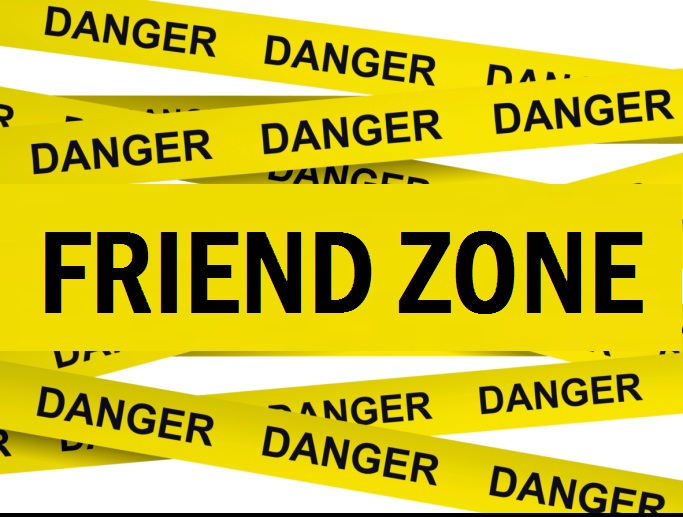
Guys in the Friendzone
 I don’t really have a lot of friends, nor girlfriends. Most women say I am too sweet, and I don’t know why.
That’s from a profile on Nice Guys of OkCupid (which was recently shut down).
The nice guys of OkCupid commonly complain that being too nice gets them “friendzoned.” But after looking through their posts, Katie Baker at Jezebel says they don’t always seem so nice. In fact some express “sheer rage and misogynistic threats of violence: ‘All I want you to do is bleed like I have.’”
Hugo Schwyzer, a sociologist who studies men and masculinity, says these guys believe that if they are nice women will have sex with them:
The subtext of virtually all of their profiles, the mournful and the bilious alike, is that these young men feel cheated. Raised to believe in a perverse social/sexual contract that promised access to women’s bodies in exchange for rote expressions of kindness, these boys have at least begun to learn that there is no Magic Sex Fairy.
But Dr. Schwyzer also points out that the niceness is often an act.
They rage about being “friendzoned,” and complain about the hours spent listening to women without being given so much as a hand job in return for their investment… Their anger, in other words, is that their own deception didn’t work as they had hoped.
Meanwhile, since they can’t conceal their hostility their profile ends any chance of getting laid.
I’ve noticed that many actual nice guys share the illusion that women would like to have sex with any nice guy who asks.
A friend of mine who’s married started passing out a book which explains that monogamy is not the natural human state. He seemed to think that if women “got that,” they’d easily have sex with him.
I’m sure some women will want sex with him, after all, he is a nice, attractive guy. But I doubt monogamous norms are the only thing keeping women from entering his open marriage.
Another guy friend of mine proposed that the way to get a woman was to act like you found her really, really attractive (he actually did find these women really, really attractive) and communicate that you would like to have a romantic relationship. After all, it would work if they did that to him.
Hmmmm….
There’s even a joke that echoes the theme:
What’s the difference between a bitch and a slut? A bitch has sex with everyone but me.
Women just waiting around to have sex with whatever nice guy asks.
Michael Kimmel, another sociologist who studies men, says pornography helps create the illusion. Full of sexually excitable women who are ready and willing, many men watch and think it’s real.
But as he points out, women’s sexuality in porn looks an awful lot like male sexuality in real life.
In some non-Western cultures men and women do behave similarly sexually but not here, where women are more repressed: they are more slut-shamed, they worry so much about their bodies that they are often distracted from sexual feeling, and sexual assault turns desire off, for instance.
Cognitive neuroscientist, Ogi Ogas has described the process of igniting female desire, explaining that women scrutinize all available evidence – social, emotional and physical, which all lead to a general feeling of favorability, or not. Only when it all comes together, just right, do physical and psychological arousal unite, he says.
Most women do want relationships with nice guys, but they need nice + chemistry, or some other “je ne sais pas.” I suspect that most men want relationships with nice girls, but they need nice + chemistry/”je ne sais pas,” too.
Popular Posts on BroadBlogs
Does Sexual Objectification Lead to Bad Sex?
Women Want Casual Sex? Yes and No
Sexual Desire & Sexism
Share this:

Can Relationships Survive A Threesome?
Here’s a 110 percent true fact: the guy you’re dating has definitely imagined having a threesome with you and the waitress from last night, his hot co-worker, or your best friend.
That’s what John DeVore over at The Frisky says… just before anticipating the feminine response,
Yuck, amiriiiiight?… while you’re squirming over how grossoholic men are, telling yourself “My boyfriend would NEVER want to have a threesome between me and my best friend Megs.”
Over time men have become increasingly enamored of this fantasy, with somewhere between one-third and two-thirds of men now having lusty visions of three-ways. Probably because it’s now a porn staple.
But can a relationship survive a threesome? Some do, but it seems they usually don’t.
A couple of John’s friends gave it a try and neither relationship survived.
A marriage therapist told the Huffington Post that all of her clients who’ve tried it broke up, except one.
A few of my friends have tried it, too. One was disappointed that it didn’t work, meaning not everyone was into it. Another friend doesn’t even want to talk about it. But, another has done threesomes and is still married.
Maybe the failure rate isn’t so surprising given the lopsided interest of men. While up to two-thirds of men want threesomes — almost always with two women, only 10% of women do — and they may well want two men. So women may be more likely to agree to a three-way out of pressure or wanting to please their partners without really being into it.
And whether or not pressure is involved, if a woman is having a three-way with another woman she is likely to be more distracted by worries about the other woman than having an erotic experience. How pretty is this other woman compared to me? How much attention is “she” getting compared to me? What does it mean about how he feels about the relationship? Is he really into me?!!!
Besides that, guys are more easily aroused by body parts, whereas women more often need a deep connection to get into sex. Between the distraction of another person, the worries, and the fact that this is just sex and not connection, it often won’t be so fun for the girl.
But guys don’t always get all that, like this comment on another post:
I’d like to comment on the willingness of female to female sex. Females are traditionally more caring, nurturing and empathetic. Naturally this would carry over in the bedroom, making sure each is highly aroused and satisfied.
Really?!
I guess that’s how it seems in porn.
Mr. DeVore opines:
Dudes just love the idea of a threesome, but we know, on a gut level, it’s probably not a good idea. Like raising a pet shark, or inventing bacon-flavored toothpaste.
Men love threesomes, partly, for the same reason we love all-you-can-eat buffets. We’re gluttons, and want more beer, more bacon, and more boobs. Two vaginas are better than one! The problem with buffets is they aren’t the place to get quality anything.
If you want a threesome like those you see in porn you’ll probably have to do what they do in porn: pay a couple of women to act like they’re loving it.
If you’re thinking about a 3-way, you might want to read a post by someone who’s been there/done that, and who has suggestions for what works and doesn’t: Threesomes Can Be Fun. Or Not.
Popular Posts on BroadBlogs
Men, Women & Internet Porn
Porn Fantasy Mistaken for Reality
Women Want Emotionally Connected Sex. Why?
Should Women Give Men The Porn-Star Experience?
Share this:

From Feminist to Doormat, and Liking It?
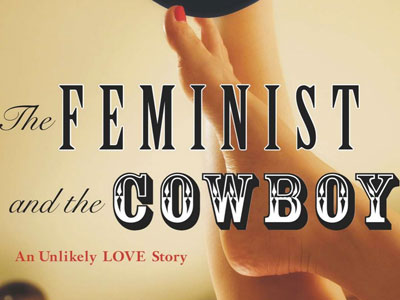 Alisa Valdes tells the story of her devolution from feminist to doormat in the memoir, The Feminist and The Cowboy.
And liking it, she claims. Or not.
Ms. Valdes says she was raised in a feminist home. She was named one of the top feminist writers by Ms. Magazine. Her first husband even “let” her hyphenate her name.
But as a single mom at age 42 she met “the Cowboy,” a conservative ranch manager who watches Fox News and believes women must submit to men. Her book blurb:
Their relationship finds harmony (and) she finds the strength, peace, and happiness that comes from embracing her femininity.
Femininity. Which here means doormat.
Instructions from Cowboy include: No back-talking; no second-guessing; no sarcastic, smart-ass remarks…
… and apparently, stay monogamous while he cats around.
In one incident she hears a women’s voicemail telling Cowboy she wants him in her shower. Alisa feels the agonizing pangs of jealousy. But she remembers that women are biologically wired to find cheaters alluring. What can you do?
Through it all she celebrates her submission, embracing women’s “natural role.” So does anti-feminist, Christina Hoff Sommers who calls the book,
An irresistible, post-feminist Taming of the Shrew… a riveting tale about how a brilliant, strong-minded woman liberated herself from a dreary, male-bashing, reality-denying feminism.
But weeks before going to press the two broke up. A problem since, as Amanda Marcotte points out, Valdes insists women will live happily ever after in orgasmic bliss if they just submit to controlling, misogynist men.
The abuse escalated soon after turning in her manuscript. During one fight he
dragged me down the hall to the bedroom, bent me over, and took me, telling me as he did so that I must never forget who was in charge.
Later, when she accidentally got pregnant and wanted to keep the child Cowboy got violent and left her. She returned to him after a miscarriage, but the violence escalated. Mostly verbal, with threats of violence.
The last time she saw him she jumped from a moving truck, fearing he would hurt or kill her:
I landed facedown on a bunch of rocks, nearly crushed under the back tires, dislocating my shoulder, badly cut and bruised everywhere, my hip filling with blood. I screamed. He stopped the truck, walked over, looked at me on the ground as I begged him to call an ambulance. “Only you would be stupid enough to jump out of a moving truck,” he told me. He did not help me, or come near me. Instead, he said he was going to the hunting lodge to get some witnesses, in case I tried to tell the police he had done this to me.
Noah Berlatsky at The Atlantic explains that:
Finally, Valdes realized that “this man did not love me. He could not love anyone,” and she left him for good—though, obviously, something of the terror remains. She notes that writing the (blog) post (about the violent incidents) puts her “in danger—real physical danger.”
Plenty of people, men and women, celebrate male dominance and female submission. But it hasn’t been so great for Ms. Valdes, and I have friends who’ve tried it and not liked it.
There is much wounding in this story that passes, in her mind, as “the natural order of things.” And Ms. Valdes as is now in a relationship with another abusive man.
The poet and writer, bell hooks, asks us to consider the nature of relationships.
“Pleasure + wound” vs “pleasure + love.”
Which makes you happier?
Which will you choose?
Popular Posts on BroadBlogs
Eminem Makes Sexism Seem Sexy – And That’s A Problem
What Happens When You Beat A Sex Object?
Frats Invite Sluts, Bitches; Women Accept Degradation. Why?
Share this:

Men: Erotic Objects of Women’s Gaze

Sexy, but all covered up.
A nude woman frolics in silhouette as clothed men sleuth about, guns in hand and feet in chase. These images introduce The Spy Who Loved Me.
Flipping through TV stations the other day, this Bond rerun caught my eye and left me imagining the reverse: a nude man cavorting about as clothed women race in pursuit of criminals. Weird.
The female body is celebrated – or exploited – while the male body is ignored.
Check out People’s sexiest men. Until 2013s Channing Tatum you would be hard-pressed to see anything but face shots, loose T-shirts, and very few rippled muscles. Who could imagine a “sexiest woman” shoot sans bodies.
Searching for a calendar of sexy men at one bookstore, the closest I could find was Barack Obama.
Yeah, yeah, there is the occasional men’s underwear ad, but they are rare.
And when men walk around in the world they’re all covered up.
No wonder women don’t spend a lot of time checking out men’s bodies, ogling them or judging them.
A man commented on one of my posts that (to paraphrase):
Not only are men not considered erotic, they are often used to get laughs. In Seinfeld, Elaine referred to the male body as “utilitarian,” implying that the female is much more erotic. George Costanza became a victim of “shrinkage.” Scenes of Johnny Knoxville running around in a thong get chuckles.
Why is the male body so de-eroticized?
One possibility: Men have historically controlled media, and they focus on what they find sexy (about 95% of them anyway). Homophobia further hinders eroticization. As women enter the industry we find more focus on men, but still not much compared with women. Meanwhile, showered with sexy-women images from the time they are small, even women come to find women the sexier of the species.
What if the world were to switch? Suddenly, a universe of men in Speedo’s?
What if women became subject, and men erotic object for women to gaze upon? What if women sought to consume men as objects? Judging them, grading their beauty? Would women feel empowered, experiencing themselves on the “person” side of the person/object divide?
Something to think about.
Popular Posts on BroadBlogs
Women Seeing Women as Sexier than Men
Man as Object: Reversing the Gaze
Women Learn the Breast Fetish, Too
Share this:

The Rules vs The Game
 The Rules and The Game are manuals created to teach men and women how to attract the opposite sex. What do they tell us about the war between the sexes in this new millennium? For in these manuals, it is war.
The Game
The Game was written in 2005 by Neil Strauss after his book editor asked him to investigate the community of pickup artists. After a few workshops this self-described “chick repellant” found that the techniques worked surprisingly well for a “pick up” — but not for relationships. And, as it turns out, the game works best for misogynistic men, but only works to attract women who are misogynistic, themselves.
Here are some rules of The Game:
- Approach a woman within three seconds of seeing her so you won’t lose your nerve
- Ask something benign like “What’s your sign?” or “What’s your type?”
- Act somewhat disinterested
- Briefly disqualify yourself from being a potential suitor
- Ignore the girl you want and flirt with one of her friends instead
- Ogle other women
- Subtly insult her to lower her self-worth
- Isolate “the target” from her friends
Clearly, these rules are all about bedding women by means of controlling them and weakening their self-esteem, while inflating the confidence of men.
The Rules
The Rules were written to aid women in getting a man to commit. Published in 1995, they were updated in 2002 to reflect single life in a high-tech culture.
Here are a few rules:
- Let him take the lead
- Don’t talk to a man first and don’t ask him to dance
- Don’t call him and rarely return his calls
- Always end a date first
- Don’t see him more than once or twice a week
- Don’t talk very much on the first date
- Break up with him if he doesn’t buy you a romantic gift for your birthday or Valentine’s Day
- Don’t open up too fast
- Be sexy
In sum, The Rules urge women to manipulate men by playing hard to get. In an ironic twist women are advised to make men the leader even while creating a sense of female independence. (Even keeping her mouth shut works to create a sense of “man as leader” as some research finds that when women talk more than one third of the time they are seen as honing in on men’s space.)
On the bright side, women are urged to get on with their lives instead of waiting around for “him.”
What The Rules/The Game have in common
Both manuals advise game-playing, so we have not evolved much — or many of us have not.
Both amass power to “their side” by means of disinterest – which may work since whomever cares least has more power.
The Rules advises a traditional source of power for those who lack it: manipulation, controlling men without their knowing. Interestingly, The Game urges this same feminine technique for men, who do not have direct control over women’s minds and bodies.
And we find sexism surviving in both books.
The war of the sexes lives on
Not surprisingly, the books also differ in a way that reflects traditional gender norms. The goal of The Game is to bed women while the goal of The Rules is to snag men. The stereotypes live on.
My students are surprised that The Rules weren’t written in the middle of the last century. But The Game’s even more recent publication comes as no shock. I guess we are more puzzled by women who agree to sexism, whereas no one is surprised that some men continue to support it.
Popular Posts on BroadBlogs
Using Insults to Pick Up Women
Are Men More Likely to Separate Love & Sex?
Sources of Power in Relationships
Share this:

Extremists Messing With The Vajayjay
 Are right-wing extremists obsessed with controlling women’s sexuality because screwing with a woman’s vagina-brain connection can weaken women and give men control?
Sounds crazy, but Naomi Wolf, famous for her book The Beauty Myth, suggests that’s what is happening.
The premise, laid out in her latest book, Vagina: A New Biography, has met mixed reviews from both scientists and the literati. But I found her thoughts interesting enough to give them some space here.
Wolf’s notion was sparked, oddly enough, when her spinal cord was repaired. Before surgery she had lost both her sex drive and her creativity. After surgery both returned. Curious, she began exploring how women’s sexuality might be connected to their broader empowerment and passion for life.
She began her journey by exploring more conventional notions of how society and power structures affect desire. But something was missing. So she moved on to biology, learning how the vagina, clitoris and cervix are connected to the brain. She found out that when neurotransmitters related to sexuality are blocked, an “anhedonic state” akin to depression can arise.
The science comes largely from Dr. Jim Pfaus, a researcher and psychology professor at Concordia University — and a defender of her book.
Next, Wolf suggests that extremists try to repress women’s sexual selves because sexuality allows women fuller, more productive and empowered lives. As she explains in the Huffington Post:
The data is sound elucidating the brain-vagina connection that many critics are struggling with. Dopamine builds confidence and motivation, oxytocin is about bonding and intimacy, and opioids are about bliss and ecstasy. If you know really what that cocktail [activated during sex] does [in the female brain], then it makes sense why patriarchy always targets female sexuality, always targets the vagina, with female genital mutilation, rape, and war, you know, derision, mockery. If you get that female desire and the vagina can be a medium for women of positive mindspeak unrelated to sex, it makes sense that the vagina is continually being targeted. The whole takeaway of the book is that the vagina is not just a sex organ. If you want to demean women, you demean the vagina.
I don’t know whether Wolf is right. (Are fanatics really that bright?) But interesting that sexuality seems so related to living a full-fledged, empowering life.
Popular Posts on BroadBlogs
Markets Must Be Free; Women Must Be Constrained
Wanting “X” from Sex, but Doing “Y”
Men Finding Fewer Women “Porn-Worthy”
Share this:

Non-Sex Reasons For First Sex
![Women-with-Vaginal-Problems-after-Sexual-Intercourse-039-Allergic-039-to-Partner-039-s-Semen-2[1]](https://broadblogs.com/wp-content/uploads/2013/01/women-with-vaginal-problems-after-sexual-intercourse-039-allergic-039-to-partner-039-s-semen-21.jpg) Freud may have named sex drive the primary motivational force among humans, but sometimes you gotta wonder. Because sex serves other aims an awful lot of the time.
Freud may have named sex drive the primary motivational force among humans, but sometimes you gotta wonder. Because sex serves other aims an awful lot of the time.
How about first sex? According to a 2011 study by Laura M. Carpenter, PhD, many see virginity as a gift to give to someone special, with the goal of strengthening the relationship. Women were more likely than men to have this purpose in mind, though some men did, too.
Men were more likely to have sex to shed the stigma of virginity. Not surprisingly, women were much less likely to state that reason, though some did. But for men, especially, it can be embarrassing to be a virgin.
About one third of those in Carpenter’s study saw losing virginity as a rite of passage, a step toward growing up. By the way, this group was the most satisfied with the experience, perhaps having lower expectations. They typically planned for the moment, complete with birth control, and they could more easily take a bad first experience in stride.
Looking at a 1994 study, by comparison, half of women said they had sex for the first time out of affection, which fits well with social expectations that women will have sex out of love — or “strengthening a relationship” as cited in the 2011 survey. Meanwhile, 51% of men had sex for the first time out of curiosity or because they felt ready. This fits well with a focus on achieving manhood (“ready” to be men).
Interestingly, only 12% of men and 3% of women said they had sex for pleasure their first
time, in the 1994 survey. Carpenter didn’t separate out “pleasure” as a separate category, and said it was most often attached to “ridding self of stigma” in her study.
By the way, the 2011 survey found that women and men were more alike than expected. “The idea we have from TV and movies is that for women it’s all about love and for men it’s all about getting it over with,” Carpenter related. “If men and women shared metaphors, the choices they made and the kinds of experiences they had were pretty similar. That’s something that hasn’t been noticed that much.”
Carpenter also noted that gays and straights were similar in their experiences.
All in all, it’s interesting to see how often pleasure takes a back seat to other concerns when it comes to sex. I’ll discuss this in a variety of other contexts to come.
Popular Posts on BroadBlogs
Lose Virginity, Lose Self-Esteem?
Sex Objects Who Don’t Enjoy Sex|
Women Want Casual Sex? Yes and No
Share this:

Boob. A Breast? Or a Fool?
![e412ba0843ed5a18555a51ed4c185b32[1]](https://broadblogs.com/wp-content/uploads/2012/12/e412ba0843ed5a18555a51ed4c185b321.png?w=604) The English language has more than 1000 words that sexually describe women or their body parts. Here are a few:
The English language has more than 1000 words that sexually describe women or their body parts. Here are a few:
Babe, nymph, nymphomaniac, bimbo, fox, dog, beaver, freak, super freak, knockout, melons, tomatoes, whore, ho, dumb blond, shapely, pussy, boobs, hussy, slut, buxom, trim, troll, femme fatale, skank, goddess, jugs, bush, poontang, tart, loose, tramp, butch, bitch, Lolita, Betty, sex kitten, temptress, beast, promiscuous.
Sometimes neutral words take on a sexual meaning when they are applied to women. Call a man a professional and you’ll likely envision a doctor or a lawyer. But say, “She’s a professional” and “prostitute” may be the first thing that comes to mind.
An author was asked to rename a book title before publication. “The Position of Women in Society” seemed too suggestive.
“It’s easy” sounds like a simple task. “He’s easy,” might denote an easy grader. But say, “she’s easy,” and you’ll likely hear “sexually promiscuous.”
One-time courtesy titles, or even high titles, can take on sexual meanings. “Madam” is a polite way of addressing a woman. She may be the female head of household. But she may also be the female head of a house of prostitution. Mistress, another term for the female head of house, is now associated with adultery. “Lady” is a polite title. But “lady of the evening” is not. Even the highest status a woman can gain, “Queen” takes on sexual connotations when applied to a gay man or a “drag queen.”
And notice how these words are demeaning as well as sexual (“gay” is overcoming the stigma, but there’s still a way to go). We could add drama queen and cootie queen to that mix.
Even the term boob, slang for a woman’s breast, is defined in the dictionary as, “a stupid or foolish person.” Odd that something so valued is also degraded. Is the appeal of boobs similar to the draw of a dumb blonde?
What difference does it all make?
In their work in anthropology, Edward Sapir and Benjamin Whorf learned that words affect how we see. The Hopi Indians had no words to distinguish among the past, present, and future. And they had a difficult time with those concepts. Skiers are more attuned than most to different kinds of snow: powder, packed powder, corn, ice, slush, for example. Or, we so often use male terms to describe humanity – man, mankind, brotherhood, fellowship – that when people are asked to think of a person, a man generally comes to mind.
Words dig deep into our unconscious psyches, directing how we see ourselves and others. When we constantly hear sexual and pejorative terms describing women, women come to be sexualized and demeaned in our minds.
The language we learn is neither the fault of the men or the women of our society, in so far as baby girls and baby boys both grow up immersed in these words. What’s important is how we use language once we “get it,” and once we get that it matters.
Related posts on BroadBlogs
“Cock” vs “Down There”
Sex: Who Gets Screwed?
Words: Sticks and Stones? Or Shaping How We See Ourselves?
Share this:

Saying “No” in 520 Languages
I’m Learning to Say No in 520 Languages
How often do I hear my brain screaming NO as I smile and say yes? These random words are all “NO” in different languages. So I am learning to say no in 520 languages, most importantly mine, NO.

Artist, Karen Gutfreund, works with unconventional materials: roof tar, bone, red food coloring, wax… As she moves against standards and customs, is she saying NO even as she works as an artist?
She has good reason to go against the flow. We all do.
Her work strikes a chord with a piece I once read entitled, “Betrayed by the Angel”:
I’m 25 years old. I’m alone in my apartment. I hear a knock. I open the door and see a face I don’t know. The man scares me, I don’t know why. My first impulse is to shut the door. But I stop myself: You can’t do something like that. It’s rude… He is inside. He slams the door shut himself and pushes me against the wall… Since he is being rude, it is okay for me to be rude back.
Despite the young woman’s revelation that rudeness can be good, it was too late. She was raped.
Some feel queasy at self-defense seminars when told to gouge out an attacker’s eyes. “Could I do something less gruesome?” someone asks. Advice from the expert: “He’s bigger than you. If you try something weaker he’ll overtake you and you’ll be raped or dead.”
I had it easier. But not really easy. He was a guy from church, and we were dating. At church we didn’t have double standards. Men and women were both told to stay pure. I was so inexperienced and naïve that when he touched me outside my clothes, but at “third base,” I froze in shock. Was he really doing that? I didn’t want to be rude. In guarding his feelings I paid a price, smacked with the label, “loose.”
Virginia Woolf speaks of the Angel in the House. Some scattered lines:
You who come of a younger and happier generation may not have heard of her – you may not know what I mean by the Angel in the House… She was intensely sympathetic. She was immensely charming. She was utterly unselfish… She sacrificed herself daily… She preferred to sympathize always with the minds and wishes of others…
I turned upon her and caught her by the throat. I did my best to kill her. My excuse, if I were to be had up in a court of law, would be that I acted in self-defense. Had I not killed her she would have killed me.
This piece was originally shown at “CONTROL,” an exhibition of California women artists presented by The Women’s Caucus for Art at New York’s Ceres Gallery, February 1 – February 26th, 2011.
For more on Karen Gutfreund’s work go to her website.
Popular Posts on BroadBlogs
Spoon Fed Barbie
Cartoonish vs Authentic Sexuality
Sex: Who Gets Screwed?

 BroadBlogs