Blog Archives
Diet Coke Gardener: Objectified Like Women?
Check out the Diet Coke ad above.
Do you react like these women?
- Aaaah, awesome 😀
- I was like :O when i saw this commercial
- ooh la la! like like like, all I need, no sugar, no calories! 😀
And Coke’s personal favorite:
- Hot damn I need a Coke.
Or like these men?
- Bad commercial, kinda degrading for women…
- kinda sexist, no? Imagine a group of guys rolling the coke can to a hot girl, that then gets splattered with coke on her top and takes it off while they stare… yeah … id wanna see that commercial!
- Bitches!
- I feel very violated as a man to be viewed as a slave laboring, sex toy meant for the amusement of females. It’s almost to hard to bear watching this demonstrable evidence of female oppression in our society. I don’t think women would be laughing if this video was the contrary. Women are nothing but misandristic swines. We have to unite my brothers and break this new established misandry system. Wahh
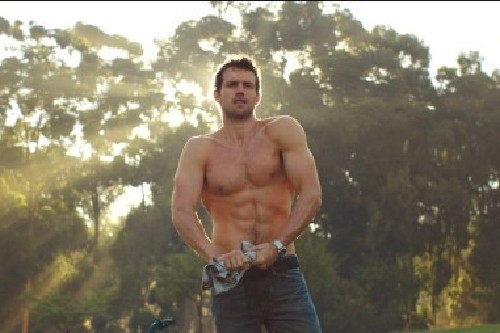 Here’s my translation of the guy-talk:
Oh no, do I have to start competing with guys who look like THAT?! (We ladies can relate having had to compete with Brooklyn Decker-types for years.)
Or:
I don’t like how he’s demeaned before he’s ogled. (On being demeaned — or being demeaned and ogled — the ladies can relate and commiserate.)
An alternative translation:
Women aren’t the only ones who are objectified! And women like to objectify, too, so quit yer whining!
If so, these guys think this ad is equivalent to what women are pelted with every day. It’s not.
First, sexiness is a part of the human experience. So if either men or women are portrayed as sexy some of the time, no big deal. Our sexuality is a part of our humanity.
The problem comes, in part, from bombardment by an impossible beauty ideal, leaving plenty of women feeling bad about themselves. Guys increasingly face this problem, but not at nearly the same level.
Also, women are almost ALWAYS the sexy ones, and that is the PRIMARY way they are portrayed. The imbalance communicates that women exist to sexually please men. That’s their main purpose, and without reciprocation.
And then women are hurt by men who learn — however unconsciously – to think of women as sexual-pleasure objects. So women may be treated as things and not people. Some men will use and abuse them. Their lovers may only care about their own pleasure and not make emotional connection. Their lovers may treat them like interchangeable objects. They may rudely ogle others while ignoring their partner. Taken to extreme, some men kidnap women for sex slavery, or go to prostitutes who have been kidnapped and enslaved.
Because if women are just objects, no feelings to worry over.
If women and men were BOTH portrayed in multidimensional ways, with one part being “sexy” — and outside of impossible body ideals (variety is the spice of life!) then “sexy” images needn’t be a problem for either gender.
Popular Posts on BroadBlogs
Why Men Objectify
Jon Hamm Hates Being A Sex Object
Sexual Desire & Sexism
Share this:

Angelina’s Boobs: Cock-Equivalent?
I can’t believe Angelina sacrificed her boobage!
I don’t know one guy who would cut off his cock in the name of cancer-prevention. I wouldn’t!

That’s the DJ blather I had the misfortune of hearing on my morning commute the day Angelina Jolie announced her double mastectomy to prevent cancer.
It made me wonder.
Why would these guys choose their cocks over life?
And boobs are a cock-equivalent?
The male member makes babies and gives pleasure (not necessarily in that order), and eliminates waste. Breasts do just one of the three — and they are not the only route to pleasure. In fact, the clit works better.
And while men love looking at Angie’s boobs, women are less enamored of the male package, or gazing at it, anyway.
And of course, some guys think a bigger cock means a bigger man. (Not true.)
I’m not sure that women see their breasts in quite the same way. Sure, they’re seen as a sign of femininity and some women want bigger ones to feel more womanly. Yet others are secure in their femininity, regardless of size: Keira Knightley, Mila Kunis, Paris Hilton, Kate Middleton and her sister, Pipa, for instance.
And as Angelina now says,
On a personal note, I do not feel any less of a woman. I feel empowered that I made a strong choice that in no way diminishes my femininity.
So what about a man choosing his cock over his life? A male student of mine wrote a piece I will be posting called, “Doing dumb stuff to prove manhood.” Maybe this is an example?
But of course, breasts have been a defining trait of Angelina Jolie – take those away and there’s nothing left if you happen to be a boob-obsessed guy? A kind of death, as far as they are concerned?
Or, if a woman is defined by her boobs and her man-appeal, maybe some dudes are just pissed that a woman would think that her body and her life are for herself and not for them?
Are others just disconcerted? Angie’s hot — even without natural C-cups. How could that be?
Boobs are a big thing, but in one stroke they’ve lost a chunk of cultural power, says Alexandra Bradner at Salon,
She absolutely robbed them of their cultural, symbolic power. And what’s so completely thrilling about this, is that she did it on her own, one single woman — one single decision — against the machine.
Imagine, valuing women for themselves and not for their breasts. For some, that is plenty disconcerting. No wonder there’s a bit of a backlash on the man-o-sphere.
Popular Posts on BroadBlogs
Beauty Tricks to Remove Your Power
Miss Representation: How I Look Is What Matters
Love My Body
Share this:

Be Sexy, Not Sexual – Ya Think?
 Good girls are sexy, bad girls are sexual. Can that message wreck havoc on women’s sexuality?
Miss Universe can pose for Playboy, but she’d better not have sex with an actual playboy.
Sexual girls may be “sluts” and “ho’s” but all girls are bombarded by sexy-women images — that tell them what they’re supposed to look like. Combined with a high school hierarchy based on looks, the message gets thru that a woman’s worth rests largely upon her ability to attract.
Some seek confirmation that they are, indeed sexy, and therefore, “worthy” by drawing the male gaze.
Walking down the street a young woman meets male approval. Or, she may try sexting. All for his pleasure and her self-esteem.
Some have sex with men, hoping to feel beautiful. But a young woman who tries that is back to being a bad girl because now she’s sexual. Except that she’s not. She’s being sexy for someone else’s pleasure — a sex object who doesn’t enjoy sex — even as she enjoys looking good.
Kerry Cohen, psychotherapist and author of Dirty Little Secrets: Breaking the Silence on Teenage Girls and Promiscuity says,
The problem is not necessarily that girls are victims of predatory males. It’s that they are victims of very narrow definitions of sexual desirability. And in the course of confirming their desirability – and hence their worthiness – they end up completely removed from their own sexuality and experience of sexual desire.
So how can young women get in touch with their sexuality on their own terms? Dr. Cohen has some suggestions:
1. Talk about Desire. When girls ask parents how they will know they are ready to have sex, desire rarely comes up:
We tell them that sex will get in the way of their happiness and growth. We tell them they must be in love. We tell them that good sex happens only when you are in love… (We must acknowledge) that girls have sexual desire, and everything can change.
2. Talk about Outercourse. Think second and third base, she says, or phone sex, so that young women can explore and test intimacy and communicate with their partners. Plus, women get more orgasms through outercourse than intercourse, anyway.
3. Talk about Masturbation. Women need to get in touch with their own bodily pleasure. It’s hard to know what you like, or communicate what you like, unless you get know your body and how it responds.
4. Talk about Emotions. Sex and sexual feelings are too often removed from emotions in our society, says Cohen, even though they are entwined. Young people need to think about various types of sexual acts and whether they are interested in them, or even prepared for them.
It’s about time more women enjoyed sexual pleasure instead of just being sexy for someone else’s.
Popular Posts on BroadBlogs
Sex Objects Who Don’t Enjoy Sex
Lose Virginity, Lose Self-Esteem?
Sexual Desire & Sexism
Share this:

Laughing at Violence Against Women
 “There’s a huge amount of online activity devoted to cultivating horrific impulses toward women,” says former sex-crimes prosecutor, Jane Manning.
For instance, while Facebook prohibits content that is hateful, threatening or incites violence, rape didn’t count until recently. It took a massive campaign to stop pages with titles like “You know she’s playing hard to get when you’re chasing her down an alleyway.”
Or, an upskirt picture of a woman lying face down on the floor was recently posted on Facebook. It got comments like these:
- Id wake her up the HARD WAY and later say it wasn’t me
- She also would have woke up feeling sticky and used!
- Whuts da ho’ doin on da flo’ ?
- An found a used codom in side of her
- any man worth his salt would fuk it now
On Facebook it was easy to see who had viciously mocked the victim. Among them:
- Men who like science, yoga, Buddhism, classical music and the local church
- A supporter of a charity that campaigns against violence
- A husband who works with a Christian Ministry
- Fathers who seek support for special needs kids, campaign against animal cruelty, are proud of their daughters, and who want to be there for their children
Or, there’s Gilberto Valle, a New York cop who favored sites filled with men chatting about raping and torturing women, and even roasting and eating them. His wife, who knows him best, called the cops and flew to Nevada to escape him. She was one of his prospective victims.
Defenders say, “lighten up!”
What happens when we do?
It may well train women to accept both their diminishment and their submission. And it seems to make men more callous to women’s abuse. Others like Officer Valle, who had a plan to kidnap, torture and eat young women, are incited to violence. Around one in five American women have been victims of rape or battering.
Should we lighten up?
Popular Posts on BroadBlogs
What Happens When You Beat A Sex Object?
What Do Top Model and Hard Core Porn Have in Common?
Frats Invite Sluts, Bitches; Women Accept Degradation. Why?
Share this:

Slut-Shamed? It Gets Better
 At age eleven Emily Lindin was declared a slut and “harassed incessantly at school, after school, and online,” she says.
A diary entry:
Aaron said he had heard that Zach “ate me out.” I wasn’t sure what that meant, but I said it wasn’t true, just to be on the safe side.
Fifteen years later she recalls:
I have a very painful memory of watching an instant message window pop up from an account called DieEmilyLindin and reading the message: “Why haven’t you killed yourself yet, you stupid slut?”
Now, at age 27 she is publishing her diary (with names disguised) on a Tumblr she calls the UnSlut Project, hoping to serve as an ‘It Gets Better’ project for girls who’ve been slut-shamed.
I’ve been thinking about this amidst an onslaught of tragedies like these:
- Fifteen-year-old Felicia Garcia of Stanton Island had sex with four football players, which was recorded and shared around her school. Two players began tormenting her and others joined in. Felicia jumped in front of a Staten Island train.
- Four boys assaulted seventeen-year-old Rehtaeh Parsons of Nova Scotia, labeled her a “slut” and shared a photo online. Then, the whole school started harassing her. Rehtaeh hung herself.
- Fourteen-year-old Samantha Kelly also hung herself, unable to withstand the taunting and harassment that followed a police report of her rape.
I’ve often wished that an “It Gets Better” project could help girls like them make it through and go on to live fulfilling lives.
Others’ opinions can have a big impact on how we see ourselves. Our personal identities can seem merely “subjective,” but when many others agree that we are “X” — for good or for ill — it can seem “objective.”
Still, each of us has more knowledge about ourselves than anyone else. And we can consider the motives behind the labeling. Kids who bully are trying to raise themselves up by putting others down. If they really thought they were so great, they wouldn’t have to make so much effort.
Luckily, it does get better because people grow up, mature and become more secure.
And, the ex-bullied may become stronger, more empathetic and deepened.
In the meantime, maybe Emily’s blog will help others to know that they’ve got support… and that it gets better.
Popular Posts on BroadBlogs
Best Not To Be Popular In High School
Do Kids Bully from Low Self-Esteem? Or Because they’re Popular? No and No
Boys on the Bus Grasping at Fake Power
Share this:

Gender-Bending Ads
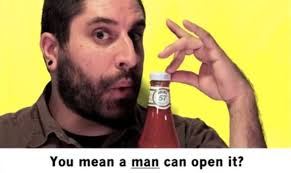 What if you lived in a world where gender-as-we-know-it were switched?
As you drive to work you see billboards with scantily clad men drawing your attention to products that they gracefully caress. Other men bend over in ways that make you want sex with them. In some ads women lord it over submissive men.
You arrive at your ad agency, and as Creative Director you take a look at new ideas your copywriters have brought:
 1) A dead man lies in an open trunk with his legs hanging over the trunk’s edge to show off some Jimmy Choo shoes. A woman stands nearby holding a murder weapon.
2) The silhouette of a man with a beer body and a foam head appears. Copy reads, “You never forget your first guy.”
3) Two women surgeons sit near a male patient who is sprawled over an operating table, dressed in just a thong. A scalpel “knife’s” his body in an ad for a TV show called “Nip Tuck.”
4) A man didn’t make coffee right so his wife spanks him.
In this world women are the dominant sex consumers who expect men to “turn them on,” passively open to them, and submit to them — sexually and otherwise. And if they don’t behave, the men will be punished.
Here’s a video on how such a world would look:
Popular Posts on BroadBlogs
Guys, Girls Swap Roles at a Bar
If Sports Were Covered Like Women’s Beach Volleyball
Men: Erotic Objects of Women’s Gaze
Share this:

Artists Urge: Break Limits, Follow Bliss
When you are true to the things you love, the things that enrich you and share it with others, it all comes back tenfold. I also allow myself more freedom as time goes on… something I never regret.
– Julian Adair

That’s from Julian Adair, dancer, choreographer and photographer.
Her words remind me of Professor Joseph Campbell’s call to “Follow your bliss and the universe will open doors where there were only walls.” I first heard this when I was newly graduated from business management and looking ahead to a life that wasn’t “me.” Armed with a practical degree, I took a U-turn, earning a Ph.D. in sociology. That leap into bliss has brought me both joy and achievement. Bliss-following has also worked for Ms. Adair and the many artists highligted in a new book called Les Femmes Folles.
Artists like Laura Burhenn, front-woman of the Mynabirds, Jamie Pressnall of Tilly & The Wall, ground-breaking poet and author, Marilyn Coffey, the multi-published author, Kathleen Rooney, the award winning playwright Robin Rice Lichtig, award winning filmmaker Kat Candler, fashion designer, Kate Walz and contemporary artist Alexandra Grant reflect on how feminism impacts their art and their lives.
Brooke Hudson is an event/fashion show producer who won’t let stereotypes, or anything else, block her way:
I embrace feminism as an ideology that all women should have the choice and freedom to pursue their best life… whether that be a doctor, lawyer, pageant contestant, fire fighter, accountant, entrepreneur, stay-at-home mom…
I’m keenly aware that being petite and blonde with a high-pitched voice working in fashion, with a pageant or two on my record, doesn’t necessarily add up to the image of someone who would be taken seriously in business. I could have let that notion turn into a fear that would hold me back from facing an opportunity that I’m well-suited for.
I realized that fear represented the very stereotypes the feminist movement had worked so very hard to dispel… the most important thing I’ve learned in that experience is that to be respected by others, we must first respect ourselves.
Artist, Jacqueline Bequette also knows that there is strength and support in numbers and that feminism can move us beyond the insecurities and resulting isolation and back-biting that breaks people apart and weakens them:
I want to do away with the competition model of relationships among women. We isolate each other when we see each other as a threat via attractiveness, status, having it all, etc. Comparison kills community.
And in fact, Les Femmes Folles emerged as a Nebraska community of women artists helped to buttress each other.
Les Femmes Folles is a beautifully illustrated introduction to feminist artists who are creating community, breaking through limitations and following their bliss.
Popular Posts on BroadBlogs
Man as Object: Reversing the Gaze
Spoon Fed Barbie
Dominance, Submission, Meaning & VOICE
Share this:

Why’s Anorexia the Feminine Ideal?
 Modeling scouts are now recruiting at eating disorder clinics.
Or as Katy Waldman at Slate’s XX Factor spelled it out:
Modeling scouts—known for weighing young girls in public like cattle and targeting down-and-out families, but perhaps not for exploiting the life-threatening delusions of sick teenagers—were gathering—in the plural, so more than one person thought this was okay—outside of Sweden’s largest eating disorder clinic.
Agents say they’re seeking “healthy, normally slim women” and “never urge weight loss.” Yet one girl who was approached was so frail that she needed a wheelchair. And they’re all hospitalized.
On never urging weight loss, Waldman muses, “The eating disorder will do all the urging for you!” Indeed, about 40% of models are eating disordered.
Anorexic-thin is unnatural and unhealthy. About 1/5 of anorexic girls and women die.
Next, the models will become even more unnatural-looking as implants are inserted into their chests.
Now add photoshop to complete the other-worldly look.
Why would a sickly, does-not-exist-in-nature look be used to model feminine beauty?
A couple of things could be happening.
As women gain equality in status and opportunity, images of men and women are changing in ways that exaggerate their natural physical differences. By nature, men have more muscular bulk. And men’s images in movies, professional wrestling, and magazines like Men’s Health – not to mention boys’ toys like G.I. Joe – have gotten more muscular over time. Meanwhile, images of women have grown thinner and frailer. At the same time, women’s breasts have gotten bigger, exaggerating another sex difference.
But there is also a profit motive. With an impossible ideal, people will spend endless sums trying to attain it through diets, exercise, gym memberships, surgeries, miracle bras, fashions that create optical illusions, and plenty of magazines to tell you all about all the stuff you can buy.
So in the interest of heightening a sense of gender difference and selling product, we create a very sick feminine ideal.
Popular Posts on BroadBlogs
How to Look Like a Victoria’s Secret Angel
Beautiful Women’s Hips Are Thinner Than Their Heads?
Woman, Not the Sum of Flawed Parts
Share this:

Why Women Want Shades of Grey
 Okay, not all women like Fifty Shades of Grey, the story of Anastasia Steele who becomes aroused by submission in her love for Christian Grey. But plenty of women have made the book a bestseller.
What’s the appeal?
The best-known guess comes from Katie Roiphe who believes women crave submission in the bedroom as relief from their newfound burden of equality, power and free will, as though they just can’t handle it:
In “Girls,” Lena Dunham’s character finds herself for a moment lying on a gynecologist’s table perversely fantasizing about having AIDS because it would free her from ambition, from responsibility, from the daunting need to make something of her life… which raises the question: is there something exhausting about the relentless responsibility of a contemporary woman’s life… about all that strength and independence and desire and going out into the world?
Roiphe’s theory has been thoroughly panned. After all, plenty of powerful men like a little dominatrix sex play to gain relief from their relentless responsibilities, too. So some men and some women may want both power and a break from it.
Mistress Shae Flanigan and Olivia Severine are dominatrices who say that most of their clients are “very high-powered” men. Says Severine,
They came to see me as a brief escape when no one was looking at them for direction or leadership. The time with me is when they were told what to do, what to feel and how to act … and all the weight of their careers, families, lives, is lifted from them for a cherished few hours.
Lena Dunham’s hard-driven “Girls” character also seems to want both power and relief.
On the other hand, dominatrices also talk of clients who fetishize their disempowerment, whether it comes from a history of child abuse, racism or poverty. That goes directly against Roiphe’s theory. There are plenty of powerless women out there who could be doing that, too.
Regardless, Tracy Clark-Flory, over at Salon points out that this fetish needn’t mean a woman wants to be disempowered in real life. Surely, a black man who eroticizes racism doesn’t want a return to the pre-Civil Rights era. What we want in fantasy is not necessarily what we crave in the real world.
Others point out that submission fantasies may not have a clear cause. A dominatrix who calls herself Midnight says:
As a child, I got told off for hitting a man in the crotch with my stuffed penguin and now I love hurting balls. Go figure.
Humans are complex and varied, but whether submission fantasies are motivated by relief from power or from fetishized disempowerment or from some other source, it is Anastasia who is disempowered here, not the reader.
Next time I’ll look at how socialization may spark the allure of Fifty Shades of Grey. Later, I’ll have thoughts on what to make of it all.
Popular Posts on BroadBlogs
Porn Fantasy Mistaken for Reality
Does Porn Objectify? Experts Disagree
Feminists Discuss Porn: Pro and Con
Share this:

You’re Better Than You Think
Are women too hard on themselves when it comes to their looks — and everything else?
A Dove ad campaign called “Real Beauty Sketches” has gone viral. In it, women describe themselves to a forensic artist who sketches them from behind a curtain. Next, strangers describe them.
Women used more negative words to describe themselves:
- (My chin) kind of protrudes a little bit, especially when I smile.
- My mom told me I have a big jaw.
- I have a big forehead.
- I have a fat, rounder face.
Strangers made more positive assessments:
- Her chin was a nice, thin chin.
- She has nice eyes. They lit up when she spoke.
- She has a cute chin.
- She has very nice blue eyes.
Afterwards, the women were surprised by how much more attractive they appeared in the eyes of strangers who — tellingly — yielded more accurate results.
In fact, Dove’s campaign was inspired by research finding that only 4% of women believe they are beautiful. Meanwhile, beauty can be a huge source of self-worth, which is unfortunate when there is so much more to women — and so much that is more significant.
“Good Morning America” did the same experiment and got the same results.
Last summer’s HBO documentary on supermodels, “About Face,” also found plenty of self-criticism among women who are thought the most beautiful among us. For instance, Carmen Dell’Orefice disliked one photo because it showed her feet, which she deemed “unattractive.” I looked at the photo and saw nothing wrong at all. Perfectly normal and natural looking.
We can be our own biggest critic.
But self-criticism doesn’t stop with our looks.
I’ve noticed that I can be pretty tough on myself. But when I consider how I would advise another person in the same situation I’m much more generous.
Being too harsh on ourselves can be a problem because low self-esteem limits us. When we lack faith in ourselves we don’t try, or when we do try, we are less likely to succeed. Or, we may put others down to feel like we’re better than someone else. But as they say, you can’t love until you love yourself.
If we were more self-accepting and self-loving everyone would likely be better off.
Popular Posts on BroadBlogs
Low Self-Esteem? Blame Beauty Myths
Beauty Tricks to Remove Your Power
You’re Hotter Than You Think

 BroadBlogs