Blog Archives
I Can’t Believe I Ate A Whole Head Of Lettuce!
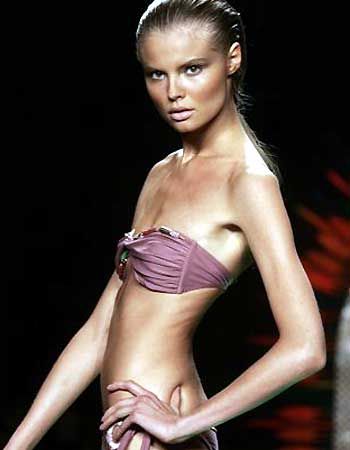 Once upon a time I wanted to look like a cover girl, despite whatever feminist consciousness I may have had.
It had not occurred to me that that wasn’t a possibility. It’s what my culture said I was supposed to look like. What I needed to look like to be truly valued.
Full of contradictions, I began my supermodel project. But in a healthy sort of way, I told myself. Wasn’t going to starve. No anorexia or bulimia for me.
I later came to see that I did end up with an eating disorder.
I became obsessed with food. How much had I eaten that day? Constantly counting calories. My worth depended upon how well I had eaten.
At times I swung between overeating and starving. Very little starving – I wasn’t good at it.
I next developed an exercise obsession. You can’t get too much exercise, right? After developing a knee injury from jogging, I tried Nordic Track. Another knee injury. Next, I began walking three miles a day at a brisk pace. Yet another knee injury. Apparently, you can rub your cartilage too much from over-exercise and lack of rest. My physical therapist told me to start biking instead – and don’t overdo it! No more than four days a week, and no hills.
After all the food and exercise mania, I still looked nothing like a supermodel. One day standing in line at a grocery store I picked up People Magazine and read a story on how supermodels did it. I finally understood why I didn’t look like them, and never would.
Kim Alexis had tried every fad diet and at one point starved herself for four days straight.
Carol Alt went on a fruit-only diet. Later, she drank eight cups of coffee a day, and ate salad for dinner.
Andie Macdowell said many models took drugs to deal with the stress of starving.
What struck me most was when Kim Alexis said,
When I first started out, I was rooming in a New York City hotel with (supermodel) Kelly Emberg. One night I came home, and I was eating only a head of lettuce for dinner. Kelly walked in and said, “You’re eating a whole head of lettuce? How could you?” I cried and said, “But it’s all I’ve had all day. It’s not even 50 calories!”
To which I say, “Are you freaking kidding me?!” That big “cheat” would be insane dieting in my book. In anyone’s book, one would hope.
That’s when my hopes for supermodel slim were dashed.
Yes, I had been insane. But not that insane.
And it’s not just me. It’s society. What kind of crazy culture says women must feel guilty about eating nothing but a head of lettuce to “look good”?
So I determined to gain my mental and physical health back. I’ve had ups and downs, but so far so good.
Georgia Platts
Related Posts on BroadBlogs
How to Look Like a Victoria’s Secret Angel
Beautiful Women’s Hips Are Thinner Than Their Heads?
Spoon Fed Barbie
Share this:

Cartoonish vs Authentic Sexuality
 “I believe we should afford our daughters and ourselves a right to our own authentic sexuality,” to paraphrase psychoanalyst and author Joyce McFadden. “Not the cartoonish MTV kind, but the kind where we respect ourselves enough to listen to what our bodies and hearts feel is right for us.”
What is authentic sexuality? In a recent post I suggested it is neither shameful nor a crutch for powerlessness or low self-esteem. But what else?
Young women are flooded with images screaming “sexy is” which can feel foreign or unpleasant. Or the market offers limited choice. Some have a hard time finding anything they feel comfortable wearing because sexy is all that’s offered.
Cartoonish sexuality is all about surface. It’s about plastic and peroxide, feeling famished and wearing clothing – or even implants – that don’t quite fit.
Actor Gabriel Olds tells a story about a woman he met at a party who blurted out, “By the way, these fake boobs are so not me.” He asked why she’d gotten them. A former boyfriend had awoken her one morning with the romantic proposition, “Hey, you ever think about getting better tits?” So she bought D-cups. He left her soon after. Eventually, she got the implants removed because they had never felt like “her.”
I asked my students how they imagined cartoonish sexuality. They saw it as a freakish figure not found in nature: Huge boobs combined with small waist and hips, big lips, bleached blond hair. Also, how society sees sexy – not what comes from inside. Artificial and superficial.
Taking it further, how cartoonish are seven-year-olds wearing Abercrombie and Finch padded bras or ten-year-olds in thongs? (Do parents actually buy these or does Abercrombie just stock them knowing they’ll bring plenty of free publicity?)
And authentic sexuality? When it came to looks, my students described it as natural, appreciating a range of sizes and body types, including your own. Light makeup (or none), a real smile, good personality, a sense of humor and confidence. Who you really are. I’ve got some pretty wise students.
Let’s turn to what inauthentic sexuality feels like. Having sex out of feeling pressured from friends or boyfriends. Having sex because it seems like the “right time,” but not because you want to.
Experiencing sexuality through the male gaze is not authentic, either. Women too often focus on how they look instead of how they feel in the bedroom. They are observing (and often criticizing) but not experiencing.
Inauthentic sexuality involves unhappily acting like porn stars for your partner’s pleasure, but not your own. (If you’re both enjoying it, that’s different). Some do things they don’t like just to keep the guy. One woman called these experiences “harrowing.”
We can all take a page from our ancient sex-positive Tahitian sisters who were not objectified in the way Western women are today, who learned the beauty of sexuality, and who did not act only for others. Of course, we live in a complex world so our sexuality must be conscientious. We must protect ourselves and others from sexually transmitted diseases. We must take care not to bring lives into the world when we are not ready for the responsibility.
Here’s what one commenter on Part I of this series wrote.
Personally, I’m constantly questioning myself when I get dressed; am I choosing this outfit for attention or simply because I genuinely like it? I try to embrace my sexuality and my femininity and dress/act in a way that’s natural for me. I don’t like playing games or feeling like I have to put on a show for others… Perhaps one small step towards liberation is dressing and acting for oneself rather than for others.
Georgia Platts
Related Posts on BroadBlogs
“Dressing Like Prostitutes”? Authentic Sexuality?
Men Are Naturally Attracted To Unnatural Women
Beautiful Women’s Hips Are Thinner Than Their Heads?
Share this:

Lose Virginity, Lose Self-Esteem?
When women lose their virginity, they can lose self-esteem, too, experiencing a small drop. That’s what a recent Penn State study reveals.
Why?
Women college students were surveyed over time. Before sex the women felt increasingly good about their bodies. But after first sex they felt worse. Looks like when they’re in bed women start worrying about whether they look good enough. Masters and Johnson tagged the phenomenon of watching yourself from a third person perspective instead of focusing on sexual sensations or your partner, “spectatoring.” Women are much more prone, being the objectified. Then, feeling they don’t measure up, self-worth drops.
Other usual suspects may also affect self-esteem, including the double standard that provokes worries about labels like slut and whore. Tracy Clark-Flory over at salon.com points to a 1995 study that found “women were significantly more likely to report that their first sexual experience left them feeling less pleasure, satisfaction, and excitement than men, and more sadness, guilt, nervousness, tension, embarrassment, and fear.” Even now women continue to experience that bind.
The double standard strikes again when women feel used, unappreciated, and worried about reputations after short flings or one-night stands.
Meanwhile, a study I recently posted finds 35% of women in strong partnerships feeling sad, anxious, restless, or irritable, after sex. Researchers don’t know why. Commenters, speculating on their own experience with the phenomenon, fingered sexual repression or difficulties with orgasm (which are related to repression) as culprit.
Studies repeatedly find that women are less likely than men to enjoy sex. Other research suggests the problem is not biologically based, or inevitable. Women in sex-positive cultures enjoy sexuality a great deal.
We are going to have to move beyond sexism for women to reclaim their sexuality. That would benefit both women and men.
Popular Posts on BroadBlogs
DO Women Like Sex Less Than Men?
Are Women Naturally Monogamous?
Are Women Culturally Monogamous?
Surprises in Indiana University Sex Survey
Share this:

Men: Erotic Objects of Women’s Gaze

Michelangelo’s “David” — a view from behind.
A nude woman frolics in silhouette as clothed men sleuth about, guns in hand and feet in chase. These images introduce The Spy Who Loved Me.
Flipping through TV stations the other day, this Bond rerun caught my eye and left me imagining the reverse: a nude man cavorting about as clothed women raced in pursuit of criminals. Weird.
The female body is celebrated – or exploited – while the male body is ignored.
Check out People’s sexiest men and you will see face shots, loose T-shirts, and very few rippled muscles. Who could imagine a “sexiest woman” shoot sans bodies.
Searching for a calendar of sexy men at Boarders, the closest I could find was Barack Obama.
Yeah, yeah, there is the occasional men’s underwear ad, but they are rare.
No wonder women don’t spend a lot of time checking out men’s bodies, ogling them or judging them.
A man commented on one of my posts that (to paraphrase):
Not only are men not considered erotic, they are often used to get laughs. In Seinfeld, Elaine referred to the male body as “utilitarian,” implying that the female is much more erotic. George Costanza became a victim of “shrinkage.” Scenes of Johnny Knoxville running around in a thong get chuckles.
Why is the male body so de-eroticized?
One possibility: Men have historically controlled media, and they focus on what they find sexy (about 95% of them anyway). Homophobia further hinders eroticization. As women enter the industry we find more focus on men, but still not much compared with women. Meanwhile, showered with sexy-women images from the time they are small, even women come to find women the sexier of the species.
What if the world were to switch? Suddenly, a universe of men in Speedo’s?
What if women became subject, and men erotic object for women to gaze upon? What if women sought to consume men as objects? Judging them, grading their beauty? Would women feel empowered, experiencing themselves on the “person” side of the person/object divide?
Something to think about.
Popular Posts on BroadBlogs
Women Seeing Women as Sexier than Men
Man as Object: Reversing the Gaze
Women Learn the Breast Fetish, Too
Share this:

Men Prefer Great Hair Over Big Breasts?
Sixty percent of men would rather date a woman with great hair than big breasts. Fabulous hair also topped low-cut blouses when it came to alluring men in bars. So says a recent survey reported in Glamour.
Do keep in mind that 40% chose breasts over hair. So if you’re well-endowed, not to worry.
Is this true? Some wonder. After all, Pantene commissioned the study.
The research has been picked up and widely reported. Here are a few comments from men on the topic.
- On my list of attributes I wanted, “hair longer than mine” ranked well above “a chest larger than mine.”
- The face/hair falls #1 on the thing my friends and I notice first about attractive ladies. It’s not that we ignore the other blessings bestowed upon a beautiful woman, but what’s above the neckline determines approachability and friendliness and gives a much better sense of the person than cleavage. I have no friends who discriminate based on cup size, and bras today can make Betty White’s breasts appear firm. (NOTE: Admittedly, I’m almost 40. So maybe we older dudes judge by different standards.)
- We would notice your curves first, ass, chest, legs and the way you stand. But your head will become our primary focus after that. Your face, your hair, your smile is what charm us. We really notice your hairstyle, especially if it’s a nice cut. It’s also a mirror of your personality, of how you can take care of yourself, it’s feminine and sexy.
The survey results make some sense. Keira Knightley and Paris Hilton have both landed on FHM’s “sexiest women” list. They both have great hair, but little cleavage. A past roommate of mine had gorgeous hair and face but very little “up top,” as they say, yet men went nuts for her.
Related research shows that men usually rank face over body in some circumstances too. Surprising? Given a choice between seeing a woman’s face or body, 75% of men preferred to see face for long-term relationships, compared with 51% who wanted to see body for a short fling.
Overall, I would call this good news. First, maintaining beautiful hair is not dangerous, unlike going under a knife for implants.
And, I appreciate the sense that face and hair reveal personality and give a sense of who the woman is, while cleavage does not. Men caring more about women as people than objects. Who knew?
Popular Posts on BroadBlogs
Men Aren’t Hard Wired To Find Breasts Attractive
Men Watch Porn, Women Read Romance. Why?
Keep Your Boobs, Get Better Guys
Share this:

500 Calories + Pregnancy Hormones = Perfect Body
Pregnancy hormones plus 500 calories a day equals the newest diet fad. Theoretically, the hormone injections allow the dieter to starve without hunger pangs.
Susan Yager, on faculty at New York University’s Department of Nutrition, called it “one of the loopiest and most dangerous ideas ever.” Even if it does work, it’s not sustainable, she says. Once people get off the injections, most will return to their usual weight.
This is the latest in a long line of nutty fads. We’ve got the grapefruit diet, liquid diet, cabbage soup diet, lemonade diet, acai berry diet, and even a tapeworm diet, to name a few.
Some who follow these regimes, are obese. Others aren’t, but are desperate to get skinny, skinny.
What else can you do but go on crazy diets if you want to resemble today’s insanely slim supermodels? They go on crazy diets, too.
Victoria’s Secret Angels are considered the ideal, but how do they create their angelic bodies? One jumped rope and ate nothing but spinach, chard and kale to lose 20 pounds, post-pregnancy. Another described the routine as “killing ourselves” in unending runs, lunges and squats. One supermodel’s big cheat was eating “a whole head of lettuce.” Many use drugs to deal with the stress of starving. These women have unusual genes in the first place, but still go diet-mad.
Naomi Wolf says the expectation that women’s bodies must be gaunt yet full breasted, though rarely found in nature, was once assumed to be the eternal and transcendent ideal. It seemed important beyond question to somehow live up to that standard.
Wolf wrote The Beauty Myth twenty years ago. Today things have changed and stayed the same. A lot of women and men now get it – that the ideal is a myth and not descended from heaven. But others don’t.
Some women still diet to extreme and feel compelled to go under the knife to correct their natural but, in their minds, “deformed” breasts.
One might hope the insanity of the means would clue us in to the insanity of the end. But too often it doesn’t.
Georgia Platts
Popular Posts on BroadBlogs
Men Are Naturally Attracted To Unnatural Women
Beautiful Women’s Hips Are Thinner Than Their Heads?
Bridalplasty: Competing to be Plastic on Reality TV
Share this:

Boob: A Breast? Or a Fool?
The English language has more than 1000 words that sexually describe women or their body parts. Here are a few:
Babe, nymph, nymphomaniac, bimbo, fox, dog, beaver, freak, super freak, knockout, melons, tomatoes, whore, ho, dumb blond, shapely, pussy, boobs, hussy, slut, buxom, trim, troll, femme fatale, skank, goddess, jugs, bush, poontang, tart, loose, tramp, butch, bitch, Lolita, Betty, sex kitten, temptress, beast, promiscuous.
Sometimes neutral words take on a sexual meaning when they are applied to women. Call a man a professional and you’ll likely envision doctor or a lawyer. But say, “She’s a professional” and “prostitute” may be the first thing that comes to mind.
An author was asked to rename a book title before publication. “The Position of Women in Society” seemed too suggestive.
“It’s easy” sounds like a simple task. “He’s easy,” might denote an easy grader. But say, “she’s easy,” and you’ll likely hear “sexually promiscuous.”
One-time courtesy titles, or even high titles, can take on sexual meanings. “Madam” is a polite way of addressing a woman. She may be the female head of household. But she may also be the female head of a house of prostitution. Mistress – another term for the female head of house – is now associated with adultery. “Lady” is a polite title. But “lady of the evening” is not. Even the highest status a woman can gain, “Queen” takes on sexual connotations when applied to a gay man or a “drag queen.”
And notice how these words are demeaning as well as sexual (“gay” is beginning to overcome the stigma, but there’s a way to go). We could add drama queen and cootie queen to that mix.
Even the term boob, slang for a woman’s breast, is defined in the dictionary as, “a stupid or foolish person.” Odd that something so valued is also degraded. Is the appeal of boobs similar to the draw of a dumb blonde?
What difference does it all make?
In their work in anthropology, Edward Sapir and Benjamin Whorf learned that words affect how we see. The Hopi Indians had no words to distinguish among the past, present, and future. And they had a difficult time with those concepts. Skiers are more attuned than most to different kinds of snow: powder, packed powder, corn, ice, slush, for example. Or, we so often use male terms to describe humanity – man, mankind, brotherhood, fellowship – that when people are asked to think of a person, a man generally comes to mind.
Words dig deep into our unconscious psyches, directing how we see ourselves and others. When we constantly hear sexual and pejorative terms describing women, women come to be sexualized and demeaned in our minds.
The language we learn is neither the fault of the men or the women of our society, in so far as baby girls and baby boys both grow up immersed in these words. What’s important is how we use language once we “get it,” and once we get that it matters.
Georgia Platts
Related posts on BroadBlogs
“Cock” vs “Down There”
Sex: Who Gets Screwed?
Words: Sticks and Stones? Or Shaping How We See Ourselves?
Share this:

Sex Objects Who Don’t Enjoy Sex
Sexualizing women can have its perks in the bedroom, with breast fetishes and butt fetishes heightening men’s arousal.
But surprisingly, sexualizing women can have the opposite effect, harming both men’s and women’s enjoyment. And in many ways. Here’s one: self-objectification.
Drowning in “sexy women” images, men and women can both come to see women as the sexy half of the species. So what happens in bed? Because men aren’t seen as especially sexy (at least by comparison) men are focused on women and women can be focused on themselves.
Caroline Heldman, assistant professor at Occidental College, found that some women become preoccupied with how they look instead of the sexual experience. “One young woman I interviewed described sex as being an ‘out of body’ experience,” she said. “She viewed herself through the eyes of her lover, and, sometimes, through the imaginary lens of a camera shooting a porn film.”
Sounds a bit like Paris Hilton: “My boyfriends say I’m sexy but not sexual,” she mused. “Being ‘hot’ is a pose, an act, a tool, and entirely divorced from either physical pleasure or romantic love.”
Heldman feels that girls and women are learning to eroticize male sexual pleasure as though it were their own. She feels they need to explore their sexuality in more empowering and satisfying ways than this vicarious act.
Cultural theorist Jackson Katz has similar concerns. “Many young women are now engaged in sex acts with men that prioritize the man’s pleasure,” he reflected, “with little or no expectation of reciprocity.”
When having sex, these young women may be enjoying themselves, and how nice they look. They may gain a boost to self-esteem as they dwell on their “hotness.” But they’re not enjoying sex.
Popular Posts on BroadBlogs
Women Seeing Women as Sexier than Men
Women Learn the Breast Fetish, Too
Surprises in Indiana University Sex Survey
Share this:

The Constricting Bodice: Empowerment and Imprisonment?
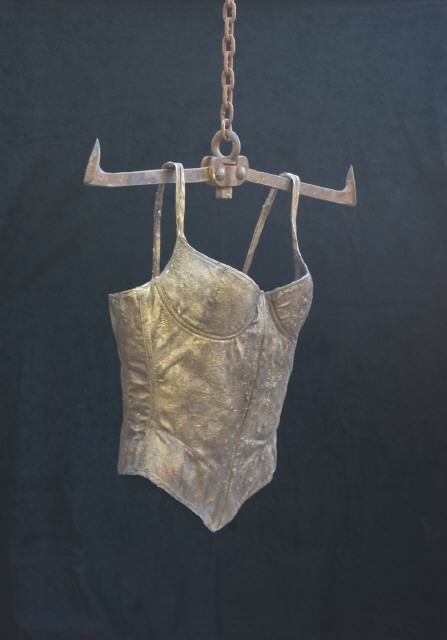
Bodice
— Angela Fortain
In her series “Overt Underthings” artist, Angela Fortain, considers a paradox: Distorting the body can both liberate and imprison, she says. Society dictates constraining fashions which, once dawned, create power over others.
Power over others?
By way of men’s desire, women’s envy.
The power to shape space as others turn in our direction.
Favors.
Lower status bowing to higher. Standing based on beauty – and what to make of that?
The power to gain love? Or sex? And must one undergo body-torture to attain either?
How might power become less available inside the constrained body?
Are the powers bestowed – or removed – substantive or superficial?
Finally, Fortain muses, “Separating the sensual object that once transformed the wearer into an object of sexuality allows us to examine the object, and our own desire.”
The power of objects… our own desire?
Fortain’s work provokes more questions than answers. As art should.
Georgia Platts
This piece was originally shown at “CONTROL,” an exhibition of California women artists presented by The Women’s Caucus for Art at New York’s Ceres Gallery, February 1 – February 26th, 2011.
For more on Angela Fortain’s work go to ARTslant.
Popular Posts on BroadBlogs
Spoon Fed Barbie (Part of the CONTROL series)
Men Aren’t Hard Wired To Find Breasts Attractive
Men Are Naturally Attracted To Unnatural Women
Surprises in Indiana University Sex Survey
Share this:

Spoon Fed Barbie
Surface appearances can be deceiving, says artist, Yvonne Escalante.
Commenting on the pieces shown here, she reflects,

- Spoon Fed


Baby's Rattle

- Sucker

As a first generation American, Escalante’s father had stressed American identity over cultural ties. Today, her work explores the conflict she feels, caught in the kaleidoscope of identity, gender roles, and societal norms.
Her work can be viewed this month at an exhibit titled, “CONTROL” at New York’s Ceres Gallery.
Here’s what these pieces say to me.
Like most little girls, I grew up spoon fed on Barbie. But not just Barbie. She was an emblem of all that mass media, friends and schoolmates, told me to be. A good shopper. Paired with Ken. Skinny and curvy all at once. The emblem of perfect womanhood, where body defines us.
Oddly, all this spoon feeding can lead to a dearth of feeding of any sort. I’ve gone through phases of not eating like I should, hoping to look like what turn out to be phony photoshopped images that don’t even resemble the starving models who posed for the pics.
What did I know?
Of course, skinny isn’t enough. We must be buxom, too. Which leads to unnecessary, and sometimes life-threatening, surgeries in pursuit of Barbie breasts. At least that’s what happens when boobs define us, creating our worth. For too many women and men, surface is all.
When women are told they must acquire surreal measurements, and when obtaining them is the source of self-worth, the pursuit takes unending time and energy.
Obsessed with diet and exercise, women can become distracted from the rest of life; so much so that (as Naomi Wolf can tell you) advances of the women’s movement can quickly wane. Frantic pursuit of the perfect body removes agitation for power of greater substance.
Hence, the pacifier. Here, called “Sucker.”
Any wonder the exhibit’s theme is “CONTROL”?
This piece can be viewed at “CONTROL,” an exhibition of California women artists presented by The Women’s Caucus for Art at New York’s Ceres Gallery, February 1 – February 26th, 2011.
For more on Yvonne Escalante’s work go to ARTslant.
Popular Posts on BroadBlogs
The Constricting Bodice: Empowerment and Imprisonment? (CONTROL series)
Men Finding Fewer Women “Porn-Worthy”
Men Are Naturally Attracted To Unnatural Women

 BroadBlogs