Category Archives: feminism
Batterers Brag
 I was out of town when Chris Brown unveiled his neck tattoo of a battered woman, possibly Rihanna, but now I’m back and I have to comment.
Strange that Brown would brand himself with a battered Rihanna for all the world to see. And if it’s not Rihanna, why sport an image that will remind everyone of the pummeling?
Publicity seeking seems likely.
Still, you have to wonder why shame doesn’t stop him.
Apparently Chris Brown is not alone in feeling no shame. Sean Connery and others feel that it is “absolutely right” to slap a woman. Televangelist, Pat Robertson, advised one man to beat his wife into submission – even if he had to move to Saudi Arabia to legally do it. To these Neanderthals, beating women is all part of being a real man (or caveman).
Amanda Marcotte over at Pandagon sees it as a batterer’s brag:
There’s a myth that men who beat and rape women just “lose control” and that after they act out, they sit around stewing in shame. That is because this is what these men tell people they are trying to ingratiate themselves with, in order to gain their acceptance and forgiveness. But inside, as many victims who have seen their true face can tell you, they are defiant. They believe they are entitled to dominate women, and they feel victimized by a world that doesn’t give them what they believe is theirs. They act out, looking for little ways to assert the right to dominate [what] they believe is theirs.
Marcotte cites research from psychologist David Lisak, who found that certain men will happily tell stories about successful sexual assaults. Joanna Schroeder over at The Good Men Project feels the analysis rings true:
The batterers I’ve known have betrayed a certain pride over the pain they cause their partner. They want their partner to keep the abuse a secret, but they themselves say things like “Jodi knows better than to look twice at another guy” while making a punching motion with their hands. It’s always under the guise of being a joke, but it makes the hairs on the back of your neck stand up when you already know or suspect that the guy is abusing his wife. One man I knew who was a batterer would threaten to rape his wife, seemingly joking, in front of almost anyone. Turned out he had been raping her for almost as long as they were married.
If you see yourself as righting the scales of justice — punishing those who have “hurt you,” and returning gender to its rightful order, with men on top — I guess bragging makes sense.
Marcotte continues:
…telling others about it and watching them recoil basically means reliving the power trip… Not only did they dominate the victim, but they have provoked anger and disgust in you, and that makes them feel powerful all over again.
Growing up, Brown was tormented by watching his stepdad beat his mom. That childhood horror and helplessness seem to have deeply scared him. Too bad he hasn’t dealt with his issues in therapy and focused his power in positive ways – in real ways – because how much power does this guy really get from beating his girlfriend?
Popular Posts on BroadBlogs
Real Men Don’t Beat, Rape Women
Mind of a Rapist: Trying to Bridge a Gap between a Small Self and a Big Man
Boys on the Bus Grasping at Fake Power
Share this:

Can A Small-Breasted Woman Be Sexiest Woman Alive?
 We’re such a big-boob obsessed culture you have to wonder whether small breasted women can ever be seen as sexy.
Turns out, they can. Esquire just named sultry Mila Kunis “Sexiest Woman Alive.” This follows Maxim naming her third hottest woman in the world, while FHM put her in the top 10. Gorgeous mate, Ashton Kutcher, is good with her, too.
Other women of petite boobage have also landed on these lists, and a few years back FHM named Kiera Knightley the hottest of the hot. More recently Kate Middleton’s “Boobgate” inspired 311 million searches for “Middleton topless photos.” (The Duchess also made FHM’s “Hottest 100” this year.) Seems many men find smaller-breasted women attractive.
Now, I’m no fan of objectification and ranking women on lists. But so long as they’re doing it, I am glad to see some branching out from a narrow ideal of “skinny + big boobs = attractive.”
Without implants or obesity, B is the average cup size. Since so many women are an A or B cup it’s no wonder that by age seventeen, 78 percent of young women are unhappy with their bodies – worries about weight being another big issue.
007 Breasts – 007b.com, a website devoted to women and their breasts, gets (not surprisingly?) quite a few male readers. Based on comments they receive WOMEN do most of the fussing over breast size, not men. Men most commonly communicate these thoughts:
- Men are happy with any pair of breasts their partner has
- Men often say implants seem unnatural and hard
- A woman who appears secure and confident is attractive
Well, Mila Kunis exudes confidence.
So it looks like women don’t need to mutilate themselves and harm their health to be attractive. And moms don’t need to give their seven-year-old daughters a $10,000 voucher for a future boob job, as one did.
And if your boyfriend thinks you’re boobs are too small, it sounds like he’s a boob — get a better boyfriend!
Popular Posts on BroadBlogs
Anything Good About Being A Sex Object?
Beauty Tricks to Remove Your Power
Share this:

Feminists Have More Fun
 You may have thought feminists were unattractive man-haters. Turns out that men find them attractive, and that relationships between feminist men and women are more romantic and healthier than others. In fact, having a feminist partner heightens sexual satisfaction for both women and men.
So says a study performed by Rutgers University researchers, published in the journal Sex Roles, and reported by LiveScience.
Rutgers psychologists surveyed 242 undergraduates and 289 older adults (average age 26 and in a relationship for about four years). They were asked how often they and their partners laughed together, how often they quarreled, whether they had thought of ending the relationship, and whether they thought their relationship had a good future, for instance.
The researchers aren’t entirely sure why feminism enhances relationships but they have a few ideas:
Feminist men might be more supportive of their female partner’s ambitions than are traditionalists. Men with feminist partners may enjoy the extra breadwinner to share the economic burden of maintaining a household.
I can think of a few others.
In feminist relationships each partner is more likely to have an equal say so that neither becomes habitually aggravated. In counter-example, I have a couple of friends who wanted to marry “male dominant” men. I guess they seemed sexy. Both of them did, but neither of them liked the reality of never having their way. One quickly divorced, the other had long-term emotional problems before finally divorcing.
Feminist men respect women and don’t hit them, rape them, or emotionally abuse them.
In the same vein, feminist relationships tend to be more respectful, generally. Men are more likely to help with the laundry and they are less likely to objectify either their partners or other women — which increases emotional connection and decreases conflict.
Feminist men are also more likely to express their feelings, which further heightens connection.
Emotional connection is great for sex. Not feeling guilty about sex is also great for sex – and as it happens, great sex is a big concern of third wave feminists.
Turns out, getting outside of traditional sex roles makes for better sex, too. He might like it when she asserts her desire – and she might, too.
Egalitarian women are even more likely to be in their relationships out of choice instead of financial dependency, because they are more likely to support themselves.
No wonder feminists have more fun.
Popular Posts on BroadBlogs
Sexual Desire & Sexism
Does Sexual Objectification Lead to Bad Sex?
Men Finding Fewer Women “Porn-Worthy”
Share this:

Come Out, Come Out Whoever You Are
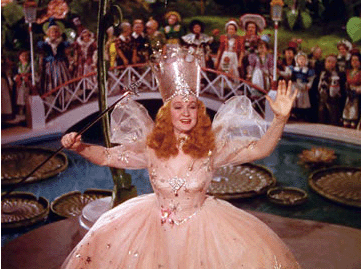 By John DuBois
With apologies to Glinda, I only changed one word to make a point. I’m sure she won’t mind because she’s an ally who supports equality and justice for all, gay, straight, or otherwise.
Whereas Glinda had asked the little Munchkins to come out of hiding, I ask that all future LGBT folk come out, too. Not from hiding in the bushes like the Munchkins were, but hiding from their true selves — or even from themselves.
Today more non-LGBT allies are championing us and lighting the way (thank you Lady Gaga) and we have more opportunity to express ourselves than in other times and places.
Which reminds me, a while back the Iranian President, Mahmoud Ahmadinejad, was asked how gay people in his country were treated. His response? “There are no gay people in Iran.” To which I retorted (yelling at the TV), “Yeah, as soon as they come out, they’ll either be arrested or killed!”
In the good ol’ U.S. gays are not threatened with execution, but we may be bashed, bullied and lashed with barbed tongues yelling “Faggot!” The original meaning of faggot was a stick of tinder used to light a fire, which conjures images of kindling for a good witch burning. (The term may actually have come from old women who were once called faggots from their job of gathering wood which later translated, oh so graciously, to the effeminate stereotype of gay men.)
Funny how old, fearful sensibilities hold on. We are still fighting to break “codes” and “ranking” systems along with the notion that sex is only for procreation and not something to be shared and enjoyed… or even discussed.
If people are taught to fear gays (or ethnic minorities or anyone else) they will most likely hate. Period.
No wonder so many still fear coming out of the closet.
But even if we don’t come out we will still be harmed. Psychologist, Carl Rogers, tells us that the further our real self strays from our ideal self the more anxiety we will feel. This gap also lowers self-esteem and inspires jealousy of those who lead authentic lives. No wonder closeted gays are so often huge homophobes. That gap between real and ideal may then lead to aggression or even violence against ourselves or others. And who wants that?
Staying in the closet keeps us shameful and keeps us feeling we have something to hide.
By bringing our ideals closer to reality we can become more content and happier from living in a state of harmony.
And so I say to one and all, come out into the clear light of day and be proud of who you are.
This was written by one of my students, who gave permission to post it.
October is LGBT Month.
Popular Posts on BroadBlogs
Homophobes Aroused by Gay Porn
The Gay Samaritan
Driving a Fagbug
Share this:

High School Girls’ Hygiene, Sex Habits Detailed. It’s Tradition
 Each year around the last day of school, junior boys at Ladue Horton Watkins High in Missouri distribute an obscene list detailing the body parts, hygiene and sex habits of 5-10 senior girls.
It’s tradition.
When Ruth Alhemeier’s daughter came home, hysterical about the list, Ruth became outraged: “It’s shocking; it’s obscene; it’s vulgar, and I just couldn’t believe it!”
Alhemeier went to see the principal, Bridget Hermann, who explained, “Well it’s kind of just tradition, it’s been going on for a really long time, there’s not much we can do to stop it.”
Administrators determined no rules had been broken.
No broken rules. Tradition. Whatever could one do?
After a push of letters to the school board Ms. Alhemeier was eventually invited to a meeting. “We have anti-bullying measures in place and there are plans to ramp those up,” she was told. Finally, those responsible were identified and “received immediate and long-term consequences.” No one’s saying what.
So here we have boys judging girls — and from the start of high school girls know it. Boys make the rules and girls are expected to conform. Girls know they’d better be careful, or they might end up on that list.
Judges lord it over the judged, making the boys superior – here, with JUNIOR boys superior to SENIOR girls.
And throughout, these young men invade the young women’s space, verbally touching and invading their bodies, like a rape.
Whether humiliating, judging, or taking over another person, these boys are classic bullies, trying to raise themselves up by bringing others down – and in a way that goes beyond individuals and establishes a gendered pecking order: boys above girls.
All the while the adults are blinded by tradition, and maybe loyalty to traditional gender roles.
I was struck by a report that described Ruth Alhemeier as having no qualms about going public.
Why would she have qualms?
On the contrary, I couldn’t believe that this was the first time the matter had been brought up, or that she would have anything but the outraged support of the entire community.
Interesting that what seems horrifying to one group seems normal to others. Once it’s the status quo, everyone around accepts it.
Related Posts on BroadBlogs
In-laws Rip Off Girl’s Fingernails, But Who Cares?
Why Do Women Fight Against Their Own Interests?
Mind of a Rapist: Trying to Bridge a Gap between a Small Self and a Big Man
Share this:

Less Sexism Means More Sex
 Sexual liberation and women’s liberation seem to go hand in hand.
Cherokee women and men were equals. Each had their own tribal councils and say in decisions. Women may have even had the upper hand since they controlled the staple, corn. If men wanted to go to war but women didn’t, the women could say, “Okay, no corn for you!” Property passed through women and tribes traced families through female lines. (Young women and men enjoyed sex, and married women didn’t always cling to fidelity, so who knew who “daddy” was?) And everyone cared for kids.
These women were also extremely sexual and orgasmic. It probably helped that sex wasn’t thought dirty and neither were sexual women.
Pacific Islanders were similar. No wonder Gauguin loved Tahiti.
Not so much in Victorian-influenced Europe and America. There, women had no means of supporting themselves and needed to stay “pure” to get married. A “bad reputation” could mean the end of the world. Wives weren’t expected to enjoy sex: bad girls liked sex, good girls didn’t. And many “good girls” probably didn’t since sexual repression tends to lead to bad sex.
Western women are still more repressed than their ancient Native American sisters, but less so than women of Victorian times. Thanks to greater equality.
The “first wave” of feminism brought women the vote in 1920, and “a revolution in manners and morals” followed. As single women increasingly entered the workforce and became independent they spent their money in the dance halls and nightclubs that had sprung up. Between their independence, the clubs and the privacy of a Model T, parents couldn’t supervise courtship, while women’s sexual needs and desires were increasingly accepted.
Better condoms helped, too.
The “second wave” of 1960s feminism sparked a second sexual revolution, again buoyed by women’s financial independence, as well as Freudian concerns over the evils of repression. The Pill also opened sexuality and helped women stay in the workforce – and stay independent.
So men, if you want more sex support equality.
Popular Posts on BroadBlogs
Sexual Desire & Sexism
Sex: Who Gets Screwed?
Sex Lessons from Mom and Dad
Share this:

Why Is There A War On Women?
 Conservatives insist there is no war on women. They must be willfully ignorant to miss the signs.
In recent years the extreme right has voted against the Lilly Ledbetter Fair Pay Act, they have refused to protect all women in the U.S. from domestic violence, they have pushed to block cancer screenings and HIV testing for poor women, they have voted against contraception and abortion that could save women’s lives. Five states now require women seeking abortions to endure ultrasounds, which might require intrusive, vaginal probes. Some have made light of rape, narrowing the definition to “forcible” rape (what’s nonforcible rape?) or, as Amanda Marcotte at RH Reality Check points out:
Showing their true colors has been a theme of anti-choicers this campaign season, from Todd Akin’s “legitimate rape” comment to Huckabee’s extolling the virtues of rape as a baby delivery system to Paul Ryan minimizing rape by calling it a “method of conception”… They don’t really think rape is a big deal—it’s not like raping uterus vessels is the same as violating people, right?
But what’s behind the war? Here’s one idea: sexist men fear that independent women won’t need them.
Marcotte points out that attempts to control women swell whenever women become more independent. She may have a point. We’ve seen increasing attempts to use government to control women as we become more independent. And the same thing occurs in relationships when some men destroy contraception, hoping their wives or girlfriends will get pregnant and become more dependent.
And the same men who work to limit women’s control over their bodies say things like this, from Rep. Allen West of Florida:
And all of these women that have been neutering American men and bringing us to the point of this incredible weakness. Let them know that we are not going to have our men become subservient.
Or Rush Limbaugh:
The average size of a penis is roughly 10 percent smaller than it was 50 years ago. And the researchers say air pollution is why. Air pollution, global warming, has been shown to negatively impact penis size, say Italian researchers.
I don’t buy this. I think it’s feminism.
Well then, men had better get their control over women back, and soon!
Marcotte sums it up:
Hostility to abortion rights and contraception access is about gender anxiety. It’s about this strange fear that unless women are forced into a subservient, dependent position to men, women will not want anything to do with men. Anti-choicers are reacting to a paranoid belief that if women are totally free to choose our own paths, we won’t choose to have men on our journeys. It’s yet further proof that misogyny has an element of man-hating to it, because the misogynist believes that men are not capable of being true friends and partners to women.
Looks like feminists have a higher opinion of men than these sexist men do, themselves.
Popular Posts on BroadBlogs
What Abusers and “Pro-Family” Conservatives Have in Common
Why Is the Right-Wing Attacking Women?
Government Takeover of Our Bodies
Share this:

Beauty and Self-Esteem
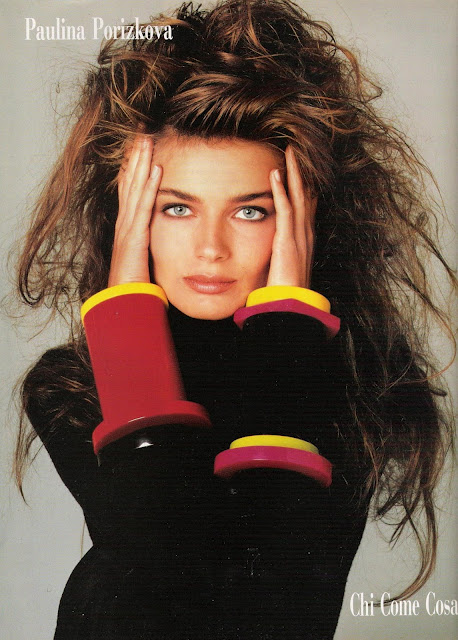
For women, beauty and self-worth can seem like the same thing. So do women at the top of the hierarchy have the highest self-esteem in the world? That’s one question that “About Face” explored in an HBO documentary on supermodels that aired over the summer.
Some supermodels did think their beauty made them better than others. Kim Alexis admitted she felt that way for while – but got over it. And Beverly Johnson explained:
You do live in a bubble where everyone is telling you you’re beautiful all the time, and get you coffee or whatever you want.
But I was also struck by how many of the world’s most beautiful women had thought they were unattractive in some way or at some point in their lives. Usually because someone had told them so.
While looking at a lovely shot of Carmen Dell’Orefice skipping in the street I was surprised that she didn’t like the photo because of her feet.
I don’t like my feet. I don’t have sexy feet. My mom used to tell me I had feet like coffins and ears like sedan doors. Then I internalized that.
First of all, her feet are perfectly fine. But you have to wonder about the self-criticism that fills women’s heads to make them find phantom flaws were they don’t exist.
Marisa Berenson had not thought she was beautiful, either:
People called me Olive Oil because I was long and lanky. I used to cut out pictures of actresses of the time, Audrey Hepburn and Rita Hayworth, and wish I looked like that.
Jerry Hall – Mick Jagger’s ex — felt she was unattractive, too, because society said so:
I used to be really upset about not having a boyfriend. I’d say, “I feel like a failure. What am I going to do?” And my mom would say, “Well, look at Twiggy. She’s a model and she is even skinnier and flatter than you.”
She got over it and went to St. Tropez to be discovered. A story in itself:
I wore a crocheted metallic bikini and platform shoes that made me 6’4. And I was expecting to be discovered. And I was, within about an hour this guy came up to me and asked if I’d like to be a model.
Most people see themselves through a positive bias according to psychological research. I assume that includes our assessment of our looks. If so, it seems strange that models so often go the opposite way. Maybe it’s a matter of age, going through the self-doubt of adolescence. Maybe it’s feeling unworthy of being at “the top.” Lisa Taylor got into cocaine because:
I was so insecure that I needed to do it. It made me feel like I had something to say, that I was worthy of being photographed, that I was somebody.
But the modeling industry, with its exacting standards — and lack of Photoshop in the early days — could be hard on self-esteem, too.
Paulina Porizkova got the double-whammy. As an immigrant child she was relentlessly teased, only to land as a supermodel and be torn apart once more:
My parents escaped to Sweden from the Czech Republic, and I was called a dirty communist bastard for years. And so when I had the chance to escape and be called beautiful – I don’t think there is any 15-year-old girl who would give up the chance to be called beautiful.
You don’t realize at that point that you will also be called ugly.
They would open my portfolio and start discussing me, start cutting me apart. “Good mouth, but what are we going to do about those teeth? Don’t let her open her mouth. And I don’t like the color of her hair. That can be fixed, but what about those thighs!”
Paulina goes on to explain that looks are not a very good platform on which to base self-esteem:
Beauty is about being self-confident and modeling has nothing to do with self-confidence. Working off your looks makes you the opposite of self-confident. So maybe I became beautiful once I stopped modeling.
Advice we should all heed.
Popular Posts on BroadBlogs
Am I Ugly? Girls Ask YouTube
The Plump Beauty Ideal: Exotic Dancers in 1890
Believe You’re Beautiful – Others Will, Too
Share this:

What’s Wrong With Hooking Up?
 By Lisa Wade
Crossposted from Ms. and Sociological Images
Hanna Rosin, senior editor at The Atlantic and author of The End of Men, has written a piece about hook-up culture on and off college campuses for the September issue of her magazine. Given that I’ve done some research on hook-up culture, here are my two cents: Rosin isn’t wrong to argue that the culture offers women sexual opportunities and independence, but she mischaracterizes the objections to hook-up culture and draws too rosy a conclusion.
Those who wring their hands and “lament” hook-up culture, Rosin contends, do so because they think women are giving it up too easily, a practice that will inevitably leave them heartbroken. She writes:
[Critics of hook up culture pine] for an earlier time, when fathers protected ‘innocent’ girls from ‘punks’ and predators, and when girls understood it was their role to also protect themselves.
If this is the problem, the answer is less sex and more (sexless?) relationships. But, Rosin rightly argues, this wrongly stereotypes women as fragile flowers whose self-esteem lies between their legs. It also romanticizes relationships. Drawing on the fantastic research of sociologists Laura Hamilton and Elizabeth A. Armstrong, she explains that young women often find serious relationships with men to be distracting; staying single (and hooking up for fun) is one way to protect their own educational and career paths.
All this is true and so, Rosin concludes, hook-up culture is “an engine of female progress—one being harnessed and driven by women themselves.”
Well, not exactly. Yes, women get to choose to have sex with men casually and many do. And some women truly enjoy hook-up culture, while others who like it less still learn a lot about themselves and feel grateful for the experiences. I make this argument with my colleague, Caroline Heldman, in Hooking Up and Opting Out: Negotiating Sex in the First Year of College [PDF].
But what young women don’t control is the context in which they have sex. The problem with hook-up culture is not casual sex, nor is it the fact that some women are choosing it; it’s the sexism that encourages men to treat women like pawns and requires women to be just as cunning and manipulative if they want to be in the game; it’s the relentless pressure to be hot that makes some women feel like shit all the time and the rest feel like shit some of the time; it’s the heterosexism that marginalizes and excludes true experimentation with same-sex desire; and it’s the intolerance towards people who would rather be in relationships or practice abstinence (considered boring, pathetic or weird by many advocates of hook-up culture, including, perhaps, Rosin).
Fundamentally, what’s wrong with hook-up culture is the antagonistic, competitive and malevolent attitude towards one’s sexual partners. College students largely aren’t experimenting with sexuality nicely. Hook ups aren’t, on the whole, mutually satisfying, strongly consensual, experimental affairs during which both partners express concern for the others’ pleasure. They’re repetitive, awkward and confusing sexual encounters in which men have orgasms more than twice as often as women:

The problem with hook-up culture, then, is not that people are friends with benefits. It’s that they’re not. As one of my students concluded about one of her hook-up partners: “You could have labeled it friends with benefits … without the friendship, maybe?”
Hook-up culture is an “engine of female progress” only if we take for granted that our destination is a caricature of male sexuality, one in which sex is a game with a winner and a loser. But do we really want sex to be competitive? Is “keep[ing] pace with the boys,” as Rosin puts it, really what liberation looks like? I think we can do better.
Crossposted from Ms. Magazine and Sociological Images
Popular Posts on BroadBlogs
Women Want Casual Sex? Yes and No
Women Want Emotionally Connected Sex. Why?
Are Women Naturally Monogamous?
Share this:

Toys Create Gender
 By Jessica Garriga
I work at a toy store. There’s a girl’s side and a boy’s side. The girl’s side is suffocated with pink and purple — with a small section of black and pink for the ‘rebellious’ little girl. This side stocks Barbies, Brats, Maxie dolls, baby dolls, stuffed animals, kitchen and food sets, cleaning sets, accessories, make up kits, pretend hair kits and real beauty products that are child safe.
Some girls hate pink and refuse to buy it. I can understand why. It has nothing to do with the color, really, but that is seems like the only color they are allowed.
The boy’s side has lots of colors – except pink. This side has video games, legos, super hero action figures and masks, toy swords and super hero themed weapons, Nerf guns, sport equipment and balls, army toys and weapons, battle ships, musical instruments, board games and chess. Boy toys celebrate violence and being tough. Even the boxes they come in are drawn with explosive effects.
Science themed toys have only pictures of boys — unless they’re painted pink or purple. A guitar aimed at boys is dark blue and painted with flames. The girl guitar is pink with flowers. Legos for girls are in pink and purple boxes with nice ‘friendship’ themed characters and sets. The action, city, and car themed Legos are for boys.
Parents are funny.
One father insisted the Nerf guns he bought were not for his daughter, but for her male friend. When I told him I did not care if his daughter played with Nerf guns and told him I’d played with them, myself, he insisted the toys were not for his daughter and seemed offended by my playing with Nerf guns.
Another dad wanted a pink science kit with princesses on them. With none available, he settled on a pink princess electric piano.
A mom refused to buy Elmo or music themed toys unless they enforced the socialization she wished to impose on her daughter.
And parents seem to avoid bringing their sons anywhere near the girls’ side. Do they fear their sons might like the baby dolls or the pink makeup sets and don’t want to risk it? One dad told me he only lets his three year old son go to the boy’s side because he likes the pink baby dolls, so dad wants to avoid them.
Toy segregation has consequences. As Katrin Bennhold at the New York Times explained:
Male and female stereotypes are established early: It is not hard to see a connection between girls playing with dolls and boys playing with cars, and the widespread segregation of labor markets into “female” and “male” professions. (Lower-paid, lower-status) nurses, primary school teachers and caregivers of most kinds are overwhelmingly female. Engineers, computer scientists and mechanics tend to be male.
Maybe parents believe that gender is biological and that their children won’t like toys that don’t “fit” the sex. But they’re unwittingly (or wittingly) creating gender through the toys they choose – with a lot of help from society and toy stores.
Popular Posts on BroadBlogs
Baby Named “Storm.” Sex Unknown
My Son Likes Girl-Things. Is He Gay?
It’s Ok To Be A Tomboy But Not A Sissy. Why?

 BroadBlogs