Blog Archives
If Sports Were Covered Like Women’s Beach Volleyball
In case you missed this… interesting contrast between photos of men’s and women’s beach volleyball. For men you find tough, competitive guys:
And for women:
Oh, and here’s a woman actually playing the sport. In that outfit she stays sexy!
Interestingly, there are a number of pics of women listed under “men’s beach volleyball” but no men on the women’s list.
When Nate Jones, over at Metro.us, innocently searched for pics of women’s Olympic beach volleyball, he was left asking, “What if every Olympic sport was photographed like beach volleyball?” Here’s a sampling of what that would look like (you can see all his pics by clicking here):


As the camera hones in on women’s body parts and ignores men’s, you can see why all of us – men and women – come to think of women as the sex objects in our society. Even the fact that women volleyball players wear such a skimpy outfit doubles down on the whole, “women as sex object” thing.
And so ignored men’s bodies leave us ignoring men-as-sexy while the women’s body-focus makes them all about sex. And actually, that’s not very good for our sex lives – or for well-rounded lives. For more on that, see the posts below.
Popular Posts on BroadBlogs
Does Sexual Objectification Lead to Bad Sex?
Why Aren’t Male Strippers Sexy?
Anything Good About Being A Sex Object?
Share this:

Give Those Girls A Donut…Please!

Taken alone, the VS models seem almost normal.
In comparison, like scarecrows.Oddly, they look like two different species, almost :}
Those are my friends’ verdicts on the “Victoria’s Secret: Love My Body” campaign as it faced off against its nemesis, “Dove: Real Beauty.”
Real beauty wins in my book.
In fact, I’ve long thought that VS models look a bit like aliens. The ones from “Close Encounters,” as the beings first come into skinny focus. (Hmm, close encounters — almost like a Freudian slip with the demand: look like this and have a close encounter!)
But skeletal is an acquired taste. If acquired at all. Unfortunately many do, complete with the glamorized “anorexic chic” look. Some girls do all they can to avoid eating in hopes of becoming “beautiful.”
Scary, when nourishment becomes the enemy.
Shows how far we can stray from evolutionary psych notions that we are attracted to healthy people.
Some choose not to promote the problem. Kylie Bisutti had beaten out 10,000 hopefuls in a Victoria’s Secret Model Search, and then quit. In part out of her Christian beliefs and in part because of a conversation she had with her 8-year-old cousin.
I was doing my makeup in the mirror one day and she was watching me. She looked at me and was like, ‘You know, I think I want to stop eating so I can look like you.’
It just broke my heart because she looks up to me and I didn’t want to be that type of person that she thought she had to be to be beautiful. Thousands of girls think that being beautiful is an outer issue and really it’s a heart issue.
Luckily, many men actually prefer women who are well-nourished. One man commented on the VS/Dove face-off, saying:
The women below look much prettier. I am skeptical as to whether the women in the first picture actually love their bodies, or themselves.
And I have to agree with another friend who said, “Give those girls a donut…please!”
Popular Posts on BroadBlogs
How to Look Like a Victoria’s Secret Angel
Beautiful Women’s Hips Are Thinner Than Their Heads?
I Can’t Believe I Ate A Whole Head Of Lettuce!
Share this:

God-Wrestling Nuns

Nun kicks a heavy bag in a gym. Photo by Martin San/Getty Images.
U.S. Nuns are grappling over a response to Vatican concern with their doctrinal loyalty. Church leadership wants them denouncing abortion and gays more than saving the lives of women and children, and affirming God’s love for all of humanity.
One sister explains:
We have a differing perspective on obedience. Our understanding is that we need to continue to respond to the signs of the times, and the new questions and issues that arise in the complexities of modern life are not something we see as a threat.
The sisters are in line with Bible heroes.
When Jacob wrestled with God he received a new name, Israel, meaning “He struggles with God.” At the end of the tussle God “blessed him there.”
God blesses one who struggles with Him?
Or, Job questioned why God made him suffer. His companions admonished him, demanding he accept God’s judgment.
Yet God did not think highly of the friends who spewed standard lines about submitting to divine will, repenting and being humble. God said, “You have not spoken the truth about me, as my servant Job has.”
And then Job conversed with God, proclaiming, “I knew of you with the hearing of the ear, but now my eyes have seen you.” He got to know God, and this would never have happened had he taken the standard “counsels of piety” and played the submissive, unquestioning part his friends advised. It was only by being authentic in his doubts and questions that he could bring enough of himself to have a chance to get to know God.
These Bible stories speak well to the nuns’ intentions.
Go get ‘em girls!
Popular Posts on BroadBlogs
Child Rape: Not As Bad As Contraception
Crying Religious Intolerance While Violating Rights
Should Organized Religion Have More Rights Than Women?
Share this:

Gag Orders Shield Rapists Who Post Photos
 Last summer when Savannah Dietrich was sixteen she had a few drinks at a party and passed out. Two acquaintances raped her and took pictures, which they sent to their friends. Gossip spread through her school, and Savannah was forced to “just sit there and wonder, who saw, who knows?”
With the humiliation she cried herself to sleep for months and avoided being in public.
Many young women don’t report rape for fear of further shaming, but Savannah did.
When her attackers pled guilty they requested a gag order to protect themselves, and the judge agreed.
First Savannah cried. Then she got angry and tweeted the names of her rapists:
There you go, lock me up. I’m not protecting anyone that made my life a living Hell… [Protecting rapists] is more important than getting justice for the victim.
Twitter closed the account.
Next, she posted on Facebook:
If reporting a rape only got me to the point that I’m not allowed to talk about it, then I regret it, I regret reporting it.
Victim’s rights activists worry about the message sent in jailing victims.
Elizabeth Beier was so outraged she created a Change.org petition asking the judge to throw out the charges, stating:
I think what she did was very brave … and I think a lot of people who may have been victims or survivors of assault and didn’t get the justice they deserve probably see themselves in her… Everyone wants this girl to have peace and time to recover and not another trauma like jail time.
The petition gathered 62,000 signatures in one day.
A defense attorney withdrew the request saying, “The horse is out of the barn. Nothing is bringing it back.”
Terry O’Neill, president of the National Organization for Women, is thrilled, declaring:
a huge victory not only for Ms. Dietrich, but for women all over the country… These boys shared the picture of her being raped with their friends and she can’t share their names with her Twitter community? That’s just crazy.
So the gag order was lifted because the Defense gave in. But you have to wonder why the justice system protects admitted assailants who ruin others’ lives, and who could ruin still more under cover of silence — and who have already revealed themselves, anyway!
I wonder if these rapists, who appear to be white males (if a site posting their names and photographs is correct) were protected because they are white and seen as “boys who made a mistake” and not the criminals they are. Too often we protect privileged members of society (white, male, rich) over others (ethnic, female, poor).
Some might also blame a girl for getting drunk. But is drunkenness a worse crime than rape? Sometimes drinking even gets boys off the hook in public opinion – “He was drunk and didn’t know what he was doing.”
Yes, publicizing these men’s names could sully their future.
Maybe they should have thought of that before attacking Savannah — and posting pictures, themselves, on the internet.
And maybe these boys should have worried more about ruining Savannah’s life.
Popular Posts on BroadBlogs
Cheerleader Ordered To Cheer Her Rapist, and Other Stories
Steal $11, Get Life Sentence
Rape Culture and Penn State
Share this:

Why Do The “Isms” That Affect Men Seem More Important?
You’re never going to have this revolution happen unless there’s also a sexual revolution.
That was Bill Maher’s verdict on the push for Democracy in Egypt as he discussed the matter on his show, Real Time with Bill Maher.
Pro-feminist, Tavis Smiley, agreed that women need to be treated better. Yet he inserted a different spin: “When we have these conversations about how they treat women, as if we treat women better in our country, it demonizes Muslim men.”
The most well-meaning among us, men like Smiley, work hard to respect other cultures. Yet sometimes we need to discern whether powerful elements of a society are harming less powerful targets. And really, is pointing out a need for improvement “demonization”?
Mr. Smiley is a-okay in my book, and I appreciate his aim here. Yet there is plenty of room for change in cultures that (depending upon the country or province) stone women for being victims of rape, beat women for leaving home without a male relative, keep girls out of school, forbid women from driving, make divorce difficult for women but easy for men, remove battered women from shelters, and cut women’s genitals – leaving them in pain, crippled, or dead.
It’s a sad turn of events when early Islam did so much to improve women’s rights in the world. The Koran gave women the right to work, inherit and own property. Female infanticide and slavery were abolished. Women were given the right to consent to marry. Protections against abuse became instituted.
Today Islamic scholars like Dr. Jamal Badawi work to support women’s rights. Meanwhile, large majorities favor legal, political and professional freedoms for women in North Africa and many countries in the Middle East and the broader Muslim world, according to a 2007 Gallup poll. In fact, the Islamic culture of West Sumatra, Indonesia is one of the most peace-loving, egalitarian places on the planet.
Islam isn’t the problem. Neither are Muslim men.
Still, problems abound. Yet Smiley seems more concerned with ethnocentrism than sexism, given his desire to cut off conversation. Why do the “isms” that affect men seem more important? And did women have equal power to create the cultures that oppress them?
When ethnocentrism and sexism are at odds, which worries should prevail? Cultural relativism – don’t judge one culture from the perspective of another – is a good guide most of the time. But what if someone is being harmed? When people are killed for reasons other than self-defense, when they are crippled physically, emotionally, intellectually or spiritually, those circumstances must trump all others.
Must we worry more about offending those who create cultures that harm women than freeing women who are harmed by them?
Meanwhile, Islamic feminists complain that Western women can be too fearful of offending ethnic sensitivities to back their feminist sisters.
Now, is lecture the best way to handle this? Dialogue is better. Other cultures have perspectives that can benefit us, too. Perhaps we can learn from each other.
Love Tavis. But he insists we cannot criticize until we perfect ourselves. We’ll never be perfect. Still, we must fight oppression wherever it is found, here and there, to whatever degree we find it. Tolerating intolerance is not progressive.
I’m on vacation. This was originally posted on February 25, 2011
Popular Posts on BroadBlogs
Early Islam’s Feminist Air
Did Women Create Burqa Culture?
Cultural Relativism: Must We Be Nazis to Criticize Them?
Share this:

What If Women Went Topless?
 Unprecedented East Coast heat has prompted Moira Johnston to go topless in New York. Why drown in a hot, puddley bra when you can rip off your top, as so many men do when temperatures rise?
Moira also wants to raise awareness that, “It’s legal for woman to be topless anywhere a guy can be without a shirt since 1992 here in New York State.”
Jamie Peck gave it a try and found the only objectors were those worried about children, which she ponders:
Personally, I think that viewing a bare breast as inherently sexual and hence corrupting of innocence is silly; I’d much rather my hypothetical kid see women of all shapes enjoying the outdoors and being comfortable with their bodies than, say, two fully clothed people dry humping on a bench.
Plenty of men would love this, and judging from the crowd Moira attracts, many do.
But what would happen if women did go topless? All of them, in mass, for a long time?
Men would probably be disappointed as the breast fetish faded away. After all, it doesn’t exist in places where women walk around topless all the time, like tribal societies. And it withered in Europe and Australia in the 80s when breasts were bared in magazine and TV ads, and on billboards, and where women went topless on the beach.
The woman who reported this piece for Stuff appears to be Australian, and she can relate:
Why do we still treat bare breasts as such objects of scandal?
I must admit it’s always puzzled me. Growing up, as I did, in the ’80s, my template for adult womanhood was that it was perfectly natural – nay, expected – to whip ’em out in summer.
We’d turn up to the beach, three or four families or so, stake out a spot, and then the mums and aunts and friends would roll their one-pieces down and pour on the Reef. Consequently my approach to beachgoing is similarly au naturel.
So freeing. And some feminists recommend this breast baring to de-objectify them.
On the downside, women would probably still be judged, and some might feel pressured to uncover when they’d rather not — the inverse of some Arab women who feel pressured to cover when they’d rather not.
Still, women from once-topless societies aren’t expected to have such huge breasts today, saving money and potentially dangerous, unnecessary surgeries. As an ex-pat now living Portugal reveals:
My wife, who teaches at a local university, had an interesting conversation with one of her students. He’s a cosmetic surgeon, one of the very few in southern Portugal who does breast augmentations.
“I’m curious,” said my wife. “What size do most women ask for when they have an augmentation?”
“In Portugal? A B-cup,” he replied.
“A B-cup? That’s all? I’d have thought women who were paying for larger breasts would want something a little more…sizeable.”
“No, a B-cup is the average here, and in Europe. But if you go to the United States, it’s a different story.”
“What do American women ask for?”
“A D-cup,” he said. “The difference between Europe and the US is two cup sizes.”
Interesting to see the law of unintended (or intended) consequences in action.
Popular Posts on BroadBlogs
Men Aren’t Hard Wired To Find Breasts Attractive
Women Learn the Breast Fetish, Too
Women Seeing Women as Sexier than Men
Share this:

Women Gazing At Men
 Lately I’ve been asking why women don’t get so excited by naked men, why women are often uncomfortable with male nudity on stage and screen or in print, and why these nude men can seem “gay” to the women who gaze at them.
Elizabeth Hall Magill has been asking the same questions over at Yo Mama. And she’s wondering how women can better appreciate the male form, without objectifying them. Here’s an excerpt from one of her posts.
So—where does that leave a woman’s gaze?
Neither here nor there.
And yet, we have eyes. We gaze. And we like what we see.
As I pondered this issue, I realized something: perhaps men posing sexually seem homosexual not only because we are used to the male gaze. Perhaps it is also because we are used to the female pose. And here we encounter a difference between media (artful or otherwise) and life: real sexiness is rarely posed. It just happens. But in “sexy” pictures of women, the women are aware of the gaze and arranging themselves for it. So, when a man does the same thing, we read him as feminized. And when a man strips for a woman, he can be seen as “performing” something generally feminine, and therefore we define it as insincere, the object of a joke. Not true eroticism.
In one of my favorite essays of all time, Looking at Women, Scott Russell Sanders says:
When I return to the street with the ancient legacy of longing coiled in my DNA, and the residues from a thousand generations of patriarchs silting my brain, I encounter women whose presence strikes me like a slap of wind in the face. I must prepare a gaze that is worthy of their splendor.
This is how I feel about men. And I bet I’m not the only one.
We’re all conditioned to ignore the fact that women feel this way about men. How many times a week do you think a man checks out his wife as she reaches into the refrigerator to get something from that bottom drawer, or reaches high above her head for a rarely-used dish? How many times a week does he check out the women walking by him on the sidewalk, riding a bike in the gym, or sitting in the next office? Magazines love to make little pie charts telling us about how often the male brain does these things. I’ve never seen a pie chart telling me how often the female brain does similar things.
And yet.
Men get things from the refrigerator or the top shelf, and often look damn good doing it. They walk on the sidewalk, ride bikes, and work right next to us, looking good all the while. And women notice.
What we need is more women noticing themselves as they notice men. Thinking about how they feel when the tide of desire leaves and returns, leaves and returns. And owning that tide.
And then we need women talking about it—not giggling, not blushing, not encouraging men to mock the idea of their own desirability. Somebody ought to talk about it so often and so loudly that a pie chart becomes inevitable, cause we just know women are thinking about sex so dang much that we better measure it.
After that, we need female photographers and directors, tons of them, taking pictures of and telling stories about men being men. Holding babies in the middle of the night, shirtless and vulnerable and full of fatherly love and strength. Squatting in the middle of a road, looking at a rock (clothed, as squatting naked in the middle of the road is unnatural and possibly unsafe). Running on treadmills, making copies in the office while wearing snazzy ties, washing the dirt off their hands after a day working outside, laughing with their friends, kicking a tire and making dinner and coming home at the end of a long day. We need to see men being men through the eyes of women, not men posing as the objects of female desire. And we should see them in all their shapes and colors—in all their splendor.
You know what I think?
I think men would totally get being sexy in this way, and I think they would love it. They wouldn’t feel like objects, they wouldn’t feel feminized, they wouldn’t pose or feel goofy. They’d be themselves, and they’d be damn glad that the women they’ve been checking out all this time are checking them right back.
Which means the female gaze would no longer be marginalized, masculinized, or mocked. It would be honest, and it would be powerful—as powerful as desire itself.
Popular Posts on BroadBlogs
Men: Erotic Objects of Women’s Gaze
Man as Object: Reversing the Gaze
Does Porn Objectify? Experts Disagree
Share this:

Mississippi Morals: So What if Women Die?
When I was 20, exactly 20 years ago this past October 25th, I was abducted, raped, and shot twice by two teenagers on a car-jacking spree. I did not get pregnant, thank goodness. But if I had, and something like Initiative 26 had been in place, I would have been forced, by the state of Mississippi, to bear that child. Giving birth might have killed me physically (the gunshot wound to my lower back was life-threatening), if not emotionally.
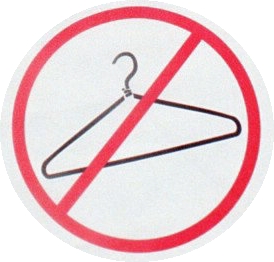
That’s from Cristen Hemmins, who became a political activist in Mississippi with Initiative 26 (the “Personhood Initiative”). If that law had passed a woman would not have been able to get an abortion even in cases of rape, incest, or if her life were endangered. Miscarriage could have become a police investigation. And at least some (possibly all) forms of contraception would have become illegal.
Now Cristen is fighting to keep the last abortion clinic in the state open as a new law — ostensibly protecting women’s health – requires providers to have admitting privileges to a local hospital.
She says this standard is both unreachable (the clinic has had no luck getting the hospital to send the necessary forms) and medically unnecessary.
“Medically unnecessary” is an understatement. It is dangerous.
If women must save money to travel out of state, they risk having the procedure when the pregnancy is further along and more dangerous.
Others will resort to back alley abortionists or use coat hangers on themselves.
This is healthier than current Mississippi law?
Dr. Douglas Laube, board chair of Physicians for Reproductive Choice and Health, wrote a letter to the editor warning that the law will harm women. He says that doctors in his organization, “know that when women seeking abortion are denied safe, legal procedures, they look for other ways to end their pregnancies.”
In fact, before Roe v. Wade doctors were at the forefront of the movement to make abortion legal, having seen too many women die.
But Mississippi State Rep. Bubba Carpenter doesn’t give a hoot:
They’re like, “Well, the poor pitiful women that can’t afford to go out of state are just going to start doing them at home with a coat hanger.” That’s what we’ve heard over and over and over. But hey–you have to have moral values.
So these Mississippi pro-lifers are fine with a law that will cause young women to die.
That’s moral?
Popular Posts on BroadBlogs
Corporations Are People; Women Not So Much
Crying Religious Intolerance While Violating Rights
Markets Must Be Free; Women Must Be Constrained
Share this:

Magic Mike Turns Tables on Objectification, Desire
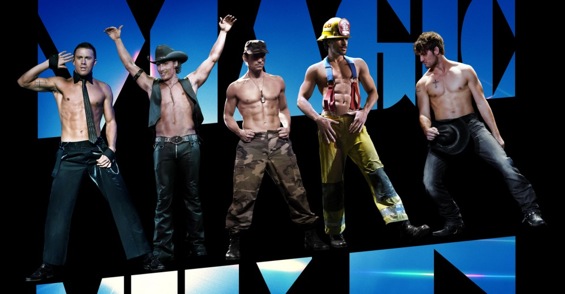 I must be obsessed with male strippers, you think, with a third post inspired by “Magic Mike.”
Maybe.
I am obsessed with objectification and desire, and that movie offers the rare turning of tables to see what’s on the other side.
In this table-turning do women experience men in the way that men typically experience them? I’ve already suggested that the answer is no.
However, we’re seeing chinks in the armor.
In “Magic Mike” women’s desire is acknowledged and catered to as the camera hones in on glutes and abs to accommodate the female gaze… and as Matthew McConaughey bends over to give us a full-moon shot.
All this in a place with “no men allowed.” Not formally, as Joanna Schroeder over at the GoodMenProject points out, but because most men don’t want to be there. But that “all-estrogen” space can feel empowering.
And for once women are calling the shots (or feel like they are) demanding, “Take it all off!” and letting ‘em know what they like: “Yeahhh honey, do it again!”
Only problem is that objectification is damaging. When women or men are objectified their looks and their sexuality become their worth – in their own minds and in the minds of others.
Those who objectify themselves are prone to body shame, low self-esteem, depression, eating disorders and sexual dysfunction. They even have more difficulty navigating everyday life because they’re so distracted by how their body looks.
And the objectified are treated like “things,” meant to serve others’ desires. They are things that lack thought or emotion, so they are not offered empathy. And when they age and lose their sex appeal they are worth nothing at all.
Do we really want to turn others into objects? (Keep in mind that it is possible to be sexy without being a sex object.)
But looking closer we see the table is only half-turned: women are also objectified, even in this film. While not revealing any male body parts that are prohibited on a public beach, the film hones in on naked breasts from time to time. One of the strippers even passes his wife around and encourages the guys to fondle her breasts because “she loves it.”
Meanwhile, the simulated sex on stage often mimics male pleasure, with women’s heads shoved against cocks and men humping women’s faces or behinds. How about a little clitoral action?
And in a movie that promises to take us out of our boxes we end up right back inside the virgin/whore dichotomy as Magic Mike chooses between the sexually adventurous Joanna and the virginal Brooke. No surprise, really, who triumphs.
So things have changed and they’ve stayed the same, which provokes the question: Where do we want to go?
Popular Posts on BroadBlogs
Women Seeing Women as Sexier than Men
Anything Good About Being A Sex Object?
Does Porn Objectify? Experts Disagree
Share this:

Gays Find Strippers Sexy; Women Don’t?
 Male strippers have beautiful bodies. And women find them sexy. But probably not sexy in a way that gets them too aroused.
Last week I considered the lack of excitement. Turns out, women don’t get too turned on by male nudity, at all. When sex researcher, Meredith Chivers, wired women up and showed them sexual images, straight women experienced no arousal — physically or subjectively — when looking at fit naked guys working out. Another time women watched a nude man walking and the only thing that aroused them less were bonobos, an ape species, having sex.
Is it because the male body simply isn’t sexually exciting?
Probably not, since gay men did get aroused looking at nude men.
Why are gay men turned on by male nudity when straight women aren’t? There are various possibilities. And it’s not that women just aren’t visual, after all, women were more aroused by a nude woman exercising than by a nude man. And, some women enjoy porn.
The fact that gay culture celebrates and eroticizes the male body in a way that straight culture does not could play a role.
And then there’s repression. Men are rarely slut-shamed for being sexual. On the other hand, gays are too often taunted as fags or queers. Still, research on men and women who have lived in repressive cultures, like Victorian England, find men less affected (perhaps because they are also less repressed). But even gay men are less affected than lesbians by homophobia-induced repression (even though homophobia is more strongly directed at gay men). Maybe because the male sex drive is stronger, due in part to higher levels of testosterone, while twice as much of their brain is taken up with sex.
Meanwhile, men’s bodies give them better feedback than women’s do. When blood rushes to the penis a man knows it. He feels very excited. But when blood rushes to a woman’s vagina, she can be clueless. Again, this difference may be biological, or due to greater female repression, or because men are less affected by repression, or all of the above. Indiana University researchers believe that women are less responsive for both anatomical and psychosocial reasons.
We don’t have the definitive answer on why gay men get aroused by male strippers when straight women don’t so much, but here’s a little food for thought to munch on.
Popular Posts on BroadBlogs
Why Aren’t Male Strippers Sexy?
Men: Erotic Objects of Women’s Gaze
Men, Women React to Male/Female Nudity

 BroadBlogs