Category Archives: psychology
A Raped Girl Is A Joke
She’s deader than a doornail.
She’s deader than Trayvon Martin.
What if she was pregnant and gave birth to a dead baby?

Anonymous has posted a video of drunken high school athletes making fun of a 16-year-old girl who was raped while unconscious by two star football players.
Jokes like that bolster rape and rapists. It’s all just fodder for wisecracks. No big deal.
Even the feminist blog, Jezebel, received comments on this story that support a lighthearted view:
Yes, it’s tasteless and twisted and offensive. But as far as we know, it’s also just talk…They’re probably just a bunch of dumb high school kids, most likely drunk and/or stoned, making terrible jokes.
Unfortunately, this is how young men joke around these days.
I guess these folks don’t get that the blasé pose contributes to the crime.
Another commenter told about rape culture from her high school days.
They would pull all kinds of pranks that I wrote off then as just typical asshole stuff, like leaving Playboys out open to the centerfold, with lit candles on every girl’s crotch, whenever girls came over to their hangout. I figured they were testing us girls to see if we were cool, if we could take a joke. Until one of them raped my friend when she was drunk. He dropped her off at a sleepover where she cried because she was a virgin and she was scared. Those guys proceeded to prank call us every 5 minutes and when we answered it was just laughter. Laughing!
Rape culture also arises when drunkenness is thought a worse crime than rape. It’s “her fault” for getting drunk. And indeed, as the 16-year-old became drunk at a party some taunted her and cheered when a baseball player dared someone to urinate on her.
The day after the assault, photos and comments went up on the Web. One tweet claimed, “Some people deserve to be peed on.” Others retweeted, including one of the rapists.
You see rape culture in the townspeople’s reactions, with many blaming the girl for being assaulted, seeking justice and putting the football team in a bad light.
Her family received threats so that extra police were needed to patrol their neighborhood.
Rape culture arises when a girl’s friends ostracize her and parents encourage their kids to stay away. As happen with this young woman.
A commenter on Jezebel wrote that,
What they mean (in the video) by “dead” is her reputation is dead. Meaning no one will ever date her or sleep with her again.
That’s what happens when being raped is thought a worse crime than raping. That’s what happens in rape culture. You blame less powerful people – typically women here –to protect more powerful people – in the case of rape, most likely men.
Things are improving. Not everyone took the side of the ballplayers. And most of the reactions on Jezebel’s blog were sympathetic to the girl, not the rapists.
Even the dimwit on the video eventually got some pushback from the other guys:
That’s not cool bro.
That’s like rape. It is rape. They raped her.
What if that was your daughter?
But unfortunately, from America to India and beyond, rape culture is still all too common.
Related Posts on BroadBlogs
Real Men Don’t Beat, Rape Women: A Guy’s View
Rape and Acting Offensively are Natural Male Urges?
Dad Imprisons, Rapes Daughters, Mere Sex Objects
Share this:

What Do Rapists Want?
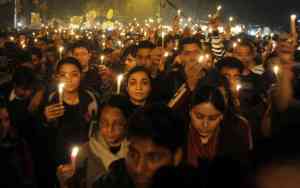 You’ve likely heard about the 23-year-old woman and her male friend who watched “Life of Pi” at a Delhi theater and then caught a bus home.
The group of drunken men who waved them onto their private bus actually wanted a “joy ride” (???!!!) so they spent the trip beating the pair with an iron rod and gang raping the woman with that same tool. Afterward the two were thrown off the bus and left to die.
The woman survived but her intestines were destroyed. After three abdominal surgeries she suffered major brain injury, cardiac arrest, an infected abdomen and infected lungs. After fighting for two weeks to live, her body finally gave out and she died.
So that a few guys could have a little fun?
Six men have been arrested. And that may be the most surprising part of this story. Indian women are constantly harassed and raped and then blamed for the crimes. What were they wearing? What were they doing? Attacks are pooh-poohed.
Recently, an 18-year-old from another Indian province was kidnapped from a place of worship, drugged and repeatedly assaulted. The police had her describe the attack — in detail — several times, and then pressured her family to take money as compensation. Or, have her marry one of the rapists to make things right. The young woman continued to be threatened and stalked by the men who raped her until she finally committed suicide.
When Indian women aren’t being raped they are too often being sexually harassed on a regular basis.
Neha Kaul Mehra was only 7 years old when it started. A man began masturbating in front of her as she walked to dance class. She went on to face much more.
Sonia Faleiro says this sort of thing is pervasive:
I LIVED for 24 years in New Delhi, a city where sexual harassment is as regular as mealtime… As a teenager, I learned to protect myself. I never stood alone if I could help it, and I walked quickly, crossing my arms over my chest, refusing to make eye contact or smile. I cleaved through crowds shoulder-first, and avoided leaving the house after dark except in a private car…
The steady thrum of whistles, catcalls, hisses, sexual innuendos and open threats continued. Packs of men dawdled on the street… To make their demands clear, they would thrust their pelvises at female passers-by.
Sexual harassment and rape are increasing in India. Between 2006 and 2011 rape was up 25%. Last year only one attack resulted in a conviction.
What lies behind the assaults? Provocative clothing? Women asking for it?
Sonia tried covering up. It didn’t work. Surely the young woman on the bus hadn’t asked to be mutilated so badly that her intestines would need to be removed. Surely she did not ask to be thrown from a bus and left for dead.
Instead we must ask what these rapists are trying to do.
The rise in assault comes as women gain greater freedom and empowerment. Clearly, someone wants to stop them.
Rape lets women know who is free and who is not. Assault leaves them feeling disempowered, intimidated, in fear of men. Rape lets them know who’s boss.
It’s working. Many women limit themselves. Politicians tell them to stay inside and stop using cell phones. Brothers tell sisters the same thing. Some mean well. But the effect is to keep women penned in. And because the real problem is not clothing or being out at night the rapes continue, anyway.
Actually, all of this backfires because it keeps women in a secondary place. The root of the problem is that women are not respected as equals. In cultures where women are valued and respected you have lower levels of rape. And sometimes no rape, as with the egalitarian American Indians before contact with Europeans.
Instead of women hiding away and covering themselves, transform the culture.
On the one hand rape is increasing because women are gaining more rights and status, and some men want to prevent that. On the other hand, the only way to really make the rapes stop is for women’s rights to increase.
Here are a few things I would recommend to both increase women’s status and power and to decrease rape at the same time:
- Stop taking the rapist’s point of view
- Stop blaming victims
- Stop believing that being raped is a worse crime than raping
- Stop marrying women off to their rapists
- Start prosecuting rape to hold rapists accountable
- Start up rape hotlines to support women
- Start educating the entire population in a way that creates empathy for rape victims
The core problem is a patriarchal culture that privileges men and that under-privileges women.
At long last a rape in Delhi has created such outrage that the people are rising up in protest to demand a more humane world. I hope for their success.
Related Posts on BroadBlogs
Mind of a Rapist: Trying to Bridge a Gap between a Small Self and a Big Man
Raping, Shaming Girls to Impress Guys
Yale Fraternity Chants “No Means Yes.” Men? Or Scaredy Cats?
Share this:

How to Lose a Man
![Lost-Love-4d483d7333834[1]](https://broadblogs.com/wp-content/uploads/2012/12/lost-love-4d483d73338341.jpg?w=300&h=225) By Raymond Bechard @ The Good Men Project
By Raymond Bechard @ The Good Men Project
I was talking to a guy installing carpet in a friend’s home the other day. For some reason, he asked my advice on whether or not he should have a surprise birthday party for his girlfriend. As he showed me her picture, he said the five best words I have ever heard to describe a relationship that is working – at least from a man’s perspective, “She makes every day better.”
In all honesty, that is what every man wants. If he is fortunate enough to find a lady who understands that concept and loves him enough to stand by him – as he does with her – to make every day better, then he should move heaven and earth to spend the rest of his life with her and prove himself worthy.
Ladies, in order to stay current here are some guaranteed tips for losing a guy forever. By the way, these can be used by men as well (see How to Lose a Woman…Forever).
#1 – Don’t learn what emotional intimacy is.
Forget what psychologist Malini Shah says, “Emotional intimacy is a feeling of close personal association and belonging. It’s a familiar connect formed through shared knowledge of each other and experience.” That would mean taking the time to find a man with whom you can build trust and be yourself. Worst of all it would mean not just accepting him for who he is, but celebrating who he is.
#2 – Don’t respect him.
Even if he deserves your respect, do not, under any circumstances show him the kind of respect you want and need. Don’t value him. Don’t listen. Don’t consider his priorities or concerns. Make sure he feels your life would be much better if he weren’t in it. On the other hand, if he truly doesn’t deserve your respect, leave him. Leave him now. And if he doesn’t respect you then he doesn’t deserve yours. Again, leave.
#3 – Don’t like him.
Sure, you love him, but do you like him? Never forget he’s probably closer to you than anyone else in his life so it’s your responsibility to make sure he doesn’t get out of line. If you want to make sure he’s unhappy and dwindling away inside, show him you don’t like him.
#4 – Complain about him.
Believe it or not (and lots of men will get mad at me for revealing this to you) most of us look to the women in our lives, or the woman closest to us, to determine how we feel about ourselves. Make sure he knows you are keeping score against him by openly expecting him to screw up. Tell all your friends what a loser he is and never, ever genuinely praise him.
#5 – Judge him.
If you want him to stop being open and honest, or if you just want him to start hiding things from you, make sure you judge him negatively every chance you get. If you can’t find anything negative that is even remotely valid, just make something up. Do anything to keep him on the defensive. Remember, every day brings new opportunities to find new faults in him.
#6 – Don’t trust him.
He’s a guy – don’t trust him – no matter how trustworthy, honest, reliable or loyal he actually proves himself to be. Of course, if he truly can’t or shouldn’t be trusted, leave the jerk. No excuses. You will never have emotional intimacy if there is no chance of mutual trust.
#7 – Blame him.
If you’re divorced, blame him. If your last boyfriend treated you badly, blame him. If you’re children aren’t behaving, blame him. Take all your anger, frustration, fears and insecurities and place them squarely on the doorstep of his life. Whatever negative feelings or experiences you are having, he should be punished for it.
#8 – Stay angry.
He’s a guy. He must have done something wrong. Even if you don’t know what it is, it still pisses you off. You don’t need to know exactly when or what he did whatever it is, he definitely did it. Save time and get angry now. Then, stay angry . . . because there’s no end to the ways he’s messed up with . . . something.
#9 – Don’t be reliable.
Make sure he knows that you are not there for him no matter how badly he may need you. That way he will know never to rely on you for anything. If you are the one person he wants to call when something really bad, or really good, happens don’t be available or interested.
#10 – Don’t get help.
You’ve been through a lot, a lot of pain, a lot that isn’t fair, a lot of horrible stuff that has wounded you. Sometimes you feel broken. Whatever you do, don’t try to effectively heal your wounds in any way. Don’t go to therapy. Don’t apply what you’ve learned in self-help books. Don’t explore faith our spirituality. Don’t ever look back at the injustices done to you or the wrong choices you’ve made and deal with them. Do whatever you can to simply mask the pain or push it down.
#11 – Don’t take responsibility.
Never apologize. Never ever admit that something you have done may have hurt him. Just live as though you are incapable of hurting him, no matter how badly you do. Don’t forget, this relationship is about you and healing your pain. His is irrelevant.
#12 – Don’t take him seriously.
You are the only one who has a right to emotions, troubles, challenges, and heartache. If he exhibits any of these it just means he is weak. You don’t have time to deal with your problems and his. He’s there for you, after all. Not the other way around.
#13 – Don’t support him.
Leave him alone, isolated, and adrift. He’s a man and should be able to handle whatever comes his way by himself. You don’t have time for a man who needs your help. If he needs support, an ally, an advocate, or you as a true friend – maybe even his best friend – then he’s not worth it.
#14 – Don’t forgive him.
Okay, he will eventually screw up for real. We all do. When he does make a mistake use it to validate all the terrible things you’ve been thinking and saying about him. Forgiving him will only teach him that he can just get away with it again. Instead, identify him by his mistakes. And being constantly told what a terrible man he is will certainly make him a better one.
#15 – Don’t learn anything.
After the relationship ends – and if you follow these guidelines, it will – don’t take away anything from it. Simply lay the blame openly on him and move forward into your next relationship by doing exactly the same thing.
However, if you are not someone who follows the latest trends then just do the opposite of all this. Find a man who wants to make your every day better and do the same for him.
You can see a longer version of this piece at The Good Men Project, where it was originally posted.
You might also like: How to Lose a Woman…Forever
Popular Posts on BroadBlogs
Being Sexual vs Looking Sexual
Women Gazing At Men
Porn Fantasy Mistaken for Reality
Share this:

Boob. A Breast? Or a Fool?
![e412ba0843ed5a18555a51ed4c185b32[1]](https://broadblogs.com/wp-content/uploads/2012/12/e412ba0843ed5a18555a51ed4c185b321.png?w=604) The English language has more than 1000 words that sexually describe women or their body parts. Here are a few:
The English language has more than 1000 words that sexually describe women or their body parts. Here are a few:
Babe, nymph, nymphomaniac, bimbo, fox, dog, beaver, freak, super freak, knockout, melons, tomatoes, whore, ho, dumb blond, shapely, pussy, boobs, hussy, slut, buxom, trim, troll, femme fatale, skank, goddess, jugs, bush, poontang, tart, loose, tramp, butch, bitch, Lolita, Betty, sex kitten, temptress, beast, promiscuous.
Sometimes neutral words take on a sexual meaning when they are applied to women. Call a man a professional and you’ll likely envision a doctor or a lawyer. But say, “She’s a professional” and “prostitute” may be the first thing that comes to mind.
An author was asked to rename a book title before publication. “The Position of Women in Society” seemed too suggestive.
“It’s easy” sounds like a simple task. “He’s easy,” might denote an easy grader. But say, “she’s easy,” and you’ll likely hear “sexually promiscuous.”
One-time courtesy titles, or even high titles, can take on sexual meanings. “Madam” is a polite way of addressing a woman. She may be the female head of household. But she may also be the female head of a house of prostitution. Mistress, another term for the female head of house, is now associated with adultery. “Lady” is a polite title. But “lady of the evening” is not. Even the highest status a woman can gain, “Queen” takes on sexual connotations when applied to a gay man or a “drag queen.”
And notice how these words are demeaning as well as sexual (“gay” is overcoming the stigma, but there’s still a way to go). We could add drama queen and cootie queen to that mix.
Even the term boob, slang for a woman’s breast, is defined in the dictionary as, “a stupid or foolish person.” Odd that something so valued is also degraded. Is the appeal of boobs similar to the draw of a dumb blonde?
What difference does it all make?
In their work in anthropology, Edward Sapir and Benjamin Whorf learned that words affect how we see. The Hopi Indians had no words to distinguish among the past, present, and future. And they had a difficult time with those concepts. Skiers are more attuned than most to different kinds of snow: powder, packed powder, corn, ice, slush, for example. Or, we so often use male terms to describe humanity – man, mankind, brotherhood, fellowship – that when people are asked to think of a person, a man generally comes to mind.
Words dig deep into our unconscious psyches, directing how we see ourselves and others. When we constantly hear sexual and pejorative terms describing women, women come to be sexualized and demeaned in our minds.
The language we learn is neither the fault of the men or the women of our society, in so far as baby girls and baby boys both grow up immersed in these words. What’s important is how we use language once we “get it,” and once we get that it matters.
Related posts on BroadBlogs
“Cock” vs “Down There”
Sex: Who Gets Screwed?
Words: Sticks and Stones? Or Shaping How We See Ourselves?
Share this:

Is Sexism Men’s Fault?
![2009-01-13-0obama[1]](https://broadblogs.com/wp-content/uploads/2012/12/2009-01-13-0obama1.jpg?w=604) Is male dominance natural and normal? Did sex inequality arise as men’s brute strength cowed women into compliance? My students often think so, saying things like, “Men have always ruled,” as though it’s inevitable. Or, “Men are bigger and stronger so they can bully women into submission.”
Is male dominance natural and normal? Did sex inequality arise as men’s brute strength cowed women into compliance? My students often think so, saying things like, “Men have always ruled,” as though it’s inevitable. Or, “Men are bigger and stronger so they can bully women into submission.”
I guess we’ve made some progress since I don’t also hear the old argument that women are naturally dependent.
Most people don’t know that men haven’t always been in charge.
When Europeans first made contact with America Indians they were amazed – and appalled – at their equality.
Matrilocal, the husband took his place with his wife’s family after marriage. Matrilineal, relatives were traced through the female line. Property passed through women. Killing a woman brought a double penalty.
Europeans were aghast that native men needed to speak with their wives before taking action!
Men and women both had tribal councils. If the men voted to go to war and the women disagreed, the women could refuse to provide corn (their staple) leaving the men backing down.
Other egalitarian cultures include the Arapesh, the !Kung, and Tahitians (before European contact), to name a few. In fact, it appears that parity was not uncommon prior to agriculture.
Inequality seems to have arisen not because men purposely tried to hurt women and help themselves, but via some seemingly innocuous routes, 1) agriculture and 2) attempts to avoid inbreeding via trading, selling, and stealing women (who could have more children and make the tribes larger and stronger). I’ll discuss these dynamics in a later post.
But we know that gender inequality is not predestined. And men do not inevitably try to dominate women through brute force.
Today many men work for women’s equality, too.
And I’d like to thank them.
Popular Posts on BroadBlogs
Are Women Naturally Monogamous?
Cultural Relativism: Must We Be Nazis to Criticize Them?
Cheerleader Ordered To Cheer Her Rapist, and Other Stories
Share this:

Saying “No” in 520 Languages
I’m Learning to Say No in 520 Languages
How often do I hear my brain screaming NO as I smile and say yes? These random words are all “NO” in different languages. So I am learning to say no in 520 languages, most importantly mine, NO.

Artist, Karen Gutfreund, works with unconventional materials: roof tar, bone, red food coloring, wax… As she moves against standards and customs, is she saying NO even as she works as an artist?
She has good reason to go against the flow. We all do.
Her work strikes a chord with a piece I once read entitled, “Betrayed by the Angel”:
I’m 25 years old. I’m alone in my apartment. I hear a knock. I open the door and see a face I don’t know. The man scares me, I don’t know why. My first impulse is to shut the door. But I stop myself: You can’t do something like that. It’s rude… He is inside. He slams the door shut himself and pushes me against the wall… Since he is being rude, it is okay for me to be rude back.
Despite the young woman’s revelation that rudeness can be good, it was too late. She was raped.
Some feel queasy at self-defense seminars when told to gouge out an attacker’s eyes. “Could I do something less gruesome?” someone asks. Advice from the expert: “He’s bigger than you. If you try something weaker he’ll overtake you and you’ll be raped or dead.”
I had it easier. But not really easy. He was a guy from church, and we were dating. At church we didn’t have double standards. Men and women were both told to stay pure. I was so inexperienced and naïve that when he touched me outside my clothes, but at “third base,” I froze in shock. Was he really doing that? I didn’t want to be rude. In guarding his feelings I paid a price, smacked with the label, “loose.”
Virginia Woolf speaks of the Angel in the House. Some scattered lines:
You who come of a younger and happier generation may not have heard of her – you may not know what I mean by the Angel in the House… She was intensely sympathetic. She was immensely charming. She was utterly unselfish… She sacrificed herself daily… She preferred to sympathize always with the minds and wishes of others…
I turned upon her and caught her by the throat. I did my best to kill her. My excuse, if I were to be had up in a court of law, would be that I acted in self-defense. Had I not killed her she would have killed me.
This piece was originally shown at “CONTROL,” an exhibition of California women artists presented by The Women’s Caucus for Art at New York’s Ceres Gallery, February 1 – February 26th, 2011.
For more on Karen Gutfreund’s work go to her website.
Popular Posts on BroadBlogs
Spoon Fed Barbie
Cartoonish vs Authentic Sexuality
Sex: Who Gets Screwed?
Share this:

Sex Drive: How Men, Women Match Up
![How-to-Increase-Sex-Drive[1]](https://broadblogs.com/wp-content/uploads/2012/12/how-to-increase-sex-drive1.jpg?w=604) Data overwhelmingly show that men typically have a higher sex drive than women, says UNLV psychology professor, Marta Meana. At least as measured by the frequency of fantasy, masturbation and sexual activity.
Data overwhelmingly show that men typically have a higher sex drive than women, says UNLV psychology professor, Marta Meana. At least as measured by the frequency of fantasy, masturbation and sexual activity.
WebMD concurs, noting that study after study shows men with the stronger drive: “Men want sex more often than women at the start of a relationship, in the middle of it, and after many years of it,” according to Roy Baumeister, a social psychologist at Florida State.
Most men under 60 think about sex at least once a day, but only one-quarter of women do. Older men fantasize less, but still twice as often as their female counterparts. Men say they want more sex partners in their lifetime, they are more interested in casual sex, and they are much more likely than women to buy sex.
Norah Vincent passed as a man in an attempt to get inside the male psyche. After living as a “man” among men for a year and a half, she described the male sex drive as “relentless,” an “obsession with f’ing.” Male reviewers of Self-Made Man found her insights credible.
Of course, the male sex drive exists along a continuum, but it’s hard to imagine a woman making this comment about her unrelenting thoughts of sex with men.
Someone needs to invent a drug which has no hormonal imbalance side-effects but is able to erase a man’s sex drive and attraction to women. It would increase productivity rates to incredible heights. I’d be free and happy. I’d feel complete. I’d be able to concentrate on my biochemistry studying.
Some women want more sex than their partners, but in general the pattern goes the other way.
Given their lower drive, it’s not surprising that women are also choosier. Most men find most women at least somewhat sexually attractive, whereas most women do not find most men sexually attractive at all, according to the University of Texas, Austin researchers who wrote Why Women Have Sex.
And, women are pickier about both “who” and “how.” They tend to want more connection and romance. Esther Perel, author of Mating in Captivity, says that women’s desire “is more contextual, more subjective, more layered on a lattice of emotion.” She says, “For women there is a need for a plot — hence the romance novel. It is more about the anticipation, how you get there; it is the longing that is the fuel for desire.”
Life can be difficult with such a large gap between the sexes.
See this post in which biological and cultural factors that create the gap are discussed, along with how we might even things out.
Popular Posts on BroadBlogs
Men Have Higher Sex Drive. Why?
Women: Climax Less Likely in Relationship Sex
Men: Climax More Likely in Relationship Sex
Share this:

A Woman Slut-Shames, in Verse
![35u7yq[1]](https://broadblogs.com/wp-content/uploads/2012/12/35u7yq1.jpg?w=604) By Rebecca Gardner
By Rebecca Gardner
I’m always surprised at how women can foster sexism, themselves. I heard Nicki Minaj’s “Stupid Hoe” the other day and thought of the problem. She uses tough-girl guises, but she is far from modeling powerful womanhood.
The title, itself, says men may do as they please. Women may not.
Or how about these lines:
ice my wrists’ and I piss on bitches
you can suck my diz-nik,
if you take this jizz-ez.
Seeing through sexist eyes, she asserts that one woman might be superior to another, but she will never equal a man. And “piss(ing) on bitches” hardly promotes female solidarity or empowerment. The jab puts other women down just to raise Minaj up.
Meanwhile, she raps-idizes on male pleasure and the “diz-nik” as a symbol of male supremacy while the genitalia of “stupid hoes” fall short.
“Pretty bitches can only get in my posse”
In her video, Minaj wears several wigs, mostly blonde and coupled with big breasts, a big butt, and a fit body. She transforms herself into viewing pleasure – pleasure for men. And unless a woman is “beautiful,” she cannot be Minaj’s friend. She’s just a “stupid hoe.”
Beauty norms are unquestioned, eliminating room for individuality and self-expression while the camera pans from her butt to her bust, like that’s all she is, like that’s all sex is, and as if her power emerges only sexually.
And then she imprisons herself in a cage – not so powerful, after all. The camera flashes between images of her head and a leopard’s, creating a sense of Minaj as animal, sub-human.
“Stupid Hoe” cries out “hoe” nearly 50 times, and the n-word more than once. This sexist racism paints a clear picture: Minaj identifies with privileged white males.
Bitches play the back cause they know I’m the front man
Why does Minaj exalt white men — and herself — at black women’s expense?
She may have simply internalized racist and sexist norms so that these “isms” now live, unquestioned, in her head.
Or she shrewdly plays a game. She gains whatever power and status she can wrest from powerful men, while leaving a system that oppresses women intact. She gains even as she loses in this patriarchal bargain.
Underneath it all lies an illusion of power.
Popular Posts on BroadBlogs
Making Violence Against Women Sexy
What Do Top Model and Hard Core Porn Have in Common?
Virtually Attack Women, But No Nudity
Share this:

Sexual Objectification, The Harm
![Dolce-Gabbana-Ad-Sexist[1]](https://broadblogs.com/wp-content/uploads/2012/12/dolce-gabbana-ad-sexist1.jpg?w=300&h=224) By Caroline Heldman (Cross-posted at Ms. and Caroline Heldman’s Blog)
By Caroline Heldman (Cross-posted at Ms. and Caroline Heldman’s Blog)
This is the second part in a series about how girls and women can navigate a culture that treats them like sex objects. (Part 1 can be found here.)
Sexual objectification is nothing new, but this latest era is characterized by greater exposure to advertising and increased sexual explicitness in advertising [PDF], magazines, television shows, movies [PDF], video games, music videos, television news, and “reality” television.
In a culture with widespread sexual objectification, women (especially) tend to view themselves as objects of desire for others. This internalized sexual objectification has been linked to problems with mental health (clinical depression, “habitual body monitoring”), eating disorders, body shame, self-worth and life satisfaction, cognitive functioning, motor functioning, sexual dysfunction [PDF], access to leadership [PDF] and political efficacy [PDF]. Women of all ethnicities internalize objectification, as do men to a far lesser extent.
Beyond the internal effects, sexually objectified women are dehumanized by others and seen as less competent and less worthy of empathy by both men and women. Furthermore, exposure to images of sexually objectified women causes male viewers to be more tolerant of sexual harassment and rape myths (false notions about rape). Add to this the countless hours that some girls/women spend primping to garner heterosexual male attention, and the erasure of middle-aged and elderly women who have little value in a society that places women’s primary value on their sexualized bodies.

Theorists [PDF] have contributed to understanding the harm of objectification culture by pointing out the difference between sexy and sexual. If one thinks of the subject/object dichotomy that dominates Western culture, subjects act and objects are acted upon. Subjects are sexual, while objects are sexy.
Pop culture sells women and girls a hurtful fiction that their value lies in how sexy they appear to others; they learn at a very young age that their sexuality is for others. At the same time, sexuality is stigmatized in women but encouraged in men. We learn that men want and women want-to-be-wanted. The yardstick for women’s value (sexiness) automatically puts them in a subordinate societal position, regardless of how well they otherwise measure up. Perfectly sexy women are perfectly subordinate.
The documentary Miss Representation has received considerable mainstream attention, one indicator that the public is now recognizing the damaging effects of sexual objectification of women.
Widespread sexual objectification in U.S. popular culture creates a toxic environment for girls and women. The next two posts in this series provide ideas for navigating objectification culture in personally and politically meaningful ways.
Popular Posts on BroadBlogs
Sexual Objectification, What is it?
Nude Men Seem Less Intelligent
Objectification’s Role in a Suicide
Share this:

Guys, Girls Swap Roles at a Bar
Men ordering Raspberry Kamikazes at a bar as women make passes — and get shut down? This bit of videoed role swapping has gone viral.
The reel holds stereotypes but even they can contain kernels of truth. And anything that moves us out of our taken-for-granted ways sheds light.
Outside the video real women can order any sort of drink they want, but guys had better keep to manly brews or risk scorn. So in that way women have a bit more freedom.
But a freedom that is gained by ranking men over women. If women order manly drinks they aren’t lowering themselves, but when men order girly drinks they are. (Even the terms “manly” and “girly” are charged.)
Meanwhile, both sexes seem to think the other has more power. Probably because we get frustrated when we don’t have it.
Men have the power to assert themselves. They needn’t wait around to be asked. And if they want sex, well, that’s expected. But women must wait to be asked. And they may worry about reputations, leaving them more shamed and less sexually expressed. Repression lowers sex drive, too, lending women the passive power to care less. And whoever cares less has more power. But here, only with a sacrifice of sexual pleasure.
In the video all is topsy-turvy. Girls try to cut in and dance with guys who are dancing with each other — and get shafted. They intrude into private conversations and get spurned. Polite men utter, “Not now please.” Others are less civil.
The message can come across: “You’re not good enough.” It can be tough on a gal.
But it’s tough for guys too. An annoying girl moans, “Those are amazing jeans. They’d look so much better on my bedroom floor.”
A girl spies a guy in an unbuttoned button-down and beckons, “Hey, I like your necklace. Is that the key to your heart? … Don’t button it up! Oh, come on!”
Male objectification may be paired with assault as women grab men’s butts or pressure them to drink shots to lower their resistance.
Guys who want sex must face the repercussions of, “good guys don’t.” The next morning a young man fumbles for his clothes as the woman he has slept with cool-confidently asks if she should call him a cab. Embarrassed, he sneaks away in shame.
As Joanna Schroeder over at The Good Men Project observes, it all “seems so much more rude, more intrusive, more exclusive, more violent, sillier or more intimidating” when the tables are turned.
But with this new slant, maybe we can all gain a bit more understanding and empathy.
Popular Posts on BroadBlogs
Sex and the Walk of Shame
Lose Virginity, Lose Self-Esteem?
Sexual Desire & Sexism

 BroadBlogs