Category Archives: gender
Vain, Fashion-Obsessed Women
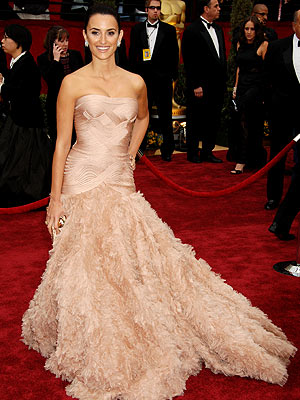 Women are silly creatures who worry their pretty little heads over fashion and vainly adorn themselves in color, lace and ruffles.
But maybe it’s the other way around. Maybe fashion, lace and ruffles are thought trivial because they are associated with women.
In fact, men were once fashionistas, too.
Many of our serious and revered Founding Fathers wore color, lace, ruffles, embroidered vests, and silk stockings with decorative garters. They also donned wigs, curled their hair and hired tutors to instruct them in the elegance of sitting, standing and gesturing.
Thomas Jefferson was particularly fastidious, his fashion sense costing him a pretty penny. Or, as historians Barbara Clark Smith and Kathy Peiss explain, Read the rest of this entry
Share this:

Men Mustn’t Pay For Pregnancies They Cause
 No fair! Men shouldn’t have to pay for women’s maternity care!
Oddly, that’s a recent GOP argument against the Affordable Care Act, a.k.a. Obamacare, which says insurance companies can’t charge women more than men.
It’s left extremist men complaining, “No babies will ever pop out between my legs, so why should I have to pay for someone else’s pregnancy?”
After all, men have nothing to do with getting women pregnant. Right?
Next, they’ll be whining that babies should have to pay for their own care!
Yet babies don’t ask to be born. Read the rest of this entry
Share this:

Couples Trade Outfits, and Attitudes
 Switch gender and watch normal become weird.
Hana Pesut photographed couples in their regular clothing, and again after switching outfits.
In the switch, women’s outfits become drab. Yet their posture straightens and strengthens. Some seem more in charge as they place their arms around their partner’s bodies. Read the rest of this entry
Share this:

Men Need Clothing. Women Need To Be Sexy.
Our society constantly shouts that women are sexy, men are utilitarian. And a lot of guys complain on my blog that they are none too happy about this. They want to be sexy too!! And lots of women complain that they are seen as being all about sexy and little else.
Here’s yet another example of that “women-are-sexy-men-not-so-much” holler, which I found on Sociological Images, courtesy of American Apparel. The pics are presented just as they were on their website a few weeks ago: Read the rest of this entry
Share this:

Men Who Wear Frocks
Some guys wear dresses. Why?

“Vivienne”
“Vivienne” is what one cross-dressing man calls himself when he’s in drag. Vivienne also blogs on her cross-dressing experience over at BluestockingBlue, where she seeks to understand why she does it.
Before delving into Vivienne’s musings, let’s do a little Transvestite 101.
First, you might be surprised to learn that most cross-dressers, a.k.a. transvestites, are straight men.
Straight men?
While biological males who are transgendered or transsexual don’t see themselves as men, transvestites do. They are men who are trying to express something of the feminine within, which is so often submerged. And, cross-dressing often holds a sexual appeal for them.
That appeal helps explain why they’re usually straight. These guys are turned-on by women, and for them, dressing like one can be arousing.
Now back to Vivienne, who wrote a four-part series on a documentary called “Why Men Wear Frocks.” The film was produced by British artist, and tranny, Grayson Perry. To read more, start with Part 1 on her site.
Share this:

Flaunting It: Damned if Do, Don’t
Dear girls,
Last night, as we sometimes do, our family sat around the dining table and looked through the summer’s social media photos.
We have teenage sons, and so naturally there are quite a few pictures of you lovely ladies to wade through. Wow – you sure took a bunch of selfies in your skimpy pj’s this summer!
I get it – you’re in your room, so you’re heading to bed, right? But then I can’t help but notice the red carpet pose, the extra-arched back, and the sultry pout. What’s up? None of these positions is one I naturally assume before sleep.
That post doesn’t reflect who you are at all! We think you are lovely and interesting, and usually very smart. But, we had to cringe and wonder what you were trying to do?
Girls, if you think you’ve made an on-line mistake (we all do), RUN to your accounts and take down the selfies that makes it too easy for friends to see you in only one dimension.
You are growing into a real beauty, inside and out.
Act like her, speak like her, post like her.

Those are a few lines lifted from a Given Breath blog post that went viral. To read the whole thing, unedited and intact, go here.
Kyoto Redbird responded, focusing less on the girls’ behavior than on our society’s messages. To see her full response, unedited and intact, go here.
Kyoto Redbird is a college-educated 20-something who finds navigating around a contradictory — and too often hostile — view of women difficult and frustrating.
Share this:

Turning Indian Girls Into Boys
 Indian parents are paying to have their daughters turned into sons through sex-change operations that cost about 145,000 rupees ($3,200). Up to 300 girls have been surgically turned into boys in one city.
The procedure involves fashioning a penis from the little girls’ female organs. Afterwards they are injected with male hormones, which they will need to take throughout their lives. The procedure will leave these children impotent and infertile in adulthood. No sons or daughters for them.
The Madhya Pradesh government is investigating.
Share this:

Gender-Swapping Grammar Lessons
 A Chrome app called Jailbreak the Patriarchy switches gendered words and makes for an eye-opening experience.
This app has inspired me to go a little further to see how the world looks when gender changes. So I’ve spiced it up by changing gendered names, etc., too.
“I Kissed A Boy (And I Liked It)” (male singer, of course)
I kissed a boy and I liked it,
the taste of his cherry chapstick.
I kissed a boy just to try it,
I hope my girlfriend don’t mind it.
It felt so wrong,
it felt so right.
Don’t mean I’m in love tonight.
I kissed a boy and I liked it.
Or how about this headline:
Share this:

Feminine Things Make You Look More Womanly, Right?
Look at the images below and then look at the faces. When does the feminine face turn masculine?

Now look at these images and then look the faces. Once again, when does the feminine face turn masculine?


You’d think that feminine things would make women look more womanly. And maybe they do in some contexts. But when researchers asked people to look at gendered objects like those above, and then judge how masculine or feminine each face appeared, the results were counter-intuitive.
Researchers found that people who looked at feminine objects thought the faces seemed more masculine, and vice versa when masculine objects appeared. Just like me.
The researchers say this happens as an “adaptation effect,” which Lisa Wade over at Sociological Images describes as,
a neurological phenomenon in which “looking at something for a long time makes you more likely to see its opposite” (source). For example if you look at a white screen after looking at a red one for a while, the white screen will appear green (red’s opposite). Or, if you look at lines moving right for a while and then look at static lines, they will appear to move left.
Apparently, our brains see both people and things as gendered — and those genders are “opposite.” But as Dr. Wade points out, “We are ‘opposite sexes,’ then, but only in our minds.”
Source: Sociological Images
Popular Posts on BroadBlogs
If Sports Were Covered Like Women’s Beach Volleyball
Baby Named “Storm.” Sex Unknown
My Son Likes Girl-Things. Is He Gay?
Share this:

Women Write Resistance to Violence

It is easier to program a child than a VCR. Only three steps. Easy, time-tested, ancient, a sure thing.
First, hurt the child. Hurt her a little, hurt her a lot, threaten to do more, things she can’t imagine. Since she couldn’t have imagined what you’ve already done, her own fear will now control her. She will blindfold and gag herself.
Those are the opening lines of a poem by Elliott Battzedek entitled, “His Favorite Gun is Me.” The poem is part of a new anthology called, Women Write Resistance.
Poetry resisting violence. Gendered violence: Battering, rape, incest, trans-violence.
Poetry as resistance may sound strange.
Yet poetry emerges from the unconscious, beyond conventional notions provided by the powerful, creating competing narratives.
That’s crucial since gender violence holds a “double-bind: keep silent or speak and be ashamed,” says scholar Cheryl Glenn.
When he held her by her ankles
upside down on the roof
like she was
a bird he was plucking
…
I wish he doesn’t drop me
I wish this hadn’t
happened,
this being
the molesting, the threats, then
– to come –
the disbelief,
when the girl came forward and said
he made me
touch him,
and she, my mother said, me too,
they told her she was
a naughty girl who just wanted attention
— Lines from Shevaun Branigan’s, “Why My Mother is Afraid of Heights”
This poetry uses sass language: naming experience in personal terms, using language that is impolite, blunt, passionate or sarcastic. Sass uses natural speech and slang to resist the illusion of objectivity and refuses to take on a disembodied voice.
and long before you
forbade a ribbon for my hair
yelled when my contact slipped out in the pool
or kicked our toddler’s stuffed snow leopard across the room,
it was moonlight,
and you were handsome,
and we were in love,
and I was 19
and had sworn, after the trailer park of childhood,
never to let a man hit me.
I felt so proud of that rule I’d made up myself.
— Lines from, “Before You” by Joy Castro
Making it personal moves us beyond customary news coverage that is abstract, sometimes titillating, and that ignores the consequences of gender violence.
By creating and communicating new ways of seeing, this poetry provides the possibility of both personal and social transformation, as Audre Lorde would put it.
Part of that transformation is reflected in the anthology’s title. Lauren Madeline Wiseman, the editor, points out that we once had only the concept of victim. Now we see one-time victims transformed into survivors. But another dimension must be added: resister.
Here are a few of the poets busy writing resistance: Ellen Bass, Alicia Ostriker, Judy Grahn, Wendy Barker, Lisa Lewis, Maureen Seaton, Judith Vollmer, Lyn Fifhin, Alison Luterman, Frannie Lindsey, Linda McCarriston, Leslie Adrienne Miller, Jehanne Dubrow, Rebecca Foust, Allison Hedge Coke, and Hilda Raz, along with many others.
The resistance emerges in broken silences, disrupted narratives, being sassy, witnessing, harnessing anger and raising consciousness to connect the dots between the personal, the political and the societal: the place where resistance lives.
Poetry that urges us all to empowered resistance.
Popular Posts on BroadBlogs
Man as Object: Reversing the Gaze
Spoon Fed Barbie
Artists Urge: Break Limits, Follow Bliss

 BroadBlogs
