Blog Archives
That’s Bitchin, But Life’s A Bitch
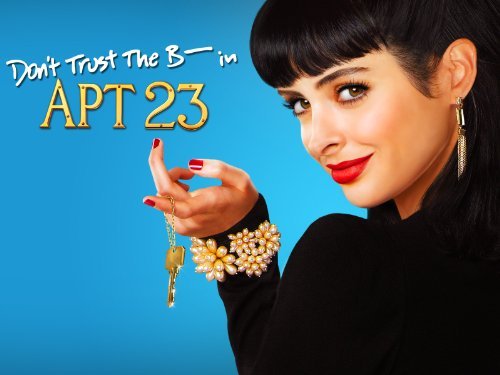 If you say, “That’s bitchin!” it’s good. But if she’s bitchin, she’s annoying. If “Life’s a bitch,” things are difficult. If “She’s a bitch!” she’s difficult, she won’t give ground. (He thinks that’s bad.) If “I’m a bitch!” I stand my ground. (I think that’s baaad – but in a good way!) But if “She’s my bitch” or “He’s my bitch,” that bitch is submissive.
So which is it? Does a bitch stand her ground? Or does she submit? I guess the words “a” vs “my” make all the difference. Taking someone who stands her ground and making her succumb is, apparently, a huge triumph.
The contradictions continue. Two sitcoms, “Don’t trust the B— in Apt. 23” and “GCB” were first pitched as “Don’t Trust the Bitch in Apt. 23” and “Good Christian Bitches.” In fact, “Good Christian Bitches” was transformed to “Good Christian Belles” before finally becoming the non-descript “GCB.” So network execs shun the b-word in series titles even as actors spew those same words on air.
The networks like the hip, cool titillation the word suggests.
Titillation, as in: “bitch,” defined as a woman who will have sex with anyone – “except me.” (And earlier, defined as a female breeding dog.) Bitch being quite different from a stud (a male breeding horse).
Bitch as hip and cool? It’s cool to demean women, as in “the Bitch in Apt. 23”? Or, it’s cool that women celebrate their independence, as in “GCB”?
Women reclaim this word that has been used to debase and dominate them. But others still use it to insult and control – and then say, “Well, you women use the word yourselves.” (Blacks use the n-word themselves, yet few non-blacks think that grants them the same permission.)
This shape shifter may reflect our society’s contradictory views of women. On the one hand women are strong and amazing; on the other, women are belittled and demeaned.
Popular Posts on BroadBlogs
“Cock” vs “Down There”
Gender-Swapping Grammar Lessons
“Bitches and Dudes,” a.k.a. “Women and Men” on College Campuses
Share this:

The Plump Beauty Ideal: Exotic Dancers in 1890
Once upon a time “plump” was the beauty ideal.
Check out this post by Lisa Wade @ Sociological Images
I recently had the pleasure of reading Peter Stearns’ Fat History: Bodies and Beauty in the Modern West. The book chronicles the shift in American history from a plump to a thin ideal. The beauty of Stearns’ book is his resistance to reducing the shift in norms to a simple cause. Instead, he traces the changes to conflicts between capitalism and religion, the backlash against women’s equality, industrialization and the devaluation of maternal roles, fashion trends, the professionalization of medicine, our cultural relationship to food, and more.
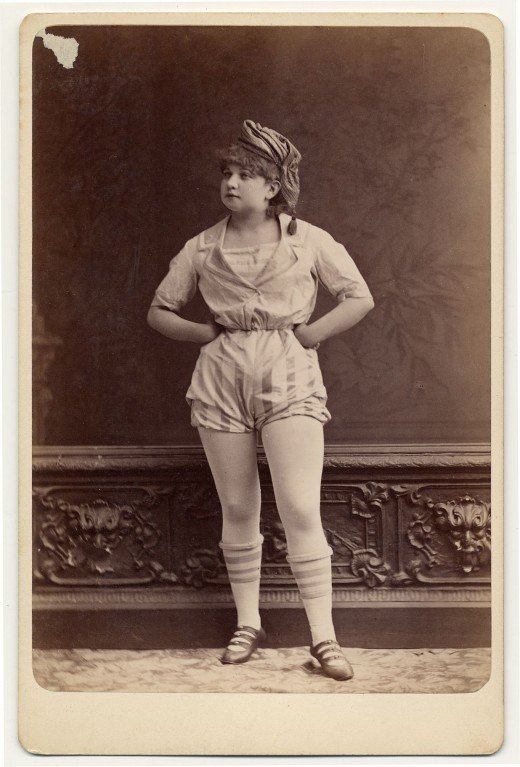
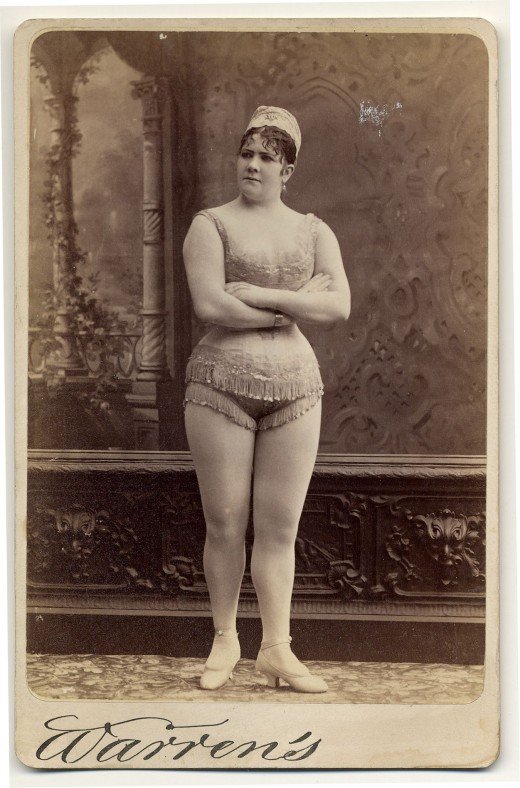
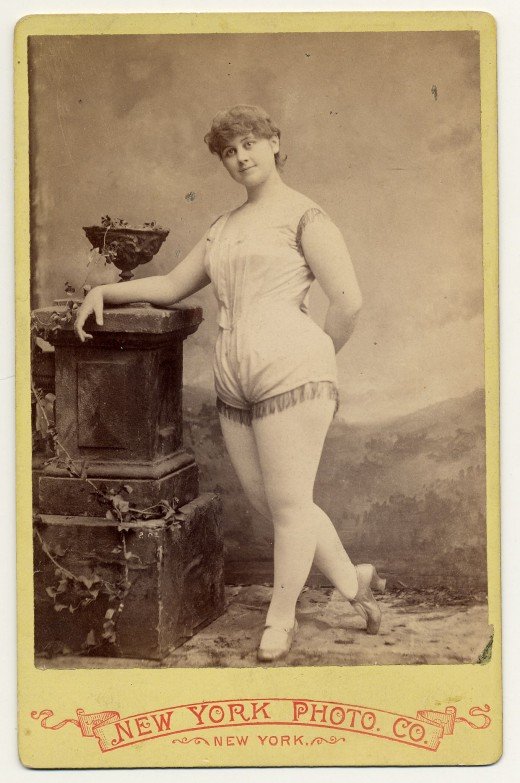
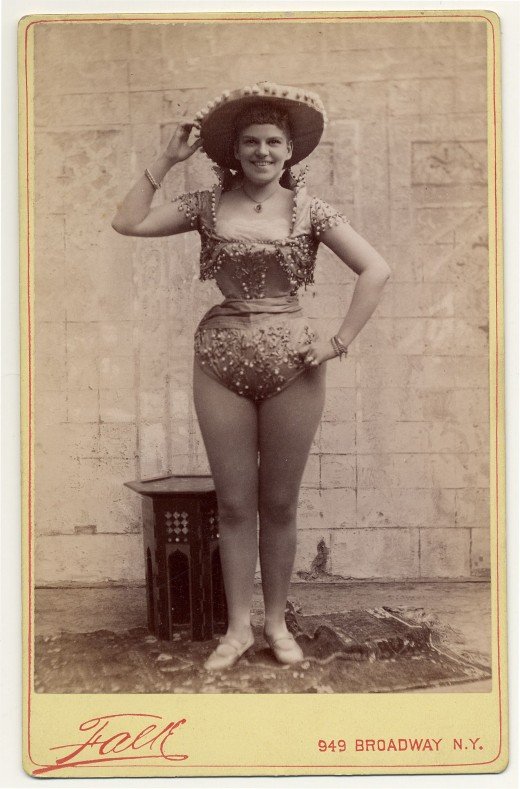
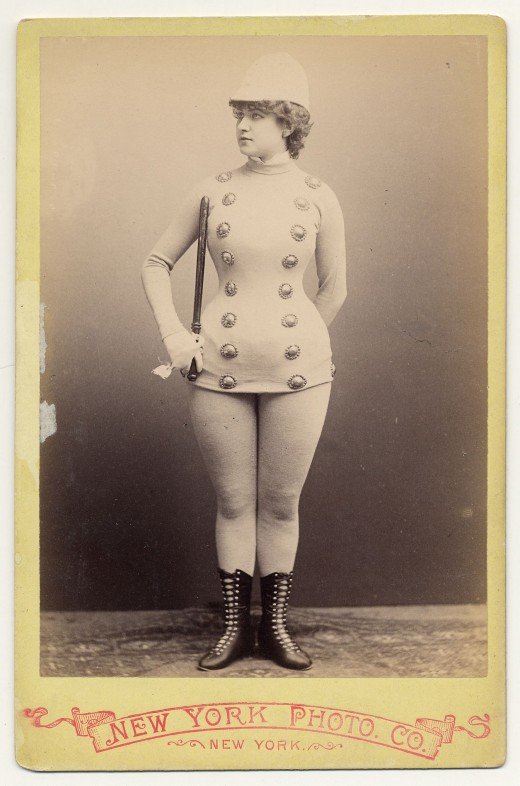
Stearns is quite specific in timing the change, however, pointing to the years between 1890 and 1910. In these 20 years, he writes:
…middle-class America began its ongoing battle aginst body fat. Never previously an item of systemic public concern, dieting or guilt about not dieting became an increasing staple of private life, along with a surprisingly strong current of disgust directed against people labeled obese.
I thought of Stearns’ book when I came across a delightful collection of photographs of exotic dancers taken in 1890, the year he pinpoints as the beginning of the shift to thinness. From a contemporary perspective, they would likely be judged as “too fat,” but their plumpness was exactly what made these dancers so desirable at the time.
This piece was originally posted @ Sociological Images
Popular Posts on BroadBlogs
Beautiful Women’s Hips Are Thinner Than Their Heads?
Men Are Naturally Attracted To Unnatural Women
How to Look Like a Victoria’s Secret Angel
Share this:

Men, Women & Internet Porn
The first time you see Lena Dunham’s character having sex in the new HBO series “Girls,” her back is to her boyfriend, who seems to regard her as an inconveniently loquacious halfway point between partner and prop, and her concern is whether she’s correctly following instructions.
“So I can just stay like this for a little while?” she asks. “Do you need me to move more?”

Those are the opening lines from New York Times columnist, Frank Bruni, writing about the HBO series “Girls” which premiered April 15. I wrote a bit about the interview last week asking, “Is male or female sexuality better?” But Lena and Frank have more to say, and so do I.
Bruni says their sex play seems to be all about what “he” wants “her” to do. Dunham’s real life informs the show, and Dunham suggests that what the proverbial “he” wants is often NOT what “she” wants. Amidst aggressive posturing and “a lot of errant hair pulling” she has thought, “There’s no way any teenage girl taught you and reinforced that behavior.”
The scene, and Dunham’ comments, suggest a depersonalized sexuality with women as objects, sex as sometimes harsh gymnastics and, too often, all about “his” pleasure.
She thinks it’s tied to internet porn, which so many young men are steeped in.
Some women get into pornified sex, too, but usually not all the time, or not on the first few dates. And most seem to want something more, even if porn-sex is a part of the experience.
Meet Valerie, who discovered pornography at age 12 and was very excited by it. Today she sometimes finds it exciting when men pull porn moves on her. But at the same time she says, “It’s icky”:
I don’t just want to become Body A. I want men to feel like they are with me, Valerie, a particular woman with a particular body and my own unique personality. I want them to be in the moment, as opposed to going through some form of learned behavior. I want it to be our own experience as opposed to an imitation of porn.
She talks of Miguel, a musician. She can tell he’s into porn by how he acts:
Lights glaring, gaping at her body parts, manipulating her into positions popular in pornography so he could admire her. He was aggressive, he was confident, he was following a formula. He was cold.
As Valerie saw it, “He thought it was hot, that he was a stud. I felt cheapened. I felt so empty after the experience.”
Dunham can relate, saying that, “People can be so available in a superficial sense that they’re inaccessible in a deeper one.”
One woman wrote about her and her friends’ experiences for GQ and offered tips for the internet-drenched generation. She loves both porn and sex, she says, but warns that not all women are charmed by being called a “dirty whore.” Most women don’t want anal three times in one night – and not from men they barely know.
And why is it, she asks, that orgasming inside someone, “the goal of every dude for zillions of years,” now seems to pale in comparison to “facials”? Noting the irony, “It hardly seems fair to call that sex. It’s more like masturbation with a fellow 3-D person. You finish with your hand, after all, like you’ve done with a million clips.” And please, no facials on the fourth date. “That’s stuff to save for later, when the excitement of someone new has worn into a comfortable live-tweeting-Monk-from-bed kind of cohabitation.”
And maybe when there’s a larger context of relationship, and not just empty sex.
Popular Posts on BroadBlogs
Sex Objects Who Don’t Enjoy Sex
Wanting “X” from Sex, but Doing “Y”
Women Want Emotionally Connected Sex. Why?
Share this:

Beauty Tricks to Remove Your Power

Ashley Judd’s face looked puffy in the promo for her new TV series, Missing. Big deal. She’s aged since I last saw her, and maybe she’s gained a little weight.
And then the furor. Everyone talking about Ashley’s face.
So she responded in the Daily Beast. A few lines:
The Conversation about women’s bodies exists largely outside of us, while it is also directed at us, and used to define and control us. The Conversation about women happens everywhere, publicly and privately. We are described and detailed, our faces and bodies analyzed and picked apart, our worth ascertained and ascribed based on the reduction of personhood to simple physical objectification. Our voices, our personhood, our potential, and our accomplishments are regularly minimized and muted. The assault on our body image, the hypersexualization of girls and women and subsequent degradation of our sexuality as we walk through the decades, and the general incessant objectification is what this conversation allegedly about my face is really about.
Wow.
The lines linger, waiting to be soaked up.
We are described and detailed
our faces and bodies analyzed and picked apart
our worth ascertained and ascribed based on
the reduction of personhood to simple physical objectification
The body detailed and critiqued, diminished and demeaned. An emotional trashing. Cut up, dissected. It feels like a killing. No wonder we are body-obsessed, declare nourishment the enemy and become terrified of aging.
With our bodies spotlighted the rest of us vanishes.
Our voices, our personhood, our potential
and our accomplishments are regularly minimized and muted
(as)
The Conversation about women’s bodies exists largely outside of us
We become nothing but our “defective” parts.
And we can say nothing as the conversation bubbles everywhere, outside ourselves, removing our power to name and control.
But Judd doesn’t leave us, or herself, hanging in hopelessness. What is deemed good and bad are equally fanciful interpretations, she says, and so she has chosen to abstain from all outside judgments about herself and her body.
We are social animals. Our identities are keenly influenced by how others see us, and more so when those visions act in concert. When many see us a certain way, the agreement brings objectivity, while our solitary thoughts seem merely subjective.
But the declarations are not absolute. Especially when we discern shallowness and falsity. We may choose otherwise:
I do not want to give my power, my self-esteem
or my autonomy
to any person, place, or thing outside myself
The only thing that matters is how I feel about myself
my personal integrity
and my relationship with my Creator
“It is ultimately about conversations women will either choose to have or choose not to have,” says NPR’s Linda Holmes.
Let’s have some new conversations.
Popular Posts on BroadBlogs
You Are “Less Than”?
Self-Esteem Falls with Rise in Power? Blame Beauty Ideals
Anything Good About Being A Sex Object?
Share this:

Dominance, Submission, Meaning & VOICE

Sally Deskins, Red Belly
Feminism has long sought to gain equality by obliterating dominance and submission. Yet some find the ends of this dichotomy alluring… erotic, and seek to drink in both sides. So comes the quandary: how to sustain this sensuality yet stay true to a feminist commitment? That’s a question that artist, Trilety Wade asks in the new exhibit: Les Femmes Folles: VOICE.
Wade knows that submission and dominance can vacillate and be exchanged. She explores how balance might be gained in the space between while reveling in both sides. As she describes it:
I usually find myself on the cusp of submitting. I almost give in to my desires. I almost give in to another person. I never wholly submit, thus I am also dominant. That push and pull of submission and dominance leaves me in a static state of anticipation, which is reflected in the distance between the figures in my paintings.
My paintings make me question why there are some people and desires I want to submit to, and why I never allow myself the freedom to either be submissive or dominant; instead I freeze.
Moving to other matters involving passion, power, surrender and control, Sally Deskins’ “Red Belly” signifies motherhood, the scarlet color evoking fiery emotion, passion and sacrifice — which may be ennobling blood-life or deadening blood-loss. The energy of this red belly calls to mind more life than loss, though the two may be intertwined.
A passionate theme continues in the seductive vibes of breasts and loins:
The curly-prints from my pubic hair give the image an erotic flair. The white stamped nipples provide a ghostly aura, and the various drips and red line at the bottom sheds light on the beautiful indeterminism that is visual art and sometimes life as well.
Inspired by Yves Klein’s “Anthropometries,” Deskins’ self-portraits explore the relationship of mind and body. She paints her body with as if it were a canvas and then physically straps herself to paper or canvas to form an imprint, painting her psyche on what appear to be a series of Rorschach Inkblot Tests. Through these self-portraits Deskins searches for her voice.
Ella Weber explores how identity evolves over a lifetime. In her “Boy’s n’ toys” series she places a person next to a person-sized inanimate object from pop culture. The drawings seem to be all about innocence, nostalgia and humor. But look closely and see something more subversive.
 In “but is she worth it?” Weber places Mrs. Butterworth’s on a bed of sticky syrup. Next to her a woman holds a plate in each hand, resembling scales. Perhaps she’s weighing her options, to serve or not? A stack of hotcakes lie between the two figures.
What is the appeal of nostalgia… falling back to a place of greater inequity when women and Blacks were all about serving others? Why does the past still loom so large? And why is it so sticky?
Inanimate object and human being stand side by side. What does it mean to be human – and female? How does identity grow? And might those hotcakes be just fine levitating in thin air? Weber voices the questions.
Wanda Ewing knits social commentary into latch-hook yarn rugs that explore how race factors into society’s notions of feminine beauty and sexuality. The interlace of gender and race adds further texture. In her hands a surprising juxtaposition of risqué images of women’s bodies attaches to cozy yarn rugs. As if Madonna and whore are woven together?
 Megan Loudon Sanders delves into identities that lie hidden yet seek expression. Historically, women were asked to conform to rigid standards that left their potential concealed from them. By mixing stylistically dissimilar elements, Sanders depicts a woman who at first glance could pass for any suburbanite. Yet she subversively announces on her body, This is who I am:
A young woman in a blue polka-dot dress brings her teacup up to sip, a simpering smile to the viewer. Intricate and colorful tattoos line her hands and arms, challenging the pristine environment.
While identities can lie hidden, so can the emotional significance of everyday life. Trudie Teijink uses a digital camera to document the remnants of family suppers, highlighting the colors and shapes of food and the utensils used to prepare it. She reveals how art emerges in the mish-mash that falls together. Her work makes us ponder how sentiments and human connections arise through the sights, smells and tastes of food, and of preparing and imbibing together. But sometimes, she says, the mundane still seems futile.
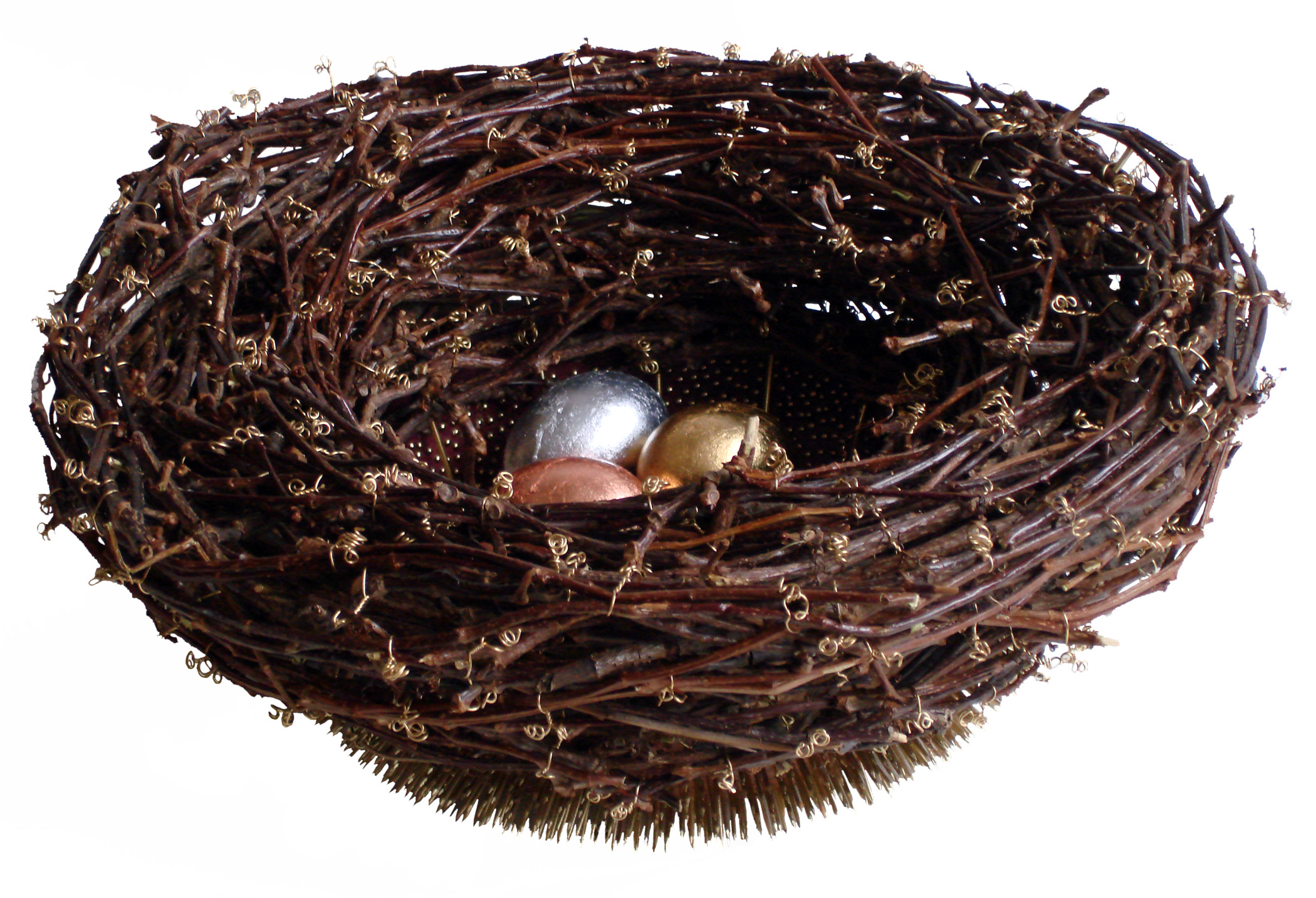 While domesticity seems a safe haven, home can be dangerous. Marcia Joffe-Bouska uses barbed nests to pose the question, “How might things appear safe when they are not?”
Joffe-Bouska also uses egg and nest imagery to express the worth of each individual and to explore how we might create our own safe havens. Strong metal nests signify strength, fabrications representing DNA indicate smarts, and lacy trimmings suggest patience. Each egg/nest combo represents a reason, a justification, or a reminder of why we have value. And each titled piece opens with this mantra: “I am ….”
Other themes look at the voices in our heads, how so much of the work women do everyday lies invisible or seemingly insignificant even to those who do it, and performance art invites attendees to write out notes to be re-interpreted by performers, with response. And more.
Women are speaking up, challenging status quo power politics and giving voice to lives and identities that too often remain shrouded and undervalued, all the while promoting positive communication in the VOICE exhibit.
Together, this art calls for deeper thought, broader expansion, and raised voices.
Co-curated by Sally Deskins and Megan Loudon Sanders, VOICE artists include Marcia Joffe-Bouska, Sally Deskins, Wanda Ewing, Kristin Lubbert, Jewel Noll, Melanie Pruitt, Amy Quinn, Megan Loudon Sanders, Trudie Teijink, Trilety Wade and Ella Weber.
Les Femmes Folles Presents: VOICE, a curated exhibition
The New BLK, 1213 Jones St.
Opening reception: Friday, April 13, 7-10p.m. Exhibition runs thru April 30. Preview art-talk at Indian Oven: April 11, 7p.m.
Art Talk at The New BLK, April 18, 7p.m.
LES FEMMES FOLLES: VOICE WANTS YOUR VOICE
Call for art
Deadline: April 6, 5pm deliver to The New BLK, 1213 Jones St.
Open to: artists who identify themselves as women
Les Femmes Folles: Voice is a curated exhibit featuring the artistic perspective of 11 Midwestern artists who are women at The New BLK Gallery opening April 13, 2012. The artists would like to also showcase the VOICES of other artists who are women with a collaborative piece. Artists are invited to create a mouth in any medium, in 2-dimensional form, no larger than 18×24” that can be hung on a wall. Deliver to The New BLK by April 6 to have it included in the show opening April 13 with artist contact information. Details sallydeskins@yahoo.com or mloundons@unmc.eduor shane@thenewblk.com
More information on the exhibit at thenewblk.com or facebook.com/newblk
Share this:

The Crimes of Hoodies, Short Skirts and Fannie Mae
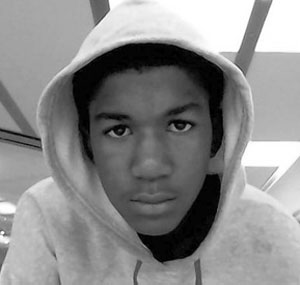
“More guns, fewer hoodies” and we’d all be safer, Gail Collins advised in a New York Times piece after Trayvon Martin was gunned down for “eating skittles while black” – and while wearing said hoodie – in a gated community. A clear threat that had to be stopped.
That’s right. Guns don’t kill people, hoodies do: Trayvon Martin’s “hoodie killed him as surely as George Zimmerman did,” claimed Geraldo Rivera (who later apologized).
Sounds familiar. When women are raped short skirts become the culprit.
Yet few rape victims are wearing short skirts. And even nicely dressed black men can create fear. Journalist Brent Staples noticed that people got out of his way when he nonchalantly walked about. Amazed at his ability to alter public space, he tried humming Mozart to project his innocence. Seemed to help.
But why aren’t pricey cars, fancy suits and expensive watches blamed when rich, white men get robbed? What thief could resist?
Why? Because making more powerless members of society the culprit is meant to distract from the sins of the powerful. It’s women’s fault if men rape them, and it’s black men’s fault if lighter men kill them.
In another example, some blamed liberals for foolishly using Fannie Mae and Freddie Mac to help Blacks and Hispanics “buy homes they couldn’t afford,” leading to the banking crises that nearly drove the U.S. economy off a cliff.
What really happened is that rich bankers gave rich campaign contributions to government officials, who in gratitude disposed of pesky regulations. That helped bankers get mega-rich by devising complex financial packages that no one could comprehend.
Used to be that when someone bought a home bankers made sure they’d get paid back. But under deregulation it didn’t matter because the loan was sold to someone else. And that investor sold the loan again. And financial packages were created and sold, composed of fractions of many people’s mortgage loans. They were rated AAA since they were 1) diversified – and hence, “safe” investments and 2) the housing market never goes down. (Yeah, right!)
Fannie and Freddie entered the process late, thinking they’d better join in or lose out.
When the housing market dropped and people couldn’t afford their homes, or sell them for a profit, the banks began collapsing. Lucky for them, the taxpayers bailed them out (or the whole economy likely would have collapsed).
Did deregulation get blamed for the fiasco? By some. But plenty of the “powers that be” — and especially “hate radio” — blamed Blacks and Latinos.
Because blaming more powerless members of society distracts from the sins of the powerful.
The crime does not lie with the man who pulls the trigger, nor with the man who rapes, and certainly not with the fat cat who pays to rig the game. No, the crime lies with those who wear hoodies, short skirts and who bank while black or brown.
Popular Posts on BroadBlogs
Cheerleader Ordered To Cheer Her Rapist, and Other Stories
Markets Must Be Free; Women Must Be Constrained
8-Year-Old Called “Whore” for Long Sleeves, Skirts
Share this:

Is Male or Female Sexuality Better?
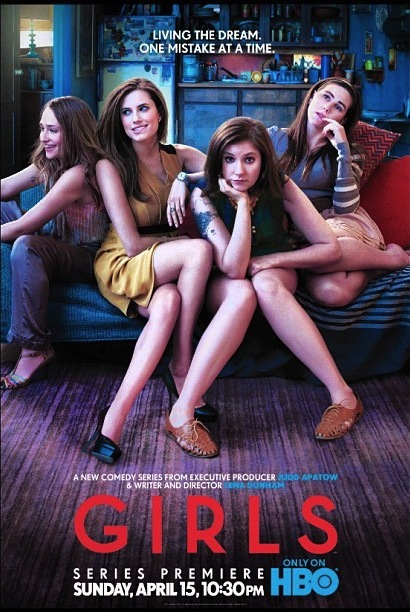 “I heard so many of my friends saying, ‘Why can’t I have sex and feel nothing?’ It was amazing: that this was the new goal.”
That’s what 25-year-old Lena Dunham told New York Times columnist, Frank Bruni as they discussed her new Sex-and-the-Cityish HBO series called “Girls,” which she writes, directs and stars in.
Dunham points out that numerous cultural cues press women to take on non-emotional, non-connected, “empowered” sexuality.
Yet she can’t manage to do it, herself. And she is not sure it’s empowering.
“There’s a biological reason why women feel about sex the way they do and men feel about sex the way they do,” she adds. “It’s not as simple as divesting yourself of your gender roles.”
Evolutionary psychology says women are genetically programmed for monogamy so fathers will stick around and provide resources for their children, while men are promiscuous so that they can widely “spread their seed.”
I have my doubts. If women are monogamous then men can’t be promiscuous. And both men and women are promiscuous in some tribal cultures.
Modernity seems to breed a monogamous ideal (meaning lifetime marriage after a few years of “sewing your wild oats”) among both women and men, perhaps because these societies are complex and children aren’t raised by the entire community (as they are in small tribes) making single parenthood difficult.
And even while casual, male-stereotypic hookup sex has overtaken college campuses (at least in theory), a recent study of hookup culture found that both men and women prefer close, connected relationships.
Still, study after study shows most women preferring sex in a context of love and connection, while men are more open to casual encounters.
So which is better? Casual or connected?
I’ve asked my students what they think. They see positives and negatives in each approach.
The variety offered in non-connected sex can be fun, and if you really do it “man-style,” guilt-free. There are no ruts! But STDs and unwanted pregnancies are bigger risks. And it’s possible that one partner will end up wanting more, which can create hurt and complications. Emotional connection adds depth and dimension, and many can’t enjoy sex without it.
The problem, my students think, lies in feeling pressured to behave in ways that are inauthentic – which isn’t pleasurable, either!
And is non-emotional, non-connected sex more “empowered”? Or do some just think so because it’s the “male” way in a culture that values masculine over feminine? Or that sees men and “their ways” as more powerful, by definition. Sure, you’re less vulnerable and dependent, but there is great power in relationship.
Likely the “best” and “most empowered” sex is that which is most fulfilling, and which best expresses who you are and what you want, and which is acted out most responsibly.
Popular Posts on BroadBlogs
“Dressing Like Prostitutes”? Authentic Sexuality?
Cartoonish vs Authentic Sexuality
It’s Ok To Be A Tomboy But Not A Sissy. Why?
Share this:

Rape Epidemic in South Africa. Why?
More than one in three South African men admits committing rape, one in seven has joined a gang rape, and more than three quarters admit committing violence against women.
More than half of South African women have experienced violence at the hands of men, and one-quarter will be raped by age sixteen.
Why? Two thirds of rapists felt sexually entitled. Some wanted to punish women who had angered or rejected them. Others wanted to turn lesbians straight. And some were just bored.
These “reasons” may only get at surface issues. What else is going on?
Rachel Jewkes, a lead researcher on the study of violence in South Africa, feels that racism lies behind the abuse.
Rape holds a sexual component, but it is essentially about power. When a large population is oppressed, say through racism – even as manhood is defined as “dominant and powerful” – men may use rape as a weapon to gain a sense of personal empowerment. Rapists are often trying to bridge a gap between their impotent selves and the dominant men they seek to be. Imagine the control they feel when they restrain, take over, and invade another person’s body. Imagine how high and mighty they feel in creating humiliation.
Gay bashing is another weapon whereby some men try to create a sense of male superiority. If women act like men (sexually/stereotypically) how can men keep their sense of dominance? Hence, the need for “corrective rape” in South Africa that seeks to turn lesbians straight.
In one attack Millicent Gaika was beaten and raped for five hours as her assailant screamed, “I know you are a lesbian. You are not a man, you think you are, but I am going to show you, you are a woman. I am going to make you pregnant.” Since the women are often murdered “correction” sounds less likely than gay-bashing as motive.
Others were simply bored. So the eroticized violence of patriarchy comes in handy: Oh, let’s have some fun!
This is helped when women are seen as sex objects, and not people who have their own lives, goals, thoughts and emotions. When women become nothing but objects for sexual pleasure, it’s no wonder that one third of the rapists said they did not feel guilty.
So here we have powerless men beaten down by racism who are trying to feel powerful, who live in a world where violence against women is eroticized, and where women are seen as mere objects. A recipe for epidemic rape.
Originally posted on January 14, 2011 by BroadBlogs
Related Posts on BroadBlogs
Mind of a Rapist: Trying to Bridge a Gap between a Small Self and a Big Man
It’s Ok To Be A Tomboy But Not A Sissy. Why?
Yale Fraternity Chants “No Means Yes.” Men? Or Scaredy Cats?
Share this:

Making Violence Against Women Sexy
 What happens when you beat a sex object? Or hang her? Or rape her? Or hogtie and torture her?
Pop culture is filled with images of women as objects. It’s also filled with images of women as abused objects. But then, the two go hand in hand: Objects have no feelings to empathize with, no lives of their own to interrupt or worry about. They can exist just for sadistic pleasure.
Oddly, I’m not seeking to shame anyone who gets aroused by these images. People tend to unconsciously absorb their culture like a sponge – we all do. Even my women’s studies students and the feminist blogs I read register a taste for this stuff. No surprise that so many find it sexy, our society is so filled with these images.
At the same time, I’m not dismissing the issue. Whether you want to participate or fight it, at least have eyes open and look at the downside.
When I was a little girl I got a children’s book from the library. In one story a woman was punished: She was stripped, placed in a kettle-like contraption with spikes to poke her, and driven through the town in humiliation. That’s my first memory of sexualized abuse.
My second encounter was flipping TV stations as a child, and seeing a man throw a woman over his knee to spank her. Apparently, if I’d flipped through a magazine I could have seen an ad with the same image.

When I got older the Rolling Stones promoted their “Black and Blue” album with a picture of a woman bound and bruised.

At the movies women are killed – in sexy bras and panties – in popular horror flicks. In tamer fare, Scarlett started out resisting Rhett, but ended up enjoying a night of passion as “no” turned to “yes.” In the soaps, Luke raped Laura and they fell in love.

Devo’s “Whip It” showed a man whipping the clothes off a mannequin. The red hat from this video is now in the Smithsonian.
In magazines and billboards we are bombarded with ads depicting violence against women.

Romance novels and erotic tales tell stories of women who are abducted and raped and who fall in love with their captors. Mainstream movies like 9-1/2 Weeks and The Secretary depict women enjoying abuse at their lovers’ hands. Justine Timberlake slapped Janet Jackson around at the Super Bowl before ripping off her bodice. Megan Fox got beat up in a popular video that you can view over and over again. In the background Eminem mouths “I’m in flight high of a love drunk from the hate,” to which Rihanna replies, “I like the way it hurts.” And then there’s the porn world full of “no’s” turning to “yes.” Or “no” remaining “no,” but that’s sexy, too.
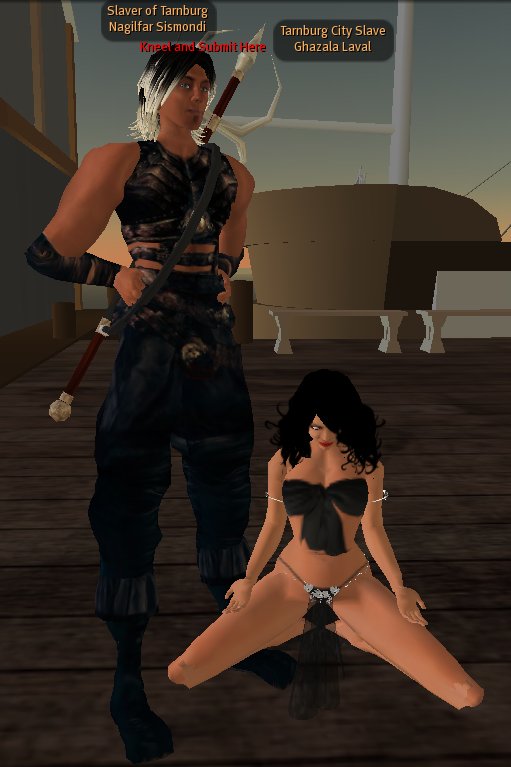 On a feminist website, one woman described the joys of being a sex slave avatar to a dominant man in the virtual world of “Second Life.” Another explained the appeal with the help of a poor understanding of evolutionary psychology: Through evolution, she explained, women have come to want male domination in their relationships.
That’s not really what evolutionary psych says (and I have issues with that field, anyway). How would craving your own abuse be adaptive? Pain is meant to warn us to stop doing something. Women’s genes don’t crave poor treatment. If they did, we’d find eroticized violence in every culture, but we don’t. Egalitarian societies like those of the American Indian (before contact with patriarchy) did not sexualize abused women.
Here are two big problems with eroticizing male dominance and women’s pain: First, women and men can both come to crave the abuse of women in real life. Second, when we make male dominance seem sexy, we become more accepting of male dominance.
Originally posted on January 12, 2011 by BroadBlogs
Popular Posts on BroadBlogs
Anything Good About Being A Sex Object?
Frats Invite Sluts, Bitches; Women Accept Degradation. Why?
Orgasm: It’s All in the Mind
Share this:

Women Seeing Women as Sexier than Men
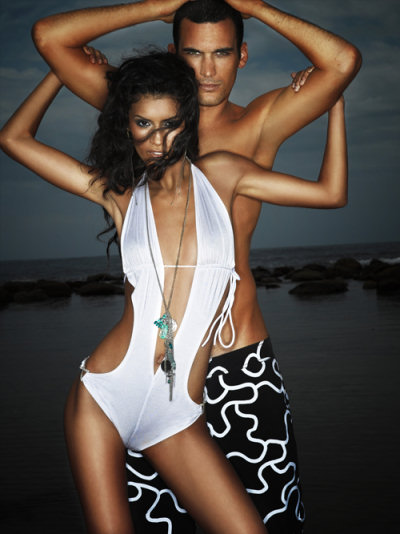 Girls are so inundated with sexualized images of women that they learn to see women as sexier than men. Women come to see women through male eyes?
In the bedroom, this can make women’s sexuality a bit convoluted, which I’ll discuss later.
But consider my students:
“Women’s bodies are just naturally sexier than men’s,” my class tells me when I ask why women are portrayed as sex objects.
In this belief, my students are not alone.
A few years back Lisa Kudrow, of Friends fame, told Jay Leno that female nudity is displayed more in movies because, “Who wants to look at a guy?”
Hugh Hefner thinks women are natural sex objects, “If women weren’t sex objects, there wouldn’t be another generation.”
I’ve talked before about how the breast fetish is not natural, but is learned by both men and women. But how do we all learn that women are sexier than men in ways that go beyond the fetish?
Growing up, girls are bombarded with visions of women as sexy, with skin selectively hidden and revealed, the camera focused on those intriguingly concealed parts.
When I was little my mom took me to the Ice Capades. After noticing that the women were half dressed while the men were fully clothed, I asked why. Mom told me that women just have better legs.
Do they? One warm summer day an adult from my church youth group commented, “It’s too bad the guys have the best legs.” (Thanks!) But what is our cultural ideal? Longer, leaner. Young men typically have longer legs, and they don’t have the extra layer of fat that women do. So most young men’s legs come closer to our ideal. Yet we say women have better legs? When I think about it, I actually think men have pretty nice looking legs. But nothing and no one directs our attention to them.
On Dancing With The Stars, women are half-dressed and men are fully-clothed. During an advertisement, the camera lingers on women’s breasts and legs in a Victoria’s Secret display. Next, a commercial for shoes focuses on women’s behinds: See this Rebook ad for EasyTone. Try to imagine the same focus on men’s butts (which actually are pretty attractive)!
Watch a football game and see big, fully-dressed, aggressive guys playing on the field, while scantily clad cheerleaders show off their stuff from the sidelines. In the Bikini Open men sport golf wear while women dawn bikinis. When does Sports Illustrated most focus on women? In the swimsuit edition.
Through it all, the camera gazes at women’s body parts, but not men’s. Telling us what’s important to notice. What’s sexy and what’s not.
Men’s bodies are rarely sexualized outside infrequent underwear ads.
Historically, men have had control of media, and they’ve portrayed what they see as sexy.
Bombarded with these images, girls come to see women as sexier than men. As I’ve said before, when I tell my class that I find a Playboy pinup sexier than a Playgirl pinup, women’s heads nod in agreement.
Meanwhile, when women answer surveys about what they find sexy they say “men.” But when they are wired up, blood flow to the vagina is stronger when viewing an image of a nude woman than a nude man – conscious responses and bodily responses not agreeing.
Oddly, and yet logically, women come to see women through male eyes.
So women come to see themselves as the sexy half of the species. Being sexy has some advantages. It can just be fun, it’s easier to attract mates (consider the success of women versus men in singles bars), and sexiness is a source of power.
But there’s a downside, too, including the narrow construct that leaves so many women feeling they exist outside the “sexy” box, with a drop in self esteem kicking in.
Taken to extreme, some women can become sex objects, taking an unhealthy one-dimensional focus on themselves, feeling that how they look is all that matters. And some men may see them as objects whose sole purpose is to be used for their pleasure.
It ain’t so great to be, or be seen, as mere object.
Popular Posts on BroadBlogs
Sex Objects Who Don’t Enjoy Sex
Men Have Higher Sex Drive. Why?
Women Learn the Breast Fetish, Too
Originally posted on January 10, 2011by BroadBlogs

 BroadBlogs