Blog Archives
Making Relationship Violence Sexy
The blogosphere was abuzz last week with talk of TV’s Gossip Girl where antihero, Chuck Bass, humiliated ex-girlfriend, Blair Waldorf, by tattling on her sexual past in front of her new boyfriend’s mother. He followed up by telling Blair she couldn’t be with anyone else because, “You’re mine.” Enraged, he wrestled her onto a sofa before hurling his fist through a window, a shard of glass cutting Blair’s face.
A reporter from E! Entertainment called the cut, “the most perfect, beautiful, dainty injury.”
Are Chuck’s violence and controlling ways meant to be seen as “perfect” and “beautiful,” as well, set within the passion of unrequited love?
As the story goes along, it appears that Blair isn’t the one who’s hurt. Chuck is. He loves Blair too much for his own good, according to the show’s producers and this week’s episode.
Unfortunately, sexualized violence is hardly a new story. Popular romance novels are commonly called “bodice rippers.” The hero fears his love of the heroine and the vulnerability his affection might bring. He must stay strong and resist, in part by treating the object of his desire poorly. Finally he gives in in a torrent of ripped clothing.
In these stories the heroine reforms the rouge and wins in the end.
What message do young women get while watching abusive lovers in Gossip Girl or reading romance? That a lover’s harm exposes his love? That she will ultimately transform him? That it’s all so romantic? That it’s all so normal?
Maybe. Along these lines it’s interesting that one-third of abused women expect to marry their abuser. Why? First, they take the jealous rage as a sign of deep love and passion. Second, they believe that marriage will end his abuse-causing insecurity. Yet after marriage, violence escalates.
Signs of an abusive lover include controlling behavior, pushing for quick involvement, persistent jealousy (especially jealousy that leads to verbal or physical attacks), constantly checking up, isolation (cutting off family and friends), blaming others for his problems, insulting yet easily insulted, unrealistic expectations (you must be perfect and meet his every need), and rigid gender roles.
Should you choose to leave an abuser, contact a shelter or hotline to form a plan of action. Do not tell the abuser you plan to leave, as this is the most dangerous time. Knowing he’s lost control, he may seek to take ultimate control: your life. The National Domestic Violence Hotline is 800 799-7233.
Helping friends who are in abusive relationships can be difficult, for victims are often in denial about how bad the situation is, or about their ability to leave. Experts say that it helps if friends “continually counter with messages like ‘It’s not you. You didn’t cause this. This is not a normal relationship.’”
One battered woman who eventually left credited her friends, saying, “They saw the signs from the beginning. They would tell me I would go missing and my picture would end up on a milk carton. Over time, it slowly sank in.”
Of course, it might be a good idea to stop romanticizing and normalizing violent relationships in the first place.
Georgia Platts
Related Posts on BroadBlogs
Women Seeing Women as Sexier than Men
What Happens When You Beat A Sex Object?
Rape Epidemic in South Africa. Why?
Share this:

Charlie Sheen: Winning. But Is He Happy?
Charlie Sheen is obsessed with winning, as in, “The only thing I’m addicted to right now is winning…” “Just winning every second…” “Winning, anyone?…” “Duh, winning!”
What’s winning? To Charlie it’s sleeping with all the attractive women he can buy, and treating them anyway he wants. When he abuses women does “beating” carry a double entendre – batter and win?
Two trains of thought prevail on the source of happiness. One side advocates freedom. The other, deep bonds.
Charlie, the libertine, seeks the former. Devoid of moral or social restraint, he feels more deserving of freedom than others. After all, the libertine’s liberty comes through other’s bondage.
Winning. Conquering. Total liberty as burden heaps onto others.
While your classic libertine could indulge in rape, murder and mayhem without much thought for the victims (think Marquis de Sade), Charlie may actually experience some, uh, “concern for others” (quotes indicating irony) seeking to believe his victims enjoy it, too. A little narcissism can help with that: I’m feelin’ good, so you must, too.
When Andrea Canning asked in a 20/20 interview how he thought the women felt, Charlie explained, “I expose people to magic. I expose them to something they’re never otherwise going to get to see in their normal, boring lives.”
Let’s see, death threats, beatings, shooting, a rampage. Magic, indeed.
It helps when others are things – objects, sex objects – to be treated anyway you want. Yet as the “thing” becomes dehumanized, so does the dehumanizer.
Charlie Sheen: part libertine, part narcissist. Either way, it’s all about himself. Me, me, me without any real concern for you.
Yes, two perspectives prevail on the roots of happiness: freedom versus deep bonds. Social research suggests that deep connection is what actually creates bliss.
In fact, some see addiction as arising out of deficiencies in deep spiritual bonds, whether the craving is for drugs/alcohol, sex, or thrills. Sheen may be exhibiting each of these. Making us wonder how joyful he really is.
Some suspect Sheen is mentally ill. If former child star, Todd Bridges, is right there may be a connection between drugs and this illness. In a discussion on The View this week, Bridges said that stopping cocaine use led him into “cocaine psychosis,” which he believes Sheen may be experiencing now.
Of course, Charlie thinks he’s fine. He’s winning. And he repeats it so often that you have to wonder who he’s trying to convince.
What is happiness’ source? Deep connection? Total freedom? Treating others like objects to be used, abused and tossed away? Drug use?
Winning and happy? That depends on your pursuit.
Georgia Platts
Popular Posts on BroadBlogs
Charlie Sheen: Celebrating a Bad-Boy Who Abuses Women
Men Finding Fewer Women “Porn-Worthy”
Real Women Competing With Porn Stars
Sex Objects Who Don’t Enjoy Sex
Share this:

Charlie Sheen: Celebrating a Bad-Boy Who Abuses Women
Charlie Sheen got fired. Until now he seemed to be rewarded more than punished for bad behavior, including a history of violence against women: He shot a fiancée in the arm, he hit a woman who wouldn’t have sex with him, he was arrested for beating a girlfriend, a porn star locked herself in a hotel bathroom as he went berserk, two of the women he married filed restraining orders against him after he issued death threats.
But right now I’m less concerned with Charlie’s behavior than with our own. Why did this abuse bring him greater celebrity than shame?
As Jezebel founder Anna Holmes pointed out in a New York Times piece, offense at abuse depends on the sort of women abused. Porn stars, prostitutes and suspected gold digging wives aren’t sympathetic.
But sometimes violence against women just doesn’t seem like a big deal. Eminem had a huge hit and huge accolades for “Love the Way You Lie,” which highlighted Rihanna singing “I like the way it hurts” as Eminem chanted, “It’s like I’m in flight, High of a love, Drunk from the hate,” while Megan Fox got beaten up in the accompanying video. The song garnered critical acclaim, including Grammy nominations for Song of the Year and Record of the Year. In fact, going into Grammy night, he led with ten nominations, including Album of the Year. No one seemed too bothered about eroticized abuse.
Oscar felt pretty hip awarding “It’s Hard Out Here For A Pimp” a few years back. Isn’t “owning,” degrading and beating women all part of the pimping life? But hey, it’s all good, as they say.
Or, Super Bowl audiences sat shocked when Justin Timberlake ripped off Janet Jackson’s bodice, revealing a bare nipple. Few cared that choreographed “slapping around” led to the grabbing and ripping. Abusing women is acceptable. But nudity is horrifying.
Then there’s Smack a Slut Week which runs October 3rd – 7th, and can be celebrated “anywhere you like, by, you guessed it, smackin’ sluts,” as The F-Bomb put it. Just a joke? One study found that men discriminated against women more after hearing sexist jokes.
Even the red hat from Devo’s “Whip It” video, depicting a man whipping the clothes off a female mannequin, is now a part of the Smithsonian collection. Accepted, mainstream stuff.
I won’t even get into the eroticized violence so often depicting women freshly killed in high fashion ads.
My first cue that Charlie had a sadistic streak was a news report that he alerted police to a “snuff” film in which a killing that followed sex looked a bit too real to him. Now, he seems to get off on harming women in real life.
Meanwhile, the rest of us stand by, barely noticing. Or celebrating Sheen’s behavior. He’s a bad boy. It’s a lot of fun, and no big deal.
Georgia Platts
Related Posts on BroadBlogs
Charlie Sheen: Winning. But Is He Happy?
Women Seeing Women as Sexier than Men
What Happens When You Beat A Sex Object?
Rape Epidemic in South Africa. Why?
Share this:

Why Do The “Isms” That Affect Men Seem More Important?
“You’re never going to have this revolution happen unless there’s also a sexual revolution.”
That’s Bill Maher’s verdict on the push for Democracy in Egypt as he discussed the matter on his show, Real Time with Bill Maher.
Pro-feminist, Tavis Smiley, agreed that women need to be treated better. Yet he inserted a different spin: “When we have these conversations about how they treat women, as if we treat women better in our country, it demonizes Muslim men.”
The most well-meaning among us, men like Smiley, work hard to respect other cultures. Yet sometimes we need to discern whether powerful elements of a society are harming less powerful targets. And really, is pointing out a need for improvement “demonization”?
Mr. Smiley is a-okay in my book, and I appreciate his aim here. Yet there is plenty of room for change in cultures that (depending upon the country or province) stone women for being victims of rape, beat women for leaving home without a male relative, keep girls out of school, forbid women from driving, make divorce difficult for women but easy for men, remove battered women from shelters, and cut women’s genitals – leaving them in pain, crippled, or dead.
It’s a sad turn of events when early Islam did so much to improve women’s rights in the world. The Koran gave women the right to work, inherit and own property. Female infanticide and slavery were abolished. Women were given the right to consent to marry. Protections against abuse became instituted.
Today Islamic scholars like Dr. Jamal Badawi work to support women’s rights. Meanwhile, large majorities favor legal, political and professional freedoms for women in North Africa and many countries in the Middle East and the broader Muslim world, according to a 2007 Gallup poll. In fact, the Islamic culture of West Sumatra, Indonesia is one of the most peace-loving, egalitarian places on the planet.
Islam isn’t the problem. Neither are Muslim men.
Still, problems abound. Yet Smiley seems more concerned with ethnocentrism than sexism, given his desire to cut off conversation. Why do the “isms” that affect men seem more important? And did women have equal power to create the cultures that oppress them?
When ethnocentrism and sexism are at odds, which worries should prevail? Cultural relativism – don’t judge one culture from the perspective of another – is a good guide most of the time. But what if someone is being harmed? When people are killed for reasons other than self-defense, when they are crippled physically, emotionally, intellectually or spiritually, those circumstances must trump all others.
Must we worry more about offending those who create cultures that harm women than freeing women who are harmed by them?
Meanwhile, Islamic feminists complain that Western women can be too fearful of offending ethnic sensitivities to back their feminist sisters.
Now, is lecture the best way to handle this? Dialogue is better. Other cultures have perspectives that can benefit us, too. Perhaps we can learn from each other.
Love Tavis. But he insists we cannot criticize until we perfect ourselves. We’ll never be perfect. Still, we must fight oppression wherever it is found, here and there, to whatever degree we find it. Tolerating intolerance is not progressive.
Georgia Platts
Popular Posts on BroadBlogs
Early Islam’s Feminist Air
Did Women Create Burqa Culture?
Don’t Reject Your Culture, Even When It Mutilates You
Cultural Relativism: Must We Be Nazis to Criticize Them?
Share this:

Learning to Say No in 520 Languages

I’m Learning to Say No in 520 Languages
“How often do I hear my brain screaming NO as I smile and say yes? These random words are all “NO” in different languages. So I am learning to say no in 520 languages, most importantly mine, NO.”
Artist, Karen Gutfreund, works with unconventional materials: roof tar, bone, red food coloring, wax… Moving against standards and customs, is she saying NO even in the becoming and embodiment of her art?
She has good reason to go against the flow. We all do.
“Using hot political issues, I mix it up with text, pop culture images, stencils, and symbols to create works that are a combination of personal commentary, religious and moral teachings, political outrage and social observation,” she says. “Often the imagery and core meaning of the painting is very personal and emotionally gut-wrenching, so that not being able to discuss it verbally, I present it visually. Part humorous, part tragic.”
As she explains, the layering and mixed meanings echo and reveal the inner complexity of dreams, nightmares and emotions.
Her work strikes a chord with a piece I once read entitled, “Betrayed by the Angel”:
“I’m 25 years old. I’m alone in my apartment. I hear a knock. I open the door and see a face I don’t know. The man scares me, I don’t know why. My first impulse is to shut the door. But I stop myself: You can’t do something like that. It’s rude… He is inside. He slams the door shut himself and pushes me against the wall… Since he is being rude, it is okay for me to be rude back.”
Despite her revelation that rudeness can be good, it was too late. The young woman was raped.
Some feel queasy at self-defense seminars when told to gouge out an attacker’s eyes. “Could I do something less gruesome?” Advice from the expert: “He’s bigger than you. If you try something weaker he’ll overtake you and you’ll be raped or dead.”
I had it easier. But not really easy. He was a guy from church, and we were dating. At church we didn’t have double standards. Men and women were both told to stay pure. So inexperienced and naïve that when he touched me outside my clothes, but at “third base,” I froze in shock. Was he really doing that? I didn’t want to be rude. In guarding his feelings I paid a price, smacked with the label, “loose.”
Virginia Woolf speaks of the Angel in the House. Some scattered lines:
“You who come of a younger and happier generation may not have heard of her – you may not know what I mean by the Angel in the House… She was intensely sympathetic. She was immensely charming. She was utterly unselfish… She sacrificed herself daily… She preferred to sympathize always with the minds and wishes of others…
“I turned upon her and caught her by the throat. I did my best to kill her. My excuse, if I were to be had up in a court of law, would be that I acted in self-defense. Had I not killed her she would have killed me.”
This piece was originally shown at “CONTROL,” an exhibition of California women artists presented by The Women’s Caucus for Art at New York’s Ceres Gallery, February 1 – February 26th, 2011.
For more on Karen Gutfreund’s work go to her website.
Popular Posts on BroadBlogs
Spoon Fed Barbie
Cartoonish vs Authentic Sexuality
Sex: Who Gets Screwed?
Share this:

What Abusers and “Pro-Family” Conservatives Have in Common
Birth control sabotage has been revealed to be a common form of partner abuse. In a report released earlier this week by the National Domestic Violence Hotline, 25 percent of women callers to the hot line, who voluntarily answered questions about birth control and pressure to get pregnant in their relationships, reported some form of reproductive coercion.
The callers said their partners hid birth control pills or flushed them down the toilet. Some refused to wear condoms or poked holes in them. One woman’s partner became furious when she recently got her period.
The study’s authors state firmly that reproductive coercion is a form of abuse. Family Violence Prevention Fund president Esta Soler says, “While there is a cultural assumption that some women use pregnancy as a way to trap their partner in a relationship, this survey shows that men who are abusive will sabotage their partner’s birth control and pressure them to become pregnant as a way to trap or control their partner.”
And physical and emotional abuse go hand-in-hand with birth control sabotage: Another study on reproductive coercion found that one-third of women using reproductive health clinics (of five studied), whose partners were physically abusive, also said their partners had pressured or forced them into pregnancy, often hiding or destroying contraception.
This tactic should alarm feminists and anti-domestic-violence workers. It also suggests a revealing political analogy.
It seems these ostensibly “pro-family” men, who are busily destroying contraception in pursuit of children, have a lot in common with the “pro-family” (read: anti-reproductive rights) political agenda.
So why aren’t we willing to call the anti-choice agenda abusive, too?
The conservative political agenda is anti-women working outside the home, anti-abortion, anti-birth control, and once upon a time, anti-battered women’s shelters (the better to keep women inside the home and attached to intact nuclear families). Each of these stances, in some way, disempowers women.
It’s easy to see how restricting shelters keeps women under the thumb of abusive men: It’s a no brainer. If there’s no safe place to go, you’re trapped.
The same holds for denying women access to birth control or abortion. If you’re pregnant with this man’s child, you’re attached–you’re trapped, again, by an unwanted pregnancy.
And women who don’t work outside the home tend to have less say within it. Not to mention that a lack of income makes it hard to leave an abusive partner.
The “pro-family” political agenda may claim to uphold “traditional” American values, but for for many young men claiming to want “normal” nuclear families, pregnancy coercion is a form of abuse and control. What kind of “family values” are those?
Georgia Platts
This post originally appeared in the Ms. Magazine Blog, February 18, 2011
Related Posts on BroadBlogs
Are You Pro Life, Or Do You Just Want To Control Women?
Patriarchy’s Role in Shielding Pedophile Priests
Is Sexism Men’s Fault?
Share this:

What Happens When You Beat A Sex Object?

Sexualizing abuse
What happens when you beat a sex object? Or hang her? Or rape her? Or hogtie and torture her?
Pop culture is filled with images of women as objects. It’s also filled with images of women as abused objects. But then, the two go hand in hand: Objects have no feelings to empathize with, no lives of their own to interrupt or worry about. They can exist just for sadistic pleasure.
Oddly, I’m not seeking to shame anyone who gets aroused by these images. People tend to unconsciously absorb their culture like a sponge – we all do. Even my women’s studies students and the feminist blogs I read register a taste for this stuff. No surprise that so many find it sexy, our society is so filled with these images.
At the same time, I’m not dismissing the issue. Whether you want to participate or fight it, at least have eyes open and look at the downside.
When I was a little girl I got a children’s book from the library. In one story a woman was punished: She was stripped, placed in a kettle-like contraption with spikes to poke her, and driven through the town in humiliation. That’s my first memory of sexualized abuse.
My second encounter was flipping TV stations as a child, and seeing a man throw a woman over his knee to spank her. Apparently, if I’d flipped through a magazine I could have seen an ad with the same image.

When I got older the Rolling Stones promoted their “Black and Blue” album with a picture of a woman bound and bruised.

At the movies women are killed – in sexy bras and panties – in popular horror flicks. In tamer fare, Scarlett started out resisting Rhett, but ended up enjoying a night of passion as “no” turned to “yes.” In the soaps, Luke raped Laura and they fell in love.

Devo’s “Whip It” showed a man whipping the clothes off a mannequin. The red hat from this video is now in the Smithsonian.
In magazines and billboards we are bombarded with ads depicting violence against women.

Romance novels and erotic tales tell stories of women who are abducted and raped and who fall in love with their captors. Mainstream movies like 9-1/2 Weeks and The Secretary depict women enjoying abuse at their lovers’ hands. Justine Timberlake slapped Janet Jackson around at the Super Bowl before ripping off her bodice. More recently Megan Fox gets beat up in a popular video that you can view over and over again. In the background Eminem mouths “I’m in flight high of a love drunk from the hate,” to which Rihanna replies, “I like the way it hurts.” And then there’s the porn world full of “no’s” turning to “yes.” Or “no” remaining “no,” but that’s sexy, too.
On a feminist website, one woman described the joys of being a sex slave avatar to a dominant man in the virtual world of “Second Life.” Another explained the appeal with the help of a poor understanding of evolutionary psychology: Through evolution, she explained, women have come to want male domination in their relationships.
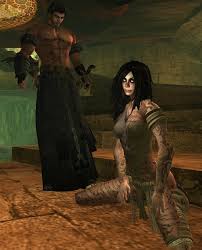 That’s not really what evolutionary psych says (and I have issues with that field, anyway). How would craving your own abuse, or even domination, be adaptive? Pain is meant to warn us to stop doing something. Women’s genes don’t crave poor treatment. If they did, we’d find eroticized violence in every culture, but we don’t. Egalitarian societies like those of the American Indian (before contact with patriarchy) did not sexualize abused women.
Here are two big problems with eroticizing male dominance and women’s pain: First, women and men can both come to crave the abuse of women in real life. Second, when we make male dominance seem sexy, we become more accepting of male dominance.
Neither of these aid the fight for equality, justice or human rights.
Popular Posts of BroadBlogs
Frats Invite Sluts, Bitches; Women Accept Degradation. Why?
What Do Top Model and Hard Core Porn Have in Common?
Women: Climax Less Likely in Relationship Sex
Men: Climax More Likely in Relationship Sex
Orgasm: It’s All in the Mind
Share this:

Beating Your Wife, Child OK in United Arab Emirates
The United Arab Emirates’ High Court ruled a few weeks ago that men can beat their wives and children. Wives are always fair game, but children may only be beaten if they are young enough to be properly defenseless (only “young” children may be battered). Also, husbands and fathers must leave no visible mark. So keeping wives and daughters properly covered could come in handy.
Sharia law expert, Dr. Ahmed al Kubaisi, reasoned that wife beating is sometimes necessary to preserve family bonds, “If a wife committed something wrong, a husband can report her to police,” he explained. “But sometimes she does not do a serious thing or he does not want to let others know; when it is not good for the family. In this case, hitting is a better option.”
It’s all so clear to me now.
Except for the part about why men are qualified to discipline women. Is it that men are more wise and compassionate? And we know this because wife and child abuse come so easily to so many of our less evolved brethren? And why would God want anyone to beat anyone else?
Islamic scholars don’t all feel that beating women and children is consistent with Islam.
Islamic law scholar, Dr. Jamal Badawi, says the Quran seeks “the prohibition of any type of wife beating.” Lawyer and women’s rights activist, Summer Hathout, observed, “To those of us who know Islam and the Quran, violence against women is so antithetical to the teachings of Islam.” Islamic feminists note that the word in the Quran which is commonly translated as “beat” (daraba) can also be translated as “to go away.”
Basing prescriptions for battering women and children on religion, the word of God, seems odd. How is violence of any sort good for the soul?
Beating women. Killing women to preserve “honor.” Throwing stones at women in a stadium. A woman is hit by a large stone. She screams out in pain. And cheers rise up from the crowd. This is ennobling?
What happens to a person’s soul who behaves this way? Only dehumanization comes from this mindset and behavior.
Georgia Platts
Related Posts: Early Islam’s Feminist Air
Don’t Reject Your Culture, Even When It Mutilates You
Cultural Relativism: Must We Be Nazis to Criticize Them?
Share this:

Raping Children under Pretext of Marriage
Saudi Arabia: A Hepatitis B infected 65-year-old man married an 11-year-old girl. Soon she’ll be infected.
Yemen: A 10-year-old was forced to marry a 30-year-old deliveryman. He took her out of school and beat her regularly. (Due to some smarts and luck, she later became a ten-year-old divorcee.)
Saudi Arabia: A father married off his 13-year-old daughter to a man in his 50s because he wanted dowry money to buy a car.
Afghanistan: A 14-year old was married off to satisfy an obligation. Abused, used as a servant, and forced to sleep in an outbuilding with animals, she eventually (and famously) ended up on Time Magazine’s cover with a severed nose as punishment for fleeing her abuse.
One Saudi social worker told Al Riyadh that she knows of three thousand cases where girls, 13-years-old and younger, were forced to marry men old enough to be their fathers or grandfathers. Or as Eman Al Nafjan at change.org described it, “forcing children to be raped under the pretensions of marriage.”
All of this is ironic as staunchly pious Muslim states somehow forget their religion: The Quran gives females the right to consent to marry. But forcing children to marry removes their say. Early Islam actually had a feminist air, and many Muslim feminists are working to return to that more woman-positive time.
Fortunately, a movement against child marriage is rising in Saudi Arabia. If you would like to read more, go to change.org, where you can also sign petition.
Hopefully, one day the right to consent to marry will not be just an empty promise.
Georgia Platts
Related Posts: Early Islam’s Feminist Air
Don’t Reject Your Culture, Even When It Mutilates You
Cultural Relativism: Must We Be Nazis to Criticize Them?
Share this:

Frats Invite Sluts, Bitches; Women Accept Degradation. Why?
“Dear Bitches, I mean witches.”
So began Duke’s Alpha Delta Phi’s e-mailed invitation to their Halloween party. It continues just as charmingly:
“The Brothers of Alpha Delta Phi know what true fear is. Fear is having someone say ‘I love you.’ … Fear is riding the C1 with Helen Keller at the helm (not because shes deaf and blind, but because she is a woman). Fear is waking up with no wallet, phone, keys, or front tooth next to a girl who you could generously deem a 3.”
Not to be outdone, Duke’s Sigma Nu frat offered their own enticement:
“Whether your dressing up as a slutty nurse, a slutty doctor, a slutty schoolgirl, or just a total slut, we invite you to find shelter in the confines of Partners D.”
Ummm, how appealing! (And I don’t just mean their grammar and spelling.)
Someone had the sense to print out the invites and scrawl handwritten messages: “If you’re not outraged, you’re not paying attention,” “Is this why you came to Duke?” and then wallpaper the campus.
Strangely, sorority sisters interviewed took it all in stride as “boys-will-be-boys.”
“Honestly, when I first received those e-mails I didn’t think anything of it,” said Emily Fausch, of Delta Delta Delta sorority. “This is the kind of thing I’ve come to expect from fraternities. In my heart, I know it’s a problem but I’ve really gotten used to it. I don’t take it too seriously. I think that college boys will be college boys.”
Now, not all fraternities are created equal. Some actually work to be respectful toward women. But at many frats, women are routinely degraded in attempts to create a sense of male superiority and “manhood” by putting women down, according to sociologist, Michael Kimmel.
But why do women so often support their own disgrace by continuing to fraternize with the frats? This woman’s comment that she’s simply gotten used to it is telling.
We live in a society that sees women as lesser-than, and which sexualizes male dominance. Both lay the groundwork for accepting ill treatment.
A few quick examples: Man, brother, and guy encompass women, but woman, sister, and gal don’t encompass men. So man becomes primary, and woman secondary. A woman marries and becomes Mrs. Leonard Smith. A man never becomes Mrs. Emily Struthers. Unless it’s an insult. Send a card from the family? Likely dad’s name goes first, then mom’s, then the children in order of appearance. Men tend to feel insulted taking the secondary spot. Women are just used to it.
We sexualize male dominance when Rhett takes Scarlett up the stairs for a night of marital rape and Scarlett cheerfully awakens the next morning. Or when Rihanna sings about enjoying mistreatment from her man, while Eminem celebrates abusing women. Watching women enjoy humiliation in porn or mainstream movies like The Secretary also eroticizes male dominance. The list goes on.
Continually treated as secondary, second-rate treatment becomes taken-for-granted, invisible. The women are used to it. It seems natural. Sometimes even sexy.
As too many frat brothers intensify the world of insult, women acclimate to the higher level shame.
All this teaches women to accept attitudes and behavior that regard them as second-class.
A college roommate of mine dated a frat boy who treated her like dirt. She defended him to all of us who cared about her. She had certainly learned to accept her own humiliation.
Popular Posts on BroadBlogs
Orgasm: It’s All in the Mind
Women Want Casual Sex? Yes and No
Women Learn the Breast Fetish, Too

 BroadBlogs