Category Archives: psychology
Porn Can Cause E.D.?
 I mentioned in class that, strangely, porn can cause E.D. A male student said he’d thought it was the opposite, that porn cured E.D. Oddly, both could be true.
In a New York Magazine piece entitled “He’s Just Not That Into Anyone” Davy Rothbart, 36, admitted faking orgasm. (Apparently it’s easier for men to fake if they use a condom. Without, they can claim having had a small one.) Rothbart eliminated various possibilities. Antidepressants weren’t causing his E.D. And he got plenty of exercise. It didn’t matter which woman he was with, or what kind of condom he used, or whether he’d had alcohol, or how much.
But after learning that men were increasingly suffering from delayed ejaculation, and increasingly faking it, he began wondering if a “tsunami of porn” accompanied by “over-masturbation” were the culprits, as suggested by sexuality counselor, Ian Kerner.
Rothbart began interviewing others with this problem.
One man was always hard as nails with porn, but couldn’t get anything up with his lady. Another said, “I used to race home to have sex with my wife. Now I leave work a half-hour early so I can get home before she does and masturbate to porn.”
Another had no problem getting aroused by his wife but, “In order to come, I’ve got to resort to playing scenes in my head that I’ve seen while viewing porn. Something is lost there. I’m no longer with my wife; I’m inside my own head.”
And so the real women in their lives fade away as a computer takes over.
Rothbart explains, “For a lot of guys, switching gears from porn’s fireworks and whiz-bangs to the comparatively mundane calm of ordinary sex is like leaving halfway through an Imax 3-D movie to check out a flipbook.”
Typically when a man has sex a combination of dopamine and oxytocin are released with orgasm, creating an emotional attachment to his partner. But increasingly, men are bonding with porn. Their brains are being rewired.
A cure is available: step away from the computer. Rothbart went without for a few days and no longer had to fake it.
Pamela Paul found this same phenomenon when she interviewed men about their pornography habits for her book, Pornified. Those who over-imbibed found it increasingly difficult to get it up with real women but gained relief when they decreased their porn consumption.
The problem isn’t porn so much as overexposure. Are you overexposed? Well, if you’ve experienced E.D. with real women but not with a computer screen, it’s likely.
Read Rothbart’s complete essay here: New York Magazine.
Popular Posts on BroadBlogs
Wanting “X” from Sex, but Doing “Y”
Does Sexual Objectification Lead to Bad Sex?
Pleasuring A Woman
Share this:

Sexual Desire & Sexism

Karen Zack, Man As Object
We are bombarded with “sexy women” but not “sexy men”
Whether on billboards, TV ads, Dancing With The Stars, Olympic ice skating, or professional football, women are half-dressed and men are fully-clothed. The camera hones in on women’s breasts and butts and ignores men. Sure, we are seeing more hot men these days thanks to Matthew McConaughey and Ryan Gosling. But the last time I checked out People’s sexiest men I saw lots of faces and loose T-shirts and few bods. Even the clothing that women and men walk around in show off women’s bodies and, more often, hide men’s.
As Amanda Marcotte at RH Reality Check points out,
Straight women don’t get nearly the provocation on a daily basis — is it any wonder that 60% of the men who answered the Consumer Reports survey (on sex) thought about sex once a day, but only 19% of women?
No part of the male is fetished
No part of the male body is fetishized, either. Men stare at breasts and butts, but what are we supposed to look at? These fetishes may seem natural for men but they are actually a cultural construction. How are they created? In part, see the section above. Or see my piece called, “Men Aren’t Hard Wired To Find Breasts Attractive.” Ever wonder why tribal men don’t get all excited about tribal women’s breasts and butts?
Porn may lead men to think we get aroused by penises, but when Anthony Weiner sexted a photo of his package, Tracy Clark-Flory over at Salon asked women if being sexed a man’s penis would “do it” for them. Most expressed repulsion. Or as one put it, “If by ‘do it (for me)’ you mean ‘send me to the toilet retching,’ then yes, it does.”
Sexy men can seem “gay”
Women are not taught to consume the male body with their eyes, as men consume theirs. To make matters worse, pics of sexy men can seem “gay.” Since sexiness is almost always meant for the male gaze, on an unconscious level women can come to see “sexy” men – perhaps posed in Speedos — through male eyes, too. Bummer!
Women don’t feel sexy
Meanwhile, we might not feel too sexy, ourselves. Surrounded by the “perfect” images our partners consume, we might not feel too hot by comparison to ladies who live on lettuce, surgery and photoshop. Do we really want to reveal our bodies and be negatively judged? The opposite of an aphrodisiac.
Good girls shouldn’t
The double standard is loosening up but sexual women may still be called: slut, whore, ho’, tramp, skank, nympho, hussy, tart, loose, trollop… the list goes on. Men possess cocky cocks while women’s privates are just “down there.” College men returning home Sunday morning may take the Walk of Fame while the women they’ve just had sex with take the Walk of Shame. And so women’s sexuality becomes more repressed.
The problem of housework
Sometimes the problem is more mundane. Women do about twice as much housework as men. After a full day at work women are more likely than men to cook dinner, clean up, and get kids ready for bed. Then they’re too tired for sex and resent their husbands. Not a way to get in the mood.
Or, maybe mom works in the home where her “invisible” work gets noticed only when it’s undone. A lack of appreciation won’t get anyone in the mood for love making.
Sexual violence
Sexual violence also takes a toll. Rape is most prevalent when women are devalued. And women who are raped often lose interest in sex. One woman I know of went numb and emotionally left her body when she had sex because a past rape had made sex seem terrifying and repugnant to her. “Desperate Housewife,” Teri Hatcher, was molested by an uncle who told her that one day she would like sex. That only made her close up more because she didn’t want to prove her disgusting uncle right.
But all women also face the prospect of getting screwed, rammed, nailed, cut, boned, banged, smacked, beaten, and f’d — in common street parlance — when they get intimate. Who wants that?
How to raise a woman’s desire
If you want women to desire sex then: help with housework, show appreciation, stop shaming women for being sexual, or for not fitting ridiculous “ideals,” desire her and let your lady know she’s beautiful.
Popular Posts on BroadBlogs
Man as Object: Reversing the Gaze
Men, Women & Internet Porn
Men, Women React to Male/Female Nudity
Share this:

Becoming A Sex Worker – The Brutal Side
 Some people get into sex work because it just seems to make sense to them, as I described last week. But more often the entry is brutal, whether poverty, drug addiction, or kidnapping force the involvement.
One prostitute writing “A Personal Refutation of the Concept of Choice” says:
Choice does not always present as balanced; it does not always offer a different-but-equal alternative. When I think of my choices they were simply these: have men on and inside you, or continue to suffer homelessness and hunger. Take your pick. Make your ‘choice.’
Another former prostitute says her grandmother unsuccessfully tried to keep her manic-depressive son from marrying his schizophrenic girlfriend. “What,” she wanted to know, “would happen to any children born into that union?”
“She was right to worry,” her granddaughter says. “It left us in state care, one after the other. And as a young teenager it left me homeless, hungry, and prostituted, in that order.”
Sometimes prostitution arises from poor choices, as one drug addict describes, “My addiction is so bad I sell my body to pay for it. I never thought I would end up like this… I wanna get clean.”
Others are promised a better life through employment, education, or marriage. Instead, they are kidnapped and thrust into international sex slavery. Nick Kristof traveled to India and found that every prostitute he encountered had been forced into it by a trafficker, her parents, or her husband. Having studied and observed trafficking over the years, Kristof says his sense is that prostitution is deeply enmeshed in coercion.
In the U.S. girls often end up walking the streets by way of pimps who “befriend” them and then enslave them. You may have heard of Sara Kruzan. Her mother was drug addicted and abusive, and she didn’t know her father. After years in foster care she became depressed and by age nine she began attempting suicide.
At age eleven, 30-year-old G.G. became a father figure, showing her affection, taking her roller skating or to the movies, and telling her she was special — “so special” that she should never give away sex for free. Pimps like G.G. know that girls like Sarah are emotionally needy, and offer a sense of love from a “father” or a “husband” figure. And, like most pimps, he added terror for good measure. He raped her repeatedly and forced her to walk the streets everyday from six in the evening until six in the morning.
Sara eventually killed her pimp. She got a life sentence.
Or, there is Stella Marr who has fortunately escaped prostitution. She grew up in a troubled home. Her mother beat her all the time for things like trying to steal her friends (when Stella was 4 years old!) or for “making noise that woke her up when I came home from school.” Sometimes abuse took a sexual turn. And she was confined to her room much of the time.
Stella eventually went to Columbia University and got good grades. But the better she did in school, the more violent her mother grew. Finally, her mom threw her out of the house.
Broke and desperate, Stella says her grief created a micro-climate around her that drew pimps. One tricked her into sexual slavery:
I met Johnny (who said) he had a friend who needed a roommate, and that her family owned a restaurant and could give me a job. When we got to the apartment Johnny and two other guys who were waiting there jumped me, beat me up and raped me. They locked me in a tiny room without a window. They broke me like you’d break a horse. It was systematic. They’d rape me, beat me up, and then they’d be ‘nice,’ and give me a tuna sandwich. Again and again and again. It was torture. They dislocated my shoulder, and gave me codeine. I didn’t know if it was day or night. I didn’t think there was anyone I could turn to.
Some wonder why she didn’t run away. But trauma affects the brain, and Stella became brainwashed into believing escape wasn’t possible. And she saw society as complicit in her slavery. Early on, her pimp took her to a party with fourteen policemen because he wanted her to know he had cops in his pocket. Stella felt there was nowhere she could turn.
Unfortunately, despite all of the brutality surrounding prostitution, we too often blame the victims instead of helping them. In future posts I’ll discuss what might be done.
Popular Posts on BroadBlogs
Becoming a Sex Worker – The Benign Side
In-laws Rip Off Girl’s Fingernails, But Who Cares
Anything Good About Being A Sex Object?
Share this:

That’s Bitchin, But Life’s A Bitch
 If you say, “That’s bitchin!” it’s good. But if she’s bitchin, she’s annoying. If “Life’s a bitch,” things are difficult. If “She’s a bitch!” she’s difficult, she won’t give ground. (He thinks that’s bad.) If “I’m a bitch!” I stand my ground. (I think that’s baaad – but in a good way!) But if “She’s my bitch” or “He’s my bitch,” that bitch is submissive.
So which is it? Does a bitch stand her ground? Or does she submit? I guess the words “a” vs “my” make all the difference. Taking someone who stands her ground and making her succumb is, apparently, a huge triumph.
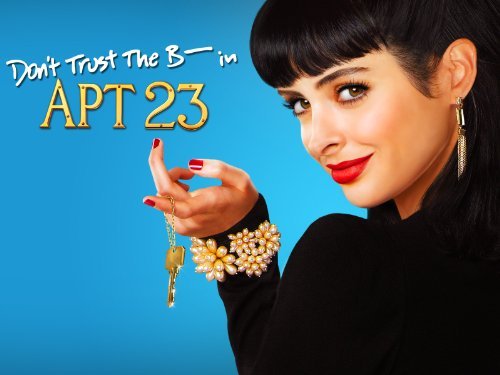
The contradictions continue. Two sitcoms, “Don’t trust the B— in Apt. 23” and “GCB” were first pitched as “Don’t Trust the Bitch in Apt. 23” and “Good Christian Bitches.” In fact, “Good Christian Bitches” was transformed to “Good Christian Belles” before finally becoming the non-descript “GCB.” So network execs shun the b-word in series titles even as actors spew those same words on air.
The networks like the hip, cool titillation the word suggests.
Titillation, as in: “bitch,” defined as a woman who will have sex with anyone – “except me.” (And earlier, defined as a female breeding dog.) Bitch being quite different from a stud (a male breeding horse).
Bitch as hip and cool? It’s cool to demean women, as in “the Bitch in Apt. 23”? Or, it’s cool that women celebrate their independence, as in “GCB”?
Women reclaim this word that has been used to debase and dominate them. But others still use it to insult and control – and then say, “Well, you women use the word yourselves.” (Blacks use the n-word themselves, yet few non-blacks think that grants them the same permission.)
This shape shifter may reflect our society’s contradictory views of women. On the one hand women are strong and amazing; on the other, women are belittled and demeaned.
Popular Posts on BroadBlogs
“Cock” vs “Down There”
Gender-Swapping Grammar Lessons
“Bitches and Dudes,” a.k.a. “Women and Men” on College Campuses
Share this:

Becoming a Sex Worker – The Benign Side
 How do people get involved in sex work? Entry ranges from the benign to the brutal. Unfortunately, the brutal is much more common. Today let’s look at the not-so-bad side.
Some sex workers are empowered enough to write a post on Daily Kos. Jonathan says it was an accident. He had been working as a research chemist for a major corporation when a person he was dating asked if he’d be interested in doing a “spanking video.” No brainer. Sure! He’s never officially escorted or hooked, but some married couples he’s “double dated” have left him money, and several others have bought him things he could in not afford, himself. Jonathan is in charge of his life and seems to be fine with his choices.
Here’s another “accident.” A young woman I’ll call “Trina” describes herself as an average looking blonde cheerleader from the upper-middle-class. She has never been abused. But she does know a record promoter named Jesse who one day asked if she could pick up a client and show him around since he was in a bind. He offered her money to buy the client dinner and go dancing. She could keep whatever money was left over. Trina made $70 and had fun so she agreed to help out several more times. Eventually some of the clients wanted sex. She refused and asked Jesse what do. He told her to do whatever she wanted. When she didn’t put out, though, Jesse limited her dates. Then one night an attractive 40-year-old offered her $500 for sex. She said no. But he kept upping the price until he reached $1000. As she recalled,
My initial thought was to slap the crap out of him, however, the things I could do with $1000 cash. It wasn’t hard. No commitments, no future to worry about, and no love to get in the way.
And it wasn’t as bad as she’d expected, so she kept doing it and made over $10,000 in four months. So Trina continued the work, but only when she found a man attractive.
Still, she wants to quit escorting when she graduates from college and live a normal life that she can share with friends and family, and make an “honest” living.
Trina is a more privileged call girl. Let’s turn to the street hookers who sometimes get involved by “drifting” into it. They might start with casual sex at a young age and eventually be offered money. Sometimes it makes sense to them to take it. As one girl explained:
I was going to school and I wanted to go to the dance after. I needed new clothes. So I went out at 10 o’clock and home by 12. I had three tricks the first time, and $15 for every trick.
After the first few times, the girls spend the next few months ambivalent about becoming prostitutes. Instead, they try to think of what they’re doing as “normal.” One girl thought of herself as, “just walking.” And a guy makes an offer. Well, it’s only normal to take the money, right?
Some eventually build their lives and identities around prostitution and stop telling themselves their behavior is “normal.” Instead, they see themselves as “helping.” They are “helping” wives by giving their husbands a sexual outlet that reduces tension in their marriages. Or they see themselves as preventing rape, for instance.
The women and men I have just described got into prostitution voluntarily. And none of them had to deal with violent pimps. In fact, contrary to popular belief, prostitutes don’t actually need pimps, who are, generally speaking, completely useless.
Next week I’ll talk about the brutal side of becoming a sex worker, which appears to be far more common.
Popular Posts on BroadBlogs
David Beckham’s Sex Sells
Men Watch Porn, Women Read Romance. Why?
Women Want Casual Sex? Yes and No
Share this:

Strip Searches Strip Our Liberty
Recently, the Supreme Court ruled that anyone can be strip-searched when arrested, for any offense, at any time. The majority was composed of the more libertarian side of the court who claim to value liberty over all.
Strange.
Albert Florence, who initiated the suit, had been stopped for a driving violation. Once taken into custody he was told to “turn around. Squat and cough. Spread your cheeks.” He felt humiliated, “It made me feel like less of a man.”
Naomi Wolf points out the absurdity of the reasoning. Justice Kennedy suggested that a 9/11 bomber could have been stopped for speeding. And strip searching him would have prevented the attack? Plans to blow up the twin towers may have been concealed in a body cavity? Or, weapons and contraband could be brought into the prison system, Kennedy continued. Yet those merely under arrest haven’t yet made it into the prison population.
Wolf goes on to warn,
Believe me: you don’t want the state having the power to strip your clothes off. History shows that the use of forced nudity by a state that is descending into fascism is powerfully effective in controlling and subduing populations.
Forcing people to undress is the first step in breaking down a sense of individuality and dignity and reinforcing powerlessness. Enslaved women were sold naked on the blocks in the American south, and adolescent male slaves served young white ladies at table in the south, while they themselves were naked: their invisible humiliation was a trope for their emasculation. Jewish prisoners herded into concentration camps were stripped of clothing and photographed naked, as iconic images of that Holocaust reiterated.
While TSA pat-downs are routine in the US, they are illegal in Britain. Wolf believes that the genital groping policy “is designed to psychologically habituate US citizens to a condition in which they are demeaned and sexually intruded upon by the state – at any moment.”
Interesting, and scary. Especially since cargo holds are not always routinely checked for bombs. And nuclear and chemical plants are not adequately guarded. All because companies want to avoid costs and delays. And yet we must put up with pat-downs, x-ray cameras and strip searches at the airport?
Meanwhile, a facility is being set up in Utah by the NSA to monitor everything all the time. And recent laws have criminalized protest. Where are we headed, Wolf wonders.
I doubt there is a clear plan to psychologically subdue the U.S. population through sexual terrorism. But so long as we all sheepishly submit to it, the techniques could potentially become a tool for our submission.
And the fact that such tools are upheld by the libertarian side of the bench leaves me wondering how pro-freedom they really are. Is it liberty for all? Or just liberty for powerful police and powerful corporations? The rest of us had better submit.
See entire article @ Naomi Wolf, “How the US Uses Sexual Humiliation as a Political Tool to Control the Masses,” Common Dreams
Popular Posts on BroadBlogs
Markets Must Be Free; Women Must Be Constrained
Should Organized Religion Have More Rights Than Women?
Should Business Owners Have More Rights Than Blacks?
Share this:

Beauty Tricks to Remove Your Power

Ashley Judd’s face looked puffy in the promo for her new TV series, Missing. Big deal. She’s aged since I last saw her, and maybe she’s gained a little weight.
And then the furor. Everyone talking about Ashley’s face.
So she responded in the Daily Beast. A few lines:
The Conversation about women’s bodies exists largely outside of us, while it is also directed at us, and used to define and control us. The Conversation about women happens everywhere, publicly and privately. We are described and detailed, our faces and bodies analyzed and picked apart, our worth ascertained and ascribed based on the reduction of personhood to simple physical objectification. Our voices, our personhood, our potential, and our accomplishments are regularly minimized and muted. The assault on our body image, the hypersexualization of girls and women and subsequent degradation of our sexuality as we walk through the decades, and the general incessant objectification is what this conversation allegedly about my face is really about.
Wow.
The lines linger, waiting to be soaked up.
We are described and detailed
our faces and bodies analyzed and picked apart
our worth ascertained and ascribed based on
the reduction of personhood to simple physical objectification
The body detailed and critiqued, diminished and demeaned. An emotional trashing. Cut up, dissected. It feels like a killing. No wonder we are body-obsessed, declare nourishment the enemy and become terrified of aging.
With our bodies spotlighted the rest of us vanishes.
Our voices, our personhood, our potential
and our accomplishments are regularly minimized and muted
(as)
The Conversation about women’s bodies exists largely outside of us
We become nothing but our “defective” parts.
And we can say nothing as the conversation bubbles everywhere, outside ourselves, removing our power to name and control.
But Judd doesn’t leave us, or herself, hanging in hopelessness. What is deemed good and bad are equally fanciful interpretations, she says, and so she has chosen to abstain from all outside judgments about herself and her body.
We are social animals. Our identities are keenly influenced by how others see us, and more so when those visions act in concert. When many see us a certain way, the agreement brings objectivity, while our solitary thoughts seem merely subjective.
But the declarations are not absolute. Especially when we discern shallowness and falsity. We may choose otherwise:
I do not want to give my power, my self-esteem
or my autonomy
to any person, place, or thing outside myself
The only thing that matters is how I feel about myself
my personal integrity
and my relationship with my Creator
“It is ultimately about conversations women will either choose to have or choose not to have,” says NPR’s Linda Holmes.
Let’s have some new conversations.
Popular Posts on BroadBlogs
You Are “Less Than”?
Self-Esteem Falls with Rise in Power? Blame Beauty Ideals
Anything Good About Being A Sex Object?
Share this:

The Crimes of Hoodies, Short Skirts and Fannie Mae

“More guns, fewer hoodies” and we’d all be safer, Gail Collins advised in a New York Times piece after Trayvon Martin was gunned down for “eating skittles while black” – and while wearing said hoodie – in a gated community. A clear threat that had to be stopped.
That’s right. Guns don’t kill people, hoodies do: Trayvon Martin’s “hoodie killed him as surely as George Zimmerman did,” claimed Geraldo Rivera (who later apologized).
Sounds familiar. When women are raped short skirts become the culprit.
Yet few rape victims are wearing short skirts. And even nicely dressed black men can create fear. Journalist Brent Staples noticed that people got out of his way when he nonchalantly walked about. Amazed at his ability to alter public space, he tried humming Mozart to project his innocence. Seemed to help.
But why aren’t pricey cars, fancy suits and expensive watches blamed when rich, white men get robbed? What thief could resist?
Why? Because making more powerless members of society the culprit is meant to distract from the sins of the powerful. It’s women’s fault if men rape them, and it’s black men’s fault if lighter men kill them.
In another example, some blamed liberals for foolishly using Fannie Mae and Freddie Mac to help Blacks and Hispanics “buy homes they couldn’t afford,” leading to the banking crises that nearly drove the U.S. economy off a cliff.
What really happened is that rich bankers gave rich campaign contributions to government officials, who in gratitude disposed of pesky regulations. That helped bankers get mega-rich by devising complex financial packages that no one could comprehend.
Used to be that when someone bought a home bankers made sure they’d get paid back. But under deregulation it didn’t matter because the loan was sold to someone else. And that investor sold the loan again. And financial packages were created and sold, composed of fractions of many people’s mortgage loans. They were rated AAA since they were 1) diversified – and hence, “safe” investments and 2) the housing market never goes down. (Yeah, right!)
Fannie and Freddie entered the process late, thinking they’d better join in or lose out.
When the housing market dropped and people couldn’t afford their homes, or sell them for a profit, the banks began collapsing. Lucky for them, the taxpayers bailed them out (or the whole economy likely would have collapsed).
Did deregulation get blamed for the fiasco? By some. But plenty of the “powers that be” — and especially “hate radio” — blamed Blacks and Latinos.
Because blaming more powerless members of society distracts from the sins of the powerful.
The crime does not lie with the man who pulls the trigger, nor with the man who rapes, and certainly not with the fat cat who pays to rig the game. No, the crime lies with those who wear hoodies, short skirts and who bank while black or brown.
Popular Posts on BroadBlogs
Cheerleader Ordered To Cheer Her Rapist, and Other Stories
Markets Must Be Free; Women Must Be Constrained
8-Year-Old Called “Whore” for Long Sleeves, Skirts
Share this:

Is Male or Female Sexuality Better?
 “I heard so many of my friends saying, ‘Why can’t I have sex and feel nothing?’ It was amazing: that this was the new goal.”
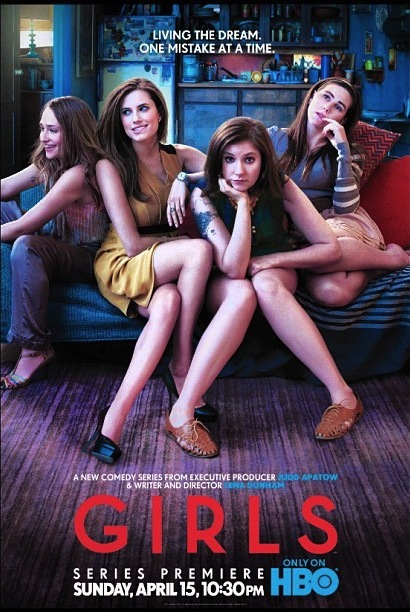
That’s what 25-year-old Lena Dunham told New York Times columnist, Frank Bruni as they discussed her new Sex-and-the-Cityish HBO series called “Girls,” which she writes, directs and stars in.
Dunham points out that numerous cultural cues press women to take on non-emotional, non-connected, “empowered” sexuality.
Yet she can’t manage to do it, herself. And she is not sure it’s empowering.
“There’s a biological reason why women feel about sex the way they do and men feel about sex the way they do,” she adds. “It’s not as simple as divesting yourself of your gender roles.”
Evolutionary psychology says women are genetically programmed for monogamy so fathers will stick around and provide resources for their children, while men are promiscuous so that they can widely “spread their seed.”
I have my doubts. If women are monogamous then men can’t be promiscuous. And both men and women are promiscuous in some tribal cultures.
Modernity seems to breed a monogamous ideal (meaning lifetime marriage after a few years of “sewing your wild oats”) among both women and men, perhaps because these societies are complex and children aren’t raised by the entire community (as they are in small tribes) making single parenthood difficult.
And even while casual, male-stereotypic hookup sex has overtaken college campuses (at least in theory), a recent study of hookup culture found that both men and women prefer close, connected relationships.
Still, study after study shows most women preferring sex in a context of love and connection, while men are more open to casual encounters.
So which is better? Casual or connected?
I’ve asked my students what they think. They see positives and negatives in each approach.
The variety offered in non-connected sex can be fun, and if you really do it “man-style,” guilt-free. There are no ruts! But STDs and unwanted pregnancies are bigger risks. And it’s possible that one partner will end up wanting more, which can create hurt and complications. Emotional connection adds depth and dimension, and many can’t enjoy sex without it.
The problem, my students think, lies in feeling pressured to behave in ways that are inauthentic – which isn’t pleasurable, either!
And is non-emotional, non-connected sex more “empowered”? Or do some just think so because it’s the “male” way in a culture that values masculine over feminine? Or that sees men and “their ways” as more powerful, by definition. Sure, you’re less vulnerable and dependent, but there is great power in relationship.
Likely the “best” and “most empowered” sex is that which is most fulfilling, and which best expresses who you are and what you want, and which is acted out most responsibly.
Popular Posts on BroadBlogs
“Dressing Like Prostitutes”? Authentic Sexuality?
Cartoonish vs Authentic Sexuality
It’s Ok To Be A Tomboy But Not A Sissy. Why?
Share this:

Rape Epidemic in South Africa. Why?
More than one in three South African men admits committing rape, one in seven has joined a gang rape, and more than three quarters admit committing violence against women.
More than half of South African women have experienced violence at the hands of men, and one-quarter will be raped by age sixteen.
Why? Two thirds of rapists felt sexually entitled. Some wanted to punish women who had angered or rejected them. Others wanted to turn lesbians straight. And some were just bored.
These “reasons” may only get at surface issues. What else is going on?
Rachel Jewkes, a lead researcher on the study of violence in South Africa, feels that racism lies behind the abuse.
Rape holds a sexual component, but it is essentially about power. When a large population is oppressed, say through racism – even as manhood is defined as “dominant and powerful” – men may use rape as a weapon to gain a sense of personal empowerment. Rapists are often trying to bridge a gap between their impotent selves and the dominant men they seek to be. Imagine the control they feel when they restrain, take over, and invade another person’s body. Imagine how high and mighty they feel in creating humiliation.
Gay bashing is another weapon whereby some men try to create a sense of male superiority. If women act like men (sexually/stereotypically) how can men keep their sense of dominance? Hence, the need for “corrective rape” in South Africa that seeks to turn lesbians straight.
In one attack Millicent Gaika was beaten and raped for five hours as her assailant screamed, “I know you are a lesbian. You are not a man, you think you are, but I am going to show you, you are a woman. I am going to make you pregnant.” Since the women are often murdered “correction” sounds less likely than gay-bashing as motive.
Others were simply bored. So the eroticized violence of patriarchy comes in handy: Oh, let’s have some fun!
This is helped when women are seen as sex objects, and not people who have their own lives, goals, thoughts and emotions. When women become nothing but objects for sexual pleasure, it’s no wonder that one third of the rapists said they did not feel guilty.
So here we have powerless men beaten down by racism who are trying to feel powerful, who live in a world where violence against women is eroticized, and where women are seen as mere objects. A recipe for epidemic rape.
Originally posted on January 14, 2011 by BroadBlogs
Related Posts on BroadBlogs
Mind of a Rapist: Trying to Bridge a Gap between a Small Self and a Big Man
It’s Ok To Be A Tomboy But Not A Sissy. Why?
Yale Fraternity Chants “No Means Yes.” Men? Or Scaredy Cats?

 BroadBlogs