Category Archives: body image
Enticing a Woman’s Libido
This matter of women liking sex less than men is confusing. I enjoy sexuality very much as a man and am disheartened by the seemingly in-your-face fact that women don’t enjoy sex as much as we men do. To me sex is a total experience (heart, soul, mind and body) and it seems that if women don’t enjoy this important part of healthy relationships, then they aren’t as attracted to men in all those ways. I don’t know, it would be nice to actually feel very attractive to the opposite sex. The whole thing makes me very sad, i dunno.

That’s one man’s reaction to a blog post I wrote asking, “DO Women Like Sex Less Than Men?” I wrote the post because statistics suggest that, on average, women do typically like it less.
That’s because women’s sexuality has been repressed by a culture that calls us sluts and ho’s and describes men getting sex with women in unappetizing ways: screw, f-, bang, nail, ram, smash, smack that, beat those… Or, women may get distracted with worry about not looking good enough. And if they do think they look good, they may focus on looking hot for the guy. Who can be in touch with sensual feelings with all that going on? Not to mention, women who have been raped often don’t enjoy sex at all.
Women in egalitarian, sex-positive cultures love sex and are easily and multiply orgasmic. They don’t even need a vibrator.
The problem is sexism, not biology.
The question remains: What to do?
As a society we need to heal. Women, their sexuality, and their bodies — in all their many forms — must be respected and celebrated. And we must put an end to a rape culture that so often blames the victim and fails to punish rapists.
Over time, both sexism and sexual repression have diminished, so there is hope. But cultural change takes time. What can we do right now?
If sexual abuse and trauma are part of a woman’s past, she likely needs therapy and a great deal of understanding from her partner. Too many couples try to struggle through the problem alone when they need help.
Meanwhile, the beauty ideal has narrowed to impossible standards, leaving many women feeling sexually undesirable – and that dampens libido. So women need to become more loving and accepting of their bodies, and men need to appreciate and communicate the unique beauty their partners hold.
Also, let go of how you look and get in tune with how you feel. Focusing on looks is a huge distraction. Instead, center on small sensations that grow larger as you submerge yourself in them.
Deep connection may also help partners to merge and emerge into a transcendent experience. As one woman describes it:
There is a form of sexual ecstasy that mimics the union of God and man, recreation of the world. I can’t really describe this experience… But pure joy and connection with another person I feel is becoming closer to the cycles of life and the underlying palpable energy to the world… in essence, God.
And finally I’ll repeat some advice to men from earlier posts:
If you want your partner to desire sex then romance her, show appreciation, stop shaming women for being sexual, or for not fitting ridiculous “ideals,” desire her and let your lady know she’s beautiful.
Popular Posts on BroadBlogs
Does Sexual Objectification Lead to Bad Sex?
Sexual Desire & Sexism
Turning on the Sex Goddess
Share this:

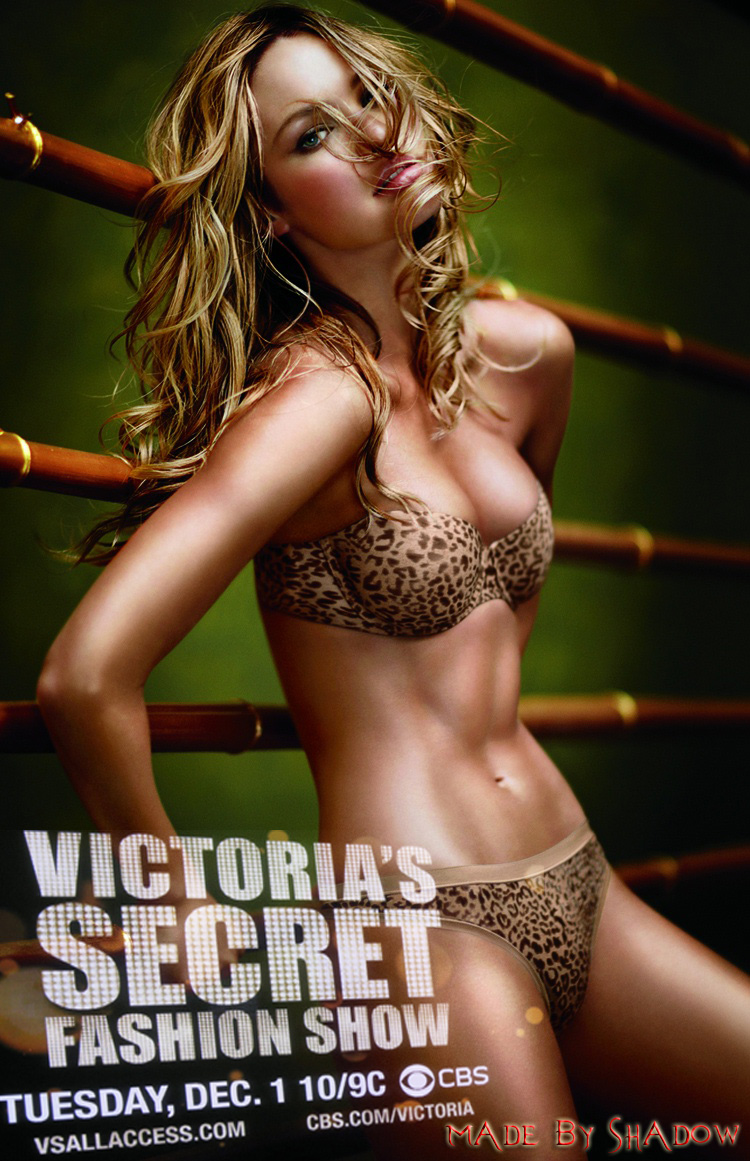
Rather be a Victoria’s Secret Angel or You?
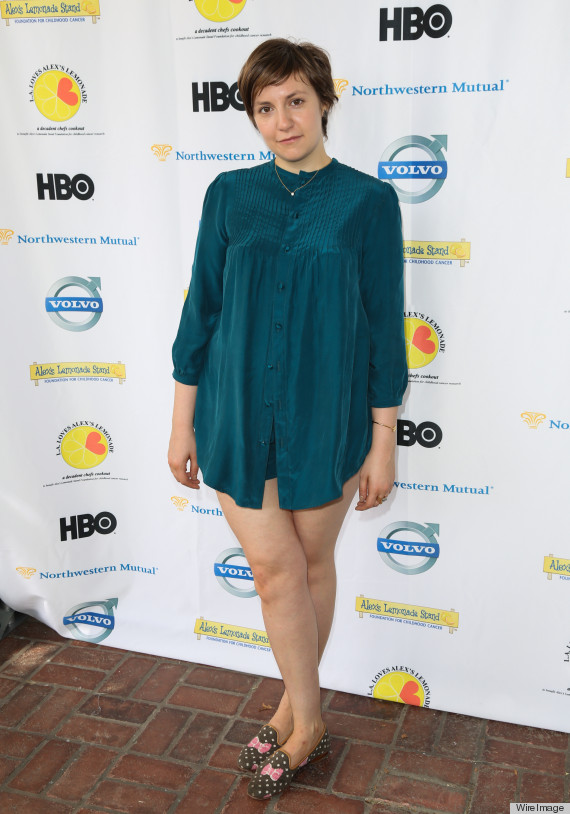 Playboy wanted to know how average-looking Lena Dunham, the award-winning producer, director, writer and star of HBO’s Girls, would feel if she woke up in the body of a Victoria’s Secret Angel.
Not so great, said Dunham, who frequently appears nude on her show.
I don’t think I’d like it very much. There would be all kinds of weird challenges to deal with that I don’t have to deal with now. I don’t want to go through life wondering if people are talking to me because I have a big rack. Not being the babest person in the world creates a nice barrier. The people who talk to you are the people who are interested in you. It must be a big burden in some ways to look that way and be in public.
Looking like a Victoria’s Secret Angel instead of me. I can see the upside. Women are hugely judged by their looks so in an Angel-body I’d land at the top of the pack. How nice. And I could have any guy.
But studies show a downside. Plain women are more likely to get a job interview, for instance. Maybe they seem less sex objecty and more brainy. The beautiful are also believed to be more conforming and self-promoting.
Or, therapist, Mary Pipher wrote in her bestselling Reviving Ophelia that,
Girls who are too attractive are seen primarily as sex objects. Their appearance overdetermines their identity. They know that boys like to be seen with them, but they doubt that they are liked for reasons other than their packaging.
Michael Kimmel, a sociology professor who studies men, says some guys are more interested in bragging to other guys that they nailed a beautiful girl than in having sex with her. Other guys entirely miss seeing the girl because they’re obsessed with her body.
Meanwhile, girls who are too plain are ignored and miss a lot of experiences. Pipher continues:
The luckiest girls are neither too plain or too beautiful. They’ll be more likely to date boys who genuinely like them. They’ll have an identity based on other factors, such as sense of humor, intelligence or strength of character.
And then there’s this: A lot of guys thought Dunham’s response was B.S. But in a Slate comment thread one woman wrote,
You think you’d be happier if you were better-looking, but would you feel the same way if you were in prison? You don’t associate being attractive with any sort of threat, but for women it can be.
On a more mundane note, it’d also take a lot of time, work, starvation and calorie-counting to keep up that body when you could be doing other stuff. Healthy is good, “perfect” takes too much time and surgery.
Popular Posts on BroadBlogs
How to Look Like a Victoria’s Secret Angel
Celebs Less Weight-Conscious
Believe You’re Beautiful – Others Will, Too
Share this:

Bad Boy Allure
I don’t understand the girls here. They say they want men to be emotionally responsive and sensitive, that they want us to be good listeners and really caring. So I’ve become all that. I’m a really good friend, a good listener, sensitive, and all the rest. And they all want to go out with these macho assholes! I don’t get it! What do women want?

Sociologist, Michael Kimmel, is an expert on men and masculinity. He says this is the question guys ask him most often.
Turns out, certain negative traits are associated with a rise in both men’s and women’s popularity. Remember the “mean girls” who top the high school pecking order?
Luckily, what makes “bad boys” and “mean girls” appealing isn’t their badass-ness. Good guys and gals can actually copy a few benign “bad boy” traits and become both desired and pleasant.
Social research, as reported by The Good Men Project, finds that personality traits named the “dark triad” are correlated with physical attractiveness.
- Narcissism – defined as an overly developed sense of self-worth and entitlement matched with intense egotism.
- Machiavellianism – defined by the person’s reliance on manipulation to get what he or she desires without regard to others as well as a cynical dismissal of morality as “for other people.”
- Psychopathy – a loaded term; it doesn’t refer to a violent maniac, but to someone defined by reckless thrill-seeking, selfishness, lack of remorse and affect and a certain level of superficial charm.
 Turns out, narcissism is most associated with being found beautiful. But it’s not the narcissism that matters. Rather, ego-centric folks just carry themselves with confidence and adorn themselves in the latest styles.
Researchers took pictures of a few “dark triad” types along with pics of a few “normal” folks. In one picture everyone dressed in their usual clothing. In another everyone wore plain clothing and hairstyles, and no makeup.
Narcissists were deemed more attractive than others when dressed in their usual fashionable ways. But in the “plain” photos they seemed no more alluring than anyone else.
Looks like all you need is confidence and decent fashion sense – or someone who can help you with fashion sense — to come across as more appealing. And in fact, you’ll have an edge over the bad boys and mean girls because the “Dark Triad” make great first impressions but most people run away once they get to know them.
Popular Posts on BroadBlogs
Women Make Men Dumber?
Should Women Play Hard To Get?
Should Men Play Hard To Get?
Share this:

I Can’t Believe I Ate A Whole Head Of Lettuce!
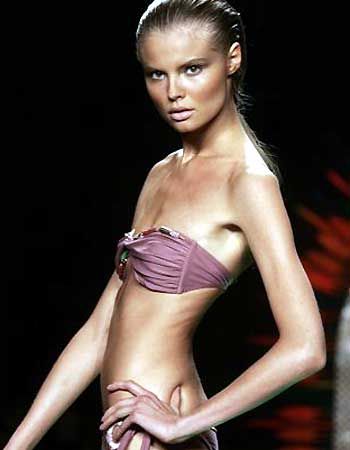 Once upon a time I wanted to look like a cover girl, despite whatever feminist consciousness I may have had.
It had not occurred to me that that wasn’t an option. It’s what my culture said I was supposed to look like. What I needed to look like to be truly valued.
Full of contradictions, I began my supermodel project. But in a healthy sort of way, I told myself. Wasn’t going to starve. No anorexia or bulimia for me.
I later came to see that I did end up with an eating disorder.
I became obsessed with food. How much had I eaten that day? Constantly counting calories. My worth depended upon how well I had kept my calories down.
At times I swung between overeating and starving. Very little starving – I wasn’t good at it.
I next developed an exercise obsession. You can’t get too much exercise, right? After developing a knee injury from jogging, I tried Nordic Track. Another knee injury. Next, I began walking three miles a day at a brisk pace. Yet another knee injury. Apparently, you can rub your cartilage too much from over-exercise and lack of rest. My physical therapist told me to start biking instead – and don’t overdo it! No more than four days a week, and no hills.
After all the food and exercise mania, I still looked nothing like a supermodel. One day standing in line at a grocery store I picked up People Magazine and read a story on how supermodels did it. I finally understood why I didn’t look like them, and never would.
Kim Alexis had tried every fad diet and at one point starved herself for four days straight.
Carol Alt went on a fruit-only diet. Later, she drank eight cups of coffee a day, and ate salad for dinner.
Andie Macdowell said many models took drugs to deal with the stress of starving.
What struck me most was when Kim Alexis said:
When I first started out, I was rooming in a New York City hotel with (supermodel) Kelly Emberg. One night I came home, and I was eating only a head of lettuce for dinner. Kelly walked in and said, “You’re eating a whole head of lettuce? How could you?” I cried and said, “But it’s all I’ve had all day. It’s not even 50 calories!”
To which I say, “Are you freaking kidding me?!” That big “cheat” would be insane dieting in my book. In anyone’s book, one would hope.
That’s when my hopes for supermodel slim were dashed.
Yes, I had been insane. But not that insane.
And it’s not just me. It’s society. What kind of crazy culture says women must feel guilty about eating a head of lettuce — or she won’t “look good”?
So I determined to gain my mental and physical health back. I’ve had ups and downs, but so far so good.
Related Posts on BroadBlogs
How to Look Like a Victoria’s Secret Angel
Beautiful Women’s Hips Are Thinner Than Their Heads?
Spoon Fed Barbie
Share this:

Gentlemen Prefer Big Boobs?
 A new study on men’s breast size preferences may or may not be surprising.
University of Westminster researchers showed 361 British men 3-D models of women with different bust sizes and asked which woman they found most attractive.
A lot of women think that men only like big breasts, but this study says otherwise. Yes, nearly half – 44% – favored larger busts. But more than half didn’t, with one third preferring medium-sized gals and another quarter saying smaller is better. So there’s a range.
And, the researchers focused on white men because prior studies showed that preference varies by ethnicity. Once again, it’s not a one-size-fits-all kind of thing.
It all goes against pop evolutionary psychology which claims men want bigger breasts because they indicate health and fertility. First of all, most men don’t prefer larger over smaller. Second, if men preferred larger, then those genes would have been spread more widely and we’d have a lot more large busted women around today. Finally, there is no evidence that large breasts are associated with better health or fertility.
And even men who love big breasts may come to love more petite women, and vice-versa, as many can attest.
So ladies, you needn’t get expensive and potentially dangerous surgeries (which need to be redone every ten years) for implants.
And here’s another reason you don’t need them: Men who preferred big boobs were more likely to be sexist.
After indicating their breast preferences the guys were surveyed on how much they objectified women, felt hostility toward them and practiced benevolent sexism (seeing women as weak and needing protection).
Turns out, a preference for large breasts was most common among men in all three of those sexist categories, and most especially, among those who saw women as weak.
Now, men who are partial to buxom women aren’t always sexist. The Western world acts like “bigger is better” so no surprise that many men come to think so.
At the same time, the pattern makes a certain amount of sense. One researcher suggested that,
It is arguable that benevolently sexist men perceived larger female breasts as attractive because larger breast size on a woman is associated with perceived femininity.
And if you are going to objectify, it helps to easily see the crucial body parts.
That said, women should be confident and proud of their bodies, however they are shaped. That confidence will attract the best guys.
Popular Posts on BroadBlogs
Men’s Mags Celebrate Varied Body Types
The Plump Beauty Ideal: Exotic Dancers in 1890
You’re Hotter Than You Think
Share this:

Are Girls Free to Make Love?
 In a recent episode of Girls, non-skinny and not classically beautiful, Hannah, has a short affair with a man who looks exactly like hunky Patrick Wilson. The response? He’s too hot for her!
As Fariha Roisin at Huffington Post put it:
Like, nobody who looks like that would a) Even think about sleeping with Hannah b) Then actually have the impertinence to enjoy it c) Then actually tell her she’s ‘beautiful.’ All he, realistically, would surely feel is remorse/self contempt, but hey sex is sex, right? Even bad sex, with a supposed undesirable.
Roisin then points out that when gender roles are reversed a similar outcry is absent.
- Katherine Heigl would go for Seth Rogen?
- The King of Queens gets the queen of Queens?
- Jon Cryer and Courtney Thorne Smith?
- Gorgeous porn stars with Ron Jeremy?
The list goes on but the outcry does not.
Maybe it’s about who has power over media and ideas – usually, men. And men like the idea of being able to get gorgeous girls even if they, themselves, aren’t so good-looking.
It’s not that men are bad. If women had more power than men it would probably be the reverse. (Lena Dunham gets a little power and look what happens to her character, Hannah. If I were producing, writing and starring in GIRLS I’d write in an affair with Patrick Wilson, too.)
This power over ideas may also affect whose body is shamed and whose is not. Men must be quite obese to garner body shame (if then) but women may be perfectly healthy and be thought too fat. And so Rush Limbaugh says feminism was created to allow unattractive women into mainstream society.
The double standard is reflected yet again as men may make love to many women without censor, but women may not.
In the end it is all about who is free and who is not — to love their bodies, to make love and to love. And it’s all tied to who makes the rules and who does not.
Popular Posts on BroadBlogs
You Are “Less Than”?
Does Sexual Objectification Lead to Bad Sex?
Celebs Less Weight-Conscious
Share this:

Low Self-Esteem? Blame Beauty Myths
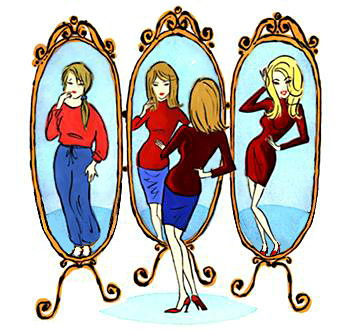 Even as women’s power has increased over the last fifty years, self-esteem has too often diminished. Why? Blame unachievable beauty ideals.
Since the mid-twentieth century, the number of women and girls with poor body image has greatly risen. A big problem, since feminine self-worth has become closely tied to body image.
As Naomi Wolf explains in The Beauty Myth, women have more money and power than ever before but, “a secret ‘underlife’ poisons our freedom; infused with notions of beauty, it is a dark vein of self-hatred, physical obsessions, terror of aging and a dread of lost control… In fact, in terms of how we feel about ourselves physically, we may be worse off than our unliberated grandmothers.” Too bad her book, which was written twenty years ago, is not now obsolete.
Once upon a time, she says, the family was a productive unit so that a woman’s value lay in her work skills, economic shrewdness, physical strength, and fertility, with physical beauty playing a lesser, and less oppressive, role.
Before the industrial revolution – before photographs, photoshop, and plastic surgery – women did not feel pressured to live up to a mass-marketed ideal – one that is nearly impossible to achieve, leaving women frustrated and depressed, obsessed with their looks, and wondering what is wrong with them.
As the beauty myth creates a hierarchy pegging some better than others, I am reminded of a book called The Spirit Level. British epidemiologists, Richard Wilkinson and Kate Pickett say “Gross inequality tears at the human psyche, creating anxiety, distrust and an array of mental and physical ailments,” with those at the bottom suffering a range of pathologies.
The Spirit Level is concerned with economic disparity. But the theory fits with other inequities. Beauty hierarchies leave too many women depressed with low self-esteem, eating disorders, competing to be plastic on reality TV, jealous, envious, and sometimes dying from anorexia or plastic surgery. Importantly, the problem isn’t so much where you stand as where you think you do. Unfortunately, it’s common for women to place themselves at the bottom, and suffer.
Why not celebrate the wonderful variety of figures and faces that women embody, instead?
Popular Posts on BroadBlogs
Men Are Naturally Attracted To Unnatural Women
The Constricting Bodice: Empowerment and Imprisonment?
Men Finding Fewer Women “Porn-Worthy”
Share this:

4 Daily Rituals to Stop Objectification

Objectification causes women a lot of harm says Caroline Heldman, a professor who specializes in gender at Occidental College:
In a culture with widespread sexual objectification, women (especially) tend to view themselves as objects of desire for others. This internalized sexual objectification has been linked to problems with mental health (clinical depression, “habitual body monitoring”), eating disorders, body shame,self-worth and life satisfaction, cognitive functioning, motor functioning, sexual dysfunction [PDF],access to leadership [PDF] and political efficacy [PDF]. Women of all ethnicities internalize objectification, as do men to a far lesser extent.
Beyond the internal effects, sexually objectified women are dehumanized by others and seen as less competent and less worthy of empathy by both men and women.
Furthermore, exposure to images of sexually objectified women causes male viewers to be more tolerant of sexual harassment and rape myths. Add to this the countless hours that some girls/women spend primping to garner heterosexual male attention, and the erasure of middle-aged and elderly women who have little value in a society that places women’s primary value on their sexualized bodies.
In a new post she discusses what women can do to navigate a culture that treats them like sex objects. (See Part 1, Part 2.) This is the third of a four-part series.
Sexual Objectification: Daily Rituals to Stop
There are four damaging daily rituals of objectification culture we can immediately stop engaging in to improve our health.
1) Stop seeking random male attention.
Most women were taught that heterosexual male attention is our Holy Grail before we were even conscious of being conscious, and its hard to reject this system of validation. But we must. We give our power away a thousand times a day when we engage in habitual body monitoring so we can be visually pleasing to others. The ways in which we seek attention for our bodies varies by sexuality, race, ethnicity and ability, but the goal too often is to attract the male gaze.
Heterosexual male attention is actually pretty easy to give up, when you think about it. First, we seek it mostly from strangers we will never see again, so it doesn’t mean anything in the grand scheme of life. Who cares what the man in the car next to you thinks of your profile? You’ll probably never see him again. Secondly, men in U.S. culture are raised to objectify women as a matter of course, so an approving gaze doesn’t mean you’re unique or special. Thirdly, male validation through the gaze alone doesn’t provide anything tangible; it’s fleeting and meaningless. Lastly, men are terrible validators of physical appearance, because so many are duped by make-up, hair coloring and styling, surgical alterations, etc. If I want an objective evaluation of how I look, a heterosexual male stranger is one of the least reliable sources on the subject.
Suggested activity: When a man catcalls you, respond with an extended laugh and declare, “I don’t exist for you!” Be prepared for a verbally violent reaction as you are challenging his power as the Great Validator. Your gazer likely won’t even know why he becomes angry, since he’s simply following the societal script that you’ve interrupted.
2) Stop consuming damaging media.
 That includes fashion, “beauty” and celebrity magazines, along with sexist television programs, movies and music. Beauty magazines, in particular, give us very detailed instructions on how to hate ourselves, and most of usfeel bad about our bodies immediately after reading. Similar effects are found with televisionand music video viewing. If we avoid this media, we undercut the$80 billion a year Beauty-Industrial Complex that peddles dissatisfaction to sell products we really don’t need.
Suggested activity: Print out sheets that say something subversive about beauty culture, like “This magazine will make you hate your body,” and stealthily put them in front of beauty magazines at your local supermarket or corner store.
3) Stop playing the tapes.
Many of us girls and women play internal tapes on loop for most of our waking hours, constantly criticizing the way we look and chiding ourselves for not being properly pleasing in what we say and do. Like a smoker taking a drag first thing in the morning, many of us are addicted to this self-hatred, inspecting our bodies first thing as we hop out of bed to see what sleep has done to our waistline. Self-deprecating tapes like these cause my female students to speak up less in class. They cause some women to act stupid when they’re not, in order to appear submissive and therefore less threatening. These tapes are the primary way we sustain our body hatred.
Stopping the body-hatred tapes is no easy task, but keep in mind that we would be highly offended if someone else said the insulting things to us that we say to ourselves. These tapes aren’t constructive, and they don’t change anything in the physical world. They are just a mental drain.
Suggested activity: Sit with your legs sprawled and the fat popping out wherever. Walk with a wide stride and some swagger. Eat in public in a decidedly non-ladylike fashion. Burp and fart without apology. Adjust your breasts when necessary. Unapologetically take up space.
4) Stop competing with other women.
 Unwritten rules require us to compete with other women for our own self-esteem. The game is simple: The prize is male attention, which we perceive as finite, so when other girls/women get attention from men we lose. This game causes many of us to reflexively see other women as natural competitors, and we feel bad when we encounter women who garner more male attention than we do. We walk into parties and see where we fit in the “pretty girl pecking order.” We secretly feel happy when our female friends gain weight. We criticize other women’s hair and clothing. We flirt with other women’s boyfriends to get attention, even if we’re not romantically interested in them.
Suggested activity: When you see a woman who triggers competitiveness, practice active love instead. Smile at her. Go out of your way to talk to her. Do whatever you can to dispel the notion that female competition is the natural order. If you see a woman who appears to embrace the male attention game, recognize the pressure that produces this and go out of your way to accept and love her.
Cross-posted at Ms. and on Caroline Heldman’s blog
Popular Posts on BroadBlogs
Sexual Objectification, What is it?
Sexual Objectification, The Harm
Why Men Objectify
Share this:

Celebs Less Weight-Conscious
 Female celebrities are obsessing less about their weight. Will that body acceptance free the rest of us to accept ourselves?
Voluptuous celebs include Christina Hendricks of “Mad Men,” Kat Dennings, a star of “2 Broke Girls,” Christina Aguilera from “The Voice,” Emmy winner Melissa McCarthy of “Mike & Molly,” Mindy Kaling of “The Mindy Project,” Rebel Wilson, who won a hunky guy in “Bachelorette,” and Lena Dunham, writer-director-producer-star of “Girls.”
Even the modeling industry has branched out with Real Beauty ads and Cosmo featuring a “plus-size” model at size 12 instead of the usual size 0.
Maybe the biggest surprise was Lady Gaga whose oversized personality materialized in bodily form last year. As Alessandra Stanley at the New York Times put it:
Gaining weight is the most outrageous stunt Lady Gaga has pulled to date. Instead of wearing raw animal flesh at a public event this summer, she wore her own — the one metamorphosis that even Madonna wouldn’t dare undertake.
But I’m also struck by Lena Dunham who as “Hannah” unselfconsciously runs about in her undies – if she wears anything at all – while eating assorted goodies. It’s remarkable. No body shame or food shame.
Of course, Ms. Dunham and Ms. Kaling have more power to break rules because they have created, produced and written their own shows, as a Times piece points out.
Interesting how power can free you, considering the body torture women have historically undergone to show off their husbands’ success — as the men sit comfortably by. At one point women wore constricting corsets so people could see that their husbands were wealthy enough to support a spouse who didn’t need to work – and couldn’t in that straight jacket. Tiny bound feet once served the same end in China. In parts of West Africa today women are force fed into obesity to demonstrate their husbands’ financial ability to over-feed them. And then the poor copy the rich and end up in even worse straits.
Women the world over internalize beauty norms that harm them.
Some suspect the ideals are put in place with the aim of harming them: make women obedient and so distracted by their looks that they have no time for anything else, like gaining political power. As Naomi Wolf suggested in her bestseller, The Beauty Myth:
A culture fixated on female thinness is not an obsession about female beauty, it is an obsession about female obedience. Dieting is the most potent political sedative in women’s history: a quietly mad population is a tractable one.
So it’s interesting that when Dunham’s character Hannah is asked about her flabby tummy she responds:
No, I have not tried a lot to lose weight. Because I decided I was going to have some other concerns in my life.
You know, so the real Lena Dunham could become the writer, director, producer and star of “Girls.”
Maybe we should all have greater concerns in our lives than how slim we can be.
Popular Posts on BroadBlogs
Beauty Tricks to Remove Your Power
Miss Representation: Girls are Pretty, Boys Are Powerful
Scrutinizing My Body Takes All My Time
Share this:

Girls Walk Fine Line Between Attractive, Slut
 Women and men both use sexual allure to raise their status. Men may try to “score” with as many women as possible, with each conquest boosting their place among men.
For women it’s more complicated. Many college women think that being “hot” is the most important thing in the world. That’s because self-worth is so attached to beauty. But Elizabethe C. Payne, Director of Queering Education Research Institute (QuERI), explained in the Huffington Post that girls can face a double bind of “damned if you do, damned if you don’t” as society tells them they will only be loved and held in high regard if they show off their bodies – but they’d better not do it the wrong way:
Girls have to “straddle an often unclear line in appearing sexually attractive (desirable) and receptive (thus not “gay”) yet unavailable (not “sluts”).
She says that middle school girls who simply dress attractively and wear makeup—or who develop breasts before their peers – may be labeled “sluts.” And any girl who actively pursues a boy, defying the double standard, can get slut-shamed too. She needn’t have sex, she only needs to be assertive:
Many young girls who have never had sex or anything close to it — at all — have been marked as “sluts.” Once marked, young girls are repeatedly subjected to sexual harassment, threats and taunts.
But the pressure on young women to constrain themselves moves beyond sexuality and sexual allure. Middle school girls can also be labeled as sluts, bitches, whores or gay for acting assertively or challenging male authority – including the authority of boys.
Girls and boys both slut-shame. Girls, because they feel threatened by attractive young women, especially when they feel they cannot be attractive, themselves. And boys might sustain the male privilege to act and be free while girls must hold themselves back.
Which brings us to another double-bind. Women and girls who criticize a system that judges us only by our beauty, and who seek, instead, to work for equality can be labeled “feminazis.” But if they smile and take it they still lose.
If you’re going to lose either way in the short-term, you might as well work toward long-term freedom and empowerment, I’d say.
Popular Posts on BroadBlogs
Did Slut-Shaming Kill Phoebe Prince?
Sex and the Walk of Shame
Lose Virginity, Lose Self-Esteem?

 BroadBlogs