Blog Archives
What Gossip Magazines & Abusers Have In Common
By Linda Bakke
Star Magazine promotes violence against women.
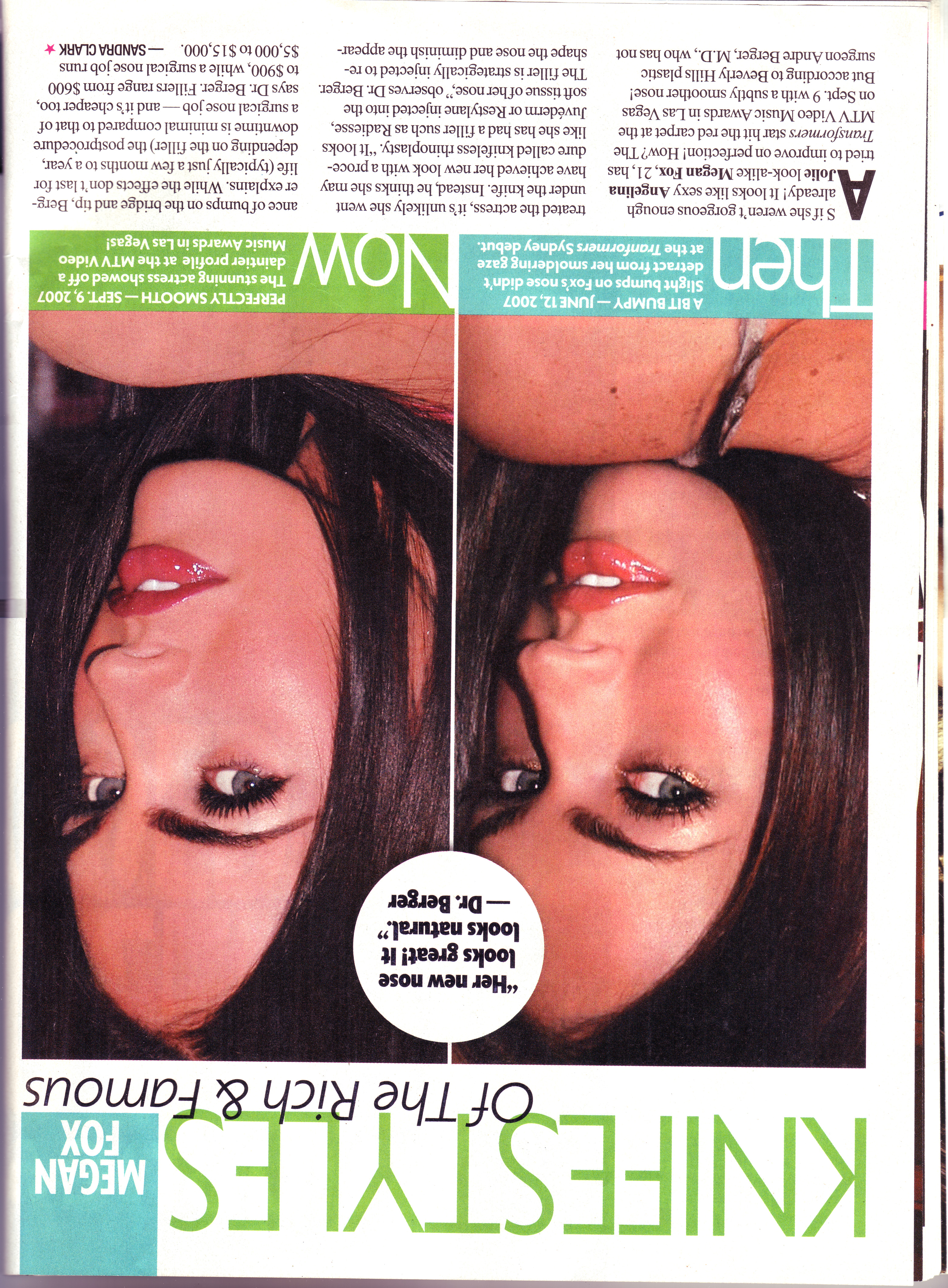 Ok, that sounds like a tabloid headline, but the more I look over Star Magazine, the more I’ve been struck by a sense of violence directed at women.
The starlets are constantly attacked for any extra weight, cellulite, bunions, ugly fingers or thick arms. It feels like open season. “Kill the Celebrity” is the name of the game.
One section called “Knifestyles” advocates mutilating women through plastic surgery. With the accompanying message, “You’re not good enough.”
In fact, Star uses the same devices that characterize domestic abusers: watching the victim’s every move, humiliation, stressing the negative rather than the positive aspects of the victim (who is supposedly adored), using “it’s her fault” to launch an attack, and transferring the abuser’s dissatisfaction with life and himself onto the victim.
After a while, she starts to blame herself.
Paparazzi hunt celebrities down and we all become cannibals of the spoils, savoring the flaws of “perfect” idols as we bring them down a peg.
But it’s not just about starlets. It’s not just their bodies that are under attack. Yours and mine are, too. If they don’t look good, we don’t either.
The depiction of women in gossip magazines represents the degradation, abuse and mutilation of women. We must recognize how damaging these portrayals are for all of us, women, girls, men and boys.
For we are all encouraged to scrutinize and vilify women for being less than perfect.
Popular Posts on BroadBlogs
Men Watch Porn, Women Read Romance. Why?
What Happens When You Beat A Sex Object?
Beautiful Women’s Hips Are Thinner Than Their Heads?
Share this:

Rush’s War on Women is No Fluke
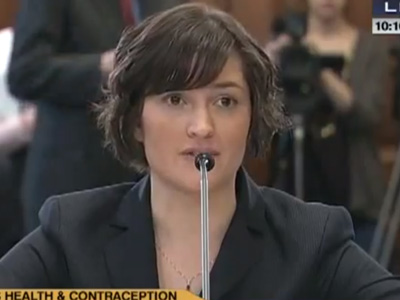 Women’s right to contraception has been challenged by Catholic Bishops and members of Congress who voted on a “Blunt Amendment” allowing employers to deny healthcare, like contraception, that they deem immoral. (The amendment was defeated in the U.S. Senate by a mere three votes!)
When Georgetown law student Sandra Fluke told Congress that contraception should be covered by insurance, Rush Limbaugh called her a whore:
What does it say about the college coed Susan Fluke [sic], who goes before a congressional committee and essentially says that she must be paid to have sex? What does that make her? It makes her a slut, right? It makes her a prostitute. She wants to be paid to have sex… she’s having so much sex she can’t afford her own birth control pills and she agrees that Obama should provide them, or the Pope.
If Rush is so vexed at supporting other people’s sex lives, why doesn’t he tackle insurance-covered Viagra too?
By attacking Ms. Fluke as a slut, Limbaugh reveals that he – and other right-wingers — are not concerned with shielding Catholic Bishops’ conscience. No. They seek to control women’s sexuality.
But if Rush can’t limit it, at least he wants to watch (another sort of control). Even as he claims to uphold “conservative values,” he rants:
If we are going to pay for your contraceptives, and thus pay for you to have sex, we want something for it, and I’ll tell you what it is. We want you to post the videos online so we can all watch.
Since when were “traditional family values” pro-porn?
Rush is all about silencing women: Be afraid of slut-shaming. Be very afraid!
Men can speak out. And Viagra-infused men can enjoy sexuality. But women must not.
Bishops, and employers more generally, must be free to follow their conscience. But women must follow the conscience of Bishops and their employers.
Conservatives claim to guard individual freedom.
Apparently, women aren’t actual people. They don’t count.
Popular Posts on BroadBlogs
Markets Must Be Free; Women Must Be Constrained
Should Organized Religion Have More Rights Than Women?
Apple® and Eve’s Choice
Share this:

Scrutinizing My Body Takes All My Time
On a typical day, you might see ads featuring a naked woman’s body tempting viewers to buy an electronic organizer, partially exposed women’s breasts being used to sell fishing line, and a woman’s rear—wearing only a thong—being used to pitch a new running shoe. Meanwhile, on every newsstand, impossibly slim (and digitally airbrushed) cover “girls” adorn a slew of magazines. With each image, you’re hit with a simple, subliminal message: Girls’ and women’s bodies are objects for others to visually consume.
So says Caroline Heldman, Assistant Professor of Politics at Occidental College, in a piece for Ms.
This notion of bodies for consumption leaves us constantly judging ourselves and others. How do we stack up? How do “they”?
Our friends declare someone too fat or too thin; sitcoms quip on body weight or shape; tabloids spot celebrities’ flaws; men bluster about big boobs; Howard Stern picks women apart and Rush Limbaugh insists feminism was established “to allow unattractive women easier access to the mainstream of society.” (Yes, really, Rush and Howard think they are in a position to make unkind remarks about other people’s appearance.)
All this leads women to “self-objectify” so that we see and judge ourselves through others’ eyes, and especially, the male gaze. Women live in “a state of double consciousness … a sense of always looking at oneself through the eyes of others,” says Heldman.
Self-objectifiers constantly “body monitor” – that is, think about how they look to the outside world. And this often leads to depression, lower self-esteem and diminished faith in their abilities.
Any surprise body monitoring distracts women from tasks at hand, whether math exams or throwing a softball? After all, girls have to split their attention between how they look and what they want their bodies to do.
Body monitoring also replaces the question “Who am I?” with “What image should I project?” It becomes difficult to imagine identities that are truly our own.
What to do? Heldman recommends avoiding fashion magazines, since just viewing those so-called “perfect” images makes women feel less attractive.
She also suggests we voice our concerns to companies and boycott their products.
Too often self-worth is based on unattainable body ideals. And with body image so closely tied to self-esteem, girls and women can end up pretty dissatisfied with themselves.
It wasn’t always so. There has been a dramatic increase in poor body image among women since the mid-20th century. Back then, a woman’s sense of self had revolved more around her talents, abilities and contributions. It was more about who she was than what she looked like. Maybe by shifting focus to who we really are we could more easily emerge out of ridiculous and superficial body consciousness.
Popular Posts on BroadBlogs
Lose Virginity, Lose Self-Esteem?
Harry Potter’s Hermione: Less Brainy, Brave. More Sexy
My Son Likes Girl-Things. Is He Gay?
Share this:

Real Men Don’t Beat, Rape Women
By Ted Esparza
 Constance Johnson was a domestic violence prosecutor – and also a battered wife.
She met her husband, Ben, in college and fell in love. They got married and were very happy for three years.
But then he began criticizing her. Everything was her fault. He was always right. She was too fat (at 110 lbs).
After they moved near her husband’s aging parents to help them – Ben’s idea — the violence began. He hadn’t seemed happy since the move and one morning he decided he didn’t like his breakfast.
“Make it yourself.” Constance told him.
— SLAP —
“Did he really hit me?”
Next, Ben shoved her onto their bed and told her not to “make him” hit her again. Later, he said he was very sorry.
Eventually Ben and Constance both entered law school, but after Ben dropped out to take over the family business the abuse escalated. Constance graduated from law school and developed a successful practice. But the more successful she became, the more violent he got.
She finally left him for good after he held a gun to her head in a fury.
The story of Constance Johnson reveals a huge problem with patriarchy. Men learn that manhood is all about being number one, being in charge, never showing vulnerability, never expressing emotions, and transforming any “weak” feelings into anger and rage – “manly” emotions.
Men learn that they are supposed to be powerful. But they aren’t always. And when they aren’t, too many try to create a sense of power by hurting women – including those they love. When they beat down a woman, or take over her body in rape, they feel strong, at least for a few moments.
In my mind the greatest problem with patriarchy, at least for men, lies in “tough guy” ideals that look powerful but actually reflect weakness.
Boys learn that “real men” don’t show emotion or reveal what’s hurting inside. But this only leads to an inability to deal with problems and personal trauma.
How is this manly?? It is not. It is childish. The “tough,” “domineering” ideals of patriarchy reduce men to children who can only express themselves through “grown up” temper tantrums that result in violence directed at others. I cannot for the life of me understand how this is considered manly.
We must redefine what it means to be a man – which is difficult because the redefinition MUST include traits that are considered feminine — like expressing emotion in a healthy way.
Manhood includes compassion and understanding, not narrow thinking and an over inflated sense of entitlement. It is understanding that women are essential to men’s very existence and loving them for that.
I will do my best to facilitate changes in my own life, and encourage my friends to take positive stances on sexism and what it means to be a man. I will also speak up when I see injustices occur, whether they be against women or anyone else.
I suspect I still do many things that are sexist without even realizing it, but that’s what the learning process is about: learning to make yourself into a better person – to the benefit of yourself and everyone else.
Popular Posts on BroadBlogs
Cheerleader Ordered To Cheer Her Rapist, and Other Stories
Rape Victims Shamed Into Suicide. In Pakistan. In America
Petite Woman Stops Big, Muscular Rapist
Share this:

Am I Ugly? Girls Ask YouTube
 A girl, age twelve or thirteen, posts a video on YouTube, asking:
I just wanted to make a random video seeing if I was like, ugly or not? Because a lot of people call me ugly and I think I am ugly … and fat. People say I’m ugly. So … tell me — am I?
The video was posted in December and has gotten over 3.4 million views and 92,000 comments. Many “tweens” (ages 11-13) have followed suit.
The girls repeatedly challenge the viewer to, “Go ahead, judge me, I don’t care what you think.” Of course, they wouldn’t have gone to the trouble if they didn’t care.
Why do they care? Because how others see us shapes how we see ourselves. Our solitary “subjective” notions about who we are morph into “objective” fact when others agree that, “That’s who you are.” And so we trumpet our successes and squelch nasty rumors because both are made more real by others’ seeing. Doesn’t have to be this way, but often is.
Come early adolescence, girls begin to grapple with who they are – looks becoming a primary source of identity, worth and status. Unfortunately, many of the “Am I Ugly?” girls seem depressed and lacking self-esteem.
Some YouTube commenters declare the girls “beautiful.” A few offer advice: “Get bangs.” Others tell them to get off the internet and do their homework.
But YouTube is not the place to gain affirmation. Too many insecure cowards anonymously hurl insults: “My vote: UGLIER THAN A DEMON” or “F*ck off whore wannabe” or “Just the fact that u did this video makes u ugly. But u were ugly already.” Twelve-year-olds aren’t mature enough to deal with misogynistic trolls who put them down in hopes of lifting their own sorry selves.
But the whole focus on looks faces the matter wrongly. As one commenter put it, “You’re not ugly, society is.”
Another summed it up nicely:
We place too much value on the way we look and too little on who we are. I could be the least attractive person on earth but I’m a good person and I have a good heart and I think that those things matter a million times more than being pretty or ugly. While I know that I’m not Ugly, I still believe that I have more to offer the world than just how I look. I wish that this was the message that young girls were getting. They need better role models, they need people to reinforce how smart they are and how talented they are vs. how pretty they look.
Popular Posts on BroadBlogs
Hit the Least Attractive Woman with an Egg
Bridalplasty: Competing to be Plastic on Reality TV
Grade School Lingerie
Share this:

Why Do Right-Wingers Hate Sex?

Why do right-wingers hate sex? And why don’t they want the rest of us to get any? Okay, not all of them. Newt Gingrich, for instance, seems to be a fan. But what he likes isn’t something he’d necessarily want anyone else to do.
Rick Santorum is the reigning sex-hating champ – unless it leads to procreation, of course. He once warned that Satan was using sensuality to attack America and he disagrees with the Supreme Court decision to allow birth control. As columnist Maureen Dowd explains,
(Santorum) believes that America’s soul wounds include men and women having sex for reasons other than procreation, people involved in same-sex relationships, women using contraception… (He feels) contraception is “not O.K. It’s a license to do things in a sexual realm that is counter to how things are supposed to be.”
Actually, those who lack contraception but don’t want pregnancy could still do anal and oral. Or, men could simply ejaculate on woman’s faces. So a lack of contraception may only encourage sodomy and other “perversities.”
And then there’s Santorum spokesperson, Foster Friess, who insists:
Back in my day, they used Bayer Aspirin for contraception. The gals put it between their knees.
Or, conservative columnist Ross Douthat helpfully explains, “Monogamy, not chemicals or latex, is the main line of defense against unwanted pregnancies.”
So if a married couple only want two kids, how often should they have sex sans chemicals or latex?
Or how about this guy who responded to a post I wrote saying women should be able to follow their conscience on birth control, and not be bullied by Catholic Bishops:
Where’s the discussion of men’s responsibility to do what they can to control their own passions? Are men just dogs who cannot control themselves?
And does all this repression make the right-wing sex drive reemerge in creepy ways? One bill sought to force women seeking abortions to undergo ultrasounds via vaginal probe. Democratic Delegate Lionell Spruill says this is tantamount to rape: inserting objects into vaginas without consent. Women’s advocates say the procedure is meant to shame women, which is similar to a motive of rapists: degrade the victim.
But why so anti-sex?
Are these just church-going folk who’ve been warned against sexuality their whole lives?
Some worry uncontrolled passions will harm the social fabric: children bearing children… unwanted babies. But that’s what contraception is for. As conservative columnist David Brooks admits, despite more sexually liberal attitudes, teen pregnancy rates are down, abortion is down, and crime is down. “There are problems with the social fabric,” he says, “but they no longer have to do with the sexual revolution.”
Others think right-wingers simply cling to clarity and order, and crave control (a common bent among extreme conservatives). And indeed, some may feel a sense of power in controlling women’s bodies. They may gain a sense of control by reigning in the flesh and wild sexuality of themselves and others. And, they can gain a sense of clarity and structure by seeing women and men as different, each in their separate spheres with men on top and women below, barefoot, pregnant, and obeying men.
Popular Posts on BroadBlogs
Markets Must Be Free; Women Must Be Constrained
Should Organized Religion Have More Rights Than Women?
Modesty Objectifies Women Says Nude Egyptian
Share this:

Gender-Swapping Grammar Lessons
A Chrome app called Jailbreak the Patriarchy switches gendered words and makes for an eye-opening experience. Check out. I’ve spiced it up by changing gendered names, etc., too to get a better feel for how the world would look if gender switched.
I Kissed A Boy (And I Liked It)” (male singer, of course)
I kissed a boy and I liked it,
the taste of his cherry chapstick.
I kissed a boy just to try it,
I hope my girlfriend don’t mind it.
It felt so wrong,
it felt so right.
Don’t mean I’m in love tonight.
I kissed a boy and I liked it.
Or how about this headline:
Women Fall For Facebook Scams More Than Men (especially when confronted by a scantily clad male “friend”)
Or, Gina Carey gender swapped book blurbs on her blog. Here’s a sample:
THE COLOR PURPLE: Chucky is a poor black man whose letters tell the story of 20 years of his life, beginning at age 14 when he is being abused and raped by his mother and attempting to protect his brother from the same fate, and continuing over the course of his marriage to “Ma’am,” a brutal woman who terrorizes him.
PRIDE AND PREJUDICE: It is a truth universally acknowledged, that a single woman in possession of a good fortune must be in want of a husband.
LITTLE MEN: Meet the March brothers: the talented sissy Joe, the beautiful Mark, the frail Bobby, and the spoiled Timmy, as they pass through the years between boyhood and manhood. A lively portrait of growing up in the 19th century with lasting vitality and enduring charm.
LOLITO: Hannah Humbert is a middle-aged, fastidious college professor. She also likes little boys. And none more so than Lolito, who she’ll do anything to possess. Is she in love or insane? A silver-tongued poet or a pervert? A tortured soul or a monster? Or is she all of these?
LOVE IN THE TIME OF CHOLERA: …As Florentina Ariza rises in her business career she whiles away the years in 622 affairs–yet she reserves her heart for Fermino.
Jezebel also did a little gender-swapping on some mainstream media. Here’s a Times article on evangelical Christianity in Africa:
Traditionally, Kassena-Nankana men are not involved in everyday decision making, even about household matters. But the born-again men were forming committees, making speeches and organizing outings, fund-raisers and other activities. Tradition in Kassena-Nankana also forbids men to communicate with ancestors and other spiritual beings; only women can do that. But the Christian men were speaking directly to Jesus about their problems. She was, many of them may have felt, the first woman ever to listen.
And from Cosmo’s “The Hottest Things to Do During Halftime”:
Whether you’re a legit fan or just enjoy watching jacked girls run around in skin-tight pants, we’re psyched for football season. And to make this Sunday’s big game a little more fun, we asked women to tell us what they’d love a man to do at halftime. No surprise here — their answers all involved sex, nachos, and you in practically nothing.
Her Halftime Fantasy: “That he’ll sit next to me in a jersey and matching panties.”
And what if you need to read something on the web exactly as it was written? Why you can simply hit a key that will Jailbreak the Patriarchy to return to the world as we know it.
Popular Posts on BroadBlogs
My Son Likes Girl-Things. Is He Gay?
It’s Ok To Be A Tomboy But Not A Sissy. Why?
Man as Object: Reversing the Gaze
Share this:

Sex: Who Gets Screwed?
One day I asked my class to think of slang words for sex. I got the following list:
Screw, f-, bang, nail, ram, smash, smack that, beat those, cut, boning, git-in-em-guts, get some trim, get some grip, do it, get some pussy, nasty time, make love.
I don’t know about you, but I only want to do one of those things.
Most of this list suggests a good deal of violence. And who gets screwed, rammed, nailed, cut, boned, banged, smacked, beaten, and f’d, anyway?
Really, it isn’t pretty.
The music I grew up on offered the B-52’s singing “Bang, bang, bang (on the door baby),” David Bowie intoning, “Wham, bam, thank you ma’am,” and the Tubes celebrating the raw tuna of a sushi girl. A nice piece of meat.
A DJ interrupts to suggest, “Could you trim that thing?”
It all sounds so appealing.
And we wonder why women indicate less sexual interest than men on surveys. But these words are only a small tip of that iceberg.
Popular Posts on BroadBlogs
Does Sexual Objectification Lead to Bad Sex?
Men, Women React to Male/Female Nudity
Men Are Naturally Attracted To Unnatural Women
Share this:


Women Must Be Free To Follow Their Conscience on Contraception

Catholic Bishops continue to plead that they must be free to exercise their conscience on contraception, which entails preventing women from exercising that same right. If there’s any conflict of rights here women should win out since it is their bodies and well-being that are at stake.
And shouldn’t the rights of individuals take precedence over the rights of institutions (whatever the conscience of an institution is)?
The Bishops would not even be the one’s buying the contraceptives. Women would.
In patriarchal societies men feel that they should govern women’s bodies. In some places women must get permission from their husbands to see a doctor. And now these male church leaders want to take on that role for women employees?
As Gail Collins at the New York Times points out, the Bishops can teach, but they can’t force others to align with their teachings.
Besides, why don’t other religions have similar issues? As Times columnist Nick Kristof observes,
I wondered what other religiously affiliated organizations do in this situation. Christian Science traditionally opposed medical care. Does The Christian Science Monitor deny health insurance to employees?
“We offer a standard health insurance package,” John Yemma, the editor, told me.
That makes sense. After all, do we really want to make accommodations across the range of faith? What if organizations affiliated with Jehovah’s Witnesses insisted on health insurance that did not cover blood transfusions? What if ultraconservative Muslim or Jewish organizations objected to health care except at sex-segregated clinics?
Or should employers, insurers or doctors refuse access to a drug or medical procedure because a disease arose from a practice they disagree with on religious grounds, whether that be the use of drugs, alcohol, tobacco, meat, sex outside of marriage, a patient’s sexual orientation, etc., etc.?
And anyway, religious people should sacrifice for their own convictions. They should not ask non-members to sacrifice for their church’s beliefs.
No surprise that political right-wingers have jumped on the bandwagon, given their pattern of seeking to strip women’s rights to their bodies, health and well-being. The far-right has tried to defund Planned Parenthood and some now want HHS to strip contraceptive coverage requirements for all employers, religious or not. Extreme conservatives have worked to prevent abortions that could save women’s lives, they have tried to redefine rape into “no rape,” and some have backtracked on protecting women from domestic violence. In fact, this past year has been widely regarded as a war on women by the extreme right.
Religious liberty? No this is about acting “severely conservative” with the aim of controlling women.
Popular Posts on BroadBlogs
Markets Must Be Free; Women Must Be Constrained
Why Is the Right-Wing Attacking Women?
Modesty Objectifies Women Says Nude Egyptian
Share this:

Nude Men Seem Less Intelligent
 The more skin women reveal, the less men see them as intelligent or empowered. Instead, nudity promotes the notion that women are sensitive, “feeling” creatures.
Turns out the perception runs both ways with women seeing men as less intelligent and less competent when they show skin, too. In fact, simply “taking off a sweater — or otherwise revealing flesh — can significantly change the way a mind is perceived” say researchers.
And as psychologist, Kurt Gray of the University of Maryland observed:
This effect can happen even without the removal of clothes. Simply focusing on someone’s attractiveness, in essence concentrating on their body rather than their mind, makes you see her or him as less of an (empowered) agent and more of an experiencer.
Women see partially-clothed men as more sensitive, too, and are disinclined to hurt them. Likewise, most men don’t want to harm unclothed women, either. Perhaps nakedness makes people seem more vulnerable so that we want to protect them.
Interesting. There’s no evidence that showing skin makes men want to rape, and it looks like the opposite effect is more likely. (Of course, some sexual fetishes do combine nudity and violence so the effect isn’t uniform, but that still doesn’t mean nudity causes a person to want to harm.)
Practical take-away? Showing skin can make us seem less competent at work. But it can be great in the bedroom, where it’s all about feeling.
Popular Posts on BroadBlogs
Anything Good About Being A Sex Object?
Men, Women React to Male/Female Nudity
What Happens When You Beat A Sex Object?

 BroadBlogs