Category Archives: feminism
Do Wrinkle Creams Work? Who Cares?
 Women in their early 20’s are now buying anti-aging potions. Used to be, the serums were sold to middle-aged women and older. But why start so late when there is money to be made?
Of course, “It’s hard to know if a wrinkle cream is working when there are no lines yet to erase,” Christina Brinkley of the Wall Street Journal points out.
But that’s an advantage to the sellers. No evidence that their products don’t work. Good thing for them, since they probably don’t.
Much of the medical establishment says anti-aging potions are ineffective. Consumer Reports has tested several and agrees:
After six weeks of use, the effectiveness of even the best products was limited and varied from subject to subject. When we did see wrinkle reductions they were at best slight.
Even the best performers reduced the average depth of wrinkles by less than 10%, the magnitude of change that was, alas, barely visible to the naked eye.
According to the National Institute on Aging we should be skeptical:
Despite claims about pills or treatments that lead to endless youth, no treatments have been proven to slow or reverse the aging process.
Instead, the Institute offers this advice on aging well: eat healthily, exercise regularly, don’t smoke, and of course, protect your skin from the sun.
We are a world that worships youth. But age was once valued when it was harder to survive and when a long past meant great wisdom and great skill. But now it’s ordinary to live long, higher education can give us more knowledge than our parents, and technology mass-produces high quality work.
Baba Cooper wrote a piece on becoming old women. Old age shouldn’t be feared, she says. It should be a final ripening, a meaningful summation, a last chance for risks and pleasures.
There are different ways of seeing. Does age erase our beauty? Or does it show off the laugh lines of our happiness? And might the wisdom we have gained be more worthy, worthwhile and fulfilling than the outer shell that contains it?
Popular Posts on BroadBlogs
Does Sexual Objectification Lead to Bad Sex?
Scrutinizing My Body Takes All My Time
Keep Your Boobs, Get Better Guys
Share this:

Men Rule… Because They Make the Rules
I’m flattered that you’re all so interested in my vagina,
but ‘no means no.’
 That quote from Michigan state Rep. Lisa Brown has gotten plenty of attention, along with her banishment from the House floor for uttering the word “vagina,” a perfectly natural, normal part of female anatomy. A word that was attached to legislation under debate. And as Rep. Brown points out, if you can’t say “vagina” you shouldn’t legislate it.
Yet while saying “vagina” is off limits, it’s just fine to propose laws that threaten women’s lives and health?
That’s right, inane Michigan legislators want to forbid health care providers from following the cheapest and most advanced medical practices for administering drugs to end a pregnancy. And they want to bar doctors from supervising the procedure via videoconference.
Next, Rep. Barb Byrum was banned for recommending vasectomies be regulated, in an attempt to show how ludicrous legislating women’s vaginas is.
Really, the men who barred Brown and Byrum from speaking rule only because they make the rules, not because their rules make any sense.
Same with Catholic Bishops scolding nuns for helping the poor and promoting health care when “obviously” they should be spending their time spewing hate toward gays and letting women die from back ally abortions.
It’s all part of the War on Women that seeks to control our bodies, minds and voices.
But women aren’t sitting back and taking it. Soon after the banishments thousands of women gathered at the Michigan State Capitol to hear their Reps perform The Vagina Monologues, where the word was uttered – and shouted — more than a hundred times.
As Rep. Brown put it, “Vaginas are here to stay.”
Popular Posts on BroadBlogs
Markets Must Be Free; Women Must Be Constrained
Child Rape: Not As Bad As Contraception
Spilling Sperm Harms Unborn, Law Says
Share this:

Textual Harassment
 An ex-boyfriend text messaged a 22-year-old Virginia woman night and day, sometimes 20 or 30 at a time. All told, he texted and called 758 times. He wanted her back.
This story is told by Donna St. George in a Washington Post report that delves into the increasing problem of “textual harassment.” As the article points out, nearly one in four people between the ages of 14 and 24 have partners who check in several times a day to see where they are or who they are with. One woman’s partner insisted she text him photos – in front of clocks — to prove her whereabouts. Another woman told of a friend who was constantly texted by a jealous boyfriend, “It’s like the 20 questions a parent would ask.”
As an added bonus, cell phone companies may charge victims for receiving the messages.
With the advent of technology harassment is easier, and with no let up: Where r u? Who r u with? Why didnt u answer me? And the harassed often feel compelled to answer.
In fact, they may not get that they’re being abused. Friends must sometimes tell victims: “This isn’t right.”
A young woman named Kristen didn’t get that the messages were abusive. Just hours before her boyfriend killed her, she texted him: “You are being ridiculous. Why cant i do something with my friends?”
In fact, too many of these victims end up dead.
These violent relationships are typically marked by misogyny and male entitlement where men feel they should be able to define the reality of “their” women, and who expect women to submit.
Here are a few red flags that a relationship is abusive, according to the President’s Commission on the Status of Women, Oregon State University.
Does your partner:
- Constantly put you down?
- Call you several times a night or show up to make sure you are where you said you would be?
- Embarrass or make fun of you in front of your family or friends?
- Make you feel like you’re nothing without him/her?
- Intimidate or threaten you? “If you do that again, I’ll…”
- Always say it’s your fault?
- Pressure you to have sex when you don’t want to?
- Glare at you, give you the silent treatment, or grab, shove, kick, or hit you?
Do you:
- Always do what your partner wants instead of what you want?
- Fear how your partner will act in public
- Constantly make excuses to other people for your partner’s behavior?
- Feel like you walk on eggs to avoid your partner’s anger?
- Believe if you just tried harder, submitted more, that everything would be okay?
- Stay with your partner because you fear what he/she would do if you broke up?
If you answered yes to any of these questions, talk to a counselor about your relationship. Remember, when one person scares, hurts or continually puts down the other person, it’s abuse.
Popular Posts on BroadBlogs
So Nice We Let Others Hurt Us
What Do Top Model and Hard Core Porn Have in Common?
Real Men Don’t Beat, Rape Women
Share this:

It’s Not Easy Being A Man
 Norah Vincent passed as a man for a year and a half. She wrote a book about the experience, Self-Made Man, which was published in 2006. When one gender visits the world of another it can be eye-opening, so let’s take a peek at one part of the woman-turned-man experience.
Turns out, it’s not easy being a man.
Norah had thought she’d love joining the privileged man-club that, until her transition, she had only glimpsed from the outside. Instead, she felt strangely inadequate.
For instance, as a lesbian, she’d expected to have great fun dating women. But it was arduous. In her new man-role she felt an expectation to lead, take charge. This made her feel small in her costume.
I felt this especially keenly on one of my earliest dates, waiting for a woman at a fancy restaurant I’d chosen. I was sitting alone in one of those cavernous red leather booths that you see at old-world steak houses, and I was holding the menu, which also happened to be red and enormous, and I felt absolutely ridiculous, like the painful geek in a teen movie who is trying to score with an older woman. I felt tiny and insignificant.
Living with pressure to always show strength, never let down your guard, and yet never measuring up, she observed:
I guess maybe that’s one of the secrets of manhood that no man tells if he can help it. Every man’s armor is borrowed and 10 sizes too big, and beneath it, he’s naked and insecure and hoping you won’t see.
Michael Kimmel, a leading researcher on men and masculinity, agrees, including that quote in a book he wrote called Guyland.
 Men have to prove they are men. Women don’t have to prove they are women.
Yes, gender-ranking strikes again. Men are bestowed higher rank in society, and so men feel they must earn that high status. But it’s hard because ranking men over women is not natural.
So men are under constant pressure to show strength, lead, walk like a man, talk like a man, sit like a man… or as Jackson Katz put it, wear a tough guise: look tough, talk tough, and be tough guys.
Some harm themselves or others proving their fearlessness through dangerous drinking or dangerous driving or avoiding doctors. Some work to turn “weak” feelings like sadness and depression into “strong” feelings like anger. But then wives get beaten and women get raped, and some boys are bullied to build others up. Or guys cave to peer pressure just to dodge being called gay, wuss, fag… or girl.
But most times they’re just trying to live up to the high expectations of manhood that demand strength, power, confidence, invulnerability, leadership and success, which may become benefit or burden — or both.
On her time being a guy, Vincent declares:
I know that a lot of my discomfort came precisely from being a woman all along, remaining one even in my disguise. But I also know that another respectable portion of my distress came, as it did to the men I met in (my men’s group) and elsewhere, from the way the world greeted me in that disguise, a disguise that was almost as much of a put-on for my men friends as it was for me. That, maybe, was the last twist of my adventure. I passed in a man’s world not because my mask was so real, but because the world of men was a masked ball. Only in my men’s group did I see these masks removed and scrutinized. Only then did I know that my disguise was the one thing I had in common with every guy in the room.
Popular Posts on BroadBlogs
Making Violence Against Women Sexy
Yale Fraternity Chants “No Means Yes.” Men? Or Scaredy Cats?
Mind of a Rapist: Trying to Bridge a Gap between a Small Self and a Big Man
Share this:

How I’m Seen Differently in a Female Body

Joelle Circé, “Waving Pride”
And if others’ responses shifted, so did my own. The more I was treated as a woman, the more woman I became. I adapted willy-nilly. If I was assumed to be incompetent at reversing cars, or opening bottles, oddly incompetent I found myself becoming. If the case was too heavy for me, inexplicably I found it so myself.
Women treated me with a frankness which was one of the happiest discoveries of my metamorphosis. But I also found men treating me more and more as junior. I discovered that even now men prefer women to be less informed, less able, less talkative, and certainly less self-centered than they are themselves; so I generally obliged.
The above lines were penned by a woman who had transitioned from being, bodily, a man. Certainly there is plenty to learn from our sisters, brothers, and others who live in-between, all of whom have transitioned away from the gender they were assigned at birth. One of the most obvious is the difference in how women and men are perceived and treated. Another is the experience of oppression for daring to cross accepted gender lines.
The passage was written in 1975, early in the movement for gender equality, so I wondered if things had changed. And then I came across artist, Joelle Circé, a woman of transsexual origin, and asked her about it. Here’s what she said:
I’ve always felt that I am a woman in my heart and my brain, but after I transitioned everything about my life changed. I noticed a very marked difference in how I was treated in public. The important parts of it are wonderful and beyond great. But some changes have been troubling.
Men are more likely to talk down to me as if I were a child. I get challenged by young male art supply clerks about the materials I want. I have over 20 years experience as an artist but they seem to think they know better, grrrrr.
And when I lived in a male body I seldom gave thought to my personal safety as I walked around, day or night. Now I do. Some aspects of my life have become dangerous and frightening.
At first I thought it was solely due to the transitioning and how I presented to others, especially men, but it didn’t take long to figure out that it was because I now look female that I’m harassed by some men, who look at me as if I were a piece of meat.
I’ve also gained weight due to hormones and eating when stressed, happy or sad. So now, like many other women I have felt yucky about my body’s size. I began thinking about self-loathing and of saying no to the media’s insistence we all have a certain body type. I had a friend of mine pose in our bathtub that was surrounded on three sides by mirrors with a sledge hammer in her hands and making as if to hit at her reflections in the mirrors. I call the piece ‘Smashing Images.’
And only after surgery did I begin to fully appreciate my body and those of other women. As a female born in the wrong body I speak to female eroticism, the beauty I see in my sisters, the joys and power of being a woman.
Being a woman of transsexual experience has permitted me to better understand oppression and prejudice, even as a woman by other women. I am conscious of myself, my sexual identity, my gender and my orientation. I am aware of communicating my hopes and fears, my joy and my anger as well as my sadness, my chaos.
My paintings maintain this constant in that I celebrate women, those who are empowered, those who are downtrodden, those who are invisible and those who are despised, hated, feared and oppressed, beaten and abused.
If anything, my art, is a reflection of my path and I hope it has some impact, brings some pleasure and happiness but also introspection and much questioning.
Thank you, Joelle Circé, for sharing your experience. You can go here to see her gallery.
June is LGBT Month
Popular Posts on BroadBlogs
Chaz Bono, He’s Scary!
My Son Likes Girl Stuff. Is He Gay?
Driving a Fagbug
Share this:

Snow White’s Dark Forest of the Psyche
 Snow White’s popping up all over with two movies, a popular TV series and another on the way. A graphic novel centered on the Snow White fable is out. Even indie rockers and Snoop Dogg are flocking to Snow.
What’s up?
As one of our earliest childhood memories, Snow White has a certain primal appeal. But the lack of plot leaves room to explore the dark forest of the psyche, that shadowy, terror-filled place of dreams that Snow White, and all of us, must make our way through.
As these regions are reflected in Snow White, matters of beauty, power and love loom large. How have they evolved since Disney’s Depression-Era version?
Beauty is crucial both now and then. Though then it was the whole story. Now there’s more.
In Once Upon a Time Queen Regina is less concerned with being fairist than seeking to avenge the lost love that Snow unwittingly took from her.
In Snow White and the Huntsman Snow’s death would bring Queen Ravenna immortality. The Queen is also wounded and angered by a patriarchy that commits sexual crimes without penalty. She thinks herself a righteous avenger.
But beauty does weigh heavily. For much of history this has been a rare source of female power, a lesson Ravenna learned as a little girl. But the pursuit of beauty destroys her.
Which provokes questions: What will we do to gain allure? And might we destroy ourselves chasing beauty?
Certainly, the pursuit of beauty messes with our health as some live on diet coke and cigarettes, becoming malnourished, anorexic or bulimic, which can end in death. Implants too often deaden sensual nerve endings. Some die on the plastic surgeon’s table.
When beauty feels evasive we can get depressed and down on ourselves, a spiritual dying.
Queen Ravenna devours raven hearts to gain eternal youth. An LA Times reviewer suggests this is frighteningly reflective of our times.
Those bloody little raven hearts she seems to be munching would sell like hotcakes if they had half of the rejuvenating properties we witness on screen.
The evil Queen has been deemed a female Darth Vader who loses her humanity, capturing beautiful women and seeking to consume Snow White’s heart so she can remain “fairest of all.”
In our envy, women become alienated from each other. We demean and slut-shame those whose beauty seems to threaten our own, not seeing that the shaming dampens our sexuality. We scorn others’ flaws even as the distain highlights our own blemishes.
No wonder Ravenna, angry at male dominance, directs her wrath at other women. Too often we do so ourselves.
 Or, in one village women disfigured themselves to avoid Ravenna’s evil. How often do women diminish themselves to appease power?
But we find women becoming empowered, too. Disney’s Snow White needs to be rescued. Today’s Snow kicks butt. Sometimes she’s saved. But she saves too. She’s strong, she battles, she defeats Ravenna, ending her reign of terror.
And then there is love. Throughout the decades love remains the most powerful magic. “Love conquers all” is both trite and true. Trite, because we hear it all the time. But maybe we hear it so much because it is true. Love overcomes alienation, reconnects us to one another, brings back our humanity, empowers and offers deep fulfillment.
Perhaps we may have a happy ending, after all.
Popular Posts on BroadBlogs
So Nice We Let Others Hurt Us
Harry Potter’s Hermione: Less Brainy, Brave. More Sexy
My Son Wants to Be Snow White for Halloween
Share this:


Guys Are Getting More Romantic
 Guys are all about getting sex and avoiding love. Guys want random sex more than committed relationships. Women, the old ball and chain…
That’s what stereotypes say. But that’s not what guys say. A large-scale survey called “That’s What He Said” found that young men between the ages of 15 and 19 are more romantic than past generations.
That’s right, 95% of them would rather have sex with their girlfriends or someone they love than with a random girl they don’t know and don’t care about. In fact, over half of these guys don’t want to have sex with a woman unless they really love her. And three-quarters want to lose their virginity to someone they love.
The lead researcher told the New York Times:
In fact, (the young men) often used strong, almost hyper-romantic language to talk about love. (A) boy whose condom broke told me the most important thing to him was being in love with his girlfriend and “giving her everything I can.”
Interestingly, while 61% do say they’d rather have sex with a “super hot” woman than with someone who is smart and funny, 78% would choose a relationship with someone who is smart and funny over super hot. So it logically follows from the above data that if a young man is in a relationship with Smart-and-Funny he’d rather have sex with her, too, right?
Further, if they must choose between sex and love, most choose love. Two thirds would rather have a girlfriend and no sex than sex and no girlfriend. These young men say they could be happy in a sexless relationship.
Sounds mind blowing.
Yet these findings resonate with a recent study of sex on college campuses where casual hookups are supposedly all the rage — yet really aren’t — as well as another large-scale study reported in the 2006 American Sociological Review which found that teen boys were just as emotionally engaged in their relationships as girls.
The researchers cite one surprising force behind the change. Now that internet porn can so easily feed their sex drive, young men can seek love and not worry so much about sex. But young men should be warned: overindulging may lead them to lose sexual interest in real women. (See my post Porn Can Cause E.D.?)
But young men today also have greater emotional depth, or are at least more willing to express it, than men of past generations. That may be due to less sexism and homophobia, leaving men better able to tap into and express emotion, and feeling less need to act macho and prove their manhood and heterosexuality by screwing a girl.
Popular Posts on BroadBlogs
Are Men More Likely to Separate Love & Sex?
Why Are Men Surprised by Breakups?
Men, Women & Internet Porn
Share this:

The Gay Samaritan
 A North Carolina pastor sternly warned against the danger of “butch” daughters, while advising dads to beat the gay out of their sons, literally:
The second you see your son dropping the limp wrist, you walk over there and crack that wrist. Man up! Give him a good punch.
Another pastor from the same state who, “Ain’t gonna vote for no homosexual-lover” (Obama?) has a plan to put queer folk behind an electric fence until they die out — all to keep them from reproducing any more gays and lesbians.
Hmmmm, aren’t gays and lesbians usually born to hetero parents?
Meanwhile, a toddler sings, “Ain’t No Homo Gonna Make It To Heaven” to wild applause from his Indiana congregation.
No surprise, then, that gays are persistently tormented and too often commit suicide. In fact, suicide rates are highest in conservative “values voters” states where hatred is preached over the bully pulpit.
Pastor and gay activist, Mel White, has founded Soulforce to resist religion-based oppression. He asks:
What other source of homophobia is there but six verses in the Bible? When Bible literalists preach that LGBT people are going to hell they become Christian terrorists. They use fear as their weapon, like all terrorists.
Against this, the story of the Good Samaritan rings ironic.
The parable tells of a man who is beaten, robbed, and left for dead. Religious leaders pass him by, but finally a Samaritan comes to his aid.
The moral is generally said to be “aid one another” or “judge people by their hearts and works, not by their religious rank.”
But why would a Master Teacher like Jesus construct a story relaying the obvious?
Jesus’ parables more often shocked audiences into thinking in entirely new ways. Keep in mind that Jesus constantly urged his hearers to see the worth and dignity of all, no matter how loathed — including Samaritans, who were despised. So consider this perspective which I’ve altered from a blog post written by a pro-gay rights Mormon (!!)
Imagine Jesus telling a story that forces you to think the unthinkable — to string together words that simply do not belong together: “good” and “[insert epithet of choice].” If we want to understand how Jesus’ words invaded and overthrew the pious and staid beliefs of his hearers, we might imagine him telling a Christian congregation in North Carolina or Indiana the parable of the Good Gay Man who stopped to help a victim near death after a Catholic Bishop, a Rabbi, and a Christian Pastor first passed him by.
The moral of the Good Samaritan? Love gays, and anyone else whose humanity is not fully appreciated.
Popular Posts on BroadBlogs
Christians for Gay Rights
Good Christians Should Abuse Gays
Gay Marriage Protects Marriage
Share this:

Teen Cougars at Prom
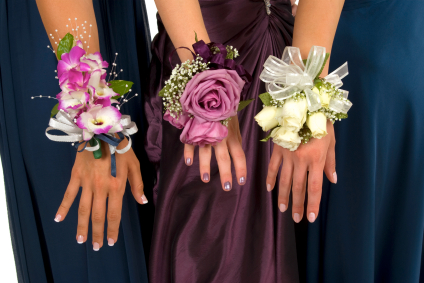 A cougar is a hot “older woman” who pursues men twenty years her junior, right? Well, lately teen cougars have been asking junior guys to senior prom.
So why do young women increasingly want relationships with younger men? Once was, girls only dated older guys. As one mom observing the phenomenon explains:
Back in my prom days (when the big slow dance was still “Stairway to Heaven”), I went with a boy who was not just taller than me, but older as well. O.K., I was only a few months younger than him, but that still mattered to my friends and me. We would never have even considered venturing out to the prom, let alone the school parking lot, with a boy in a lower grade, unless we were baby-sitting him.
Why the change? It may be that we no longer expect guys to be “ranked” so much more highly than girls anymore.
We’re not completely over gender ranking, which places males above females. You still see it when a man avoids dating or marrying a highly successful woman, since that success gives her higher rank than him. Or, when guys do girl-things like hopscotch they’re “lowering themselves” and taunted as sissies, wimps and fags — or girls. But girls can climb trees, play with trucks and be tomboys with little worry. And, girls can wear pants but guys can’t wear dresses. Girls aren’t demeaning themselves by doing boy-stuff.
Traditionally, women have wanted someone “older and wiser” as sixteen-year-old Liesl sang to Rolf in The Sound of Music:
I need someone
Older and wiser
Telling me what to do
You are 17 going on 18
I’ll depend on you
But suddenly girls don’t need someone older and wiser.
Furthermore, these girls like “nice guys” who are more respectful and nicer to date than the dominant “bad boys” that girls are thought to prefer.
When they get to college upper-class women often continue favoring younger men:
Here at Dartmouth we have a saying, ‘Get the guy before he pledges’ (because) that way you grab them before they are corrupted by fraternity brothers.
That would be frat boys who work hard to create a “superior man” status by demeaning women as bitches and sluts, and who maintain their independence and invulnerability by avoiding relationships with women, choosing to conquer them in one-night-stands, instead.
But back in high school a senior girl simply reasons, “The senior guys at my school tend to like to go out with the younger girls, so now I guess we are doing the same with younger guys.”
I’m all for gender parity. Why not?
Popular Posts on BroadBlogs
Should Women Play Hard To Get?
The Allure of Bad Boys
Share this:

Believe You’re Beautiful – Others Will, Too
 Back in college I knew a girl who did not seem to fit our cultural notion of “pretty.” But then a really attractive guy began dating her. Holding my own “lookism” bias, I didn’t get it. What did he see in her?
What happened next surprised me more. “Plain Jane” transformed into a beautiful young woman. It’s as though she hadn’t known her beauty, and couldn’t show it to the world until she felt someone else see it in her. And whether he actually did doesn’t matter. She believed that he did, and she was transformed.
This reminded me of a story my mom told me. An “unattractive” friend of hers went to college in the 1950s, when a girl’s worth was tied to how many dates she got. (Back then women didn’t sleep with the men they dated, so the only reputation they got was “popular.”)
Anyway, a frat decided to joke around by getting all the brothers to eagerly ask her out. Once again an ugly duckling transformed into a swan and the men began asking her out for real.
If you want to be beautiful, believe that you are.
Pretty women wonder where my secret lies.
I’m not cute or built to suit a fashion model’s size
But when I start to tell them,
They think I’m telling lies.
I say,
It’s in the reach of my arms
The span of my hips,
The stride of my step,
The curl of my lips.
I’m a woman
Phenomenally.
Phenomenal woman,
That’s me.
– From Maya Angelou’s “Phenomenal Woman”
Popular Posts on BroadBlogs
Beauty Tricks to Remove Your Power
You’re Hotter Than You Think

 BroadBlogs