Category Archives: body image
Advice Women-Haters Could Use Via Ashton Kutcher
 You may have seen Ashton Kutcher’s Teen Choice Awards speech. After all, it went viral.
He says a lot of great stuff. I’ll focus on this:
The sexiest thing in the entire world… is being really smart. And being thoughtful. And being generous. Everything else is crap, I promise you! It’s just crap that people try to sell to you to make you feel like less.
Now, Ashton Kutcher can’t help but be sexy, so what does he know?
On the other hand, anyone could become more attractive by following his advice.
Think about it.
Being smart is a confidence-builder. And confident is the sexiest thing you can be.
The thoughtful and generous also hold an air of confidence. And they don’t scare people off.
Unlike some men who write to tell me how much they hate women because they can’t get one. Like this guy:
Share this:

You Are Not A Fashion Sketch
Have you ever seen a fashion sketch and wished you looked like that? So glamorous!
But here’s “you” as a fashion sketch:


Not so glamorous after all.
Star Models, A Brazilian modeling agency, released this series as an anti-anorexia PSA advertisement.
The ads may help a bit. At the same time, when we are constantly bombarded with the notion that hyper-thin feminine bodies is what fashion looks like, the ideal becomes unconsciously embedded in our brains — along with eating disorders imprinted on our bodies. Maybe anorexia, maybe bulimia, maybe obsessive or over-vigilent eating.
And while we like to draw firm boundaries between what’s normal and what’s not, anorexia has become more normalized than abnormal, says Women’s Studies professor, Susan Bordo.
It’s hard to change our ways of seeing by trying to convince individuals alone. Modeling agencies and fashion magazines must change, too, says Tristan Bridges, PhD.
But that can be difficult when impossible ideals promote so many sales. Women trying to achieve skinny bodies can buy gym memberships, exercise equipment, Jenny Craig memberships, Weight Watchers frozen dinners, or clothing that pulls in, pushes up, and camouflages.
Until our world begins to change just keep chanting, “I am not a fashion sketch, I am not a fashion sketch, I am not a fashion sketch” and hope for the best.
Popular Posts on BroadBlogs
How to Look Like a Victoria’s Secret Angel
500 Calories + Pregnancy Hormones = Perfect Body
Beautiful Women’s Hips Are Thinner Than Their Heads?
Share this:

I Love My Wife Because She’s Aging
 By James Stafford @ The Good Men Project
I’ve grown immune to the use of sex to sell products. I can’t tell you who the starlet of the week is. I’m immune to beer commercials and other “buy this product and have sex with hot hard bodies” advertisements. What I find attractive has aged along with me.
I have no more interest in twenty-year-olds than they have in me. Flirty young waitresses just embarrass me, but you wouldn’t know that from commercials, movies, and television. According to pop culture, all I want is a girl gone wild.
And because pop culture insists on making every woman believe that she isn’t beautiful if she isn’t a twenty year-old size zero, and on making every man doubt his virility if he’s not chasing (and catching) supermodels, I decided to break the man code and tell you the truth about what I find attractive.
I love the gray in your hair Read the rest of this entry
Share this:

Choosing Beauty Over Sex, or Anything Else–Lessons From Tootsie
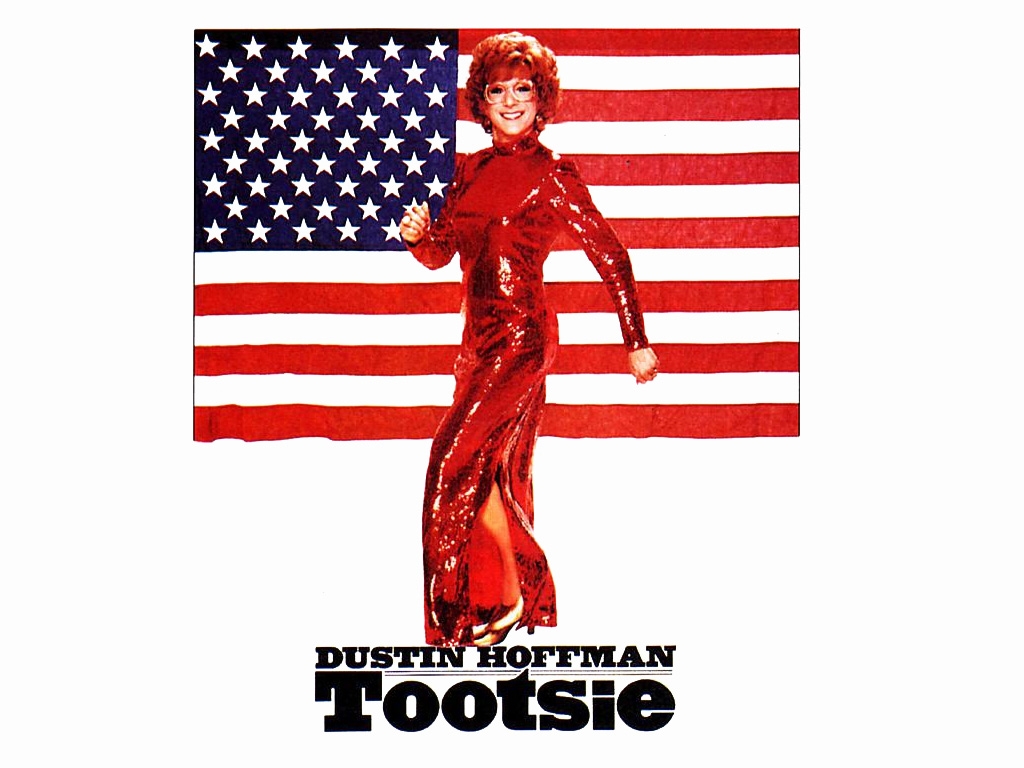
Dustin Hoffman as Tootsie
A lot of guys think women want to be beautiful so they can get sex. I’m sure many do. But some guys are surprised that — or don’t believe that — it’s often the reverse: many women have sex hoping to feel beautiful.
But then, men’s value often rests on how much sex they have, while women’s value often rests on their looks.
A woman may capture the Wimbledon title yet be slighted as not “a looker.” She may even become Prime Minister of Australia yet folks debate, “the size of her bottom… the cut of her hair.”
And as I’ve said before:
From the time they’re small, little girls are told they’re pretty – or notice when they’re not told that. They receive gifts of play makeup and vanity sets. They watch endless repeats of Disney princesses on DVD, buy beautiful princess dolls, and then graduate to Barbie or Bratz. All of whom have extensive wardrobes. It’s all about being pretty.
Meanwhile, girls and women are bombarded with media images of impossibly beautiful women who are photoshopped up the wazoo, modeling what they’re supposed to look like.
Who’s popular in middle school and high school? Pretty girls. By the time they’re in college young women are under relentless pressure to be hot, as if that’s the most important thing in the world.
 When Dustin Hoffman took the role of Tootsie he got a shocking first-hand glimpse of all this.
In the film, Hoffman plays a difficult-to-work-with actor who no one will hire. So he poses as an actress to get a role. In an interview that’s gained a lot of attention, Hoffman says the experience helped him to see how men can unknowingly reinforce impossible beauty ideals.
His make-up artist had made him look like woman, he recalls, but:
I was shocked that I wasn’t more attractive… I said “Now you have me looking like a woman. Now make me beautiful.” I thought I should be beautiful. If I was going to be a woman, I would want to be as beautiful as possible. But they said, “This is as good as it gets.”
At that moment he had an epiphany that made him think twice about how he treated women. He told his wife,
I think I am an interesting woman when I look at myself on screen. And I know that if I met myself at a party, I would never talk to that character because she doesn’t fulfill physically the demands that we’re brought up to think women have to have in order to ask them out… There’s too many interesting women I have…not had the experience to know in this life because I have been brainwashed.
Women are taught from the time they are small that their value lies in their beauty — unfortunate since our shell is shallow and looks are fleeting.
But is it any surprise that beauty so often seems more important than sex – or anything else?
Popular Posts on BroadBlogs
Beauty Tricks to Remove Your Power
Miss Representation: How I Look Is What Matters
Scrutinizing My Body Takes All My Time
Share this:

Stop Objectifying Yourself: 4 Daily Rituals
 Sexual objectification hurts women.
Women who see themselves as primarily objects of desire for others have higher levels of body shame, clinical depression, eating disorders and experience higher levels of sexual dysfunction. They also have lower levels of self-worth and life satisfaction, cognitive functioning, motor functioning, access to leadership and political efficacy. And they waste a lot of time primping. As they age they lose even more value in their own eyes.
Men who objectify also dehumanize women and believe they are less competent and less worthy of empathy. So no surprise that objectifiers are more tolerant of sexual harassment and rape myths.
So says Occidental College professor, Caroline Heldman.
In the post below, originally published in Ms., Dr. Heldman suggests daily rituals that interrupt harmful objectifying scripts. (This is the last of a four-part series. See Part 1, Part 2 and Part 3.)
Sexual Objectification 4: Daily Rituals to Start
1) Start enjoying your body as a physical instrument. Girls are raised to view their bodies as a project they have to constantly work on and perfect for the adoration of others, while boys are raised to think of their bodies as tools to master their surroundings. Women need to flip the script and enjoy our bodies as the physical marvels they are. We should be thinking of our bodies as vehicles that move us through the world; as sites of physical power; as the physical extension of our being in the world. We should be climbing things, leaping over things, pushing and pulling things, shaking things, dancing frantically, even if people are looking. Daily rituals of spontaneous physical activity are a sure way of bringing about a personal paradigm shift, from viewing our bodies as objects to viewing our bodies as tools to enact our subjectivity.
Suggested activity: parkour,”the physical discipline of training to overcome any obstacle within one’s path by adapting one’s movements to the environment,” can be done any time, anywhere. I especially enjoy jumping off bike racks between classes while I’m dressed in a suit.
2) Do at least one “embarrassing” action a day. Another healthy daily ritual that reinforces the idea that we don’t exist to only please others is to purposefully do at least one action that violates “ladylike” social norms. Discuss your period in public. Swing your arms a little too much when you walk. Open doors for everyone. Offer to help men carry things. Skip a lot. Galloping also works. Get comfortable with making others uncomfortable.
 3) Focus on personal development that isn’t related to beauty culture. Since you’ve read Part 3 of this series and given up habitual body monitoring, body hatred and meaningless beauty rituals, you’ll have more time to develop yourself in meaningful ways. This means more time for education, reading, working out to build muscle and agility, dancing, etc. You’ll become a much more interesting person on the inside if you spend less time worrying about the outside.
4) Actively forgive yourself. A lifetime of body hatred and self-objectification is difficult to let go of, and if you find yourself falling into old habits of playing self-hating tapes, seeking male attention, or beating yourself up for not being pleasing, forgive yourself. It’s impossible to fully transcend the beauty culture game, since it’s so pervasive and part of our social DNA. When we fall into old traps, it’s important to recognize that, but then quickly move on through self forgiveness. We need all the cognitive space we can get for the next beauty culture assault on our mental health.
Originally posted in Ms., reposted with permission.
Also posted on Caroline Heldmans’ Blog.
Related Posts on BroadBlogs
Sexual Objectification, What is it?
Sexual Objectification, The Harm
4 Daily Rituals to Stop Objectification
Share this:

Surviving Beauty and its Privileges
The supermodels weren’t just about physical beauty. They had character. They had personality. They had something on the inside that came through.

Or so Calvin Klein opined on HBO’s documentary, “About Face: Supermodels, Then and Now.”
Supermodel, Pat Cleveland, agreed:
I have seen so many girls come and go because they had nothing going on inside.
Maybe that’s why they were supermodels.
Or maybe that’s why they survived being supermodels.
The cover girls had plenty to contend with: the temptation of ego-inflation amid fawning and primping and everyone saying they’re so great because they’re so beautiful. Or, fearing they could never live up to the hype. Anorexia, bulimia… Sex, drugs and rock ‘n roll…
The supermodel’s life was full of highs and lows.
![0-whiteny[1]](https://broadblogs.com/wp-content/uploads/2013/05/0-whiteny1.jpg) “We lived the greatest adventure of all in those days,” Marisa Berenson reminisced, “We were so free and we wanted to taste everything and do everything.”
“We lived the greatest adventure of all in those days,” Marisa Berenson reminisced, “We were so free and we wanted to taste everything and do everything.”
Jerry Hall expounded, “Salvador Dali, Andy Warhol. We met all these amazing people. It was about making this whole world that you would enter into.”
Pat Cleveland relished the memory:
I was a liberated woman in those days. I had the pill, I had the clothes, I had the place to go. We didn’t know who we were with. The girls with the boys and the boys with the boys. Just get with the best-looking thing you can find! And there were a lot of good-looking people in the modeling business.
Some people got lost in that….
Drugs, anorexia… AIDS. “AIDS was like a fire that went straight through the heart of the business,” Paulina Porizkova recalled. “Is my friend so thin because she’s smoking too much or partying too much, or is it AIDS?”
In Pat Cleveland’s eyes, “Everyone was dressing in black and they started disappearing and I knew it was the end of a time.”
I’m not sure why the supermodels who show up in “About Face” came out alive and mostly well. But I was struck by how many had created space between “who they are” and “what they projected” in those super images.
![Paulina_Porizkova[1]](https://broadblogs.com/wp-content/uploads/2013/05/paulina_porizkova1.jpg) Isabella Rossellini remarked that, “I understood it was an image. It wasn’t me.” Paulina Porizkova, Pat Cleveland and China Machado echoed the theme. Kim Alexis came to see that beauty didn’t make her happy – family did. And Carol Alt remained grounded throughout:
Isabella Rossellini remarked that, “I understood it was an image. It wasn’t me.” Paulina Porizkova, Pat Cleveland and China Machado echoed the theme. Kim Alexis came to see that beauty didn’t make her happy – family did. And Carol Alt remained grounded throughout:
At my first job the editor walked in and said, “Who cuts your hair? Your eyebrows look like shit. And you’re too big for our clothes.” But I knew who I was so it didn’t hurt me. After that it changed for me a little bit but I still knew who I was. I’m a fireman’s daughter from Long Island. And that’ll never change.
When Cheryl Tiegs finished college her agent told her that the key to beauty was “always educating yourself. Always learning something new, always doing something new, having something to talk about. And I think that’s how one ages beautifully.”
Pat Cleveland talked of making people appreciate what you’re wearing by being alive in it:
On the runway it’s as though I’m lifting off the ground. I want to hear drums playing and express all that rhythmy feeling in your soul. It’s almost orgasmic.
Dayle Haddon thought other models were more beautiful than she was, so she brought more than what she looked like.
Through a picture I felt like I could communicate. That’s where beauty lies. How do you translate your experiences – good or bad – into something that is meaningful to yourself and to others?
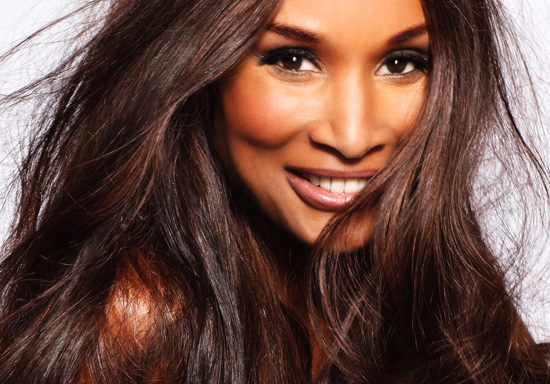 People who face abuse and prejudice often develop both character and empathy for others. Maybe that’s what happened to Pat Cleveland as the Ebony Fashion Fair traveled the states:
It was hard work, especially in the South. We were in this Greyhound bus and stopped to go to the bathroom and they said, “You black girls can’t go in there,” except for me because I was only 1/8 black so I didn’t look black, but everyone else did. And then these angry guys came toward the bus with sticks and the bus driver says, “We’ve got to get out of here!” but he couldn’t get the bus started to get away, and the men started banging on the bus and tried to turn it over, and it was very frightening.
Others developed an attitude to protect themselves. China Machado exhibited the unique walk she used to look empowered and intimidating: commanding, with arched back, wide gestures, and head held high – in an effort to avoid sexual harassment.
Most interestingly, some could see their beauty only after living, surviving, and gaining self-assurance. Despite Paulina Porizkova’s ravishing youthful looks she only came to see herself as beautiful a couple of years ago. She now says, “The most beautiful thing is confidence.”
Ah, lessons from supermodels. Who knew?
Popular Posts on BroadBlogs
Must We All Look The Same? Variety Is The Spice Of Life
Beauty Tricks to Remove Your Power
Believe You’re Beautiful – Others Will, Too
Share this:

Diet Coke Gardener: Objectified Like Women?
Check out the Diet Coke ad above.
Do you react like these women?
- Aaaah, awesome 😀
- I was like :O when i saw this commercial
- ooh la la! like like like, all I need, no sugar, no calories! 😀
And Coke’s personal favorite:
- Hot damn I need a Coke.
Or like these men?
- Bad commercial, kinda degrading for women…
- kinda sexist, no? Imagine a group of guys rolling the coke can to a hot girl, that then gets splattered with coke on her top and takes it off while they stare… yeah … id wanna see that commercial!
- Bitches!
- I feel very violated as a man to be viewed as a slave laboring, sex toy meant for the amusement of females. It’s almost to hard to bear watching this demonstrable evidence of female oppression in our society. I don’t think women would be laughing if this video was the contrary. Women are nothing but misandristic swines. We have to unite my brothers and break this new established misandry system. Wahh
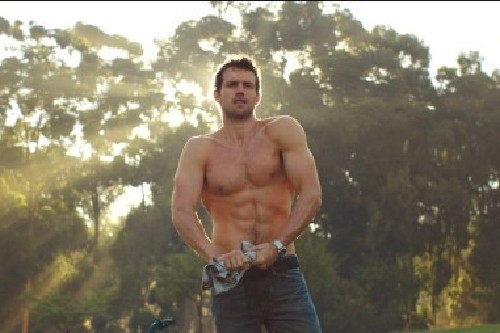 Here’s my translation of the guy-talk:
Oh no, do I have to start competing with guys who look like THAT?! (We ladies can relate having had to compete with Brooklyn Decker-types for years.)
Or:
I don’t like how he’s demeaned before he’s ogled. (On being demeaned — or being demeaned and ogled — the ladies can relate and commiserate.)
An alternative translation:
Women aren’t the only ones who are objectified! And women like to objectify, too, so quit yer whining!
If so, these guys think this ad is equivalent to what women are pelted with every day. It’s not.
First, sexiness is a part of the human experience. So if either men or women are portrayed as sexy some of the time, no big deal. Our sexuality is a part of our humanity.
The problem comes, in part, from bombardment by an impossible beauty ideal, leaving plenty of women feeling bad about themselves. Guys increasingly face this problem, but not at nearly the same level.
Also, women are almost ALWAYS the sexy ones, and that is the PRIMARY way they are portrayed. The imbalance communicates that women exist to sexually please men. That’s their main purpose, and without reciprocation.
And then women are hurt by men who learn — however unconsciously – to think of women as sexual-pleasure objects. So women may be treated as things and not people. Some men will use and abuse them. Their lovers may only care about their own pleasure and not make emotional connection. Their lovers may treat them like interchangeable objects. They may rudely ogle others while ignoring their partner. Taken to extreme, some men kidnap women for sex slavery, or go to prostitutes who have been kidnapped and enslaved.
Because if women are just objects, no feelings to worry over.
If women and men were BOTH portrayed in multidimensional ways, with one part being “sexy” — and outside of impossible body ideals (variety is the spice of life!) then “sexy” images needn’t be a problem for either gender.
Popular Posts on BroadBlogs
Why Men Objectify
Jon Hamm Hates Being A Sex Object
Sexual Desire & Sexism
Share this:

Angelina’s Boobs: Cock-Equivalent?
I can’t believe Angelina sacrificed her boobage!
I don’t know one guy who would cut off his cock in the name of cancer-prevention. I wouldn’t!

That’s the DJ blather I had the misfortune of hearing on my morning commute the day Angelina Jolie announced her double mastectomy to prevent cancer.
It made me wonder.
Why would these guys choose their cocks over life?
And boobs are a cock-equivalent?
The male member makes babies and gives pleasure (not necessarily in that order), and eliminates waste. Breasts do just one of the three — and they are not the only route to pleasure. In fact, the clit works better.
And while men love looking at Angie’s boobs, women are less enamored of the male package, or gazing at it, anyway.
And of course, some guys think a bigger cock means a bigger man. (Not true.)
I’m not sure that women see their breasts in quite the same way. Sure, they’re seen as a sign of femininity and some women want bigger ones to feel more womanly. Yet others are secure in their femininity, regardless of size: Keira Knightley, Mila Kunis, Paris Hilton, Kate Middleton and her sister, Pipa, for instance.
And as Angelina now says,
On a personal note, I do not feel any less of a woman. I feel empowered that I made a strong choice that in no way diminishes my femininity.
So what about a man choosing his cock over his life? A male student of mine wrote a piece I will be posting called, “Doing dumb stuff to prove manhood.” Maybe this is an example?
But of course, breasts have been a defining trait of Angelina Jolie – take those away and there’s nothing left if you happen to be a boob-obsessed guy? A kind of death, as far as they are concerned?
Or, if a woman is defined by her boobs and her man-appeal, maybe some dudes are just pissed that a woman would think that her body and her life are for herself and not for them?
Are others just disconcerted? Angie’s hot — even without natural C-cups. How could that be?
Boobs are a big thing, but in one stroke they’ve lost a chunk of cultural power, says Alexandra Bradner at Salon,
She absolutely robbed them of their cultural, symbolic power. And what’s so completely thrilling about this, is that she did it on her own, one single woman — one single decision — against the machine.
Imagine, valuing women for themselves and not for their breasts. For some, that is plenty disconcerting. No wonder there’s a bit of a backlash on the man-o-sphere.
Popular Posts on BroadBlogs
Beauty Tricks to Remove Your Power
Miss Representation: How I Look Is What Matters
Love My Body
Share this:

Why’s Anorexia the Feminine Ideal?
 Modeling scouts are now recruiting at eating disorder clinics.
Or as Katy Waldman at Slate’s XX Factor spelled it out:
Modeling scouts—known for weighing young girls in public like cattle and targeting down-and-out families, but perhaps not for exploiting the life-threatening delusions of sick teenagers—were gathering—in the plural, so more than one person thought this was okay—outside of Sweden’s largest eating disorder clinic.
Agents say they’re seeking “healthy, normally slim women” and “never urge weight loss.” Yet one girl who was approached was so frail that she needed a wheelchair. And they’re all hospitalized.
On never urging weight loss, Waldman muses, “The eating disorder will do all the urging for you!” Indeed, about 40% of models are eating disordered.
Anorexic-thin is unnatural and unhealthy. About 1/5 of anorexic girls and women die.
Next, the models will become even more unnatural-looking as implants are inserted into their chests.
Now add photoshop to complete the other-worldly look.
Why would a sickly, does-not-exist-in-nature look be used to model feminine beauty?
A couple of things could be happening.
As women gain equality in status and opportunity, images of men and women are changing in ways that exaggerate their natural physical differences. By nature, men have more muscular bulk. And men’s images in movies, professional wrestling, and magazines like Men’s Health – not to mention boys’ toys like G.I. Joe – have gotten more muscular over time. Meanwhile, images of women have grown thinner and frailer. At the same time, women’s breasts have gotten bigger, exaggerating another sex difference.
But there is also a profit motive. With an impossible ideal, people will spend endless sums trying to attain it through diets, exercise, gym memberships, surgeries, miracle bras, fashions that create optical illusions, and plenty of magazines to tell you all about all the stuff you can buy.
So in the interest of heightening a sense of gender difference and selling product, we create a very sick feminine ideal.
Popular Posts on BroadBlogs
How to Look Like a Victoria’s Secret Angel
Beautiful Women’s Hips Are Thinner Than Their Heads?
Woman, Not the Sum of Flawed Parts
Share this:

You’re Better Than You Think
Are women too hard on themselves when it comes to their looks — and everything else?
A Dove ad campaign called “Real Beauty Sketches” has gone viral. In it, women describe themselves to a forensic artist who sketches them from behind a curtain. Next, strangers describe them.
Women used more negative words to describe themselves:
- (My chin) kind of protrudes a little bit, especially when I smile.
- My mom told me I have a big jaw.
- I have a big forehead.
- I have a fat, rounder face.
Strangers made more positive assessments:
- Her chin was a nice, thin chin.
- She has nice eyes. They lit up when she spoke.
- She has a cute chin.
- She has very nice blue eyes.
Afterwards, the women were surprised by how much more attractive they appeared in the eyes of strangers who — tellingly — yielded more accurate results.
In fact, Dove’s campaign was inspired by research finding that only 4% of women believe they are beautiful. Meanwhile, beauty can be a huge source of self-worth, which is unfortunate when there is so much more to women — and so much that is more significant.
“Good Morning America” did the same experiment and got the same results.
Last summer’s HBO documentary on supermodels, “About Face,” also found plenty of self-criticism among women who are thought the most beautiful among us. For instance, Carmen Dell’Orefice disliked one photo because it showed her feet, which she deemed “unattractive.” I looked at the photo and saw nothing wrong at all. Perfectly normal and natural looking.
We can be our own biggest critic.
But self-criticism doesn’t stop with our looks.
I’ve noticed that I can be pretty tough on myself. But when I consider how I would advise another person in the same situation I’m much more generous.
Being too harsh on ourselves can be a problem because low self-esteem limits us. When we lack faith in ourselves we don’t try, or when we do try, we are less likely to succeed. Or, we may put others down to feel like we’re better than someone else. But as they say, you can’t love until you love yourself.
If we were more self-accepting and self-loving everyone would likely be better off.
Popular Posts on BroadBlogs
Low Self-Esteem? Blame Beauty Myths
Beauty Tricks to Remove Your Power
You’re Hotter Than You Think

 BroadBlogs