Category Archives: psychology
Do Women See Sexy Men As Sexy?
![Picture10[1]](https://broadblogs.com/wp-content/uploads/2013/07/picture101.png) When women look at men who are sexily posed or who show skin, they don’t always seem sexy, as I’ve discussed before. Is there any hope?
When women look at men who are sexily posed or who show skin, they don’t always seem sexy, as I’ve discussed before. Is there any hope?
First, the problem: Imagine watching the Bikini Open “in reverse” so that women are fully clothed while men wear revealing Speedos. What about nearly nude men dancing on platforms? Or a camera focused on a man’s butt as he walks by. All this may look sexy. But women may well see it all as “gay.”
In fact, a sexily posed man may be played for laughs, a favorite ploy of Sacha Baron Cohen.
But then, women are so used to sexualized bodies being meant for men’s “consumption” that women can come to see nude or near-naked men through men’s eyes, too. And of course, sexualized images of men that are meant for men would be gay. (Nothing wrong with being gay, but it’s not a big turn-on for women.)
![David-Beckhams-Shirtless-HM-Super-Bowl-Ad-Video[1]](https://broadblogs.com/wp-content/uploads/2013/07/david-beckhams-shirtless-hm-super-bowl-ad-video1.jpg) Yet David Beckham can show skin and still look sexy. Maybe it’s because he seems so hyper masculine and hetero that it’s hard to think of him as gay. Sociologist, David Mayeda, has been theorizing on what makes men seem sexy to women. He describes Beckham this way:
Yet David Beckham can show skin and still look sexy. Maybe it’s because he seems so hyper masculine and hetero that it’s hard to think of him as gay. Sociologist, David Mayeda, has been theorizing on what makes men seem sexy to women. He describes Beckham this way:
Tattooed, rugged, athletic, showcasing a lean musculature and menacing glare, Beckham embodies a (dominating) masculinity… he is globally recognized, financially wealthy, and married to a woman who also holds currency in popular culture. This last point is critical. By being married, Beckham confirms his heterosexuality, and her extraordinary beauty and international popularity raise his standing as a “real man.”
![110909--fathers-baby-hmed-2p.grid-6x2[1]](https://broadblogs.com/wp-content/uploads/2013/07/110909-fathers-baby-hmed-2p-grid-6x21.jpg) So must men be hyper masculine to seem sexy? Not always. Plenty of women find buffed men holding babies alluring. Again, the images are muscular and masculine. Having produced a baby he sure looks hetero. But the loving care signals something of the feminine side: sensitivity, not dominance. He’s masculine in a fatherly way.
So must men be hyper masculine to seem sexy? Not always. Plenty of women find buffed men holding babies alluring. Again, the images are muscular and masculine. Having produced a baby he sure looks hetero. But the loving care signals something of the feminine side: sensitivity, not dominance. He’s masculine in a fatherly way.
Men are sometimes confused by women who want masculinity and tenderness. This just goes to show that many women do like both — perhaps especially combined. And who knows, there may be extra appeal in the sense of a man who appears committed to his partner and family.
Looks like “sexy men” too often fit inside a box that is as narrow as the box for “sexy women.” The current feminine ideal is skinny with big boobs while the current masculine ideal is limited to hard-bodies + dominance. Or toned + sensitive.
 Luckily “sexy” and “attractive” can also exist outside the “bodily sensual” box for both women and men.
Enter Don Draper who is sexy by way of his face, his confidence, and his success, despite being generously draped in clothing. This is a sort of sexy that may work like a dog whistle. No bare skin to trigger notions of sexuality in men’s eyes, so that leaves women free to notice it.
But it would be nice for both sexes to move further away from our cramped boxes.
As a last note, this is all about imagery. Both women and men can find real-life men and women pretty sexy even if they don’t match these cultural ideals.
Popular Posts on BroadBlogs
Men: Erotic Objects of Women’s Gaze
Why Aren’t Male Strippers Sexy?
Man as Object: Reversing the Gaze
Share this:

Trayvon Martin’s Right to ‘Stand His Ground’
We’re told over and over that if Zimmerman was afraid of Martin, according to Florida law, he had the right to put a bullet in the chamber of his concealed handgun, get out of his car after being told not to by the 911 dispatcher and follow and confront Martin and shoot him to death.

That’s from CNN opinion writer, Miller Francis. He continues:
At the same time, we are told that Martin, who had far greater reason to fear Zimmerman, practically and for reasons of American history, did not have the right to confront his stalker, stand his ground and defend himself, including by using his fists. We are told that this was entirely unjustified and by doing so, Martin justified his own execution.
Talk about victim-blaming!
The contradiction-in-rights likely arises because we tend to see through the eyes of the powerful and not through the eyes of the powerless. After all, the powerless have little control over media or the political or religious pulpits. With that in mind, I’m reposting the following as the Martin v. Zimmerman jury deliberates:
The Crimes of Hoodies, Short Skirts and Fannie Mae
“More guns, fewer hoodies” and we’d all be safer, Gail Collins advised in a New York Times piece after Trayvon Martin was gunned down for “eating skittles while black” – and while wearing said hoodie – in a gated community. A clear threat that had to be stopped.
That’s right. Guns don’t kill people, hoodies do: Trayvon Martin’s “hoodie killed him as surely as George Zimmerman did,” claimed Geraldo Rivera (who later apologized).
Sounds familiar. When women are raped short skirts become the culprit.
Yet few rape victims are wearing short skirts. And even nicely dressed black men can create fear. Journalist Brent Staples noticed that people got out of his way when he nonchalantly walked about. Amazed at his ability to alter public space, he tried humming Mozart to project his innocence. Seemed to help.
But why aren’t pricey cars, fancy suits and expensive watches blamed when rich, white men get robbed? What thief could resist?
Why? Because making more powerless members of society the culprit is meant to distract from the sins of the powerful. It’s women’s fault if men rape them, and it’s black men’s fault if lighter men kill them.
In another example, some blamed liberals for foolishly using Fannie Mae and Freddie Mac to help Blacks and Hispanics “buy homes they couldn’t afford,” leading to the banking crises that nearly drove the U.S. economy off a cliff.
What really happened is that rich bankers gave rich campaign contributions to government officials, who in gratitude disposed of pesky regulations. That helped bankers get mega-rich by devising complex financial packages that no one could comprehend.
Used to be that when someone bought a home bankers made sure they’d get paid back. But under deregulation it didn’t matter because the loan was sold to someone else. And that investor sold the loan again. And financial packages were created and sold, composed of fractions of many people’s mortgage loans. They were rated AAA since they were 1) diversified – and hence “safe” investments and 2) the housing market never goes down. (Yeah, right!)
Fannie and Freddie entered the process late, thinking they’d better join in or lose out.
When the housing market dropped and people couldn’t afford their homes, or sell them for a profit, the banks began collapsing. Lucky for them, the taxpayers bailed them out (or the whole economy likely would have collapsed).
Did deregulation get blamed for the fiasco? By some. But plenty of the “powers that be” — and especially “hate radio” — blamed Blacks and Latinos.
Because blaming more powerless members of society distracts from the sins of the powerful.
The crime does not lie with the man who pulls the trigger, nor with the man who rapes, and certainly not with the fat cat who pays to rig the game. No, the crime lies with those who wear hoodies, short skirts and who bank while black or brown.
Popular Posts on BroadBlogs
Cheerleader Ordered To Cheer Her Rapist, and Other Stories
Markets Must Be Free; Women Must Be Constrained
8-Year-Old Called “Whore” for Long Sleeves, Skirts
Share this:

In-laws Rip Off Girl’s Fingernails, But Who Cares?
Sahar Gul
KABUL, Afghanistan — A court has reversed the convictions of three Afghans jailed for torturing a young relative who had refused to become a prostitute, alarming activists who had celebrated the guilty verdicts as a warning to all those who would seek to reverse the strides made by women here in the past 12 years… the defendants — Sahar Gul’s mother-in-law, sister-in-law and father-in-law — (will) be set free.

In objection to this reversal, I am rerunning my original post and unfortunately asking this same question: In-laws rip off girl’s fingernails, but who cares?
Fifteen-year-old Sahar Gul’s in-laws locked her away in a basement for six months. They beat her, tortured her with hot irons, broke her fingers, and ripped her fingernails off. Her uncle called authorities and by the time she arrived at a hospital her eyes were swollen nearly shut and scabs crusted her fingertips.
Afghanistan allows multiple wives, including child brides. This young bride had been taken in hopes of pimping her out in prostitution. The abuse was meant to persuade.
What struck me most in the AP report were the following lines:
The outcry over a case like Gul’s probably would not have happened just a few years ago because of deep cultural taboos against airing private family conflicts and acknowledging sexual abuse.
I am heartened that things are changing, with public outrage and an editorial in the Afghanistan Times reading, “Let’s break the dead silence on women’s plight.”
But to think that not long ago horrendous abuses like Sahar’s would have provoked no comment is outrageous. You have to wonder why women’s plight has been invisible for so long. And whether Afghanistan is alone in its blindness.
Women must be poorly valued for such abuses to go on without remark: mere property to be sold off, to make money off of, to beat when “disobedient,” to be stoned as spectator sport. And in some cases, to be tortured like lab rats.
When that is all you’ve known your whole life, when this world seems normal to all around you, who can fully see the horror?
Yet America isn’t always so different. Many still blame rape victims for their rape, and many victims still fear coming forward. Battering victims may be blamed for their abuse. Bullied spouses may feel shamed and cover up — and cover for their partners.
The world may be changing in Afghanistan.
The world needs changing right here in America, too.
Popular Posts on BroadBlogs
Why Do Women Fight Against Their Own Interests?
Should Organized Religion Have More Rights Than Women?
Better My Daughter Die Than Signal “Sex is Ok”
Share this:

Choosing Beauty Over Sex, or Anything Else–Lessons From Tootsie
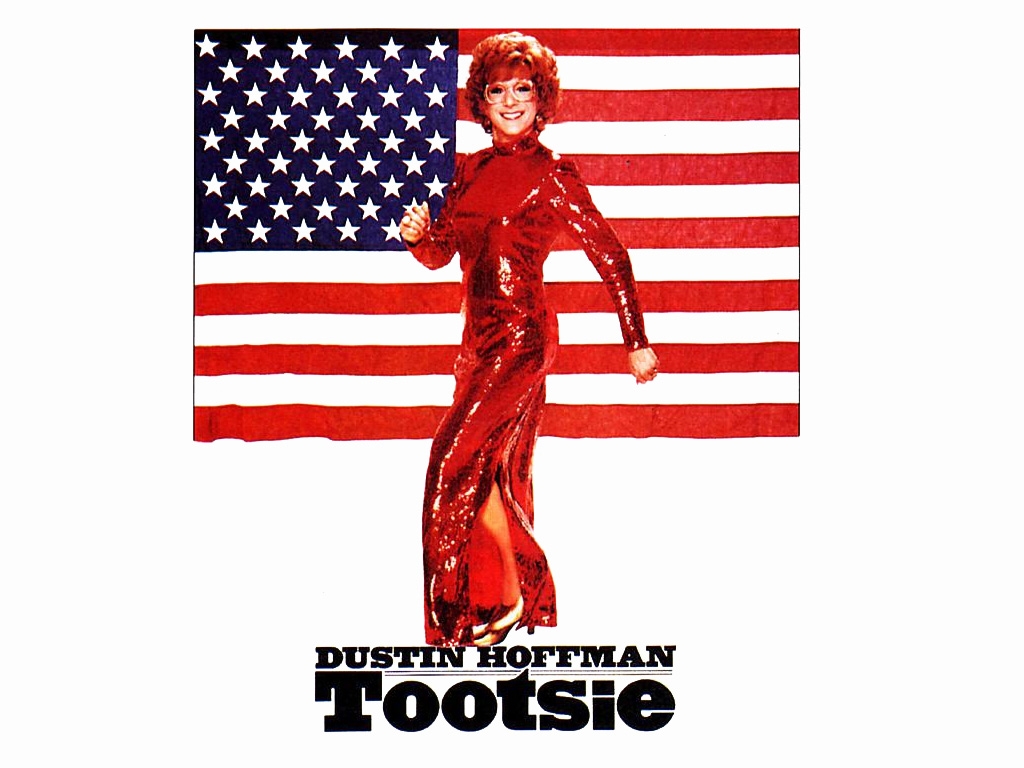
Dustin Hoffman as Tootsie
A lot of guys think women want to be beautiful so they can get sex. I’m sure many do. But some guys are surprised that — or don’t believe that — it’s often the reverse: many women have sex hoping to feel beautiful.
But then, men’s value often rests on how much sex they have, while women’s value often rests on their looks.
A woman may capture the Wimbledon title yet be slighted as not “a looker.” She may even become Prime Minister of Australia yet folks debate, “the size of her bottom… the cut of her hair.”
And as I’ve said before:
From the time they’re small, little girls are told they’re pretty – or notice when they’re not told that. They receive gifts of play makeup and vanity sets. They watch endless repeats of Disney princesses on DVD, buy beautiful princess dolls, and then graduate to Barbie or Bratz. All of whom have extensive wardrobes. It’s all about being pretty.
Meanwhile, girls and women are bombarded with media images of impossibly beautiful women who are photoshopped up the wazoo, modeling what they’re supposed to look like.
Who’s popular in middle school and high school? Pretty girls. By the time they’re in college young women are under relentless pressure to be hot, as if that’s the most important thing in the world.
 When Dustin Hoffman took the role of Tootsie he got a shocking first-hand glimpse of all this.
In the film, Hoffman plays a difficult-to-work-with actor who no one will hire. So he poses as an actress to get a role. In an interview that’s gained a lot of attention, Hoffman says the experience helped him to see how men can unknowingly reinforce impossible beauty ideals.
His make-up artist had made him look like woman, he recalls, but:
I was shocked that I wasn’t more attractive… I said “Now you have me looking like a woman. Now make me beautiful.” I thought I should be beautiful. If I was going to be a woman, I would want to be as beautiful as possible. But they said, “This is as good as it gets.”
At that moment he had an epiphany that made him think twice about how he treated women. He told his wife,
I think I am an interesting woman when I look at myself on screen. And I know that if I met myself at a party, I would never talk to that character because she doesn’t fulfill physically the demands that we’re brought up to think women have to have in order to ask them out… There’s too many interesting women I have…not had the experience to know in this life because I have been brainwashed.
Women are taught from the time they are small that their value lies in their beauty — unfortunate since our shell is shallow and looks are fleeting.
But is it any surprise that beauty so often seems more important than sex – or anything else?
Popular Posts on BroadBlogs
Beauty Tricks to Remove Your Power
Miss Representation: How I Look Is What Matters
Scrutinizing My Body Takes All My Time
Share this:

Shades of Making Sexism Sexy
 Do Fifty Shades of Grey, along with the deluge of violent and humiliating images that flood our consciousness, support patriarchy by making male dominance seem sexy?
Some worry that it might.
John Stoltenberg, a feminist activist and scholar, wrote a piece called “Pornography and Freedom,” observing that plenty of porn seems to promote oppression, whether a woman is pictured bound and gagged with her genitals open to the camera or whether lines from a book read, “The man wanted only to abuse and ravish her until she was broken and subservient.”
These sorts of images in both mainstream media and porn are mostly about women submitting to men.
In the eroticization, male dominance can seem sexy, he says.
If it’s sexy, who would want to end it?
A student of mine once asked why we should care about women’s equality when a lot of women (like her?) find male dominance sexy.
Two of my friends told me that they wanted to marry dominant men. One did and eventually divorced him because she didn’t like the reality of it. The other stayed married but had a lot of emotional problems.
I’ve mentioned Alisa Valdes before. She was raised feminist, and was even named one of the top feminist writers by Ms. Magazine. But when she met “the Cowboy,” she “embraced her femininity” and learned to submit: No back-talking; no second-guessing; no sarcastic, smart-ass remarks. She stayed monogamous and ignored her jealousy while Cowboy catted about. Her book, “The Feminist and the Cowboy,” suggests women will live happily ever after in orgasmic bliss if they just submit to controlling, misogynist men. In a recent post I described how her submission turned increasingly violent.
Still, my students often wonder “What’s the big deal?”
But what if the imagery were about race instead of sex? What if blacks nearly always had white lovers in real life, and at the same time nearly all of the “D/s” imagery depicted white domination and sadistic acts inflicted upon blacks? And what if some blacks came to crave submission and their own abuse at the hands of whites?
Would that be healthy?
Of course, once patriarchy sexualizes submission you can turn it around with “the dominatrix” emerging. Yet we are not bombarded with imagery that makes matriarchy sexy. So guys don’t go around wanting to marry dominant females who will boss them around in real life.
But a lot of people don’t want to engage this discussion. Repression and all that.
Prof. Robert Jensen, of the University of Texas, studies porn and says,
When I critique pornography, I am often told to lighten up. Sex is just sex… (but) Pornography offers men a politics of sex and gender – and that politics is patriarchal and reactionary…
There should be nothing surprising about the fact that some pornography includes explicit images of women in pain. But my question is: Wouldn’t a healthy society want to deal with that? Why aren’t more people, men or women, concerned? …
We should be free to talk about our desire for an egalitarian intimacy and for sexuality that rejects pain and humiliation.
I feel it is important to discuss things that are rarely discussed, and that make distinctions between what is healthy and what is not.
Next time I will turn to the other side of this question, looking at “pro-orgasm” feminists.
Popular Posts on BroadBlogs
Enslaving Sex Objects
Why Women Want Shades of Grey
Learning to Like Torture in Shades of Grey
Share this:

How to Pleasure A Woman
 Men get much of their sex ed from porn, which has little to do with pleasing actual women (porn stars are acting ecstatic, after all, and the focus is often on pleasing the man). So WebMD asked reputed sex educators, Tristan Taormino and Lou Paget, to talk about some common mistakes men make. Go here to see the full text. We’ll also look at research from Cindy Meston and David Buss, who researched and wrote, Why Women Have Sex.
Men imagine that women feel something parallel to what they feel, says Paget, leaving a “huge disconnect” about what feels good to women:
When a man has intercourse with a woman, and his penis goes into her body, that sensation is so off the charts for most men, they cannot imagine that it isn’t feeling the same way for her. It couldn’t be further from the truth.
The vagina is actually less sensitive than the clitoris and the surrounding parts for most women.
And a vibrator can help. So don’t be insulted, thinking something is wrong if that’s what she needs, say the authors. “Some women can’t have an orgasm with less than 3,000 rpm, so think of a vibrator as your assistant, not your substitute.”
But many men continue to believe that women should be able to reach orgasm from vaginal penetration. Taormino says:
I still get letters from people who say things like, my wife can’t [orgasm] from intercourse unless she has clitoral stimulation — please help. I want to write back and say, ‘OK, what’s the problem?’
And then there’s the myth that bigger is better. It all depends. Length is great for women who enjoy having their cervix stimulated, say Meston and Buss. But the same stimulation can be painful for other women. And if the penis is too long, “it feels like you’re getting punched in the stomach,” Paget explains. “It makes you feel nauseous.” Still others feel neither pleasure nor pain—and often not much of anything.
Generally speaking, width is more important than length. But depending on the woman, some prefer larger and some smaller.
And men should not assume they know what a woman wants based upon what other women have wanted. Taormino points out that:
You develop a repertoire as you mature sexually, but you should never assume that what worked for the last person is going to work for this person.
So open the lines of communication and ask what feels good. But consider: If you constantly ask her if she’s coming, do you really think she will? The badgering can move her from erotic to just feeling pressured. So don’t overdo it.
And finally, let her know how gorgeous and sexy she is. That’s one of the biggest turn-ons a woman can get.
Popular Posts on BroadBlogs
Sex Drive: How Men and Women Match Up
One Out of Ten Women Get Depressed After Sex
Orgasm: It’s All in the Mind
Share this:

Ogling: A Turn-Off
![1[1]](https://broadblogs.com/wp-content/uploads/2013/06/112.jpg) Men may ogle, or stare at women, because they are sexually turned on, and many women may enjoy the attention (some don’t). But ogling could be a sexual turnoff for a man’s partner.
Men may ogle, or stare at women, because they are sexually turned on, and many women may enjoy the attention (some don’t). But ogling could be a sexual turnoff for a man’s partner.
I surveyed my women students (a total of 47, non-random sample) and asked: How attracted would you be if your partner let you know he thought you were the most attractive woman in the world? He never ogles other women because he only has eyes for you. Nearly everyone gave this scenario 10’s on a scale of 1 to 10 (10 = very turned on; 1= very turned off; n/a = no affect).
What if he said, “You’re the most attractive woman in the world,” but he sometimes ogles other women. No 10’s anymore. Answers fell mostly around 7. But if he did it a lot responses dipped to about 3.
What if he assured you that he found you just as attractive as other women, but still sometimes ogles? Typical response landed around 4. If he did it a lot, 1’s were common.
Now let’s up the ante in terms of how he feels for you. He explains that he loves you and not them, but other women are just more attractive. Suddenly we find 1’s all around. One student went off the scale, writing in “0.” With exclamation points!!!!
Many seem to think women dislike ogling because they fear cheating, or being left for another woman. So a cure is prescribed: “Be more secure.” Yet few women cited concerns with cheating as their problem. Instead, most simply didn’t like feeling that their man was “as attracted” or “more attracted” to other women.
The feeling likely has something to do with how women’s sexuality works.
Men operate by seeing a sexy woman, or sexy body parts, and getting excited. No wonder so many want to stare. But how do women work? First, the mere sight of a man, or any part of him doesn’t do a whole lot for most women. Hence, the abundance of girlie magazines and the dearth of beefcake.
Men aren’t sex objects in our culture. Women are. As Linda Phelps explains in an article called, “Female Sexual Alienation,” a woman gets aroused by feeling like her guy is turned on by her. So it stands to reason that if she feels like he’s getting turned on by someone else, that has the opposite effect: it’s a turnoff. Hence, the survey results.
Ogling may dull a woman’s libido for just a few hours, for several days, or permanently – a few hours being most common, women said.
So men, you can ogle if you like, but it could put a damper on your real sex life.
I’m on vacation. Originally posted June 15, 2011
Ogling posts on BroadBlogs
Staring at Breasts Is Good For Men’s Health? And Women’s?
Ogling: Boys Will Be Boys?
Related Posts on BroadBlogs
Men Watch Porn, Women Read Romance. Why?
Anything Good About Being A Sex Object?
Men: Erotic Objects of Women’s Gaze
Share this:

Shades of Craving Your Own Abuse
 I’ve mused over why so many women want Fifty Shades of Grey. Some may crave a brief escape from the power and responsibility of their lives. Others may fetishize their own disempowerment. Random happenings may play a role. And certainly, a media blitz that eroticizes the degradation and torture of women can end up living in women’s own heads.
Some stick to fantasy and role-play. Others come to accept, or even crave, their own abuse.
Alisa Valdes was raised a feminist but eventually learned to submit when she met “the Cowboy.” What began as obedience turned violent, as when he:
dragged me down the hall to the bedroom, bent me over, and took me, telling me as he did so that I must never forget who was in charge.
The violence escalated and she eventually leapt from a moving truck, fearing he would kill her.
Or, I read this on the feminist blog, Jezebel:
“Hit me. Harder. Hard.” …
I slapped her as hard as I could. She made a noise, like crying but also like a hot intake of breath. She nodded. I did it again, a little less hard. I could see her face darkening and didn’t want to leave a mark. My hand stung. I assumed her face hurt more… As we fucked increasingly hard, she made noises I didn’t know. I took them as cues, so I would slap her as hard as I could, as hard as she seemed to want.
Another woman posted this comment on my blog:
However, as far as the violent sex goes, I will admit being one of those women who enjoys it.
I also know from experience, however, that violent sex is addicting and only induces more desire for increased violence, which almost became borderline physically dangerous sometimes.
We experience pain for a reason. It is a warning to stop whatever we are doing because it is harming us. People who lack pain receptors die young.
Does this eroticization teach women to crave their own abuse? Almost like a backlash to a movement that teaches men not to abuse and that teaches women they don’t have to take it?
A counterblast to a society that now provides women’s shelters, hot lines and mandatory arrest? Maybe we can get you to crave your own abuse, without complaint?
That’s one of my worries about the Dominance/submission trend, which includes the appeal of Fifty Shades.
In my next post in this series, I’ll look at how sexualizing male dominance keeps male dominance sexy. After that I’ll consider the other side: pro-orgasm feminism that wants women to cum, however they cum.
Popular Posts on BroadBlogs
Why Women Want Shades of Grey
Learning to Like Torture in Shades of Grey
Enslaving Sex Objects
Share this:

Male/Female Friendships Help End Rape
![220px-WhenHarryMetSallyPoster[1]](https://broadblogs.com/wp-content/uploads/2013/04/220px-whenharrymetsallyposter1.jpg) by Michael Kimmel PhD
by Michael Kimmel PhD
Cross-posted at Sociological Images
Let me ask you a question: Do you have a good friend of the opposite sex?
Odds are you do. In fact, the odds are overwhelming.
When I first began teaching, 25 or so years ago, I asked my students how many of them had a good friend of the opposite sex. About 10% said they did. The rest were from what I called the When Harry Met Sally generation. You’ll remember the scene, early in the film, when Harry asserts that women and men can’t be friends because “sex always gets in the way.” Sally is sure he’s wrong. They fight about it. Then, thinking she has the clincher for her position, she says, confidently, “So that means that you can be friends with them if you’re not attracted to them!”
“Ah,” says Harry, “you pretty much want to nail them too.”
Young people today have utterly and completely repudiated this idea. These days, when I ask my students, I’ve had to revise the question: “Is there anyone here who does not have a friend of the opposite sex?” A few hands perhaps, in the more than 400 students in the class.
But let’s think, for a moment, about the “politics” of friendship. With whom do you make friends? With your peers. Not your supervisor or boss. Not your subordinate. Your equal. More than romance, and surely more than workplace relationships, friendships are the relationships with the least amount of inequality.
This changes how we can engage men in the efforts to end sexual assault, because there are three elements to sexual assault that can be discussed and disentangled.
First is men’s sense of entitlement to women’s bodies, to sex. This sense of entitlement dissolves in the face of an encounter with your friends. After all, entitlement is premised on inequality. The more equal women are, the less entitlement men may feel. (Entitlement is not to be confused with resentment; equality often breeds resentment in the privileged group. The privileged rarely support equality because they fear they have something to lose.) Entitlement leads men to think that they can do whatever they want.
Second, the Bro Code tells those guys that they’re right – that they can get away with it because their bros won’t challenge or confront them. The bonds of brotherhood demand men’s silent complicity with predatory and potentially assaultive behavior. One never rats out the brotherhood. But if we see our female friends as our equals, then we might be more likely to act ethically to intervene and resist being a passive bystander. (And, of course, we rescue our male friends from doing something that could land him in jail for a very long time.)
Men’s silence is what perpetuates the culture of sexual assault; many of the excellent programs that work to engage men suggest that men start making some noise. We know the women, or know people who know them. This is personal.
Finally, we’re better than that – and we know it.
Sexual assault is often seen as an abstraction, a “bad” thing that happens to other people: Bad people do bad things to people who weren’t careful, were drunk or compromised. But, as I said, it’s personal. And besides, this framing puts all the responsibility on women to monitor their activities, alcohol consumption, and environments; if they don’t, whose fault is it?
This sets the bar far too low to men. It assumes that unless women monitor and police everything they do, drink, say, wear etc., we men are wild, out of control animals and we cannot be held responsible for our actions.
Surely we can do better than this. Surely we can be the good and decent and ethical men we say we are. Surely we can promise, publicly and loudly, the pledge of the White Ribbon Campaign (the world’s largest effort to engage men to end men’s violence against women): I pledge never to commit, condone, or remain silent about violence against women and girls.
Our friends – both women and men – deserve and expect no less of us.
Michael Kimmel is a professor of sociology at the State University of New York at Stonybrook. He has written or edited over twenty volumes, including Manhood in America: A Cultural History and Guyland: The Perilous World Where Boys Become Men. You can visit his website here.
Popular Posts on BroadBlogs
Real Men Don’t Beat, Rape Women: A Guy’s View
Guys Are Getting More Romantic
Men, Women not from Mars, Venus
Share this:

Learning to Like Torture in Shades of Grey
 What’s the appeal of Fifty Shades of Grey? As I’ve written before, release from power, fetishizing disempowerment, and random happenings may all play a part.
Internalizing a culture that eroticizes the degradation and torture of women surely plays a role, too.
A post from Feministing reads:
I am in no way surprised that many women, who have been socialized in a culture in which male sexuality is linked to domination and in which women are taught their sexual power comes from being wanted, have fantasies of submission.
When you are bombarded by images, ideas subconsciously get inside your head. And we are drenched in “male dominance is sexy” imagery.
![Dolce-Gabbana-Ad-Sexist[1]](https://broadblogs.com/wp-content/uploads/2012/12/dolce-gabbana-ad-sexist1.jpg) Dolce & Gabana has a sexy ad suggesting gang rape. In another, a swimsuit-clad woman lies down as fully clothed men look menacingly down on her.
Dolce & Gabana has a sexy ad suggesting gang rape. In another, a swimsuit-clad woman lies down as fully clothed men look menacingly down on her.
A Tom Ford eyewear ad seems to say F-you to a woman, in a BJ kind of way.
Fashion ads suggest that black and blue is beautiful.
At Superbowl XXXVIII Justin Timberlake slapped Janet Jackson around before ripping off her bodice.
Rhett Butler “takes” Scarlett in an act of marital rape – and she awakens sexually satisfied in the morning. Luke rapes Laura on “General Hospital” — and they fall in love.
 Law & Order: Special Victims Unit invites us to indulge in the rape, battering and torture of sex victims — usually women.
Meanwhile, The Secretary indulges in a little D/s on the side.
Or go to the ballet and watch a man overtake a woman in “Petite Mort” or “little death” (in idiom: orgasm).
On the music scene sexy women are routinely debased as bitches and ho’s while Eminem chants “I’m in flight high of a love drunk from the hate” while Rihanna submits saying, “I like the way it hurts” — and periodically returns to a lover who beat her.
Women are also watching more porn these days. Now showing: violence and degradation of women. Watching, they increasingly find it all arousing.
On the High Court Justice Breyer asks why thirteen-year-olds are protected from Playboy while video games that let boys bind, torture and kill a woman are just fine – so long as the she’s not topless.
 As a kid I checked out Grimm’s Fairy Tales at the library only to read a tale about a woman who was punished by being stripped and driven through the town in humiliation as sharp spikes pierced her skin. Another childhood memory emerges of a woman being thrown over a man’s knee to be spanked on TV.
When young girls are steeped in these sexy images, is it any surprise that they come to see male domination and violence as sexy, themselves?
So really, it is no surprise that so many women are enthralled by the domination and submission of Fifty Shades of Grey.
I’ll talk more on what I make of all this later.
Popular Posts on BroadBlogs
What Do Top Model and Hard Core Porn Have in Common?
Eminem Makes Sexism Seem Sexy
Virtually Attack Women, But No Nudity

 BroadBlogs