Monthly Archives: July 2013
You Are Not A Fashion Sketch
Have you ever seen a fashion sketch and wished you looked like that? So glamorous!
But here’s “you” as a fashion sketch:


Not so glamorous after all.
Star Models, A Brazilian modeling agency, released this series as an anti-anorexia PSA advertisement.
The ads may help a bit. At the same time, when we are constantly bombarded with the notion that hyper-thin feminine bodies is what fashion looks like, the ideal becomes unconsciously embedded in our brains — along with eating disorders imprinted on our bodies. Maybe anorexia, maybe bulimia, maybe obsessive or over-vigilent eating.
And while we like to draw firm boundaries between what’s normal and what’s not, anorexia has become more normalized than abnormal, says Women’s Studies professor, Susan Bordo.
It’s hard to change our ways of seeing by trying to convince individuals alone. Modeling agencies and fashion magazines must change, too, says Tristan Bridges, PhD.
But that can be difficult when impossible ideals promote so many sales. Women trying to achieve skinny bodies can buy gym memberships, exercise equipment, Jenny Craig memberships, Weight Watchers frozen dinners, or clothing that pulls in, pushes up, and camouflages.
Until our world begins to change just keep chanting, “I am not a fashion sketch, I am not a fashion sketch, I am not a fashion sketch” and hope for the best.
Popular Posts on BroadBlogs
How to Look Like a Victoria’s Secret Angel
500 Calories + Pregnancy Hormones = Perfect Body
Beautiful Women’s Hips Are Thinner Than Their Heads?
Share this:

Fifty Shades of Pro-Orgasm
 Some worry that the deluge of male dominance/female submission imagery in our culture helps to make sexism seem sexy, encourages women to crave their own submission and abuse, and spurs some men to abuse women.
Others are less concerned. Specifically regarding the Fifty Shades series one of my students — a fan — says,
To those feminists who are bashing the book and those of us who read it: Give us more credit! Women are not that easily influenced by a piece of poorly written fiction. At least not the women I know.
Or this from Feministing:
I’m not perplexed by (the appeal of Fifty Shades of Grey). And I am in no way appalled. I am fully in support of anyone doing whatever (safe, consensual) thing that they want to do to get themselves off. Feminists for Orgasms.
Feminists for Orgasms. Pro-choice feminists. Feminists who think women have more sense than to be so easily swayed by a pornified culture that sexualizes male dominance.
And anyway, since male domination is rather of off-limits for feminists, that makes it that much more forbidden and O-inducing, right? Katie Roiphe, whose Newsweek piece on “Shades” was widely panned, has a point when she says,
What is interesting is that this material still, in our jaded porn-saturated age, manages to be titillating or controversial or newsworthy. We still seem to want to debate or interrogate or voyeuristically absorb scenes of extreme sexual submission. Even though we are, at this point, familiar with sadomasochism, it still seems to strike the culture as new, as shocking, as overturning certain values, because something in it still feels, to a surprisingly large segment of our tolerant post-sexual-revolution world, wrong or shameful.
I have mixed feelings. On the one hand sure, women should choose what they want. On the other hand, how much choice do you have when you’ve unconsciously internalized society’s way of seeing? Or, as one of my readers put it,
I find this post (on women learning to like torture) extremely frustrating because it points out an issue that bothers me so much. I have always struggled with the fact that morally (and in general) I am completely disgusted by degrading and torturing women, but when it comes to sexual fantasies, I feel completely differently. I think that this is a serious problem and needs to be addressed by my and the coming generations. I think it is perfectly fine to enjoy D/s if that’s what you’re into, however I do not think it should be subconsciously shoved into the minds of every girl growing up in our society.
And while many believe that we aren’t affected by our culture and the messages around us, we do seem to be. Sales go up for products that are advertised. Why else would companies spend mega-millions on a 30-second Super Bowl ad?
Or, a post from Feministing reads:
I am in no way surprised that many women, who have been socialized in a culture in which male sexuality is linked to domination and in which women are taught their sexual power comes from being wanted, have fantasies of submission.
And actually, “dominating men” is one of the few ways that men in our culture are eroticized at all.
Meanwhile, nearly 80% of young women have poor body image and can get distracted from sex by worries over what their bodies look like. The whole dominance/submission thing could help young women to get away from that focus and get into the sexy happenings they are engaged in.
Still, I don’t care to see abuse eroticized, whether based on gender or ethnicity. Or whether the target is children or animals. And I will continue to work against it.
But eroticized abuse is what we’ve got. And many women, including many feminists, find it arousing.
So I’ve given this a lot of thought.
While people do unconsciously internalize the messages of their society, we can also become conscious of them, which makes choice more possible. We may then choose to overcome the messages or, alternatively, compartmentalize them.
So, a woman could live an egalitarian and empowered life while keeping submission fantasies confined to the bedroom in order to neutralize the potential harm that comes from feeling — and becoming — “lesser than.” She could also do the BDSM-thing in ways that are not physically harmful.
Many who engage in D/s only do so with partners who respect them as equals and who see these “cut off from reality” moments as play.
Others keep the fantasies in their heads and don’t act them out. As one dominatrix put it,
In many cases people’s eyes are bigger than their stomachs and they prefer the fantasy to reality.
If anyone chooses to act out their fantasies I suggest avoiding anything that is actually harmful. Pain exists to warn against whatever is causing it. Those who lack pain receptors die young.
Others protest that some people deal with emotional problems by harming themselves. Like cutting. Again, cutting is not healthy. If you need that sort of release, seeing a therapist to deal with the underlying issue is healthier.
Finally, so that women don’t consistently act in ways that bolster an ideology that encourages them to submit, how about turning it around sometimes? Maybe he’d like to be dominated now and again. Or, maybe you could spend an evening with him serving your every desire.
Now that would be nice.
Popular Posts on BroadBlogs
Why Women Want Shades of Grey
Learning to Like Torture in Shades of Grey
Shades of Making Sexism Sexy
Share this:

American Hunger Games
 In the futuristic country of Panem of North America, young Katniss hones her archery skills to supplement her family’s meager meals in
a world where roses are unimaginable, and bread is a commodity so valuable that its arrival is a symbol from the heavens and it can create emotional ties that last a lifetime.
Amidst the impoverished masses dwell a wealthy few who dance beneath crystal chandeliers, turn platinum doorknobs, and embody their excess in elaborate hair, make-up and fashion — one dress is even designed to flame as it twirls.
The elite have invented “The Hunger Games,” a reality show to distract the masses, enthralling them with impoverished contenders picked by lottery to compete to the death — of all but one.
But perhaps these games are not so fictional.
In the last 40 years nearly all of our GDP gains have gone to the top 1%. And some of that 1% want to end food stamps — 80% of which goes to families with children, the disabled, and the poor elderly. Others are working poor.
Meanwhile, rising inequality squeezes the middle-class, with more and more dropping into the lower classes and, sometimes, poverty.
As the rich give big campaign contributions, the middle-class bails out Wall Street. The rich get tax shelters and tax preferences to offshore work. And they gain “right to work” (for less) laws. Minimum wage stays stagnant. Too many Walmart workers must apply for food stamps. Yes, the rest of us are supplementing the wealthy Walton family.
And in fact, House Republicans voted to both subsidize Big Agriculture and eliminate food stamps.
Government has no right to take people’s money and give it to the poor. But it’s a-okay to give it to the rich, as Paul Krugman points out. He continues:
Representative Stephen Fincher of Tennessee, for example, cited the New Testament: “The one who is unwilling to work shall not eat.” Sure enough, it turns out that Mr. Fincher has personally received millions in farm subsidies.
So the wealthy build helipads on top of penthouses and abandon kids unable to focus in school due to hunger pangs. Uneducated, they are more likely to drop out, get pregnant or go to jail.
Now, create a distraction by blaming the poor. It’s that hungry child’s fault that she can’t eat because she’s just too lazy to work, or wasn’t clever enough to be born into Sam Walton’s family?
Or, try to end public education to make the common folk that much easier to manipulate.
America is moving from democracy to plutocracy: the rule of the rich. If you would like your members of Congress to listen to you instead of Money Bags, get in touch with one of the following: Common Cause, Move To Amend, Rootstrikers or do your own Google search.
And if you’d like to help end hunger and poverty, contact RESULTS.
Because right now the odds are never in your favor.
Thanks to Alyssa Rosenberg @ ThinkProgress for a couple of these quotes.
Popular Posts on BroadBlogs
Vote to Help the Rich, Hurt Yourself
No Longer Blinded by the Right
The Crimes of Hoodies, Short Skirts and Fannie Mae
Share this:

Feminine Things Make You Look More Womanly, Right?
Look at the images below and then look at the faces. When does the feminine face turn masculine?

Now look at these images and then look the faces. Once again, when does the feminine face turn masculine?


You’d think that feminine things would make women look more womanly. And maybe they do in some contexts. But when researchers asked people to look at gendered objects like those above, and then judge how masculine or feminine each face appeared, the results were counter-intuitive.
Researchers found that people who looked at feminine objects thought the faces seemed more masculine, and vice versa when masculine objects appeared. Just like me.
The researchers say this happens as an “adaptation effect,” which Lisa Wade over at Sociological Images describes as,
a neurological phenomenon in which “looking at something for a long time makes you more likely to see its opposite” (source). For example if you look at a white screen after looking at a red one for a while, the white screen will appear green (red’s opposite). Or, if you look at lines moving right for a while and then look at static lines, they will appear to move left.
Apparently, our brains see both people and things as gendered — and those genders are “opposite.” But as Dr. Wade points out, “We are ‘opposite sexes,’ then, but only in our minds.”
Source: Sociological Images
Popular Posts on BroadBlogs
If Sports Were Covered Like Women’s Beach Volleyball
Baby Named “Storm.” Sex Unknown
My Son Likes Girl-Things. Is He Gay?
Share this:

I Love My Wife Because She’s Aging
 By James Stafford @ The Good Men Project
I’ve grown immune to the use of sex to sell products. I can’t tell you who the starlet of the week is. I’m immune to beer commercials and other “buy this product and have sex with hot hard bodies” advertisements. What I find attractive has aged along with me.
I have no more interest in twenty-year-olds than they have in me. Flirty young waitresses just embarrass me, but you wouldn’t know that from commercials, movies, and television. According to pop culture, all I want is a girl gone wild.
And because pop culture insists on making every woman believe that she isn’t beautiful if she isn’t a twenty year-old size zero, and on making every man doubt his virility if he’s not chasing (and catching) supermodels, I decided to break the man code and tell you the truth about what I find attractive.
I love the gray in your hair Read the rest of this entry
Share this:

Women Write Resistance to Violence

It is easier to program a child than a VCR. Only three steps. Easy, time-tested, ancient, a sure thing.
First, hurt the child. Hurt her a little, hurt her a lot, threaten to do more, things she can’t imagine. Since she couldn’t have imagined what you’ve already done, her own fear will now control her. She will blindfold and gag herself.
Those are the opening lines of a poem by Elliott Battzedek entitled, “His Favorite Gun is Me.” The poem is part of a new anthology called, Women Write Resistance.
Poetry resisting violence. Gendered violence: Battering, rape, incest, trans-violence.
Poetry as resistance may sound strange.
Yet poetry emerges from the unconscious, beyond conventional notions provided by the powerful, creating competing narratives.
That’s crucial since gender violence holds a “double-bind: keep silent or speak and be ashamed,” says scholar Cheryl Glenn.
When he held her by her ankles
upside down on the roof
like she was
a bird he was plucking
…
I wish he doesn’t drop me
I wish this hadn’t
happened,
this being
the molesting, the threats, then
– to come –
the disbelief,
when the girl came forward and said
he made me
touch him,
and she, my mother said, me too,
they told her she was
a naughty girl who just wanted attention
— Lines from Shevaun Branigan’s, “Why My Mother is Afraid of Heights”
This poetry uses sass language: naming experience in personal terms, using language that is impolite, blunt, passionate or sarcastic. Sass uses natural speech and slang to resist the illusion of objectivity and refuses to take on a disembodied voice.
and long before you
forbade a ribbon for my hair
yelled when my contact slipped out in the pool
or kicked our toddler’s stuffed snow leopard across the room,
it was moonlight,
and you were handsome,
and we were in love,
and I was 19
and had sworn, after the trailer park of childhood,
never to let a man hit me.
I felt so proud of that rule I’d made up myself.
— Lines from, “Before You” by Joy Castro
Making it personal moves us beyond customary news coverage that is abstract, sometimes titillating, and that ignores the consequences of gender violence.
By creating and communicating new ways of seeing, this poetry provides the possibility of both personal and social transformation, as Audre Lorde would put it.
Part of that transformation is reflected in the anthology’s title. Lauren Madeline Wiseman, the editor, points out that we once had only the concept of victim. Now we see one-time victims transformed into survivors. But another dimension must be added: resister.
Here are a few of the poets busy writing resistance: Ellen Bass, Alicia Ostriker, Judy Grahn, Wendy Barker, Lisa Lewis, Maureen Seaton, Judith Vollmer, Lyn Fifhin, Alison Luterman, Frannie Lindsey, Linda McCarriston, Leslie Adrienne Miller, Jehanne Dubrow, Rebecca Foust, Allison Hedge Coke, and Hilda Raz, along with many others.
The resistance emerges in broken silences, disrupted narratives, being sassy, witnessing, harnessing anger and raising consciousness to connect the dots between the personal, the political and the societal: the place where resistance lives.
Poetry that urges us all to empowered resistance.
Popular Posts on BroadBlogs
Man as Object: Reversing the Gaze
Spoon Fed Barbie
Artists Urge: Break Limits, Follow Bliss
Share this:

1/10 of Women Depressed After Sex
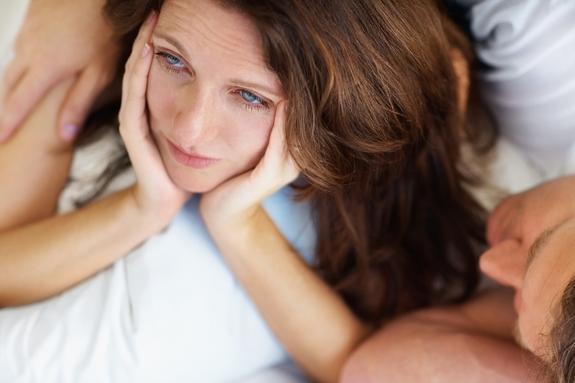
One-third of women have felt depressed after sex, and 10% regularly do.
It’s not about feeling down after a one night stand, worried you’ve made a mistake. Many of the women were in stable relationships. One explained:
I did not associate the feeling with an absence of love or affection for my sexual partner nor with an absence of love or affection from them towards me, because it seemed so unconnected with them.
I thought of this study as I read a blog post from “Overcoming Depression,” by a man who struggles with this same issue:
A passionate love making is one of the most enriching experience of one’s life. Let me tell you one difficulty that I sometimes face in love making. If I did not get enough satisfaction after sex I become very sad and I feel very ‘low’ and slightly depressed. I don’t like it happening to me. It makes my girl-friend feel bad as well by thinking that it is her fault. I don’t know how to tackle this issue. Any suggestions?
This is a hard one because even the researchers don’t know.
The problem is common among women who have been sexually abused or grown up in sex-shaming religions of families. They often feel guilty or frustrated afterward.
But that was not so for everyone in the study.
Depression may arise from issues outside the bedroom. Researcher, Dr. Debby Herbenick suggests talking with your partner, your doctor or seeing a therapist. Ask yourself, “Are you upset with your partner? Are you having self-esteem or body issues? Are you sad about other things in your life?”
Below are some reader comments from Clutch, where I first read about this study:
- I would imagine that women my age at least (over 40) may still have some guilt tied up with sex. Growing up in the 60′s and being browbeaten, threatened and dared to “keep your dress down and your panties up,” by the time many women did get some, they felt too guilty about it to enjoy it. And then these women raised their daughters this same way as they were raised, which would explain younger women suffering from the same emotional malady. We pass along a lot of twisted notions to our kids sometimes, even when we know it’s not right.
- I had that problem in the past but for some reason, it hasn’t occurred in a very long time. I have also experienced extreme agitation and anger, but um, I’m sure that was due to not being satisfied.
- i get irritable when i don’t have an orgasm. this is why i believe in using a magic wand. go get one – around $35. best money you will ever spend.
My thoughts:
In cultures that are sex-positive, women enjoy sex a great deal and are highly orgasmic. Something is terribly wrong in our society when one-third of American women have experienced sadness or anxiety after sex.
Otherwise, I’d suggest focusing on the connection, on the merging with each other, rather than the goal of an amazing orgasm.
And Casey, who blogs at The Sprightly Writer also has some interesting suggestions:
Hmm…after making love, I’ve felt sad and low at times too. But I think the solution to this is to focus on the full body experience and not focus on the goal, but on the exploration of the other person.
How much do you incorporate sensory play? A lot of people whose sex lives become too boring will improve with incorporating different sensations – ice cubes, feathers, soft fabrics. If your partner is willing, she might even go for a little bit of wicked fun.
…For men, there is also a trick you can try to prolong and enhance your personal experience. If they can learn to practice coming to the edge of ‘completion’, backing off from it and focus on her, coming back to that place, and backing away from it, it extends the duration and the intensity when you finally do find release.
If anyone finds any of this helpful, let me know.
Related Posts on BroadBlogs
DO Women Like Sex Less Than Men?
Repressive Female Sex Culture
Sex Lessons from Mom and Dad
Surprises in Indiana University Sex Survey
Share this:

Do Women See Sexy Men As Sexy?
![Picture10[1]](https://broadblogs.com/wp-content/uploads/2013/07/picture101.png) When women look at men who are sexily posed or who show skin, they don’t always seem sexy, as I’ve discussed before. Is there any hope?
When women look at men who are sexily posed or who show skin, they don’t always seem sexy, as I’ve discussed before. Is there any hope?
First, the problem: Imagine watching the Bikini Open “in reverse” so that women are fully clothed while men wear revealing Speedos. What about nearly nude men dancing on platforms? Or a camera focused on a man’s butt as he walks by. All this may look sexy. But women may well see it all as “gay.”
In fact, a sexily posed man may be played for laughs, a favorite ploy of Sacha Baron Cohen.
But then, women are so used to sexualized bodies being meant for men’s “consumption” that women can come to see nude or near-naked men through men’s eyes, too. And of course, sexualized images of men that are meant for men would be gay. (Nothing wrong with being gay, but it’s not a big turn-on for women.)
![David-Beckhams-Shirtless-HM-Super-Bowl-Ad-Video[1]](https://broadblogs.com/wp-content/uploads/2013/07/david-beckhams-shirtless-hm-super-bowl-ad-video1.jpg) Yet David Beckham can show skin and still look sexy. Maybe it’s because he seems so hyper masculine and hetero that it’s hard to think of him as gay. Sociologist, David Mayeda, has been theorizing on what makes men seem sexy to women. He describes Beckham this way:
Yet David Beckham can show skin and still look sexy. Maybe it’s because he seems so hyper masculine and hetero that it’s hard to think of him as gay. Sociologist, David Mayeda, has been theorizing on what makes men seem sexy to women. He describes Beckham this way:
Tattooed, rugged, athletic, showcasing a lean musculature and menacing glare, Beckham embodies a (dominating) masculinity… he is globally recognized, financially wealthy, and married to a woman who also holds currency in popular culture. This last point is critical. By being married, Beckham confirms his heterosexuality, and her extraordinary beauty and international popularity raise his standing as a “real man.”
![110909--fathers-baby-hmed-2p.grid-6x2[1]](https://broadblogs.com/wp-content/uploads/2013/07/110909-fathers-baby-hmed-2p-grid-6x21.jpg) So must men be hyper masculine to seem sexy? Not always. Plenty of women find buffed men holding babies alluring. Again, the images are muscular and masculine. Having produced a baby he sure looks hetero. But the loving care signals something of the feminine side: sensitivity, not dominance. He’s masculine in a fatherly way.
So must men be hyper masculine to seem sexy? Not always. Plenty of women find buffed men holding babies alluring. Again, the images are muscular and masculine. Having produced a baby he sure looks hetero. But the loving care signals something of the feminine side: sensitivity, not dominance. He’s masculine in a fatherly way.
Men are sometimes confused by women who want masculinity and tenderness. This just goes to show that many women do like both — perhaps especially combined. And who knows, there may be extra appeal in the sense of a man who appears committed to his partner and family.
Looks like “sexy men” too often fit inside a box that is as narrow as the box for “sexy women.” The current feminine ideal is skinny with big boobs while the current masculine ideal is limited to hard-bodies + dominance. Or toned + sensitive.
 Luckily “sexy” and “attractive” can also exist outside the “bodily sensual” box for both women and men.
Enter Don Draper who is sexy by way of his face, his confidence, and his success, despite being generously draped in clothing. This is a sort of sexy that may work like a dog whistle. No bare skin to trigger notions of sexuality in men’s eyes, so that leaves women free to notice it.
But it would be nice for both sexes to move further away from our cramped boxes.
As a last note, this is all about imagery. Both women and men can find real-life men and women pretty sexy even if they don’t match these cultural ideals.
Popular Posts on BroadBlogs
Men: Erotic Objects of Women’s Gaze
Why Aren’t Male Strippers Sexy?
Man as Object: Reversing the Gaze
Share this:

Tampons Confiscated as Women Protest in Texas
 You know what happens when women protest restrictions on their rights?
In Egypt they’re harassed and raped.
In Texas their tampons are confiscated.
If you can’t bully women by forcing something into their vaginas, just keep women from putting anything in there, themselves.
That’s right. You can take a gun into the Texas State Capital. But tampons, pads, and condemns are forbidden. Or even diabetic supplies that could save your life. Because pro-lifers just don’t like that sort of thing.
After all, women’s lives and autonomy are far more dangerous than guns.
Any sort of control women have over their bodies and reproductive lives must be stopped by Texas law enforcement! Abortion, contraception, sex ed… and now tampons.

Popular Posts on BroadBlogs
Extremists Messing With The Vajayjay
What Abusers and “Pro-Family” Conservatives Have in Common
Beat, Rape… Whatever It Takes To Control Women
Share this:

Trayvon Martin’s Right to ‘Stand His Ground’
We’re told over and over that if Zimmerman was afraid of Martin, according to Florida law, he had the right to put a bullet in the chamber of his concealed handgun, get out of his car after being told not to by the 911 dispatcher and follow and confront Martin and shoot him to death.

That’s from CNN opinion writer, Miller Francis. He continues:
At the same time, we are told that Martin, who had far greater reason to fear Zimmerman, practically and for reasons of American history, did not have the right to confront his stalker, stand his ground and defend himself, including by using his fists. We are told that this was entirely unjustified and by doing so, Martin justified his own execution.
Talk about victim-blaming!
The contradiction-in-rights likely arises because we tend to see through the eyes of the powerful and not through the eyes of the powerless. After all, the powerless have little control over media or the political or religious pulpits. With that in mind, I’m reposting the following as the Martin v. Zimmerman jury deliberates:
The Crimes of Hoodies, Short Skirts and Fannie Mae
“More guns, fewer hoodies” and we’d all be safer, Gail Collins advised in a New York Times piece after Trayvon Martin was gunned down for “eating skittles while black” – and while wearing said hoodie – in a gated community. A clear threat that had to be stopped.
That’s right. Guns don’t kill people, hoodies do: Trayvon Martin’s “hoodie killed him as surely as George Zimmerman did,” claimed Geraldo Rivera (who later apologized).
Sounds familiar. When women are raped short skirts become the culprit.
Yet few rape victims are wearing short skirts. And even nicely dressed black men can create fear. Journalist Brent Staples noticed that people got out of his way when he nonchalantly walked about. Amazed at his ability to alter public space, he tried humming Mozart to project his innocence. Seemed to help.
But why aren’t pricey cars, fancy suits and expensive watches blamed when rich, white men get robbed? What thief could resist?
Why? Because making more powerless members of society the culprit is meant to distract from the sins of the powerful. It’s women’s fault if men rape them, and it’s black men’s fault if lighter men kill them.
In another example, some blamed liberals for foolishly using Fannie Mae and Freddie Mac to help Blacks and Hispanics “buy homes they couldn’t afford,” leading to the banking crises that nearly drove the U.S. economy off a cliff.
What really happened is that rich bankers gave rich campaign contributions to government officials, who in gratitude disposed of pesky regulations. That helped bankers get mega-rich by devising complex financial packages that no one could comprehend.
Used to be that when someone bought a home bankers made sure they’d get paid back. But under deregulation it didn’t matter because the loan was sold to someone else. And that investor sold the loan again. And financial packages were created and sold, composed of fractions of many people’s mortgage loans. They were rated AAA since they were 1) diversified – and hence “safe” investments and 2) the housing market never goes down. (Yeah, right!)
Fannie and Freddie entered the process late, thinking they’d better join in or lose out.
When the housing market dropped and people couldn’t afford their homes, or sell them for a profit, the banks began collapsing. Lucky for them, the taxpayers bailed them out (or the whole economy likely would have collapsed).
Did deregulation get blamed for the fiasco? By some. But plenty of the “powers that be” — and especially “hate radio” — blamed Blacks and Latinos.
Because blaming more powerless members of society distracts from the sins of the powerful.
The crime does not lie with the man who pulls the trigger, nor with the man who rapes, and certainly not with the fat cat who pays to rig the game. No, the crime lies with those who wear hoodies, short skirts and who bank while black or brown.
Popular Posts on BroadBlogs
Cheerleader Ordered To Cheer Her Rapist, and Other Stories
Markets Must Be Free; Women Must Be Constrained
8-Year-Old Called “Whore” for Long Sleeves, Skirts

 BroadBlogs
