Blog Archives
Women Shouldn’t Be Alphas!
![Kristen-Stewart-Snow-White-Huntsman-armour[1]](https://broadblogs.com/wp-content/uploads/2012/06/kristen-stewart-snow-white-huntsman-armour1.jpg) I don’t want to publish reviews of films where women are alpha and men are beta. Where women are heroes and villains and men are just lesser versions or shadows of females.
I don’t want to publish reviews of films where women are alpha and men are beta. Where women are heroes and villains and men are just lesser versions or shadows of females.
Frank Parlato wrote that email soon after becoming editor of The Reporter.
The New York Times says it was Snow White and the Huntsman that set him off.
(It) struck Parlato as emblematic of “a Hollywood agenda of glorifying degenerate power women and promoting as natural the weakling, hyena-like men, cum eunuchs.”
He must not have seen the film.
Luckily, The Reporter is just a small weekly in upstate New York. But I’ve been thinking about this with the Oscars approaching.
Fortunately for Parlato, movies are mostly the way he likes them. But that’s not so fortunate for the rest of us.
Quick thought experiment: how would you experience yourself after watching popular Oscar-nominated films if gender roles were reversed?
- What if we watched President Mary Todd Lincoln fight to abolish slavery and save the union?
- What if CIA operative, Tonya Mendez, led the charge to liberate female diplomats from Tehran during the Iranian hostage crises in Argo?
- In Zero Dark Thirty a male CIA agent finds Osama bin Laden’s whereabouts. A highly-skilled female unit then finds and kills bin Laden.
- Our heroine explores spirituality and survives the good part of a year stranded on a lifeboat with a Bengal tiger named Rachel Parker in the Life of Pi.
- In Les Misérables ex-convict Janette Valjean undergoes redemption while pursued by police inspector, Monique Javer, who doubts the possibility of transformation.
- In Silver Linings Playbook bipolar Patricia leaves a mental health facility where she’d ended up after nearly beating her husband’s lover to death. Next thing you know, she’s fighting thugs at a Philadelphia Eagles game. In the end she enters a dance contest and gains love.
- Django Unchained follows Sally Django, a freed slave who crosses the United States with bounty hunter, Kate King, on a mission to rescue her husband from a cruel and charismatic plantation owner named Lenora Crawford.
If these were the movies would you experience yourself as a more powerful woman? More in control? More the main event? As a man would you feel more disempowered and marginal?
Plenty of things in our culture create the same psychology, such as “man” and “he” referring to us all. Or, “woman,” “she,” and “her” are consistently placed after “man,” “he,” and “him.” A wife takes her husband’s name. The list goes on. Living in a world where the power players in business, government, religion, the home and beyond are mostly men adds to the effect.
I grew up with a mother who’d grown up in a world where women were even more passively presented than they are today. She couldn’t change things, she thought. Others had to create a good place for her or she was out of luck. She felt powerless and depressed. That didn’t help me and that didn’t help my brother. (So yeah, males are harmed, too.)
Surely, balance would be better.
Related Posts on BroadBlogs
Women, We Are Men
Gender-Swapping Grammar Lessons
Frats Invite Sluts, Bitches; Women Accept Degradation. Why?
Share this:

Burning Wives
 By Hanna Ingraham
Rhuksana’s husband threw acid on her face and then her sister-in-law lit her on fire. Shortly after, one of her children got sick and she was forced to move back in with them because she couldn’t afford to feed her kids.
Zakia was divorcing her husband and just leaving the courthouse when he found her and threw acid on her. She is now disfigured and has lost an eye.
I learned about Rhuksana and Zakia in the documentary “Saving Face” which tells of the many Pakistani women who are victims of these attacks — about 100 cases each year. Women who consider themselves “the living dead.”
A patriarchy that devalues women appears to be the culprit.
Men who feel disgraced or embarrassed because of an argument over the dishes, or discarded advances, or who hold a generalized hatred of women, lash out. If women don’t do what men want, they deserve it.
These men want to ruin the women’s lives. And they succeed.
Agonizing acid burns through skin and fuses it together, making it difficult to eat or breathe. It blinds and kills. Women who survive become ashamed of their bodies and are ostracized. They are emotionally wrecked from being burned alive by their own husbands.
Abuse is rife in Pakistan with 65% of men saying they were abused as children and about half now say they abuse their wives. Through generations the men become diseased with a lust to harm women.
For years Pakistani women had not fought back because they had no voice. They may have believed that this was life and there was no other way. But recently the scales are falling from their eyes and the women are seeing possibilities and working to end the abuse. The government is listening and passing bills to protect them.
Here we see the cycle of abuse and how it can be broken. We see women once disempowered and blind to the possibility of change gaining both sight and muscle.
I’m inspired!
Popular Posts on BroadBlogs
In-laws Rip Off Girl’s Fingernails, But Who Cares?
Whipping a Daughter. Good Dad? Bad Dad?
Real Men Don’t Beat, Rape Women
Share this:

Rapists Get Child Custody?
I would learn firsthand that in the vast majority of states — 31 — men who father through rape are able to assert the same custody and visitation rights to their children that other fathers enjoy.
That’s Shauna Prewitt. In her final year of college she became the victim of a horrifying rape. Nine months later she gave birth to a beautiful baby girl. She chose to keep and raise her because her daughter was,
so much more than her beginnings. I blissfully believed that after I finally had decided to give birth to and to raise my daughter, life would be all roses and endless days at the playground.
I was wrong again.
Nearly 1/3 of women who conceive by rape choose to keep and raise their children. Like Shauna, they probably don’t realize that their rapist will be given visitation rights and end up in their lives forever.
As if the violent rape weren’t bad enough now she must be constantly reminded of it as she is forced into contact with the child’s father.
That may be just why the men seek custody. Rapists enjoy power and intimidation and can now create dread and fear through a lifetime. Or, as Shauna sees it:
It is not surprising that a man who cruelly degrades a woman would also seek to torture her in an even more agonizing way, by seeking access to her child.
A rape victim may, alternatively, sacrifice her need for justice by dropping the charges in a bargain to gain sole custody of the child.
Apparently, the court’s concern is that the man may not have raped the woman. But in this “he said/she said,” why does he win? Especially since rapists tend to have a controlling nature and a violent streak, risking child endangerment.
When I look at which causes greater harm, a man denied custody or a woman forever tormented and a child at risk for abuse, I wonder why the man’s rights trump the woman’s and the child’s.
Probably because every society is ruled from the perspective of the powerful. In this case, men. Those making the law are looking at things more from the man’s perspective than from the perspective of where the greater harm occurs.
It’s all reminiscent of a newly proposed bill “aimed at throwing rape victims in jail if they refuse to honor their rapist’s right to control their body by carrying his child,” as Amanda Marcotte put it.
That’s right. Rep. Cathrynn Brown of New Mexico wants a bill banning abortion for rape victims because it “tampers with evidence.” Sounds phony since pregnancies may occur without rape and rape can occur without pregnancy. Wonder how much money one of her constituents contributed to get that bill proposed?
At best this ban sees through the eyes of the powerful instead of the powerless.
At worst it is misogynistic, an excuse to hurt a woman even more than she has already been harmed by rape.
When it comes to justice sometimes it’s a world turned upside-down.
Popular Posts on BroadBlogs
Community Bullies Rape Victim
If She Was Drunk, Did She Rape Herself?
Mind of a Rapist: Trying to Bridge a Gap between a Small Self and a Big Man
Share this:

From Feminist to Doormat, and Liking It?
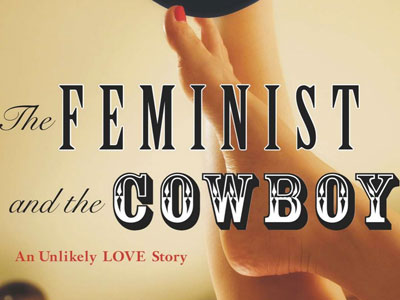 Alisa Valdes tells the story of her devolution from feminist to doormat in the memoir, The Feminist and The Cowboy.
And liking it, she claims. Or not.
Ms. Valdes says she was raised in a feminist home. She was named one of the top feminist writers by Ms. Magazine. Her first husband even “let” her hyphenate her name.
But as a single mom at age 42 she met “the Cowboy,” a conservative ranch manager who watches Fox News and believes women must submit to men. Her book blurb:
Their relationship finds harmony (and) she finds the strength, peace, and happiness that comes from embracing her femininity.
Femininity. Which here means doormat.
Instructions from Cowboy include: No back-talking; no second-guessing; no sarcastic, smart-ass remarks…
… and apparently, stay monogamous while he cats around.
In one incident she hears a women’s voicemail telling Cowboy she wants him in her shower. Alisa feels the agonizing pangs of jealousy. But she remembers that women are biologically wired to find cheaters alluring. What can you do?
Through it all she celebrates her submission, embracing women’s “natural role.” So does anti-feminist, Christina Hoff Sommers who calls the book,
An irresistible, post-feminist Taming of the Shrew… a riveting tale about how a brilliant, strong-minded woman liberated herself from a dreary, male-bashing, reality-denying feminism.
But weeks before going to press the two broke up. A problem since, as Amanda Marcotte points out, Valdes insists women will live happily ever after in orgasmic bliss if they just submit to controlling, misogynist men.
The abuse escalated soon after turning in her manuscript. During one fight he
dragged me down the hall to the bedroom, bent me over, and took me, telling me as he did so that I must never forget who was in charge.
Later, when she accidentally got pregnant and wanted to keep the child Cowboy got violent and left her. She returned to him after a miscarriage, but the violence escalated. Mostly verbal, with threats of violence.
The last time she saw him she jumped from a moving truck, fearing he would hurt or kill her:
I landed facedown on a bunch of rocks, nearly crushed under the back tires, dislocating my shoulder, badly cut and bruised everywhere, my hip filling with blood. I screamed. He stopped the truck, walked over, looked at me on the ground as I begged him to call an ambulance. “Only you would be stupid enough to jump out of a moving truck,” he told me. He did not help me, or come near me. Instead, he said he was going to the hunting lodge to get some witnesses, in case I tried to tell the police he had done this to me.
Noah Berlatsky at The Atlantic explains that:
Finally, Valdes realized that “this man did not love me. He could not love anyone,” and she left him for good—though, obviously, something of the terror remains. She notes that writing the (blog) post (about the violent incidents) puts her “in danger—real physical danger.”
Plenty of people, men and women, celebrate male dominance and female submission. But it hasn’t been so great for Ms. Valdes, and I have friends who’ve tried it and not liked it.
There is much wounding in this story that passes, in her mind, as “the natural order of things.” And Ms. Valdes as is now in a relationship with another abusive man.
The poet and writer, bell hooks, asks us to consider the nature of relationships.
“Pleasure + wound” vs “pleasure + love.”
Which makes you happier?
Which will you choose?
Popular Posts on BroadBlogs
Eminem Makes Sexism Seem Sexy – And That’s A Problem
What Happens When You Beat A Sex Object?
Frats Invite Sluts, Bitches; Women Accept Degradation. Why?
Share this:

Girls Walk Fine Line Between Attractive, Slut
 Women and men both use sexual allure to raise their status. Men may try to “score” with as many women as possible, with each conquest boosting their place among men.
For women it’s more complicated. Many college women think that being “hot” is the most important thing in the world. That’s because self-worth is so attached to beauty. But Elizabethe C. Payne, Director of Queering Education Research Institute (QuERI), explained in the Huffington Post that girls can face a double bind of “damned if you do, damned if you don’t” as society tells them they will only be loved and held in high regard if they show off their bodies – but they’d better not do it the wrong way:
Girls have to “straddle an often unclear line in appearing sexually attractive (desirable) and receptive (thus not “gay”) yet unavailable (not “sluts”).
She says that middle school girls who simply dress attractively and wear makeup—or who develop breasts before their peers – may be labeled “sluts.” And any girl who actively pursues a boy, defying the double standard, can get slut-shamed too. She needn’t have sex, she only needs to be assertive:
Many young girls who have never had sex or anything close to it — at all — have been marked as “sluts.” Once marked, young girls are repeatedly subjected to sexual harassment, threats and taunts.
But the pressure on young women to constrain themselves moves beyond sexuality and sexual allure. Middle school girls can also be labeled as sluts, bitches, whores or gay for acting assertively or challenging male authority – including the authority of boys.
Girls and boys both slut-shame. Girls, because they feel threatened by attractive young women, especially when they feel they cannot be attractive, themselves. And boys might sustain the male privilege to act and be free while girls must hold themselves back.
Which brings us to another double-bind. Women and girls who criticize a system that judges us only by our beauty, and who seek, instead, to work for equality can be labeled “feminazis.” But if they smile and take it they still lose.
If you’re going to lose either way in the short-term, you might as well work toward long-term freedom and empowerment, I’d say.
Popular Posts on BroadBlogs
Did Slut-Shaming Kill Phoebe Prince?
Sex and the Walk of Shame
Lose Virginity, Lose Self-Esteem?
Share this:

Men: Erotic Objects of Women’s Gaze

Sexy, but all covered up.
A nude woman frolics in silhouette as clothed men sleuth about, guns in hand and feet in chase. These images introduce The Spy Who Loved Me.
Flipping through TV stations the other day, this Bond rerun caught my eye and left me imagining the reverse: a nude man cavorting about as clothed women race in pursuit of criminals. Weird.
The female body is celebrated – or exploited – while the male body is ignored.
Check out People’s sexiest men. Until 2013s Channing Tatum you would be hard-pressed to see anything but face shots, loose T-shirts, and very few rippled muscles. Who could imagine a “sexiest woman” shoot sans bodies.
Searching for a calendar of sexy men at one bookstore, the closest I could find was Barack Obama.
Yeah, yeah, there is the occasional men’s underwear ad, but they are rare.
And when men walk around in the world they’re all covered up.
No wonder women don’t spend a lot of time checking out men’s bodies, ogling them or judging them.
A man commented on one of my posts that (to paraphrase):
Not only are men not considered erotic, they are often used to get laughs. In Seinfeld, Elaine referred to the male body as “utilitarian,” implying that the female is much more erotic. George Costanza became a victim of “shrinkage.” Scenes of Johnny Knoxville running around in a thong get chuckles.
Why is the male body so de-eroticized?
One possibility: Men have historically controlled media, and they focus on what they find sexy (about 95% of them anyway). Homophobia further hinders eroticization. As women enter the industry we find more focus on men, but still not much compared with women. Meanwhile, showered with sexy-women images from the time they are small, even women come to find women the sexier of the species.
What if the world were to switch? Suddenly, a universe of men in Speedo’s?
What if women became subject, and men erotic object for women to gaze upon? What if women sought to consume men as objects? Judging them, grading their beauty? Would women feel empowered, experiencing themselves on the “person” side of the person/object divide?
Something to think about.
Popular Posts on BroadBlogs
Women Seeing Women as Sexier than Men
Man as Object: Reversing the Gaze
Women Learn the Breast Fetish, Too
Share this:

The Rules vs The Game
 The Rules and The Game are manuals created to teach men and women how to attract the opposite sex. What do they tell us about the war between the sexes in this new millennium? For in these manuals, it is war.
The Game
The Game was written in 2005 by Neil Strauss after his book editor asked him to investigate the community of pickup artists. After a few workshops this self-described “chick repellant” found that the techniques worked surprisingly well for a “pick up” — but not for relationships. And, as it turns out, the game works best for misogynistic men, but only works to attract women who are misogynistic, themselves.
Here are some rules of The Game:
- Approach a woman within three seconds of seeing her so you won’t lose your nerve
- Ask something benign like “What’s your sign?” or “What’s your type?”
- Act somewhat disinterested
- Briefly disqualify yourself from being a potential suitor
- Ignore the girl you want and flirt with one of her friends instead
- Ogle other women
- Subtly insult her to lower her self-worth
- Isolate “the target” from her friends
Clearly, these rules are all about bedding women by means of controlling them and weakening their self-esteem, while inflating the confidence of men.
The Rules
The Rules were written to aid women in getting a man to commit. Published in 1995, they were updated in 2002 to reflect single life in a high-tech culture.
Here are a few rules:
- Let him take the lead
- Don’t talk to a man first and don’t ask him to dance
- Don’t call him and rarely return his calls
- Always end a date first
- Don’t see him more than once or twice a week
- Don’t talk very much on the first date
- Break up with him if he doesn’t buy you a romantic gift for your birthday or Valentine’s Day
- Don’t open up too fast
- Be sexy
In sum, The Rules urge women to manipulate men by playing hard to get. In an ironic twist women are advised to make men the leader even while creating a sense of female independence. (Even keeping her mouth shut works to create a sense of “man as leader” as some research finds that when women talk more than one third of the time they are seen as honing in on men’s space.)
On the bright side, women are urged to get on with their lives instead of waiting around for “him.”
What The Rules/The Game have in common
Both manuals advise game-playing, so we have not evolved much — or many of us have not.
Both amass power to “their side” by means of disinterest – which may work since whomever cares least has more power.
The Rules advises a traditional source of power for those who lack it: manipulation, controlling men without their knowing. Interestingly, The Game urges this same feminine technique for men, who do not have direct control over women’s minds and bodies.
And we find sexism surviving in both books.
The war of the sexes lives on
Not surprisingly, the books also differ in a way that reflects traditional gender norms. The goal of The Game is to bed women while the goal of The Rules is to snag men. The stereotypes live on.
My students are surprised that The Rules weren’t written in the middle of the last century. But The Game’s even more recent publication comes as no shock. I guess we are more puzzled by women who agree to sexism, whereas no one is surprised that some men continue to support it.
Popular Posts on BroadBlogs
Using Insults to Pick Up Women
Are Men More Likely to Separate Love & Sex?
Sources of Power in Relationships
Share this:

Non-Sex Reasons For First Sex
![Women-with-Vaginal-Problems-after-Sexual-Intercourse-039-Allergic-039-to-Partner-039-s-Semen-2[1]](https://broadblogs.com/wp-content/uploads/2013/01/women-with-vaginal-problems-after-sexual-intercourse-039-allergic-039-to-partner-039-s-semen-21.jpg) Freud may have named sex drive the primary motivational force among humans, but sometimes you gotta wonder. Because sex serves other aims an awful lot of the time.
Freud may have named sex drive the primary motivational force among humans, but sometimes you gotta wonder. Because sex serves other aims an awful lot of the time.
How about first sex? According to a 2011 study by Laura M. Carpenter, PhD, many see virginity as a gift to give to someone special, with the goal of strengthening the relationship. Women were more likely than men to have this purpose in mind, though some men did, too.
Men were more likely to have sex to shed the stigma of virginity. Not surprisingly, women were much less likely to state that reason, though some did. But for men, especially, it can be embarrassing to be a virgin.
About one third of those in Carpenter’s study saw losing virginity as a rite of passage, a step toward growing up. By the way, this group was the most satisfied with the experience, perhaps having lower expectations. They typically planned for the moment, complete with birth control, and they could more easily take a bad first experience in stride.
Looking at a 1994 study, by comparison, half of women said they had sex for the first time out of affection, which fits well with social expectations that women will have sex out of love — or “strengthening a relationship” as cited in the 2011 survey. Meanwhile, 51% of men had sex for the first time out of curiosity or because they felt ready. This fits well with a focus on achieving manhood (“ready” to be men).
Interestingly, only 12% of men and 3% of women said they had sex for pleasure their first
time, in the 1994 survey. Carpenter didn’t separate out “pleasure” as a separate category, and said it was most often attached to “ridding self of stigma” in her study.
By the way, the 2011 survey found that women and men were more alike than expected. “The idea we have from TV and movies is that for women it’s all about love and for men it’s all about getting it over with,” Carpenter related. “If men and women shared metaphors, the choices they made and the kinds of experiences they had were pretty similar. That’s something that hasn’t been noticed that much.”
Carpenter also noted that gays and straights were similar in their experiences.
All in all, it’s interesting to see how often pleasure takes a back seat to other concerns when it comes to sex. I’ll discuss this in a variety of other contexts to come.
Popular Posts on BroadBlogs
Lose Virginity, Lose Self-Esteem?
Sex Objects Who Don’t Enjoy Sex|
Women Want Casual Sex? Yes and No
Share this:

Boob. A Breast? Or a Fool?
![e412ba0843ed5a18555a51ed4c185b32[1]](https://broadblogs.com/wp-content/uploads/2012/12/e412ba0843ed5a18555a51ed4c185b321.png?w=604) The English language has more than 1000 words that sexually describe women or their body parts. Here are a few:
The English language has more than 1000 words that sexually describe women or their body parts. Here are a few:
Babe, nymph, nymphomaniac, bimbo, fox, dog, beaver, freak, super freak, knockout, melons, tomatoes, whore, ho, dumb blond, shapely, pussy, boobs, hussy, slut, buxom, trim, troll, femme fatale, skank, goddess, jugs, bush, poontang, tart, loose, tramp, butch, bitch, Lolita, Betty, sex kitten, temptress, beast, promiscuous.
Sometimes neutral words take on a sexual meaning when they are applied to women. Call a man a professional and you’ll likely envision a doctor or a lawyer. But say, “She’s a professional” and “prostitute” may be the first thing that comes to mind.
An author was asked to rename a book title before publication. “The Position of Women in Society” seemed too suggestive.
“It’s easy” sounds like a simple task. “He’s easy,” might denote an easy grader. But say, “she’s easy,” and you’ll likely hear “sexually promiscuous.”
One-time courtesy titles, or even high titles, can take on sexual meanings. “Madam” is a polite way of addressing a woman. She may be the female head of household. But she may also be the female head of a house of prostitution. Mistress, another term for the female head of house, is now associated with adultery. “Lady” is a polite title. But “lady of the evening” is not. Even the highest status a woman can gain, “Queen” takes on sexual connotations when applied to a gay man or a “drag queen.”
And notice how these words are demeaning as well as sexual (“gay” is overcoming the stigma, but there’s still a way to go). We could add drama queen and cootie queen to that mix.
Even the term boob, slang for a woman’s breast, is defined in the dictionary as, “a stupid or foolish person.” Odd that something so valued is also degraded. Is the appeal of boobs similar to the draw of a dumb blonde?
What difference does it all make?
In their work in anthropology, Edward Sapir and Benjamin Whorf learned that words affect how we see. The Hopi Indians had no words to distinguish among the past, present, and future. And they had a difficult time with those concepts. Skiers are more attuned than most to different kinds of snow: powder, packed powder, corn, ice, slush, for example. Or, we so often use male terms to describe humanity – man, mankind, brotherhood, fellowship – that when people are asked to think of a person, a man generally comes to mind.
Words dig deep into our unconscious psyches, directing how we see ourselves and others. When we constantly hear sexual and pejorative terms describing women, women come to be sexualized and demeaned in our minds.
The language we learn is neither the fault of the men or the women of our society, in so far as baby girls and baby boys both grow up immersed in these words. What’s important is how we use language once we “get it,” and once we get that it matters.
Related posts on BroadBlogs
“Cock” vs “Down There”
Sex: Who Gets Screwed?
Words: Sticks and Stones? Or Shaping How We See Ourselves?
Share this:

Is Sexism Men’s Fault?
![2009-01-13-0obama[1]](https://broadblogs.com/wp-content/uploads/2012/12/2009-01-13-0obama1.jpg?w=604) Is male dominance natural and normal? Did sex inequality arise as men’s brute strength cowed women into compliance? My students often think so, saying things like, “Men have always ruled,” as though it’s inevitable. Or, “Men are bigger and stronger so they can bully women into submission.”
Is male dominance natural and normal? Did sex inequality arise as men’s brute strength cowed women into compliance? My students often think so, saying things like, “Men have always ruled,” as though it’s inevitable. Or, “Men are bigger and stronger so they can bully women into submission.”
I guess we’ve made some progress since I don’t also hear the old argument that women are naturally dependent.
Most people don’t know that men haven’t always been in charge.
When Europeans first made contact with America Indians they were amazed – and appalled – at their equality.
Matrilocal, the husband took his place with his wife’s family after marriage. Matrilineal, relatives were traced through the female line. Property passed through women. Killing a woman brought a double penalty.
Europeans were aghast that native men needed to speak with their wives before taking action!
Men and women both had tribal councils. If the men voted to go to war and the women disagreed, the women could refuse to provide corn (their staple) leaving the men backing down.
Other egalitarian cultures include the Arapesh, the !Kung, and Tahitians (before European contact), to name a few. In fact, it appears that parity was not uncommon prior to agriculture.
Inequality seems to have arisen not because men purposely tried to hurt women and help themselves, but via some seemingly innocuous routes, 1) agriculture and 2) attempts to avoid inbreeding via trading, selling, and stealing women (who could have more children and make the tribes larger and stronger). I’ll discuss these dynamics in a later post.
But we know that gender inequality is not predestined. And men do not inevitably try to dominate women through brute force.
Today many men work for women’s equality, too.
And I’d like to thank them.
Popular Posts on BroadBlogs
Are Women Naturally Monogamous?
Cultural Relativism: Must We Be Nazis to Criticize Them?
Cheerleader Ordered To Cheer Her Rapist, and Other Stories

 BroadBlogs