Category Archives: body image
The Plump Beauty Ideal: Exotic Dancers in 1890
Once upon a time “plump” was the beauty ideal.
Check out this post by Lisa Wade @ Sociological Images
I recently had the pleasure of reading Peter Stearns’ Fat History: Bodies and Beauty in the Modern West. The book chronicles the shift in American history from a plump to a thin ideal. The beauty of Stearns’ book is his resistance to reducing the shift in norms to a simple cause. Instead, he traces the changes to conflicts between capitalism and religion, the backlash against women’s equality, industrialization and the devaluation of maternal roles, fashion trends, the professionalization of medicine, our cultural relationship to food, and more.
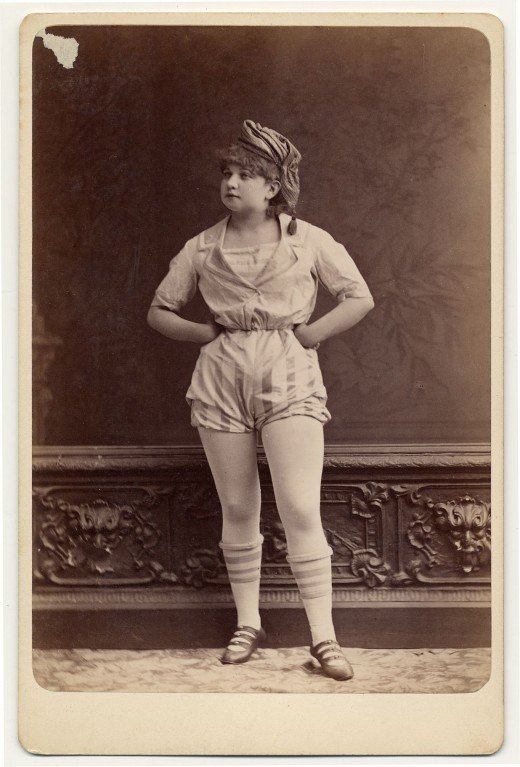
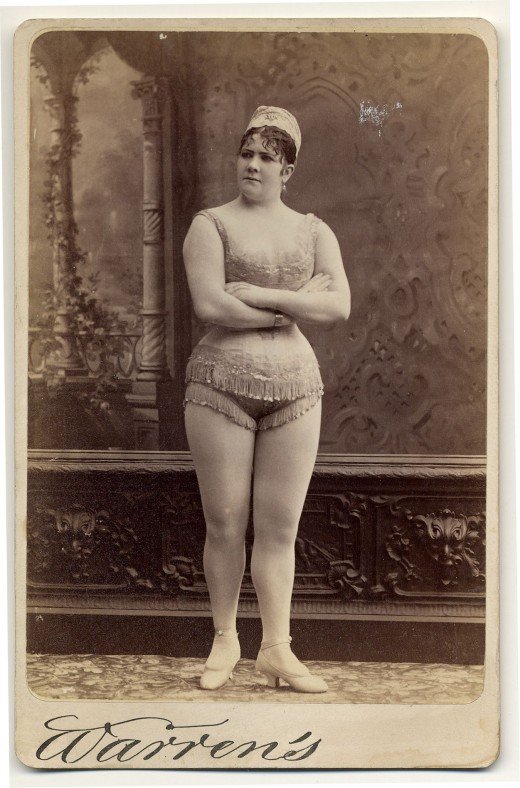
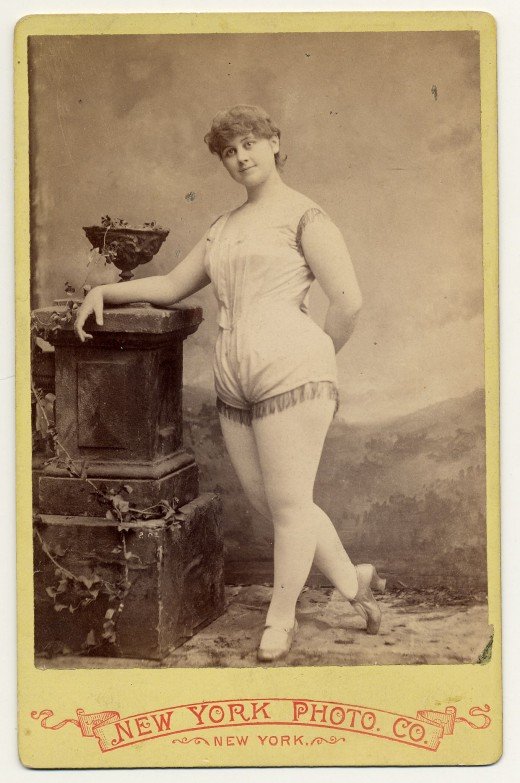
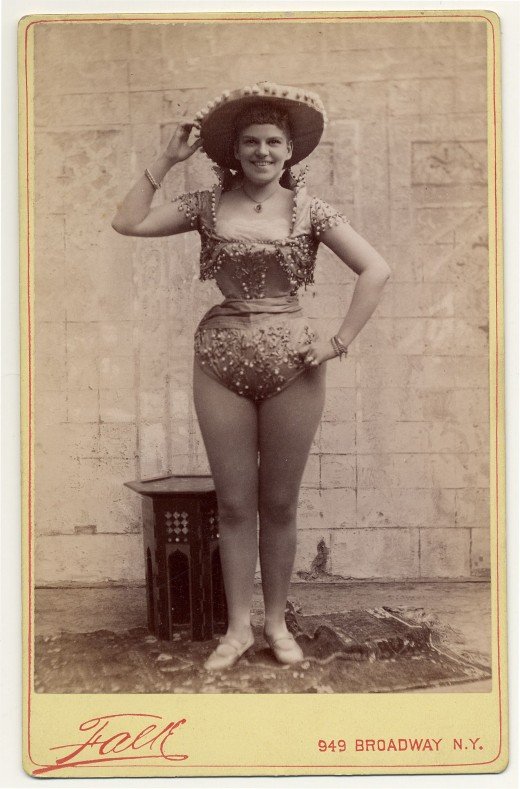
Stearns is quite specific in timing the change, however, pointing to the years between 1890 and 1910. In these 20 years, he writes:
…middle-class America began its ongoing battle aginst body fat. Never previously an item of systemic public concern, dieting or guilt about not dieting became an increasing staple of private life, along with a surprisingly strong current of disgust directed against people labeled obese.
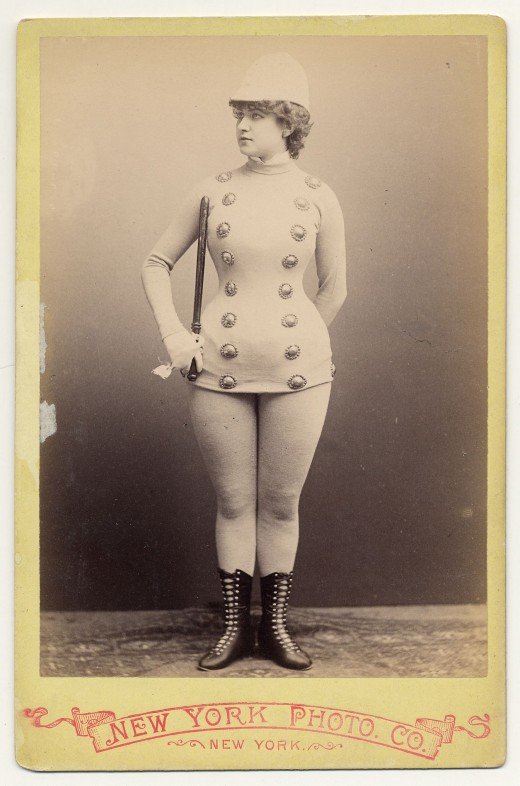
I thought of Stearns’ book when I came across a delightful collection of photographs of exotic dancers taken in 1890, the year he pinpoints as the beginning of the shift to thinness. From a contemporary perspective, they would likely be judged as “too fat,” but their plumpness was exactly what made these dancers so desirable at the time.
This piece was originally posted @ Sociological Images
Popular Posts on BroadBlogs
Beautiful Women’s Hips Are Thinner Than Their Heads?
Men Are Naturally Attracted To Unnatural Women
How to Look Like a Victoria’s Secret Angel
Share this:

Beauty Tricks to Remove Your Power

Ashley Judd’s face looked puffy in the promo for her new TV series, Missing. Big deal. She’s aged since I last saw her, and maybe she’s gained a little weight.
And then the furor. Everyone talking about Ashley’s face.
So she responded in the Daily Beast. A few lines:
The Conversation about women’s bodies exists largely outside of us, while it is also directed at us, and used to define and control us. The Conversation about women happens everywhere, publicly and privately. We are described and detailed, our faces and bodies analyzed and picked apart, our worth ascertained and ascribed based on the reduction of personhood to simple physical objectification. Our voices, our personhood, our potential, and our accomplishments are regularly minimized and muted. The assault on our body image, the hypersexualization of girls and women and subsequent degradation of our sexuality as we walk through the decades, and the general incessant objectification is what this conversation allegedly about my face is really about.
Wow.
The lines linger, waiting to be soaked up.
We are described and detailed
our faces and bodies analyzed and picked apart
our worth ascertained and ascribed based on
the reduction of personhood to simple physical objectification
The body detailed and critiqued, diminished and demeaned. An emotional trashing. Cut up, dissected. It feels like a killing. No wonder we are body-obsessed, declare nourishment the enemy and become terrified of aging.
With our bodies spotlighted the rest of us vanishes.
Our voices, our personhood, our potential
and our accomplishments are regularly minimized and muted
(as)
The Conversation about women’s bodies exists largely outside of us
We become nothing but our “defective” parts.
And we can say nothing as the conversation bubbles everywhere, outside ourselves, removing our power to name and control.
But Judd doesn’t leave us, or herself, hanging in hopelessness. What is deemed good and bad are equally fanciful interpretations, she says, and so she has chosen to abstain from all outside judgments about herself and her body.
We are social animals. Our identities are keenly influenced by how others see us, and more so when those visions act in concert. When many see us a certain way, the agreement brings objectivity, while our solitary thoughts seem merely subjective.
But the declarations are not absolute. Especially when we discern shallowness and falsity. We may choose otherwise:
I do not want to give my power, my self-esteem
or my autonomy
to any person, place, or thing outside myself
The only thing that matters is how I feel about myself
my personal integrity
and my relationship with my Creator
“It is ultimately about conversations women will either choose to have or choose not to have,” says NPR’s Linda Holmes.
Let’s have some new conversations.
Popular Posts on BroadBlogs
You Are “Less Than”?
Self-Esteem Falls with Rise in Power? Blame Beauty Ideals
Anything Good About Being A Sex Object?
Share this:

Women Seeing Women as Sexier than Men
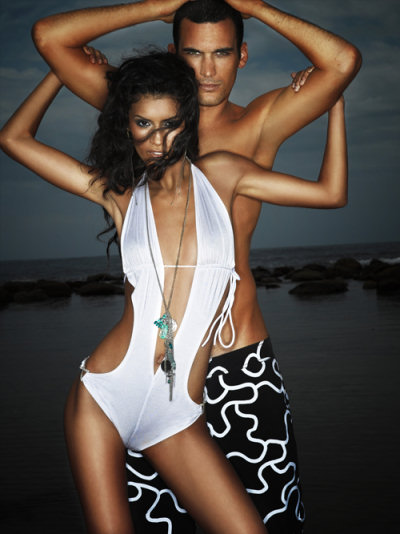 Girls are so inundated with sexualized images of women that they learn to see women as sexier than men. Women come to see women through male eyes?
In the bedroom, this can make women’s sexuality a bit convoluted, which I’ll discuss later.
But consider my students:
“Women’s bodies are just naturally sexier than men’s,” my class tells me when I ask why women are portrayed as sex objects.
In this belief, my students are not alone.
A few years back Lisa Kudrow, of Friends fame, told Jay Leno that female nudity is displayed more in movies because, “Who wants to look at a guy?”
Hugh Hefner thinks women are natural sex objects, “If women weren’t sex objects, there wouldn’t be another generation.”
I’ve talked before about how the breast fetish is not natural, but is learned by both men and women. But how do we all learn that women are sexier than men in ways that go beyond the fetish?
Growing up, girls are bombarded with visions of women as sexy, with skin selectively hidden and revealed, the camera focused on those intriguingly concealed parts.
When I was little my mom took me to the Ice Capades. After noticing that the women were half dressed while the men were fully clothed, I asked why. Mom told me that women just have better legs.
Do they? One warm summer day an adult from my church youth group commented, “It’s too bad the guys have the best legs.” (Thanks!) But what is our cultural ideal? Longer, leaner. Young men typically have longer legs, and they don’t have the extra layer of fat that women do. So most young men’s legs come closer to our ideal. Yet we say women have better legs? When I think about it, I actually think men have pretty nice looking legs. But nothing and no one directs our attention to them.
On Dancing With The Stars, women are half-dressed and men are fully-clothed. During an advertisement, the camera lingers on women’s breasts and legs in a Victoria’s Secret display. Next, a commercial for shoes focuses on women’s behinds: See this Rebook ad for EasyTone. Try to imagine the same focus on men’s butts (which actually are pretty attractive)!
Watch a football game and see big, fully-dressed, aggressive guys playing on the field, while scantily clad cheerleaders show off their stuff from the sidelines. In the Bikini Open men sport golf wear while women dawn bikinis. When does Sports Illustrated most focus on women? In the swimsuit edition.
Through it all, the camera gazes at women’s body parts, but not men’s. Telling us what’s important to notice. What’s sexy and what’s not.
Men’s bodies are rarely sexualized outside infrequent underwear ads.
Historically, men have had control of media, and they’ve portrayed what they see as sexy.
Bombarded with these images, girls come to see women as sexier than men. As I’ve said before, when I tell my class that I find a Playboy pinup sexier than a Playgirl pinup, women’s heads nod in agreement.
Meanwhile, when women answer surveys about what they find sexy they say “men.” But when they are wired up, blood flow to the vagina is stronger when viewing an image of a nude woman than a nude man – conscious responses and bodily responses not agreeing.
Oddly, and yet logically, women come to see women through male eyes.
So women come to see themselves as the sexy half of the species. Being sexy has some advantages. It can just be fun, it’s easier to attract mates (consider the success of women versus men in singles bars), and sexiness is a source of power.
But there’s a downside, too, including the narrow construct that leaves so many women feeling they exist outside the “sexy” box, with a drop in self esteem kicking in.
Taken to extreme, some women can become sex objects, taking an unhealthy one-dimensional focus on themselves, feeling that how they look is all that matters. And some men may see them as objects whose sole purpose is to be used for their pleasure.
It ain’t so great to be, or be seen, as mere object.
Popular Posts on BroadBlogs
Sex Objects Who Don’t Enjoy Sex
Men Have Higher Sex Drive. Why?
Women Learn the Breast Fetish, Too
Originally posted on January 10, 2011by BroadBlogs
Share this:

I Didn’t Want To Be Pretty
By Victoria King
Man clothes, dark, heavy makeup, scarcely a trace of femininity: that was me in high school. I hated the notion that girls had to be pretty and were valued only for their looks. I wanted people to appreciate me for being fun, funny and a good debater.
I felt like women made themselves out to be pretty idiots because they were naturally shallow and stupid.
And envious. I hated the competition between females, so I looked as weird as possible hoping no one would see me as a threat.
Men don’t see attractive males as threats. They’re high-fived for getting women – the more the better. I wanted sisterhood, but was really more interested in having “brotherhood.”
It was a strange place to be, looking down on females as a female, and not wanting people to care whether I was pretty or not.
Yet part of me wanted very badly to be pretty. I believed I was hideous.
Despite a wholehearted attempt to free myself from incessant judgments on my appearance, I developed severe issues with self-image and self-esteem.
I saw myself being sidelined because of how I looked. I began to resent working that much harder to keep myself relevant and earn respect when other girls just stood there looking pretty. I felt trapped by society, my body and my inability to change myself or anything around me.
And so I fell into disordered eating in a desperate attempt to gain control over something. It didn’t work.
I began searching for answers. I wanted to know why women’s beauty seemed to be the only thing that mattered. I wanted to know why deep pain is associated with the beauty that is supposed to be a blessing.
The film, America the Beautiful offered a clue. The film tells how businesses make money when women feel dissatisfied with the way they look. If women weren’t satisfied, they wouldn’t spend money to make themselves “better.” I saw how we are manipulated.
As I studied more I began to see what it means to live in a patriarchy. It had never occurred to me that denigrating women’s appearance and capabilities could be a reaction to women’s gain of rights and power. If women have equal rights, you can still defeat their souls by draining their self-worth as they strive to live up to impossible standards.
The revelation was freeing. I didn’t have to accept impossible standards. I even stopped seeing anorexic models as attractive.
Now I feel that “pretty” is neither something to be obsessed over nor obsessively avoided. And I don’t think “attractive” comes in only one form. And that is freeing.
Popular Posts on BroadBlogs
Am I Ugly? Girls Ask YouTube
Keep Your Boobs, Get Better Guys
I Can’t Believe I Ate A Whole Head Of Lettuce!
Share this:

Are Blondes as Picky as the Men Who Prefer Them?
 I’m still regarded a libidinous lad by a lot of (especially buxom blonde) ladies, so this muscular, boyishly handsome 5’8 black 58-year-old ALMOST ALWAYS ogles well-endowed women because I’m proud to be considered an aging lad!!!! How ’bout it, girls?
That’s one of the more colorful comments I’ve received (slightly edited to include all the vital stats he’s provided over time).
“Lusty” (part of his moniker) has voiced his buxom blonde penchant on numerous occasions, so I asked:
“Do you think Buxom Blondes are as picky as you?”
“Well, maybe,” he responded. “But as long as I can remember, I’ve been captivated by bosomy women — white, black, Latina, etc. — but buxom blondes are my faves.”
Little wonder, since they are regularly presented as the most prized by our society — though the preference has been moving toward “racially ambiguous” (meaning you can’t tell what race the woman is). Still, most starlets today embody Lusty’s preference.
Sooo many men desire buxom blondes and think they’re “the best.” But if BB’s are similarly restricted in their preferences (and why not, when they’ve got so much to choose from) then few men would seem to stand a chance. It just doesn’t seem to occur to a lot of men that snobbery can run both ways, leaving them out of the running, too.
I suspect that narrow notions of beauty benefit few (mostly corporations that sell products by making people feel bad about themselves).
But when only some are esteemed, everyone else ends up feeling deprived and frustrated. Women, because they don’t fit the narrow notions, and men, because they can’t have the limited number of women who do.
Meanwhile fabulous people, who may be a much better match, and who could please us more, end up out in the cold.
And that leaves too many lonely and lacking deep satisfaction.
Instead of running about like lemmings, led around by society’s dictates, why not find beauty in the varieties of women and men around us? And in the men and women we are actually with?
Popular Posts on BroadBlogs
Men Are Naturally Attracted To Unnatural Women
Self-Esteem Falls with Rise in Power? Blame Beauty Ideals|
Does Sexual Objectification Lead to Bad Sex?
Share this:

What Gossip Magazines & Abusers Have In Common
By Linda Bakke
Star Magazine promotes violence against women.
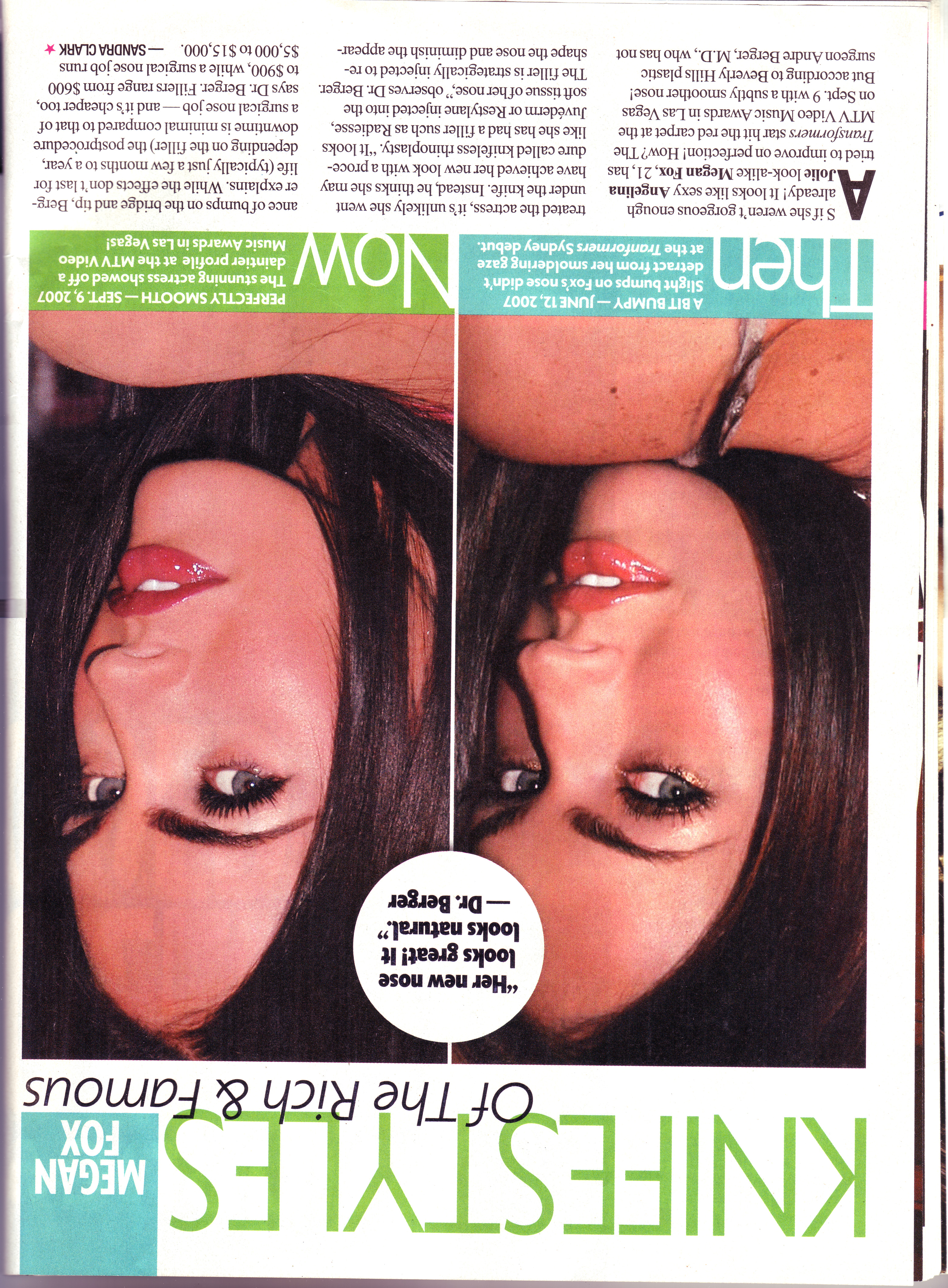 Ok, that sounds like a tabloid headline, but the more I look over Star Magazine, the more I’ve been struck by a sense of violence directed at women.
The starlets are constantly attacked for any extra weight, cellulite, bunions, ugly fingers or thick arms. It feels like open season. “Kill the Celebrity” is the name of the game.
One section called “Knifestyles” advocates mutilating women through plastic surgery. With the accompanying message, “You’re not good enough.”
In fact, Star uses the same devices that characterize domestic abusers: watching the victim’s every move, humiliation, stressing the negative rather than the positive aspects of the victim (who is supposedly adored), using “it’s her fault” to launch an attack, and transferring the abuser’s dissatisfaction with life and himself onto the victim.
After a while, she starts to blame herself.
Paparazzi hunt celebrities down and we all become cannibals of the spoils, savoring the flaws of “perfect” idols as we bring them down a peg.
But it’s not just about starlets. It’s not just their bodies that are under attack. Yours and mine are, too. If they don’t look good, we don’t either.
The depiction of women in gossip magazines represents the degradation, abuse and mutilation of women. We must recognize how damaging these portrayals are for all of us, women, girls, men and boys.
For we are all encouraged to scrutinize and vilify women for being less than perfect.
Popular Posts on BroadBlogs
Men Watch Porn, Women Read Romance. Why?
What Happens When You Beat A Sex Object?
Beautiful Women’s Hips Are Thinner Than Their Heads?
Share this:

Wanting “X” from Sex, but Doing “Y”
 Most people say they want pleasure and closeness from sex. But they don’t act like it.
Instead, they’re preoccupied with how they look, what their partner is thinking, how they’re performing, and what is “normal”
That’s what Dr. Marty Klein, a Certified Sex Therapist and sociologist, says in his book, “Sexual Intelligence: What We Really Want From Sex and How to Get It.”
Perhaps because of fashion magazines, or porn, or because we see “good sex” as the sex of our 20s, we conclude that great sex is looking like 20-year-old “perfectly” built porn stars, and doing what 20-year-old “perfectly” built porn stars do.
And that leaves most women feeling insecure about their bodies (since most women are insecure about their bodies): “Am I too fat? Are my breasts too small, too lopsided, too droopy? Do I have cellulite?” instead of having close, pleasurable sex.
Which naturally leads to: “Is my partner thinking I’m too big, too small…? Is he thinking about someone else?” Again, worries — not good sex.
Most men don’t yet expect to look like Ryan Reynolds. But they may worry about penis size. And they may notice that neither they nor their partners look like porn stars. Or, they may worry about performance or wish their bodies would do what they did years ago. And wish their ladies would act like porn stars. Or they may imagine porn stars instead of really being with their ladies. Distractions. Not good sex.
Too often, new positions or techniques are prescribed to perk things up. But Klein says the key is mind, not matter. Who can have great sex with all the distractions? You’ve got to clear out the baggage first.
A bit of advice:
First, embrace your body as it is – how it looks, what it can do. That frees you up to be present. As Klein points out, “You’d be foolish to craft a definition of sexy or manly or womanly that excludes you” (or your partner). He adds:
It is possible to detach how you look from how you feel and see that sexiness is not a product of what your body looks like from the outside, that sexiness is a product of how you feel on the inside… From there it’s a question of a person tuning into what do I have to offer somebody else sexually, and what do I have to offer myself sexually?
And let go of worries about what’s ‘normal,’ he says, because that takes us out of authenticity. Move “from ‘sex has to validate me’ to ‘I validate my sexuality.’”
The focus, according to Klein, should be on creating lasting physical and emotional connection with your partner. Don’t overburden genitalia with too much responsibility for making sex enjoyable. Media portray orgasm as the most important thing, he says, “But focusing on those few seconds misses most of what sex offers.” Instead, feeling good with your partner is the big payoff.
Popular Posts on BroadBlogs
Does Sexual Objectification Lead to Bad Sex?
Being Sexual vs Looking Sexual
Cartoonish vs Authentic Sexuality
Share this:

Scrutinizing My Body Takes All My Time
On a typical day, you might see ads featuring a naked woman’s body tempting viewers to buy an electronic organizer, partially exposed women’s breasts being used to sell fishing line, and a woman’s rear—wearing only a thong—being used to pitch a new running shoe. Meanwhile, on every newsstand, impossibly slim (and digitally airbrushed) cover “girls” adorn a slew of magazines. With each image, you’re hit with a simple, subliminal message: Girls’ and women’s bodies are objects for others to visually consume.
So says Caroline Heldman, Assistant Professor of Politics at Occidental College, in a piece for Ms.
This notion of bodies for consumption leaves us constantly judging ourselves and others. How do we stack up? How do “they”?
Our friends declare someone too fat or too thin; sitcoms quip on body weight or shape; tabloids spot celebrities’ flaws; men bluster about big boobs; Howard Stern picks women apart and Rush Limbaugh insists feminism was established “to allow unattractive women easier access to the mainstream of society.” (Yes, really, Rush and Howard think they are in a position to make unkind remarks about other people’s appearance.)
All this leads women to “self-objectify” so that we see and judge ourselves through others’ eyes, and especially, the male gaze. Women live in “a state of double consciousness … a sense of always looking at oneself through the eyes of others,” says Heldman.
Self-objectifiers constantly “body monitor” – that is, think about how they look to the outside world. And this often leads to depression, lower self-esteem and diminished faith in their abilities.
Any surprise body monitoring distracts women from tasks at hand, whether math exams or throwing a softball? After all, girls have to split their attention between how they look and what they want their bodies to do.
Body monitoring also replaces the question “Who am I?” with “What image should I project?” It becomes difficult to imagine identities that are truly our own.
What to do? Heldman recommends avoiding fashion magazines, since just viewing those so-called “perfect” images makes women feel less attractive.
She also suggests we voice our concerns to companies and boycott their products.
Too often self-worth is based on unattainable body ideals. And with body image so closely tied to self-esteem, girls and women can end up pretty dissatisfied with themselves.
It wasn’t always so. There has been a dramatic increase in poor body image among women since the mid-20th century. Back then, a woman’s sense of self had revolved more around her talents, abilities and contributions. It was more about who she was than what she looked like. Maybe by shifting focus to who we really are we could more easily emerge out of ridiculous and superficial body consciousness.
Popular Posts on BroadBlogs
Lose Virginity, Lose Self-Esteem?
Harry Potter’s Hermione: Less Brainy, Brave. More Sexy
My Son Likes Girl-Things. Is He Gay?
Share this:

Am I Ugly? Girls Ask YouTube
 A girl, age twelve or thirteen, posts a video on YouTube, asking:
I just wanted to make a random video seeing if I was like, ugly or not? Because a lot of people call me ugly and I think I am ugly … and fat. People say I’m ugly. So … tell me — am I?
The video was posted in December and has gotten over 3.4 million views and 92,000 comments. Many “tweens” (ages 11-13) have followed suit.
The girls repeatedly challenge the viewer to, “Go ahead, judge me, I don’t care what you think.” Of course, they wouldn’t have gone to the trouble if they didn’t care.
Why do they care? Because how others see us shapes how we see ourselves. Our solitary “subjective” notions about who we are morph into “objective” fact when others agree that, “That’s who you are.” And so we trumpet our successes and squelch nasty rumors because both are made more real by others’ seeing. Doesn’t have to be this way, but often is.
Come early adolescence, girls begin to grapple with who they are – looks becoming a primary source of identity, worth and status. Unfortunately, many of the “Am I Ugly?” girls seem depressed and lacking self-esteem.
Some YouTube commenters declare the girls “beautiful.” A few offer advice: “Get bangs.” Others tell them to get off the internet and do their homework.
But YouTube is not the place to gain affirmation. Too many insecure cowards anonymously hurl insults: “My vote: UGLIER THAN A DEMON” or “F*ck off whore wannabe” or “Just the fact that u did this video makes u ugly. But u were ugly already.” Twelve-year-olds aren’t mature enough to deal with misogynistic trolls who put them down in hopes of lifting their own sorry selves.
But the whole focus on looks faces the matter wrongly. As one commenter put it, “You’re not ugly, society is.”
Another summed it up nicely:
We place too much value on the way we look and too little on who we are. I could be the least attractive person on earth but I’m a good person and I have a good heart and I think that those things matter a million times more than being pretty or ugly. While I know that I’m not Ugly, I still believe that I have more to offer the world than just how I look. I wish that this was the message that young girls were getting. They need better role models, they need people to reinforce how smart they are and how talented they are vs. how pretty they look.
Popular Posts on BroadBlogs
Hit the Least Attractive Woman with an Egg
Bridalplasty: Competing to be Plastic on Reality TV
Grade School Lingerie
Share this:

Nude Men Seem Less Intelligent
 The more skin women reveal, the less men see them as intelligent or empowered. Instead, nudity promotes the notion that women are sensitive, “feeling” creatures.
Turns out the perception runs both ways with women seeing men as less intelligent and less competent when they show skin, too. In fact, simply “taking off a sweater — or otherwise revealing flesh — can significantly change the way a mind is perceived” say researchers.
And as psychologist, Kurt Gray of the University of Maryland observed:
This effect can happen even without the removal of clothes. Simply focusing on someone’s attractiveness, in essence concentrating on their body rather than their mind, makes you see her or him as less of an (empowered) agent and more of an experiencer.
Women see partially-clothed men as more sensitive, too, and are disinclined to hurt them. Likewise, most men don’t want to harm unclothed women, either. Perhaps nakedness makes people seem more vulnerable so that we want to protect them.
Interesting. There’s no evidence that showing skin makes men want to rape, and it looks like the opposite effect is more likely. (Of course, some sexual fetishes do combine nudity and violence so the effect isn’t uniform, but that still doesn’t mean nudity causes a person to want to harm.)
Practical take-away? Showing skin can make us seem less competent at work. But it can be great in the bedroom, where it’s all about feeling.
Popular Posts on BroadBlogs
Anything Good About Being A Sex Object?
Men, Women React to Male/Female Nudity
What Happens When You Beat A Sex Object?

 BroadBlogs